Rufous Sibia
Heterophasia capistrata
Order: Passeriformes / Family: Leiothrichidae

Wikimedia Commons
About the Rufous Sibia
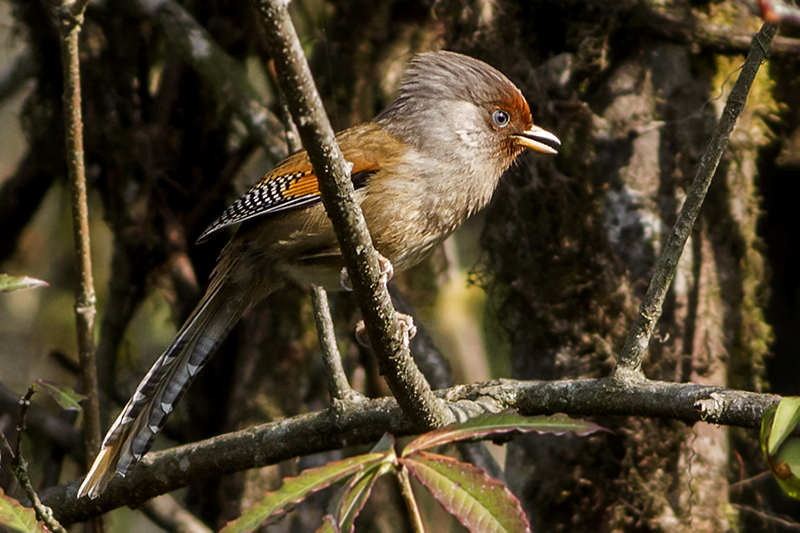
The Rufous Sibia (Heterophasia capistrata) is a striking and vocal songbird belonging to the family Leiothrichidae. Predominantly found in the montane forests of the Himalayas, this bird is easily recognizable by its vibrant rufous-orange body, contrasted with a black cap and white throat. Its presence is significant in the ecosystems of Bhutan, Nepal, and the northeastern states of India, where it plays an essential role in the seed dispersal of various plant species and the control of insect populations. Seasonal behaviors of the Rufous Sibia include altitudinal migration in response to temperature changes, moving to lower elevations during the colder months. These birds are often seen in pairs or small flocks, contributing to the dynamic soundscape of their habitat with their melodic calls. The ecological role of the Rufous Sibia extends beyond seed dispersal and insect control. As an integral part of the food web, it serves as prey for larger raptors and carnivorous mammals, thus maintaining the balance in its environment. The bird's adaptability to various forest types, from subtropical to temperate, underscores its ecological versatility. During the breeding season, which typically spans from March to July, Rufous Sibias become particularly vocal, and their songs can carry long distances across the forested valleys. This increased vocal activity not only facilitates mate attraction but also strengthens pair bonds. Furthermore, the Rufous Sibia is known for its cooperative breeding behavior, where older siblings or unrelated adults assist in feeding the young, a strategy that enhances the survival rates of fledglings. Throughout history, the Rufous Sibia has adapted to various forested regions across its range. In the hill tracts of northeastern India, its presence indicates healthy forest ecosystems capable of supporting diverse avian fauna. Its role as a bioindicator makes it a species of interest for conservationists monitoring the health of forest ecosystems. With its striking plumage and engaging song, the Rufous Sibia continues to captivate birdwatchers and researchers alike, inspiring further study into its habits, distribution, and ecological impact.
The Rufous Sibia belongs to the family Leiothrichidae, within the order Passeriformes. These birds typically live average 6-9 years, with a maximum recorded of 12 years..
How to Identify a Rufous Sibia
The Rufous Sibia is a medium-sized bird, measuring approximately 22 to 25 centimeters in length. Its plumage is predominantly rufous-orange, with a distinctive black cap that extends down to the nape and contrasts sharply with its white throat and chest. The wings and tail are marked with intricate patterns of black and white, adding to its visual appeal. Males and females share similar plumage, making them difficult to distinguish in the field. Juvenile Rufous Sibias exhibit duller coloration compared to adults, with a less pronounced black cap and slightly more muted rufous tones. In flight, the bird displays a characteristic silhouette, with long, rounded wings and a slightly curved tail. Perched, the Rufous Sibia maintains an upright posture, often flicking its tail in a manner that adds to its lively demeanor. It can be confused with the similarly colored Rufous-winged Fulvetta, but the latter is smaller and lacks the distinctive black cap. The Rufous Sibia's vocalizations also help in identification, as its melodious song differs from the harsher calls of the Fulvetta. Overall, the combination of its vibrant plumage and melodic song makes the Rufous Sibia a standout species among the avian community in its range.
Having trouble telling birds apart? Upload a photo to our bird identification tool for an instant species match.
Rufous Sibia Habitat and Range
Preferred Habitat
The Rufous Sibia thrives in montane forests throughout the Himalayas, preferring elevations ranging from 1,500 to 3,000 meters. Its favored habitats include subtropical and temperate broadleaf forests, where dense foliage and diverse plant life provide ample food and nesting sites. These birds are commonly found in regions such as the Eastern Himalayas, including parts of Nepal, Bhutan, and the northeastern states of India like Arunachal Pradesh and Sikkim. During the winter, the Rufous Sibia may descend to lower elevations in response to colder temperatures, though it remains within forested areas. While primarily a forest-dwelling species, it can occasionally be spotted in forest edges and secondary growth areas. Unlike some other bird species, the Rufous Sibia is not typically found in urban environments, preferring the seclusion and resources provided by its natural forest habitats.
Geographic Range
The Rufous Sibia has a primarily South Asian distribution, with its breeding range extending across the Himalayan foothills. This includes the countries of Nepal, Bhutan, and the northeastern states of India, such as Arunachal Pradesh, Sikkim, and Assam. The species is also found in parts of northern Myanmar and southeastern Tibet. During the winter months, the Rufous Sibia may undertake altitudinal migrations, moving to lower elevations within its range to escape the cold. However, it does not exhibit long-distance migratory behavior. Population density hotspots include regions with extensive forest cover, such as the forests of Bhutan and the hill tracts of northeastern India, where the species is relatively common. Despite its limited geographical range, the Rufous Sibia is considered widespread within its preferred habitats, thriving in regions where forest ecosystems remain intact.
Want to know which birds visit your area? Browse our backyard birds by location guides for region-specific species lists.
What Does the Rufous Sibia Eat?
The Rufous Sibia's diet is diverse, consisting mainly of insects, fruits, and nectar. During the warmer months, it actively forages for a variety of insects and their larvae, which provide essential proteins for breeding adults and growing chicks. The bird's sharp beak and agile movements enable it to catch insects in flight or glean them from foliage. In the autumn and winter, when insect populations decline, the Rufous Sibia relies more heavily on fruits and berries. It has a particular fondness for the fruits of the Rhododendron and Viburnum species, which are abundant in its forested habitat. Nectar from flowering plants forms a secondary food source, supplementing its diet with sugars and energy. The Rufous Sibia's foraging technique involves a combination of hover-gleaning and short sallying flights, allowing it to exploit food resources efficiently. Feeding primarily occurs during the early morning and late afternoon, with periods of rest and preening in between.
Rufous Sibia Behavior and Social Structure
The Rufous Sibia exhibits a complex social structure, often seen in pairs or small family groups. These groups may join mixed-species foraging flocks, especially during non-breeding seasons, to enhance foraging efficiency and predator vigilance. The bird's territorial behavior becomes more pronounced during the breeding season, with pairs defending nesting sites against intruders. Courtship displays include mutual preening and duet singing, reinforcing pair bonds. Rufous Sibias are generally active during daylight hours, with peak activity occurring in the early morning and late afternoon. They exhibit a dynamic flight pattern, characterized by short, undulating flights between perches. When threatened by predators such as hawks, Rufous Sibias emit loud alarm calls and may take cover in dense foliage. Despite their cautious nature, these birds are curious and will often investigate disturbances in their environment.
Rufous Sibia Nesting and Reproduction
Rufous Sibias construct cup-shaped nests using a variety of materials, including twigs, moss, and leaves. These nests are typically situated in the fork of a tree branch, often concealed by foliage to protect against predators. The preferred nesting sites are located at heights ranging from 2 to 5 meters above the ground. A typical clutch consists of 2 to 4 eggs, which are pale blue with brown speckles. Both parents participate in incubation, which lasts approximately 14 to 16 days. After hatching, the chicks remain in the nest for another 14 to 18 days before fledging. Parental care is shared, with both adults feeding and protecting the young. In some cases, older siblings or unrelated adults assist in caring for the chicks, a behavior known as cooperative breeding. Rufous Sibias generally have one to two broods per year, depending on environmental conditions and food availability.
Rufous Sibia Sounds and Vocalizations
The Rufous Sibia's song is a melodious series of clear, flute-like notes, often described as cheerful and varied in rhythm. Its primary song consists of repeated phrases that can last up to several seconds, punctuated by brief pauses. The quality of the song is rich and resonant, making it easily distinguishable from the harsher calls of other forest birds. In addition to its song, the Rufous Sibia produces a variety of call notes, including short whistles and chattering sounds used for communication within flocks. Alarm calls are sharper and more urgent, serving to alert other birds to the presence of predators. During the dawn chorus, the Rufous Sibia contributes its voice to the symphony of the forest, its song carrying over long distances in the still morning air.
Interesting Facts About the Rufous Sibia
- 1The Rufous Sibia can mimic the calls of other birds, adding to its complex vocal repertoire.
- 2In the Himalayas, Rufous Sibias often join mixed-species flocks with other laughingthrushes and babblers.
- 3The Rufous Sibia's diet shifts seasonally from insects to fruits, adapting to the availability of food sources.
- 4Despite their vivid plumage, Rufous Sibias are adept at hiding in dense foliage when threatened.
- 5Rufous Sibias engage in cooperative breeding, where non-breeding individuals help raise chicks.
- 6Historically, the Rufous Sibia was considered a good omen in Himalayan cultures, often depicted in local art.
- 7The Rufous Sibia's nesting season aligns with the monsoon, ensuring a rich supply of food for their young.
Rufous Sibia Conservation Status
The Rufous Sibia is currently listed as a species of Least Concern by the IUCN, indicating a stable population trend across its range. However, habitat loss due to deforestation and agricultural expansion poses a potential threat to its long-term survival. Conservation efforts focus on protecting forest habitats and maintaining ecological corridors that allow for altitudinal migration. In Bhutan and parts of India, protected areas and national parks play a crucial role in safeguarding the Rufous Sibia's habitat. Historical population data suggest that while local declines have occurred in areas of significant habitat alteration, the species remains resilient in undisturbed regions. Ongoing monitoring is essential to ensure that the Rufous Sibia continues to thrive in its natural environment.