Rufous-vented Laughingthrush
Ianthocincla gularis
Order: Passeriformes / Family: Leiothrichidae

Wikimedia Commons
About the Rufous-vented Laughingthrush
The Rufous-vented Laughingthrush (Ianthocincla gularis) is a captivating bird belonging to the Leiothrichidae family, which is renowned for its gregarious behavior and melodious vocalizations. This species inhabits the lush forests of Southeast Asia, with significant populations in countries such as Vietnam, Laos, and Thailand. Rufous-vented Laughingthrushes thrive in subtropical and tropical moist lowland forests and montane regions, often at elevations ranging from 800 to 2,400 meters. They play a vital ecological role as both seed dispersers and insect controllers within these ecosystems.
This laughingthrush is an integral part of the avian community in these regions, often found in mixed-species foraging flocks. These flocks facilitate efficient foraging while providing safety in numbers. During the breeding season, which typically occurs from March to July, the Rufous-vented Laughingthrush becomes more territorial, often defending its nesting sites vocally and physically. These birds exhibit a fascinating array of vocalizations, often engaging in duets or group choruses that resonate through their forested habitats.
Ecologically, the Rufous-vented Laughingthrush contributes significantly to the health of the forest ecosystem. By feeding on insects and small invertebrates, they help control pest populations. Their diet also includes fruits and seeds, aiding in the dispersal of various plant species. Seasonal changes influence their foraging patterns, with shifts in diet depending on food availability. Understanding the ecological role of the Rufous-vented Laughingthrush provides insights into the complex web of interactions that sustain these rich ecosystems.
The Rufous-vented Laughingthrush belongs to the family Leiothrichidae, within the order Passeriformes. These birds typically live average 5-8 years with max recorded 11 years.
How to Identify a Rufous-vented Laughingthrush
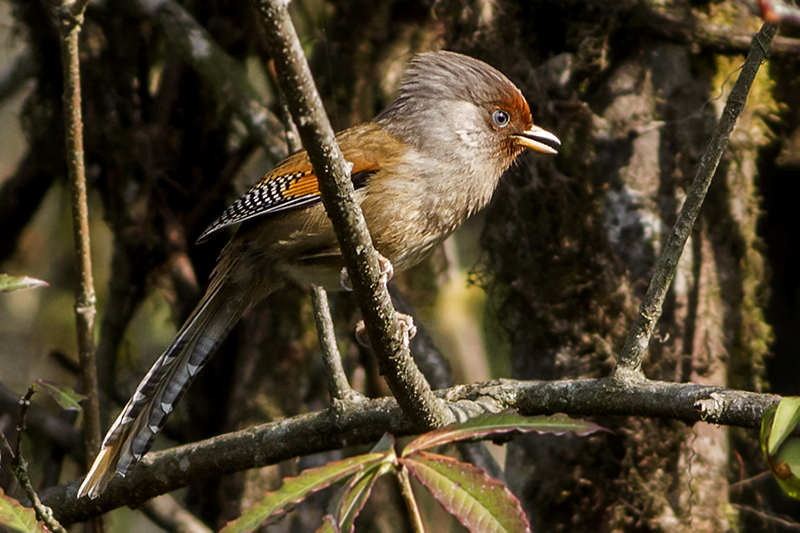
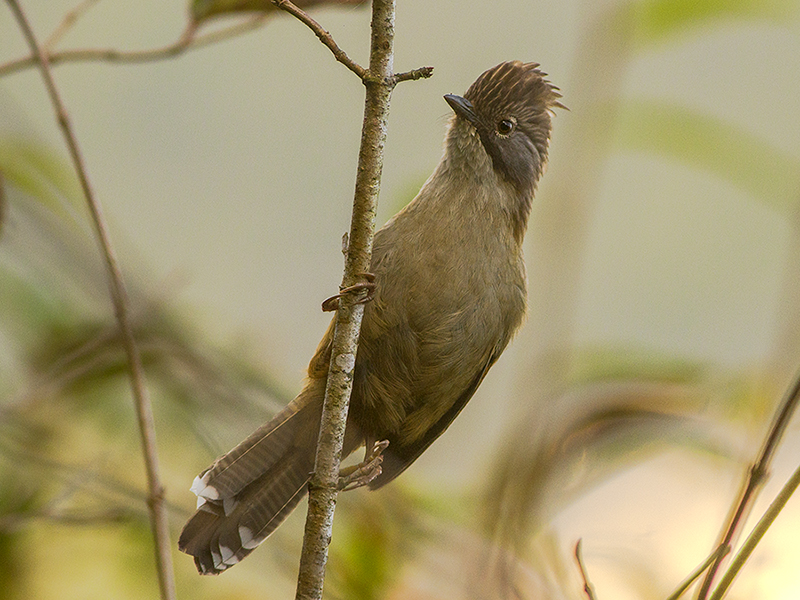
The Rufous-vented Laughingthrush is easily identified by its striking plumage. Adults display a predominantly grayish-brown coloration with a distinctive rufous vent and undertail coverts. The face features a black mask-like pattern extending from the beak through the eyes, enhancing its expressive appearance. The upperparts are a rich, warm brown, providing effective camouflage among the forest foliage.
Juveniles resemble adults but have slightly duller plumage and less defined facial markings. There is little sexual dimorphism, meaning males and females are similar in appearance, which can make field identification challenging without careful observation of behavior or vocalizations.
In flight, the Rufous-vented Laughingthrush exhibits a stocky silhouette with rounded wings and a short tail. Its perching posture is often upright, with a tendency to flick its tail, a behavior typical within the Leiothrichidae family. Confusion with other laughingthrush species can occur, but the rufous vent and distinct vocal patterns help distinguish it from similar species.
Having trouble telling birds apart? Upload a photo to our bird identification tool for an instant species match.
Rufous-vented Laughingthrush Habitat and Range
Preferred Habitat
The Rufous-vented Laughingthrush predominantly inhabits subtropical and tropical moist lowland and montane forests. These birds favor dense understory vegetation, which provides essential cover and abundant foraging opportunities. They are found at elevations ranging from 800 to 2,400 meters, often in regions with high humidity and lush foliage.
During the breeding season, they may select areas with thicker vegetation to ensure sufficient cover for nests and young. Although primarily forest dwellers, they occasionally venture into secondary growth or lightly disturbed areas, particularly when searching for food. Unlike some bird species, Rufous-vented Laughingthrushes show little inclination to urbanize, preferring the natural tranquility of forested habitats.
Geographic Range
The Rufous-vented Laughingthrush has a range that spans several countries in Southeast Asia, with significant populations in Vietnam, Laos, Thailand, and parts of southern China. These birds are non-migratory, residing year-round within their established territories.
The species is most densely populated in regions where suitable forest habitats remain intact and undisturbed. While their distribution is relatively stable, localized population densities may fluctuate depending on habitat quality and availability. The conservation of their preferred forest habitats is crucial for maintaining healthy populations.
Want to know which birds visit your area? Browse our backyard birds by location guides for region-specific species lists.
What Does the Rufous-vented Laughingthrush Eat?
The diet of the Rufous-vented Laughingthrush is diverse, consisting primarily of insects and other invertebrates, such as beetles, caterpillars, and spiders. These birds also consume a variety of fruits and seeds, particularly during periods when insect abundance is low.
Foraging behaviors include probing through leaf litter, gleaning from branches, and occasionally fluttering to catch insects in mid-air. The Rufous-vented Laughingthrush typically forages in small groups, often as part of mixed-species flocks, allowing them to exploit a wide range of food sources efficiently. Their feeding schedule is mostly diurnal, with peak activity occurring during the cooler hours of the morning and late afternoon.
Rufous-vented Laughingthrush Behavior and Social Structure
Rufous-vented Laughingthrushes are highly social birds, often found in small groups or larger mixed-species flocks. Their social structure is complex, with established hierarchies that dictate foraging and nesting behaviors. These birds are territorial, particularly during the breeding season, when they defend their nesting sites aggressively against intruders.
Courtship displays involve vocal duets, where pairs engage in synchronized singing that strengthens pair bonds. Flocking patterns provide safety in numbers, reducing the risk of predation. When faced with threats, these birds exhibit alarm calls that alert other flock members, prompting a coordinated retreat into dense vegetation.
Daily activity patterns are influenced by environmental conditions, with foraging and social interactions peaking during the cooler hours. Their adaptability in social organization allows them to thrive in dynamic forest ecosystems.
Rufous-vented Laughingthrush Nesting and Reproduction
Rufous-vented Laughingthrushes build cup-shaped nests made of twigs, leaves, and moss, often lined with softer materials for insulation. These nests are typically positioned in dense shrubs or low trees, providing concealment from predators.
The typical clutch size ranges from two to four eggs, with both parents sharing incubation duties over a period of approximately 14 to 16 days. After hatching, the chicks remain in the nest for another two weeks before fledging. Both parents actively participate in feeding and caring for the young, ensuring their survival during this vulnerable stage.
These birds generally produce one to two broods per year, depending on environmental conditions and resource availability. Their nesting success is closely tied to habitat quality, emphasizing the importance of preserving intact forest ecosystems.
Rufous-vented Laughingthrush Sounds and Vocalizations
The primary song of the Rufous-vented Laughingthrush is a series of melodious whistles and trills, often performed in duets by mated pairs. These vocalizations are characterized by their rhythmic quality and varied pitch, creating a harmonious chorus that resonates through their forest habitat.
Call notes include sharp, metallic chips used for communication within flocks and to alert others to potential dangers. During the dawn chorus, these laughingthrushes contribute significantly to the avian soundscape, announcing their presence and territory. Their vocal repertoire is diverse, allowing them to communicate effectively within their social groups.
Interesting Facts About the Rufous-vented Laughingthrush
- 1Rufous-vented Laughingthrushes are named for their rufous-colored vent, a key identifying feature among closely related species.
- 2These birds often participate in mixed-species flocks, improving foraging efficiency and predator detection.
- 3Vocal communication in these laughingthrushes includes complex duets that strengthen pair bonds and establish territory.
- 4The Rufous-vented Laughingthrush's diet shifts seasonally, with a greater emphasis on fruits during times of insect scarcity.
- 5These birds exhibit strong site fidelity, often returning to the same nesting areas year after year.
- 6Despite their social nature, Rufous-vented Laughingthrushes can become highly territorial during the breeding season.
- 7Their presence in a habitat often indicates a healthy forest ecosystem, as they require dense vegetation and abundant food resources.
Rufous-vented Laughingthrush Conservation Status
The Rufous-vented Laughingthrush is currently listed as Least Concern by the IUCN, reflecting a relatively stable population trend. However, habitat destruction and fragmentation pose significant threats, particularly as logging and agricultural expansion encroach on their forest habitats. Conservation efforts focus on preserving forested areas and promoting sustainable land-use practices to mitigate habitat loss. Historical population changes have shown resilience, but ongoing conservation measures are essential to ensure long-term survival. Engaging local communities in conservation initiatives can help protect these birds and their habitats.