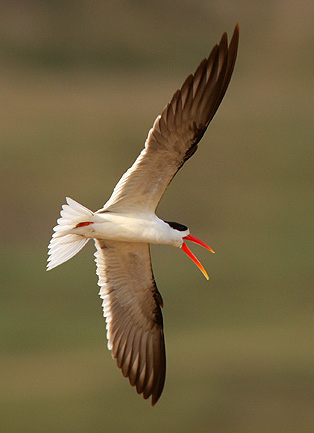
Rynchops fulva
Rynchops fulva
Order: Charadriiformes / Family: Laridae

Wikimedia Commons
About the Rynchops fulva
The Rynchops fulva, commonly known as the Black Skimmer, fascinates bird watchers with its unique ecological role within coastal and nearshore environments. This bird, a member of the family Laridae and order Charadriiformes, is recognized for its remarkable foraging technique and its striking appearance. The Black Skimmer inhabits regions across the Americas, particularly thriving along the Atlantic and Gulf coasts of the United States, extending into Central and South America. Its presence is essential to the health of coastal ecosystems, as it plays a role in controlling fish populations and serves as an indicator species for habitat quality. Black Skimmers are especially associated with sandbars, estuaries, and tidal flats, where they find both food and suitable nesting sites. Skimmers exhibit seasonal behaviors, arriving at nesting sites in the spring and departing for wintering grounds in the fall. During the breeding season, they form large colonies, sometimes numbering in the hundreds, creating a dynamic and lively environment. The ecological role of the Black Skimmer extends beyond its foraging habits. As a colonial breeder, it influences the structure and dynamics of the habitats it occupies. The presence of skimmer colonies can affect the distribution of other bird species, including terns and gulls, which often share similar nesting sites. Skimmers are sensitive to environmental changes, making them valuable indicators of ecosystem health. Habitat degradation, pollution, and human disturbance pose significant threats to their populations. The bird's reliance on specific coastal habitats underscores the importance of conserving these areas to ensure the survival of the species. The Black Skimmer's migratory patterns reveal its adaptability and resilience. Breeding populations in the northern United States migrate southward to Central and South America during the winter months. This migratory behavior underscores the bird's dependence on a network of habitats that span vast geographic ranges. The conservation of these migratory corridors is crucial for maintaining healthy skimmer populations. Understanding the ecological significance of the Black Skimmer requires a comprehensive appreciation of its life history and behavioral ecology. As a species, it exemplifies the intricate connections between organisms and their environments, highlighting the need for integrated conservation strategies that address both local and regional scales.
The Rynchops fulva belongs to the family Laridae, within the order Charadriiformes. These birds typically live Unknown.
How to Identify a Rynchops fulva
Identification of the Black Skimmer, Rynchops fulva, requires attention to several distinct field marks. The adult skimmer measures approximately 40 to 50 cm in length, with a wingspan ranging from 100 to 120 cm, classifying it as a medium-sized bird. Its striking black upperparts contrast sharply with its white underparts, creating a distinctive appearance in flight. A key feature is its long, knife-like bill, with the lower mandible extending beyond the upper mandible. This adaptation is crucial for its skimming feeding behavior. The bill is bright orange at the base, fading to black at the tip, a characteristic that distinguishes it from similar species. Juvenile Black Skimmers display more subdued plumage, with mottled brown upperparts that gradually darken as they mature. Unlike adults, juveniles have a shorter bill that lacks the pronounced color contrast seen in mature birds. Both male and female skimmers appear similar, though males tend to be slightly larger. In flight, the Black Skimmer presents a unique silhouette, with long, narrow wings and a forked tail. Its graceful, buoyant flight style sets it apart from other seabirds. When perched, skimmers often rest on sandbars or beaches, sitting low with their body weight supported by their legs rather than their feet, a posture that minimizes energy expenditure. The Black Skimmer is occasionally confused with other tern species, but its unique bill and flight pattern provide clear distinguishing characteristics.
Having trouble telling birds apart? Upload a photo to our bird identification tool for an instant species match.
Rynchops fulva Habitat and Range
Preferred Habitat
The Black Skimmer thrives in coastal habitats such as sandbars, estuaries, and tidal flats, where open water is readily accessible for foraging. These habitats provide the necessary conditions for the skimmer's specialized feeding technique, which involves skimming the water's surface to catch fish. Skimmers typically nest on sandy or gravelly beaches, often forming colonies on barrier islands that offer protection from predators and human disturbance. The bird prefers low-lying coastal areas at elevations near sea level. Seasonal shifts in habitat use occur as skimmers move from breeding sites in summer to wintering grounds in warmer regions. While primarily associated with natural coastal environments, Black Skimmers can occasionally be found in urban areas near waterfronts, where artificial habitats mimic their natural preferences. Despite their adaptability to certain human-altered landscapes, skimmers remain reliant on healthy, undisturbed coastal ecosystems for successful breeding and foraging.
Geographic Range
The range of the Black Skimmer extends across the Americas, with distinct breeding and wintering areas. During the breeding season, skimmers are found along the Atlantic and Gulf coasts of the United States, from New Jersey to Texas, as well as in parts of Mexico, the Caribbean, and northern South America. Notable breeding hotspots include the Chesapeake Bay, the Outer Banks of North Carolina, and the coastline of Florida. Wintering ranges span from southern coastal U.S. states to Central and South America, including countries like Brazil, Argentina, and Ecuador. The bird's migratory corridors link these regions, facilitating seasonal movements that ensure access to food and suitable climates. Population density is highest in areas with extensive coastal habitats, particularly where estuarine environments provide abundant foraging opportunities. Conservation efforts focus on protecting these critical habitats from development and degradation, recognizing their importance for sustaining Black Skimmer populations.
Want to know which birds visit your area? Browse our backyard birds by location guides for region-specific species lists.
What Does the Rynchops fulva Eat?
The diet of the Black Skimmer primarily consists of small fish, which it captures using its unique skimming technique. By flying low over the water with its elongated lower mandible submerged, the skimmer is able to catch fish as they swim near the surface. This foraging method is most effective during dawn and dusk when fish are more active near the water's edge. Secondary food sources include crustaceans and small invertebrates, which supplement the skimmer's diet when fish are less abundant. Seasonal diet changes occur in response to prey availability, with skimmers adapting to different food sources as they migrate between breeding and wintering grounds. The size of prey typically ranges from 2 to 10 cm, suitable for the skimmer's specialized bill. Feeding often takes place in groups, with skimmers taking advantage of schools of fish that aggregate in shallow waters.
Rynchops fulva Behavior and Social Structure
The Black Skimmer exhibits a variety of behaviors that reflect its social and ecological adaptations. As a colonial breeder, it forms large, dense nesting colonies that provide protection from predators and facilitate cooperative defense strategies. Within these colonies, skimmers exhibit territorial behavior, defending nest sites from intruders and potential threats. Courtship displays involve synchronized flight patterns and vocalizations, strengthening pair bonds prior to nesting. During the breeding season, skimmers engage in cooperative foraging, often seen skimming in groups along estuarine waters. Flocking patterns vary with the time of day, with peak activity observed during early morning and late afternoon. The bird's response to predators includes alarm calls and aggressive mobbing, particularly when chicks are present. Daily activity patterns revolve around feeding and resting, with skimmers often seen roosting on sandbars during midday when temperatures are highest.
Rynchops fulva Nesting and Reproduction
Black Skimmers nest in colonies on sandy or gravelly beaches, often forming large aggregations that provide mutual protection from predators. Nests consist of shallow scrapes in the sand, lined with small pebbles or shell fragments. The clutch size typically ranges from two to five eggs, with incubation lasting about 21 to 25 days. Both parents share incubation duties, taking turns to ensure the eggs remain at a stable temperature. Once hatched, chicks remain in the nest for several days before gradually venturing out to explore their surroundings. Fledging occurs at approximately four weeks of age, with parental care extending until young skimmers can forage independently. The number of broods per year is usually limited to one, though pairs may attempt a second brood if the first is unsuccessful. Parental roles are shared, with both male and female skimmers involved in feeding and protecting their offspring.
Rynchops fulva Sounds and Vocalizations
The Black Skimmer's vocal repertoire includes a distinctive series of calls used for communication within colonies. The primary song consists of a sharp, repetitive 'kip-kip-kip' sound, often heard during courtship and territorial displays. Call notes vary in pitch and intensity, serving as signals to coordinate group movements and alert others to potential threats. Alarm calls, a harsh 'kaa' sound, warn colony members of approaching predators, prompting a collective response. During the dawn chorus, skimmers are particularly vocal, engaging in a dynamic exchange of calls that reinforce social bonds within the colony. The bird's vocalizations are critical for maintaining cohesion among individuals in large and often noisy breeding environments.
Interesting Facts About the Rynchops fulva
- 1The Black Skimmer's lower mandible is up to one-third longer than the upper, allowing efficient skimming.
- 2Colonial nesting behavior helps protect Black Skimmers from predators, with colonies sometimes exceeding 100 pairs.
- 3Black Skimmers are one of the few bird species that feed primarily at dawn and dusk, taking advantage of low light conditions.
- 4The unique flight style of the Black Skimmer, with its wings held rigid, allows for precise control during skimming.
- 5Despite being widespread, the Black Skimmer is sensitive to changes in water quality, making it an indicator species for coastal health.
- 6Black Skimmers can adjust their skimming depth by varying their flight height, demonstrating adaptability in foraging strategy.
- 7The Black Skimmer's distinctive bill coloration, orange at the base and black at the tip, develops fully by adulthood.
Rynchops fulva Conservation Status
The Black Skimmer is currently classified as 'Least Concern' by the IUCN, although certain populations face localized threats that could impact their long-term viability. Population trends have shown a mix of stability and decline depending on the region, with human activities such as coastal development, pollution, and disturbance posing significant risks. Conservation efforts focus on habitat protection, particularly safeguarding nesting beaches from human encroachment and preserving estuarine environments critical for foraging. Historical population changes reflect the impact of habitat loss and environmental degradation, emphasizing the need for ongoing conservation initiatives. Public awareness campaigns and habitat restoration projects aim to mitigate threats and support sustainable population levels.
Other Laridae Species


Birds Similar to the Rynchops fulva
These species are often confused with the Rynchops fulva due to similar appearance or overlapping range.