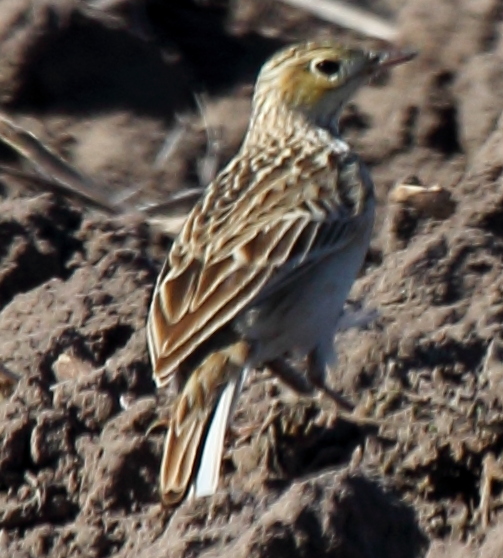
Sharpe's Longclaw
Macronyx sharpei
Order: Passeriformes / Family: Motacillidae

Wikimedia Commons
About the Sharpe's Longclaw
Sharpe's Longclaw (Macronyx sharpei) is a striking passerine endemic to the eastern African grasslands, primarily found in central Kenya. Known for its vibrant yellow underparts and melodious calls, this bird serves as an important indicator of grassland health. These birds thrive in open grasslands with tall grasses, where they forage on the ground, making them particularly vulnerable to habitat loss. Their presence indicates a well-preserved ecosystem. Sharpe's Longclaws play a crucial ecological role by controlling insect populations through their diet, thus maintaining the balance in their native habitats. The species is currently listed as endangered, primarily due to agricultural expansion and habitat alteration. During the breeding season, which coincides with the rainy periods, these birds become more active and vocal, defending their territories with vigor. They are largely sedentary, with some local movements driven by rainfall and food availability. The bird's survival is intertwined with the conservation of its grassland habitat, emphasizing the importance of sustainable land management practices in the regions where it resides. Efforts to conserve Sharpe's Longclaw also benefit other grassland species, making it a flagship species for conservation actions.
The Sharpe's Longclaw belongs to the family Motacillidae, within the order Passeriformes. These birds typically live average 5-7 years with a max recorded of 10 years..
How to Identify a Sharpe's Longclaw
Sharpe's Longclaw is a medium-sized bird, approximately 16-18 cm in length, with a distinctive yellow throat and underparts that contrast sharply with its streaked brown upperparts. The adult plumage includes a blackish breast band that stands out against the yellow. Males and females appear similar, though males may exhibit slightly brighter colors during the breeding season. Juveniles can be distinguished by their duller plumage and less defined breast band. In flight, the bird's dark tail with white edges becomes apparent, aiding in identification. When perched, the bird often adopts an erect posture, showcasing its long legs and prominent bill. Sharpe's Longclaw might be confused with the similar-looking Yellow-throated Longclaw; however, the latter lacks the distinct black breast band. Observers should note the bird's unique song pattern and preferred habitat when confirming identification.
Having trouble telling birds apart? Upload a photo to our bird identification tool for an instant species match.
Sharpe's Longclaw Habitat and Range
Preferred Habitat
Sharpe's Longclaw favors high-altitude grasslands ranging from 1,800 to 3,000 meters above sea level. These areas are characterized by tall grasses and sparse woody vegetation, providing essential cover and foraging grounds. The bird is primarily found in regions like the Kinangop Plateau and the Mau Narok in Kenya, where intact grasslands persist. During dry seasons, Sharpe's Longclaw may venture to slightly wetter areas, but it remains closely tied to grassland habitats. Unlike some grassland birds, it does not adapt well to urban environments or significantly altered landscapes, making it a true specialist of its habitat.
Geographic Range
Sharpe's Longclaw's range is restricted to the central highlands of Kenya, particularly the Laikipia, Kinangop, and Mau Narok regions. It occupies a relatively narrow range due to its habitat specificity, making it especially vulnerable to changes in land use. While it is not considered migratory, the species may exhibit some altitudinal movements in response to seasonal rainfall patterns. Population densities are highest in well-preserved grassland areas, though these are increasingly fragmented. The bird's limited range underscores the importance of targeted conservation efforts in these key regions.
Want to know which birds visit your area? Browse our backyard birds by location guides for region-specific species lists.
What Does the Sharpe's Longclaw Eat?
Sharpe's Longclaw feeds mainly on insects and other invertebrates, including beetles, caterpillars, and grasshoppers, which it gleans from the ground or low vegetation. Its diet may vary slightly with the seasons, with more abundant prey items consumed during the rainy season when insects are plentiful. The bird employs a methodical foraging technique, walking slowly through grasslands while scanning the ground for movement. Its sharp bill is adept at probing the soil to extract hidden prey. This diet not only sustains the bird but also helps control insect populations in its habitat.
Sharpe's Longclaw Behavior and Social Structure
Sharpe's Longclaw is generally solitary or found in pairs, particularly during the breeding season when they become territorial. Males perform aerial displays and sing to establish and defend their territories. These displays often involve a series of fluttering flights interspersed with melodic calls. Outside the breeding season, the bird may join loose flocks, especially when foraging. It remains active throughout the day, with peak activity occurring early in the morning and late afternoon. When threatened by predators, the bird employs a combination of cryptic coloration and evasive flight to escape detection.
Sharpe's Longclaw Nesting and Reproduction
The nest of Sharpe's Longclaw is a well-concealed cup made of grass and placed on the ground, often hidden within a tuft of tall grass. The female typically lays 2-3 eggs, which she incubates for about 12-14 days. After hatching, both parents participate in feeding the chicks, which fledge approximately two weeks after birth. The bird generally raises one brood per year, although favorable conditions may occasionally permit a second. Nesting success is closely tied to the availability of undisturbed grassland habitat.
Sharpe's Longclaw Sounds and Vocalizations
The primary song of Sharpe's Longclaw is a rich, melodious series of notes, often delivered from a prominent perch or during flight displays. The rhythm is lively, with clear, fluting phrases that carry well across the grasslands. Call notes are sharp and distinctive, used for communication between mates or signaling alarm. During the dawn chorus, these vocalizations contribute to the vibrant soundscape of their grassland habitats, with the song's quality reminiscent of a flute or small wind instrument.
Interesting Facts About the Sharpe's Longclaw
- 1Sharpe's Longclaw was named after Richard Bowdler Sharpe, a renowned British ornithologist, who contributed significantly to the study of African birds.
- 2The species is a member of the Motacillidae family, which includes pipits and wagtails, noted for their ground-dwelling habits and insectivorous diets.
- 3Sharpe's Longclaw's strong, clear song is often used as an auditory marker by birdwatchers to locate this elusive species in dense grasslands.
- 4Despite its restricted range, Sharpe's Longclaw plays a crucial role in controlling insect populations, highlighting its ecological importance.
- 5The bird's striking yellow plumage is an adaptation that helps it blend with the yellowing grasses of its habitat during dry seasons.
- 6Efforts to conserve Sharpe's Longclaw also benefit other endemic grassland species, making it a keystone for broader conservation strategies.
- 7Sharpe's Longclaw is particularly sensitive to changes in its environment, making it an ideal bioindicator for the health of highland grassland ecosystems.
Sharpe's Longclaw Conservation Status
Sharpe's Longclaw is currently classified as endangered by the IUCN, with populations declining due to habitat loss and fragmentation. The conversion of grasslands for agriculture poses the greatest threat, compounded by overgrazing and inappropriate land management practices. Conservation efforts focus on preserving remaining grassland areas and promoting sustainable agriculture. Historical population estimates indicate a significant decline over recent decades, underscoring the urgent need for protective measures.