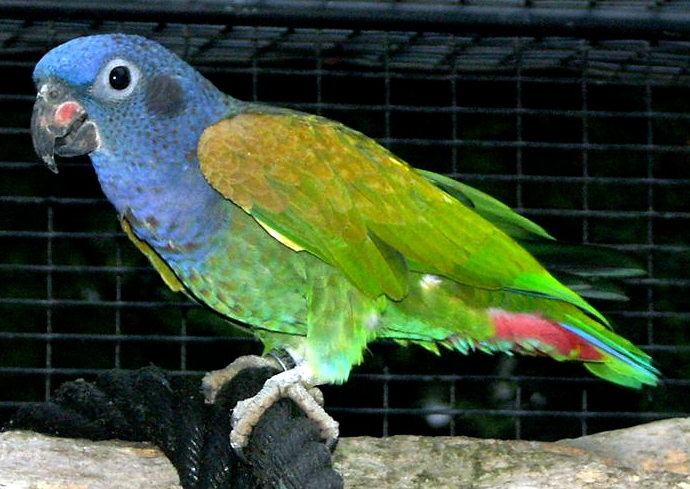
Short-tailed Parrot
Graydidascalus brachyurus
Order: Psittaciformes / Family: Psittacidae

Wikimedia Commons
About the Short-tailed Parrot
The Short-tailed Parrot (Graydidascalus brachyurus) is a vibrant member of the Psittacidae family, widely recognized for its dense green plumage and conspicuously short tail feathers. It thrives primarily in the tropical lowland forests of the Amazon Basin, extending its range across several South American countries such as Brazil, Peru, Colombia, and Ecuador. This bird favors the humid, lush environments typical of these regions, where it plays an essential ecological role as a seed disperser. By consuming various fruits and subsequently spreading seeds through their droppings, Short-tailed Parrots contribute significantly to forest regeneration and diversity. As a non-migratory species, they remain within the same general area year-round, although local movements in response to food availability can occur. During the wet season, when fruit is abundant, these parrots are particularly active, feeding on a wide range of botanical species. Short-tailed Parrots exhibit a strong preference for living in flocks, which can vary in size from small family units to larger congregations of up to 30 individuals or more. This social structure aids in mutual protection and enhances foraging efficiency. The parrots are known for their loud, raucous calls, often heard echoing through the forest canopy, which can serve both to communicate with flock members and to ward off potential threats. Their presence in these ecosystems is vital, offering both ecological benefits and serving as an indicator of the health of their forest habitats. Given their ecological significance and the pressures of habitat loss, understanding and conserving the Short-tailed Parrot's habitats is crucial for maintaining the biodiversity of the regions they inhabit.
The Short-tailed Parrot belongs to the family Psittacidae, within the order Psittaciformes. These birds typically live average 10-15 years with a maximum recorded of 20 years.
How to Identify a Short-tailed Parrot
The Short-tailed Parrot exhibits a predominantly green plumage that serves as excellent camouflage within its leafy rainforest habitat. Adults measure approximately 24 cm in length, with a short tail that is a distinctive field mark, helping birders distinguish it from other parrot species. Its short, rounded tail is unusual for a parrot and contributes to its name. The parrot's head is a slightly darker shade of green than the rest of its body, and its eyes are surrounded by a narrow ring of bare skin. Juvenile parrots resemble adults but may have duller plumage and less defined eye rings. There is little sexual dimorphism in this species, meaning males and females look alike to the casual observer. However, subtle differences in size or plumage gloss might be observed by experienced ornithologists. In flight, the Short-tailed Parrot presents a compact silhouette with rapid, direct wingbeats. While perched, its upright posture and the contrast between its short tail and robust body help distinguish it from other similar-sized parrots.
Having trouble telling birds apart? Upload a photo to our bird identification tool for an instant species match.
Short-tailed Parrot Habitat and Range
Preferred Habitat
Short-tailed Parrots inhabit primarily lowland tropical forests, with a strong preference for humid and dense forested areas. They are commonly found at elevations from sea level up to 1000 meters, although they seldom venture into higher altitudes. Within these forests, the parrots prefer areas with abundant fruiting trees, which supply their primary food sources. They are also occasionally seen in secondary growth forests and forest edges, adapting to habitat changes as long as food remains plentiful. Unlike some other parrot species, the Short-tailed Parrot is not typically found in urban environments, preferring the cover and resources provided by undisturbed natural areas.
Geographic Range
The geographic range of the Short-tailed Parrot spans the northern part of South America, primarily within the Amazon Basin. This includes significant portions of Brazil, where they are found throughout the extensive Amazon Rainforest. Their range extends westward into eastern Peru and Ecuador, north into southern Colombia, and east into the Guianas. They do not migrate, but may undertake local movements in response to seasonal changes in fruit availability. Populations are densest in regions where large tracts of contiguous forest exist, such as the central Amazon, which supports high densities due to the abundance of food and suitable nesting sites.
Want to know which birds visit your area? Browse our backyard birds by location guides for region-specific species lists.
What Does the Short-tailed Parrot Eat?
The diet of the Short-tailed Parrot mainly comprises fruits, seeds, and nuts, with a strong preference for the fleshy fruits of various rainforest trees. They also consume flowers and occasionally supplement their diet with insects and other invertebrates. Foraging often takes place in the upper canopy, where they skillfully navigate branches in search of ripe fruit. Their robust beak allows them to crack open hard nuts and seeds, which are an important food source during periods when fruit is less abundant. Feeding occurs primarily in the early morning and late afternoon, with rest periods during the hottest parts of the day.
Short-tailed Parrot Behavior and Social Structure
Social by nature, Short-tailed Parrots typically form small flocks, which can grow to larger sizes when foraging. These flocks provide safety in numbers, alerting members to predators through their loud calls. The parrots exhibit strong pair bonds during the breeding season, engaging in mutual preening and close contact. Courtship displays involve the male presenting food to the female and engaging in synchronized movements. Their daily routine includes periods of active foraging interspersed with rest and preening. They are diurnal, becoming active shortly after dawn and retreating to roosts at sunset. Their response to predators involves loud alarm calls and rapid flight to denser cover.
Short-tailed Parrot Nesting and Reproduction
Short-tailed Parrots nest in tree cavities, often utilizing existing holes created by woodpeckers or natural decay. They prefer cavities high in the canopy to avoid ground-based predators. Nesting season aligns with the onset of the rainy season, ensuring food availability for the chicks. Clutch size typically ranges from two to four eggs, with both parents sharing incubation duties over a period of approximately 24 to 26 days. After hatching, chicks remain in the nest for up to eight weeks, during which both parents contribute to feeding and care. The species generally produces one brood per year, although favorable conditions may allow for a second.
Short-tailed Parrot Sounds and Vocalizations
The calls of the Short-tailed Parrot are loud and harsh, consisting of a series of screeching notes that can be heard over long distances. These vocalizations serve both to maintain flock cohesion and to deter intruders. Alarm calls are sharper and more insistent, signaling the presence of danger. While not known for melodic song, their vocal repertoire is varied and includes softer chirps used during courtship and feeding interactions. Dawn and dusk are particularly active periods for vocalizing, as flocks gather to roost or begin their day.
Interesting Facts About the Short-tailed Parrot
- 1Short-tailed Parrots are one of the few parrot species with a notably short tail, a feature that helps in quick maneuvers through dense foliage.
- 2These parrots can live for over 20 years in the wild, reflecting their adaptability and resourcefulness in forest habitats.
- 3Despite their name, Short-tailed Parrots are highly proficient flyers, capable of covering large distances in search of food.
- 4Flocks of Short-tailed Parrots are known to include other parrot species, indicating their social flexibility and adaptability.
- 5The Short-tailed Parrot's loud calls can be heard up to 1 km away, a testament to their powerful vocal abilities.
- 6While primarily fruit-eaters, they occasionally consume clay from riverbanks, likely to aid in digestion and neutralize toxins.
- 7Their eye-ring, a patch of bare skin, can change color slightly depending on their emotional state or health.
Short-tailed Parrot Conservation Status
Currently, the Short-tailed Parrot is listed as Least Concern by the IUCN, with stable population trends. However, habitat destruction due to deforestation poses a significant threat. Conservation efforts focus on preserving large tracts of rainforest and promoting sustainable land use practices. Historical data suggests that while the species has adapted to some habitat changes, continued loss could lead to localized population declines. Conservationists emphasize the importance of protecting nesting sites and ensuring the availability of food resources throughout their range.
Other Psittacidae Species


Birds Similar to the Short-tailed Parrot
These species are often confused with the Short-tailed Parrot due to similar appearance or overlapping range.