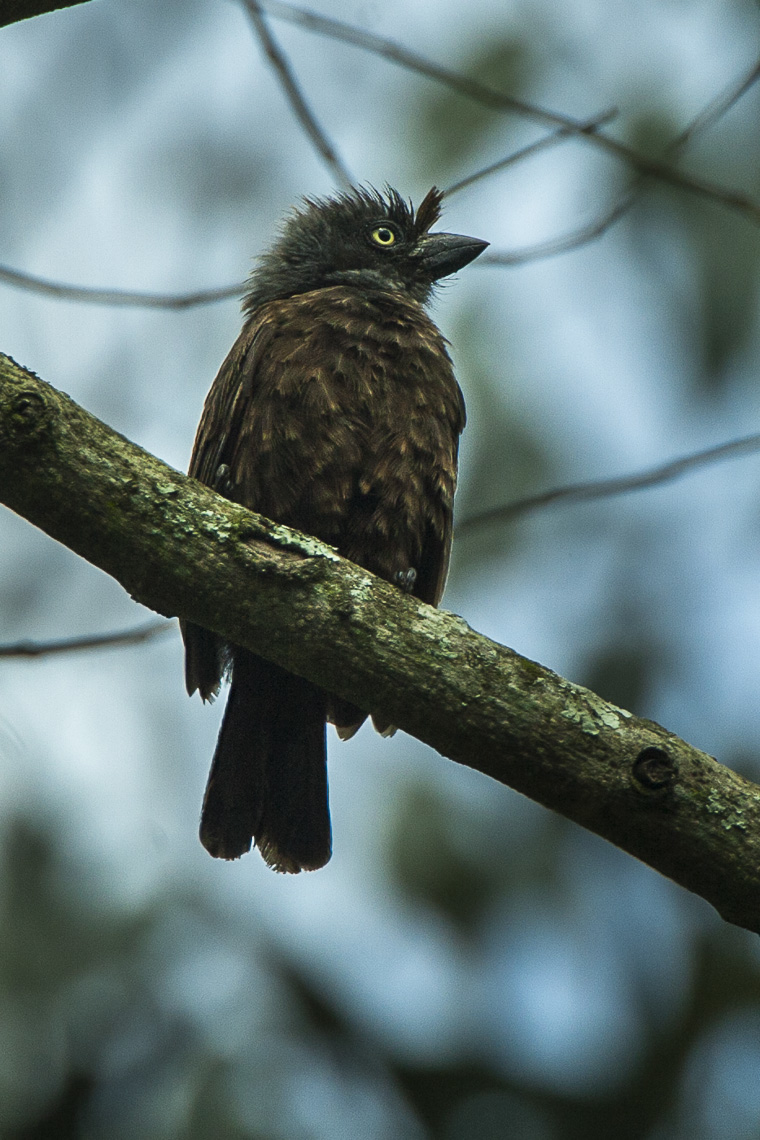
Sladen's Barbet
Gymnobucco sladeni
Order: Piciformes / Family: Lybiidae
About the Sladen's Barbet
Sladen's Barbet, or Gymnobucco sladeni, is a fascinating bird species within the family Lybiidae, order Piciformes. This bird is native to the dense forests of central and western Africa, where it plays a crucial role in the ecosystem. Often found in countries such as Cameroon, Gabon, and the Democratic Republic of the Congo, Sladen's Barbet is primarily a resident of lowland tropical forests. These birds are known for their unique appearance, particularly their bristly head feathers, which give them a somewhat comical expression. The ecological significance of Sladen's Barbet lies in its role as both a seed disperser and a predator of insects. By consuming fruits and berries, they help in the propagation of various plant species, contributing to the forest's biodiversity. Additionally, their insectivorous habits help control pest populations, providing an ecological balance within their habitat. Sladen's Barbet exhibits a range of seasonal behaviors, although it does not migrate over long distances. During the breeding season, which typically coincides with the rainy season, these birds engage in more vocal displays and increased territorial behavior. They maintain a relatively stable presence in their habitats throughout the year, adapting to seasonal changes in food availability. Observations have noted that they tend to forage in small groups, often alongside other barbet species, which enhances their foraging efficiency. This social behavior also aids in predator awareness and avoidance. The presence of Sladen's Barbet in an area is often an indicator of a healthy and diverse forest ecosystem, as they thrive in environments with a high density of fruiting trees and rich insect life. Their continued survival is closely linked to the preservation of forest habitats, making them a species of interest for conservationists.
The Sladen's Barbet belongs to the family Lybiidae, within the order Piciformes. These birds typically live average 10 years with a maximum recorded of 14 years..
How to Identify a Sladen's Barbet
The adult Sladen's Barbet is easily recognized by its distinctive bristly head feathers, which are a defining characteristic of the Gymnobucco genus. These feathers create a 'shaggy' appearance. The plumage of Sladen's Barbet is predominantly grayish-brown, providing effective camouflage against the tree bark and branches they frequent. Their underparts are lighter, often appearing off-white or pale gray. Juvenile Sladen's Barbets resemble adults but have a more subdued and uniform coloration, lacking the distinct bristles found in mature individuals. Both male and female Sladen's Barbets exhibit similar plumage, making them challenging to distinguish by sight alone. However, subtle differences in size and behavior during courtship may aid in gender identification. While the Sladen's Barbet shares its range with several similar species, such as the Naked-faced Barbet, its bristle-covered head remains a reliable field mark. In flight, Sladen's Barbet displays a rapid wingbeat pattern and a relatively short tail, which can help distinguish it from other small birds in the same habitat. When perched, this barbet often adopts an upright posture, clinging close to tree branches or trunks. This posture, combined with their bristly head, gives them a characteristic silhouette that is easily recognizable to seasoned birders.
Having trouble telling birds apart? Upload a photo to our bird identification tool for an instant species match.
Sladen's Barbet Habitat and Range
Preferred Habitat
Sladen's Barbet thrives in the humid, dense forests of central and western Africa. These birds are primarily found in lowland tropical forests, although they can occasionally be spotted in secondary growth areas and forest edges. They inhabit regions such as the Congo Basin and the rainforests of Gabon and Cameroon, where their preferred habitat features a high density of fruiting trees and rich insect life. While they are predominantly forest dwellers, Sladen's Barbets are adaptable and may venture into adjacent areas like plantations and gardens if food sources are abundant. The elevation range for Sladen's Barbet is typically from sea level to about 1,200 meters. Seasonal shifts in habitat are minimal, as they remain largely sedentary, relying on the forest's consistent food availability year-round. Unlike some other bird species, Sladen's Barbet does not favor urban environments and is rarely found in heavily populated areas, preferring the tranquility and resources of rural and forested settings.
Geographic Range
Sladen's Barbet has a relatively restricted range concentrated in the tropical forests of central and western Africa. Their breeding range encompasses countries such as Cameroon, Gabon, the Republic of the Congo, and the Democratic Republic of the Congo. They occupy the extensive rainforests of the Congo Basin, which provide the necessary resources for breeding and sustenance. Unlike migratory species, Sladen's Barbet is largely sedentary, remaining within the same geographic areas throughout the year. This year-round residence is facilitated by the stable climate and rich biodiversity of the tropical forests they inhabit. Within their range, population density hotspots include the dense forests of Gabon and the lower altitudes of the Congolese rainforests, where they are most commonly observed. While their overall range is limited compared to some other bird species, their presence is a testament to the health of the forest ecosystems they inhabit. Conservation efforts within these regions are crucial for maintaining the habitats that support not only Sladen's Barbet but also the myriad of species that share their environment.
Want to know which birds visit your area? Browse our backyard birds by location guides for region-specific species lists.
What Does the Sladen's Barbet Eat?
The diet of Sladen's Barbet is a mix of fruits, berries, and insects, reflecting their role as both seed dispersers and insect predators within their ecosystem. Their primary food sources include a variety of fruits, such as figs and other small berries, found abundantly in the tropical forests they inhabit. These fruits provide essential nutrients and energy, particularly during the breeding season when the demand for food increases. In addition to fruits, Sladen's Barbet consumes a wide range of insects, including beetles, caterpillars, and ants. These insects are typically foraged from tree bark and foliage, where the birds use their strong bills to probe and extract prey. The size of their prey varies, but they generally target small to medium-sized insects that can be easily captured and consumed. Seasonal changes in their diet are minimal, as the tropical forests provide a relatively constant supply of both fruits and insects year-round. However, during periods of fruit scarcity, they may increase their intake of insects to compensate. Sladen's Barbet typically forages in small groups, which allows them to cover larger areas more efficiently and potentially locate food sources more quickly. This social foraging behavior also serves as a protective mechanism, as multiple eyes can better detect potential predators.
Sladen's Barbet Behavior and Social Structure
Sladen's Barbet exhibits a range of intriguing behaviors, particularly related to their social structure and territoriality. These birds are generally social, often seen foraging in small groups or family units. Their social nature extends to their vocalizations, which play a critical role in communication and territory establishment. During the breeding season, Sladen's Barbet becomes more vocal, using a series of calls and displays to attract mates and deter rivals. Their courtship displays involve mutual preening and the presentation of food items, which strengthens pair bonds and signals readiness for breeding. Territorial behavior is most pronounced during this time, with individuals defending their chosen nesting sites from intruders. Sladen's Barbet responds to predators with a combination of alarm calls and evasive maneuvers. Their group foraging behavior provides additional safety, as multiple individuals can alert the group to potential dangers. Daily activity patterns revolve around foraging and resting, with peak activity occurring in the early morning and late afternoon when temperatures are cooler. Throughout the day, they may retreat to shaded areas to avoid the intense midday heat. Although Sladen's Barbet is non-migratory, they may adjust their foraging locations based on seasonal variations in food availability, venturing further afield during times of scarcity.
Sladen's Barbet Nesting and Reproduction
Sladen's Barbet constructs its nests in tree cavities, often utilizing natural hollows or abandoned woodpecker holes. They prefer nesting sites that are well-hidden within the dense foliage of the forest canopy, providing protection from predators and environmental elements. The nesting materials used are minimal, as they rely on the natural structure of the cavity for support. Clutch size for Sladen's Barbet typically ranges from two to four eggs, which are incubated primarily by the female. The incubation period lasts approximately 14 to 16 days, during which time the male may assist by providing food to the incubating female. Once the eggs hatch, both parents share responsibilities for feeding and caring for the chicks. The fledging timeline varies, but young barbets generally leave the nest about 20 to 25 days after hatching. Parental care continues for several weeks post-fledging, as the young birds learn to forage and navigate their environment. Sladen's Barbet typically raises one brood per year, although conditions with abundant food may allow for a second brood. Their nesting success is closely linked to the availability of suitable nesting sites and the density of predator populations in the area.
Sladen's Barbet Sounds and Vocalizations
The primary song of Sladen's Barbet is a series of rhythmic, grating notes, often described as a repetitive 'krrr-krrr-krrr' sound. This song serves both as a territorial call and a mate attraction signal, echoing through the forest canopy. In addition to their song, Sladen's Barbet produces a variety of call notes, including sharp 'chik' sounds used in communication between individuals. Alarm calls are shorter and more urgent, serving to alert other birds of potential threats. During the dawn chorus, Sladen's Barbet contributes its distinctive calls to the symphony of forest sounds, establishing its presence in the territory. Their vocalizations, while not melodious, are an essential aspect of their behavior and play a key role in maintaining social bonds and territory boundaries.
Interesting Facts About the Sladen's Barbet
- 1Sladen's Barbet is named after the British ornithologist W.J. Sladen, who contributed to African bird studies.
- 2These birds often join mixed-species flocks, increasing their foraging success and reducing predation risk.
- 3Sladen's Barbet has a robust bill adapted for eating a variety of fruits and probing for insects under bark.
- 4Unlike many bird species, both male and female Sladen's Barbets participate in nest-building and chick-rearing.
- 5Their bristle-like feathers are thought to help in camouflaging among tree branches and foliage.
- 6The species' stable population is a good indicator of forest health, as they thrive in biodiverse environments.
- 7Sladen's Barbet is rarely seen in urban areas, preferring the undisturbed tranquility of dense forests.
Sladen's Barbet Conservation Status
Currently, Sladen's Barbet is listed as Least Concern on the IUCN Red List, indicating a stable population trend. However, the primary threats to their survival include habitat loss due to deforestation and land conversion for agriculture. Conservation efforts focus on preserving the tropical forests that serve as their habitat, which benefit numerous other species as well. Historically, Sladen's Barbet populations have remained relatively stable, but continued habitat degradation could pose future risks. Organizations working in central and western Africa prioritize the protection of forested areas, establishing reserves and promoting sustainable land use practices. Ensuring the long-term survival of Sladen's Barbet requires maintaining the integrity of their forest habitats and addressing the root causes of deforestation.