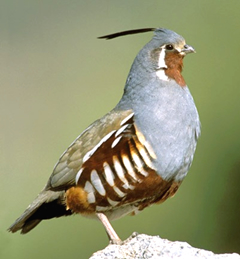
Snow Mountain Quail
Synoicus monorthonyx
Order: Galliformes / Family: Phasianidae

Wikimedia Commons
About the Snow Mountain Quail
The Snow Mountain Quail (Synoicus monorthonyx) is a unique bird species endemic to the Snow Mountains of New Guinea. These quails inhabit the high-altitude grasslands, thriving at elevations ranging from 3,000 to 4,500 meters. Their presence in such a specific and isolated habitat highlights their ecological significance as a niche species adapted to harsh conditions. Unlike many of their relatives within the Phasianidae family, these quails have evolved to withstand cold temperatures and limited vegetation, a testament to their adaptability. The Snow Mountain Quail plays a critical role in its ecosystem, influencing seed dispersal and impacting the vegetation dynamics of its montane habitat. During the breeding season, which aligns with the austral summer, these quails become more active, engaging in courtship displays and nesting activities. Their behavior during this period contributes to the ecological cycles of the region, as they consume a wide range of seeds and insects, thereby aiding in the balance of the local flora and fauna. In contrast, during the colder months, the Snow Mountain Quail adopts a more subdued lifestyle, focusing on survival and maintaining energy reserves. Their presence in the Snow Mountains underscores the biodiversity of New Guinea's high-altitude ecosystems, showcasing the evolutionary pathways birds have taken to adapt to specific environmental niches.
The Snow Mountain Quail belongs to the family Phasianidae, within the order Galliformes. These birds typically live estimated to live around 3-5 years, though data is scarce..
How to Identify a Snow Mountain Quail
The Snow Mountain Quail, a medium-sized bird, features a distinctive plumage that allows it to blend seamlessly into its grassland environment. Adult quails exhibit a mottled brown and gray coloration with black and white streaks, providing effective camouflage against predators. Their underparts are slightly lighter, with a subtle buff hue. Juvenile Snow Mountain Quails resemble adults but with less defined streaking, giving them a smoother, more uniform appearance. Males and females are similar in size and plumage, making visual differentiation challenging in the field. The Snow Mountain Quail can sometimes be confused with other quail species in the region, such as the Brown Quail, but its higher altitude range and slightly larger size are distinguishing factors. In flight, these quails display a short, rapid wingbeat, with rounded wings and a characteristic low, swift trajectory. When perched, they maintain a compact, upright posture, often remaining still to avoid detection.
Having trouble telling birds apart? Upload a photo to our bird identification tool for an instant species match.
Snow Mountain Quail Habitat and Range
Preferred Habitat
The Snow Mountain Quail primarily inhabits alpine and subalpine grasslands within the Snow Mountains of New Guinea. These habitats are characterized by sparse vegetation, rocky outcrops, and a cool climate. The species prefers elevations between 3,000 and 4,500 meters, where few other bird species venture. During different seasons, they may shift slightly in elevation, seeking areas with optimal food availability and shelter. Unlike many quail species that adapt to more diverse environments, the Snow Mountain Quail remains largely confined to its montane habitat, avoiding urban areas and lowland regions where conditions are unsuitable for its survival.
Geographic Range
The Snow Mountain Quail is endemic to the Snow Mountains of New Guinea, found exclusively within this high-altitude range. Its distribution is limited to the central highlands, particularly in regions such as the Star Mountains and other adjacent alpine areas. This species does not exhibit significant migratory behavior, remaining within its breeding range year-round. Population densities vary across its range, with higher concentrations found in areas where grassland vegetation provides ample cover and food resources. The isolated nature of its range contributes to its unique status, as it is one of the few bird species adapted to New Guinea's challenging montane environments.
Want to know which birds visit your area? Browse our backyard birds by location guides for region-specific species lists.
What Does the Snow Mountain Quail Eat?
The Snow Mountain Quail's diet consists primarily of seeds and small insects, reflecting its adaptation to the high-altitude grasslands of New Guinea. Seasonally, their diet may shift, with a greater emphasis on insect consumption during the breeding season to meet the increased nutritional demands of reproduction. Their foraging technique involves scratching at the ground with their feet, uncovering food hidden beneath the grass and rocky substrate. They exhibit a preference for small seeds from native grasses and shrubs, and their ability to consume a wide range of prey sizes allows them to exploit various food resources. Snow Mountain Quails typically feed during the cooler parts of the day, taking advantage of the cover provided by morning and late afternoon shadows.
Snow Mountain Quail Behavior and Social Structure
Snow Mountain Quails are generally solitary or found in small family groups, particularly outside the breeding season. During the breeding season, males engage in courtship displays, which include vocalizations and visual signals to attract females. These displays play a crucial role in mate selection and territorial establishment. The species demonstrates a strong territorial instinct, often defending chosen areas against intruders. In response to predators, Snow Mountain Quails rely on their cryptic plumage to remain undetected, freezing in place to avoid drawing attention. They are primarily active during dawn and dusk, aligning their activity patterns with periods of reduced predation risk and optimal foraging conditions.
Snow Mountain Quail Nesting and Reproduction
The nesting behavior of the Snow Mountain Quail involves constructing a simple ground nest, often a shallow depression lined with grasses and leaves. These nests are strategically located among dense grass clumps or under rocks to provide concealment from predators. A typical clutch consists of 4 to 6 eggs, which the female incubates for approximately 18 to 21 days. During this period, the male plays a supportive role, often standing guard and foraging nearby. Upon hatching, chicks are precocial, leaving the nest shortly after birth and following the female as she forages. This species usually raises one brood per year, timed to coincide with the peak availability of food resources in the austral summer.
Snow Mountain Quail Sounds and Vocalizations
The primary song of the Snow Mountain Quail is a series of soft whistles, often described as melodious and rhythmic. These calls serve as both territorial markers and mate attraction signals. The quail's call notes are simple yet distinctive, consisting of a repeated "chee-chee" sound. Alarm calls are sharper and more abrupt, designed to alert family members to potential threats. During the dawn chorus, Snow Mountain Quails become more vocal, their calls resonating across the grasslands as they establish territories and communicate with potential mates.
Interesting Facts About the Snow Mountain Quail
- 1The Snow Mountain Quail is one of the few bird species that can thrive at elevations over 4,000 meters, showcasing remarkable adaptation.
- 2Despite its isolated habitat, the Snow Mountain Quail has a stable population, thanks to its specialized niche in the Snow Mountains.
- 3The quail's cryptic plumage is so effective that it can remain undetected even when predators are nearby.
- 4Snow Mountain Quails are known for their rapid, low-flight patterns, which aid in quick escapes from danger.
- 5Their primary diet consists of seeds, but they shift to insects during breeding season for extra protein.
- 6These quails are non-migratory, spending their entire lives within the confines of New Guinea's high-altitude ranges.
- 7The Snow Mountain Quail's song, a series of soft whistles, is a key part of its courtship ritual and territorial display.
Snow Mountain Quail Conservation Status
The Snow Mountain Quail currently holds a conservation status of Least Concern according to the IUCN. However, its population trend remains uncertain due to the limited accessibility and remoteness of its habitat. Primary threats include habitat degradation from climate change, which may alter the delicate balance of the alpine ecosystems it inhabits. Conservation efforts focus on preserving the high-altitude grasslands of New Guinea and monitoring changes in the quail's range and population dynamics. Historically, the population has remained stable, but ongoing environmental changes necessitate vigilance to ensure the species' long-term survival.
Other Phasianidae Species


Birds Similar to the Snow Mountain Quail
These species are often confused with the Snow Mountain Quail due to similar appearance or overlapping range.