
Splendid Astrapia
Astrapia splendidissima
Order: Passeriformes / Family: Paradisaeidae

Wikimedia Commons
About the Splendid Astrapia
The Splendid Astrapia (Astrapia splendidissima) is a bird of paradise renowned for its breathtaking plumage and unique ecological niche in the montane forests of New Guinea. This species has evolved a remarkable set of adaptations that allow it to thrive in the dense, high-altitude environments it calls home. With its vibrant iridescent feathers, the male Splendid Astrapia is particularly striking, featuring elongated tail feathers that can reach impressive lengths. These physical traits make it a visual marvel and a subject of fascination for ornithologists and bird watchers alike. This bird plays a crucial role in its ecosystem as both a pollinator and a seed disperser. Its diet consists predominantly of fruit, which it helps to spread throughout the forest, aiding in plant regeneration and the maintenance of biodiversity. Additionally, its feeding habits contribute to the pollination of several plant species, making it an integral part of the forest's reproductive cycle. The Splendid Astrapia's presence is a clear indicator of a healthy, thriving forest ecosystem. The bird's habitat preferences are specific, often found in pristine montane forests at elevations between 1500 and 3000 meters. These forests provide the perfect combination of humidity, temperature, and vegetation density necessary for the Splendid Astrapia's survival. The species exhibits seasonal behaviors in response to changes in food availability, sometimes moving to lower elevations during certain times of the year. Such shifts ensure access to a consistent food supply and showcase the bird's remarkable adaptability. Understanding the ecological role and significance of the Splendid Astrapia underscores the importance of preserving its natural habitat. With deforestation and habitat degradation posing significant threats, conservation efforts must focus on protecting these montane forests to ensure the survival of this magnificent species. As a flagship species, the Splendid Astrapia highlights the broader conservation needs of New Guinea's unique and richly diverse ecosystems.
The Splendid Astrapia belongs to the family Paradisaeidae, within the order Passeriformes. These birds typically live average 5-7 years with a maximum of 10 years recorded..
How to Identify a Splendid Astrapia
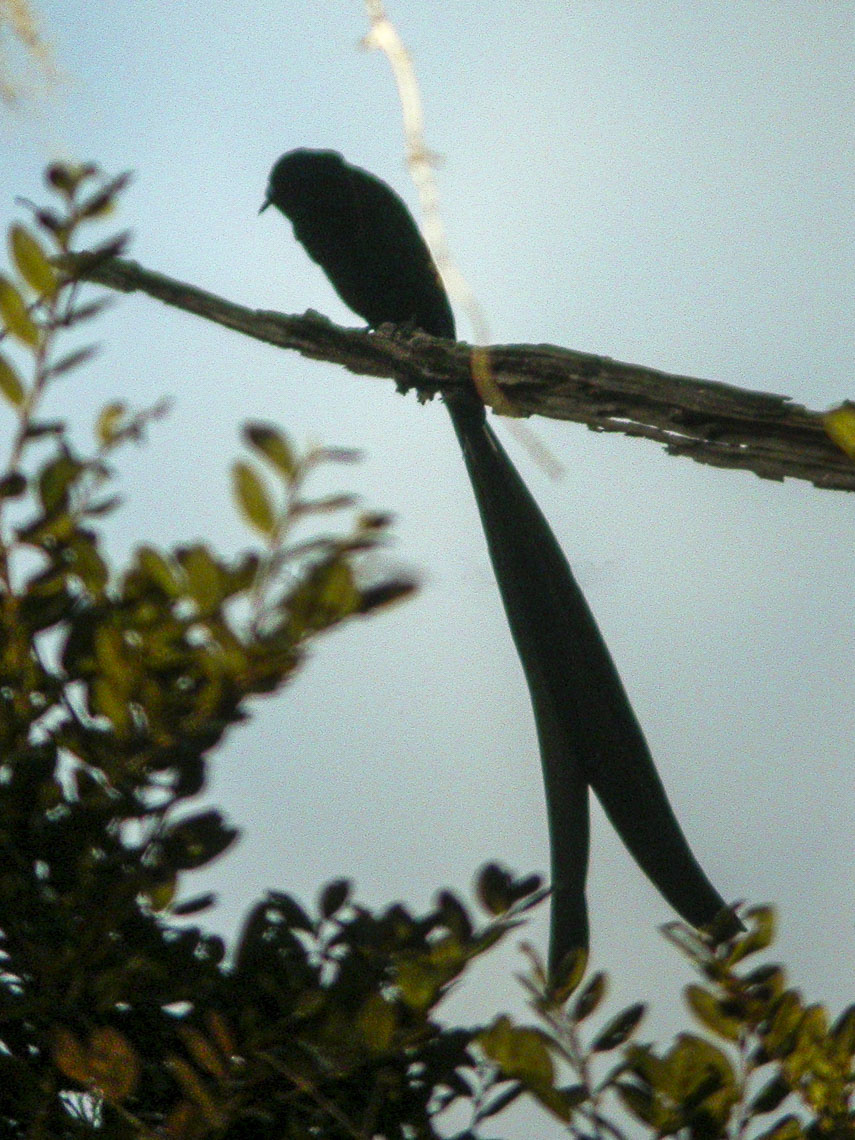
Identifying the Splendid Astrapia in the field requires attention to its distinctive plumage and silhouette. Adult males are adorned with iridescent green and bronze feathers, a characteristic not shared with many other species. Their elongated tail feathers, often twice the length of their bodies, are a key field mark. Females, while less ornate, still display a subtle beauty with muted brown and green tones. Juveniles resemble females but lack the mature feather structure. Distinguishing males from females can be relatively straightforward due to the males' pronounced coloration and tail length. Confusion with similar species such as the Ribbon-tailed Astrapia can occur, but the Splendid Astrapia's unique blend of colors and shorter tail feathers usually aid in accurate identification. When in flight, the Splendid Astrapia exhibits a distinctive silhouette. The elongated tail feathers of the male trail elegantly behind, while their agile, fluttering flight pattern is characteristic. Perched, the bird maintains an upright posture, often making subtle movements that catch the light on its iridescent feathers, adding to its visual allure.
Having trouble telling birds apart? Upload a photo to our bird identification tool for an instant species match.
Splendid Astrapia Habitat and Range
Preferred Habitat
The Splendid Astrapia predominantly inhabits the montane forests of New Guinea, thriving at elevations between 1500 and 3000 meters. These forests offer a blend of dense canopy cover and abundant resources necessary for the bird's survival. The species shows a preference for primary forests, which provide the intricate ecological balance needed to support its lifestyle. However, the bird occasionally occupies secondary forests, especially where primary forest coverage decreases. Seasonal habitat shifts occur, with individuals sometimes descending to lower elevations in search of food during certain periods. While primarily a forest dweller, the Splendid Astrapia rarely ventures into urban areas, maintaining a preference for rural and undisturbed environments. Its reliance on intact forest ecosystems highlights the importance of habitat conservation.
Geographic Range
The Splendid Astrapia is endemic to New Guinea, primarily found in the highland regions of the central and eastern parts of the island. Its range extends across several mountain ranges, including the Owen Stanley Range, which offers the elevated environments it requires. The species does not undertake long migrations but instead exhibits altitudinal movements, adjusting to seasonal changes in food availability. Breeding territories are concentrated in areas with high fruit abundance, often resulting in population density hotspots in regions with optimal forest conditions. While not widely distributed across other regions or countries, the Splendid Astrapia's presence remains a strong indicator of healthy montane ecosystems within its native range.
Want to know which birds visit your area? Browse our backyard birds by location guides for region-specific species lists.
What Does the Splendid Astrapia Eat?
The diet of the Splendid Astrapia centers primarily around fruit, making it a vital component of its ecological role as a seed disperser. This frugivorous diet can include figs and a variety of berries, which the bird plucks deftly using its strong bill. Seasonally, the Splendid Astrapia may supplement its diet with insects and small invertebrates, providing essential protein during breeding seasons. Feeding usually occurs during the cooler morning and late afternoon hours, correlating with peak fruit availability. Its foraging technique involves hopping and fluttering among branches, occasionally hanging upside down to reach elusive fruits. This behavior not only aids in seed dispersal but also in pollination as the bird navigates through flowering trees.
Splendid Astrapia Behavior and Social Structure
The Splendid Astrapia exhibits intriguing behavioral traits, particularly during breeding season. Males engage in elaborate courtship displays, showcasing their iridescent plumage and long tail feathers to attract mates. These displays often involve complex dances, where the male moves rhythmically to highlight its colors under the dappled light of the forest canopy. Socially, the Splendid Astrapia tends to be solitary or found in small groups, especially outside the breeding season. Territorial behavior is pronounced, with males often defending their chosen display sites vigorously. In response to predators, the bird employs a combination of rapid flight and concealment among dense foliage. Daily activity patterns align with those of other frugivores, with peak activity during early morning and late afternoon, coinciding with optimal foraging times.
Splendid Astrapia Nesting and Reproduction
The nesting habits of the Splendid Astrapia involve careful selection and construction. Nests are typically located high in the canopy, well-concealed from potential predators. They are constructed using a variety of natural materials, including twigs, leaves, and moss, forming a sturdy cup structure. A typical clutch consists of one to two eggs, which the female incubates while the male provides food and protection. The incubation period lasts approximately 19 to 21 days, with the young fledging about three weeks after hatching. Parental roles are clearly defined, with the male actively participating in feeding and defending the nest. Generally, the Splendid Astrapia raises one brood per year, though favorable conditions may lead to occasional second broods.
Splendid Astrapia Sounds and Vocalizations
The vocalizations of the Splendid Astrapia are as distinctive as its plumage. Its primary song features a series of melodious whistles and warbles, each phrase flowing smoothly into the next. These songs are often delivered from high perches, allowing the sound to carry through the dense forest canopy. In addition to its song, the Splendid Astrapia produces a variety of call notes, ranging from sharp, short chips to longer, more complex whistles. Alarm calls are more staccato, alerting nearby birds to potential dangers. During the dawn chorus, its contributions are prominent, adding a bright, rhythmic quality to the forest's soundscape.
Interesting Facts About the Splendid Astrapia
- 1The male Splendid Astrapia's tail feathers can measure up to 1 meter in length, almost twice the length of its body.
- 2Despite being a bird of paradise, the Splendid Astrapia is relatively elusive, often dwelling in high-altitude, dense forests.
- 3This bird's iridescent plumage changes color depending on the angle of light, making it a fascinating subject for photographers.
- 4The Splendid Astrapia's diet is so fruit-dominant that some individuals have been observed consuming over 100 different fruit species.
- 5Courtship displays of the Splendid Astrapia can involve complex dances lasting several minutes, showcasing the male's vibrant plumage.
- 6The species plays a critical role in seed dispersal, helping maintain the biodiversity of New Guinea's montane forests.
- 7Males defend their display sites vigorously, often engaging in aerial chases to ward off rivals.
Splendid Astrapia Conservation Status
The Splendid Astrapia is currently classified as Near Threatened on the IUCN Red List, with a population trend that appears to be decreasing. The primary threats to its survival include habitat loss due to logging and agricultural expansion. While hunting pressures have historically impacted some populations, habitat degradation remains the most pressing concern. Conservation efforts focus on habitat preservation and the establishment of protected areas within its range. Despite challenges, local conservation initiatives and international support provide hope for the Splendid Astrapia's future. Continuous monitoring and habitat management are crucial for reversing current population declines.
Other Paradisaeidae Species


Birds Similar to the Splendid Astrapia
These species are often confused with the Splendid Astrapia due to similar appearance or overlapping range.
