
Splendid Starling
Lamprotornis splendidus
Order: Passeriformes / Family: Sturnidae
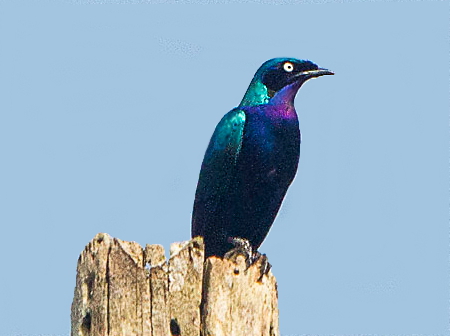
Wikimedia Commons
About the Splendid Starling
The Splendid Starling, scientifically known as Lamprotornis splendidus, graces the landscapes of sub-Saharan Africa with its vivid, iridescent plumage that catches the sunlight in a dazzling display. This medium-sized songbird plays a vital role in its ecosystem, primarily through its insectivorous diet. It helps control pest populations, benefiting agriculture and maintaining ecological balance. The Splendid Starling is a member of the Sturnidae family, known for their vocal complexity and social nature. Typically found in open woodlands, savannas, and sometimes urban areas, these birds are highly adaptable, often seen near human settlements where they forage for food. In countries like Nigeria, Cameroon, and Uganda, the Splendid Starling is a familiar sight, its presence marked by its distinctive calls and sociable behavior. During the breeding season, which varies depending on the region, these starlings engage in elaborate courtship displays. Their ability to thrive in diverse habitats, from the dense forests of the Congo Basin to the arid savannas of Kenya, demonstrates their remarkable adaptability. They are often seen in mixed-species flocks, enhancing interspecies interactions and biodiversity. The Splendid Starling's ecological role extends to seed dispersal, as they consume various fruits, aiding in plant propagation across their range. Despite their abundance in many areas, habitat destruction and climate change pose threats to their populations, necessitating conservation efforts to ensure their continued presence in the African avian tapestry. Seasonally, these birds exhibit nomadic tendencies, moving in response to food availability and environmental conditions, yet they do not partake in long-distance migrations like some of their avian relatives. This adaptability is a testament to their evolutionary success in the dynamic environments they inhabit.
The Splendid Starling belongs to the family Sturnidae, within the order Passeriformes. These birds typically live typically 6-8 years, with the potential to live up to 10 years in the wild..
How to Identify a Splendid Starling
The Splendid Starling is a visual marvel with its glossy, metallic plumage. Adult starlings showcase a rich combination of iridescent blues and greens on their upperparts, creating a shimmering effect in sunlight. Their underparts are typically darker, often appearing with a purplish hue. The contrast between their dark head and bright body can vary slightly, depending on the angle of light. Juveniles lack the vivid iridescence of adults and tend to have duller, more subdued plumage, often appearing browner. Both males and females are similar in appearance, making gender differentiation challenging without close observation. One distinguishing feature is their bright yellow eyes, which stand out against the darker head. In the field, the Splendid Starling can be confused with other species of glossy starlings. However, its size and the specific hue of its plumage help differentiate it from close relatives like the Lesser Blue-eared Starling. In flight, the Splendid Starling exhibits a robust silhouette with broad wings and a somewhat stocky body. Their flight is direct and purposeful, characterized by rapid wingbeats. When perched, they maintain an upright posture, often tilting their head as they survey their surroundings.
Having trouble telling birds apart? Upload a photo to our bird identification tool for an instant species match.
Splendid Starling Habitat and Range
Preferred Habitat
Splendid Starlings inhabit a wide range of environments across sub-Saharan Africa. They favor open woodlands and savannas, where scattered trees provide opportunities for nesting and foraging. These birds can be found at elevations ranging from sea level to about 2,000 meters, depending on the regional topography. In East Africa, they are commonly seen in acacia-dominated landscapes, while in Central Africa, they thrive in the forested regions. Seasonal habitat shifts occur as these starlings move to areas with abundant food resources. In urban settings, Splendid Starlings adapt well, frequenting parks and gardens where food scraps and insects are abundant. While they prefer rural and semi-wild areas, their presence in cities highlights their adaptability to human-altered environments.
Geographic Range
The Splendid Starling's range spans across much of sub-Saharan Africa, with strongholds in West and Central Africa. Breeding populations are notably dense in countries like Nigeria, Ghana, and Cameroon. They extend eastward into Uganda and western Kenya, where they find suitable habitats in the expansive savannas and open woodlands. Although primarily resident birds, some populations exhibit local movements influenced by seasonal food availability. These movements do not constitute true migrations but allow the starlings to exploit different ecological niches throughout the year. High-density populations occur in the equatorial regions, where consistent climate conditions support year-round breeding and feeding opportunities.
Want to know which birds visit your area? Browse our backyard birds by location guides for region-specific species lists.
What Does the Splendid Starling Eat?
Primarily insectivorous, the Splendid Starling's diet consists largely of beetles, grasshoppers, and caterpillars. These birds actively forage on the ground, using their sharp beaks to probe the soil and leaf litter for hidden prey. During the wet season, when insect populations peak, starlings take advantage of this abundance to meet their dietary needs and support their young. In addition to insects, they consume fruits and berries, which supplement their diet and provide essential nutrients. This opportunistic feeding strategy allows the Splendid Starling to thrive in various environments. They have been observed visiting fruiting trees, where they play a role in seed dispersal, contributing to plant regeneration. Their feeding schedule is largely diurnal, with heightened activity during the cooler morning and late afternoon hours.
Splendid Starling Behavior and Social Structure
Social creatures, Splendid Starlings often congregate in groups, displaying complex social structures within flocks. These groups provide safety in numbers, facilitating cooperative foraging and predator vigilance. Territoriality is limited, as these birds are more inclined to share resources with conspecifics and other species. During the breeding season, males perform courtship displays that include song and dance, showcasing their iridescent plumage to attract females. Flocking patterns vary seasonally, with larger aggregations forming when food resources are plentiful. In the face of predators, such as raptors, Splendid Starlings exhibit a united front, using alarm calls and evasive flight maneuvers to avoid capture. Their daily activity patterns are dictated by the availability of food and environmental conditions, with peak activities occurring during the cooler parts of the day.
Splendid Starling Nesting and Reproduction
Splendid Starlings typically nest in tree cavities, utilizing natural hollows or abandoned woodpecker nests. They also adapt to nesting in man-made structures when necessary. The nests consist of grass, leaves, and feathers, providing a well-insulated environment for their eggs. A typical clutch contains 3 to 5 eggs, which the female incubates for approximately 12 to 14 days. Both parents participate in feeding and caring for the fledglings, which leave the nest about 20 days after hatching. The collaborative effort of both parents ensures high survival rates for the young starlings. Splendid Starlings usually raise two broods per year, taking advantage of the abundant resources during the rainy seasons.
Splendid Starling Sounds and Vocalizations
The Splendid Starling's vocalizations are a mix of melodic whistles and harsh, chattering calls. Their primary song features a series of varied pitches and rhythms, creating a complex and vibrant soundscape. These songs play a crucial role in courtship and territorial displays. In addition to their musical repertoire, they emit distinct call notes to communicate within flocks. Alarm calls, characterized by sharp, repetitive tones, signal potential threats. During the dawn chorus, their voices blend with those of other birds, contributing to the rich avian symphony of the African landscape.
Interesting Facts About the Splendid Starling
- 1The Splendid Starling can live up to 15 years in the wild, a testament to its adaptability and resilience.
- 2This bird's iridescent plumage results from microscopic structures that reflect light, not pigments.
- 3In mixed-species flocks, Splendid Starlings often serve as sentinels, alerting others to potential dangers.
- 4They are known to mimic the calls of other bird species, showcasing their vocal versatility.
- 5Splendid Starlings have been observed using tools, such as sticks, to extract insects from crevices.
- 6These birds exhibit a unique behavior known as anting, where they use ants to cleanse their feathers.
- 7During courtship, male starlings may bring food gifts to females as part of their mating rituals.
Splendid Starling Conservation Status
Currently listed as Least Concern by the IUCN, the Splendid Starling maintains stable populations across its range. However, habitat loss due to deforestation and agricultural expansion poses ongoing threats. Conservation efforts focus on preserving natural habitats and promoting sustainable land use practices. While historical population changes have remained relatively stable, continued monitoring ensures that any negative trends are promptly addressed. Organizations work to raise awareness about the ecological importance of starlings, advocating for protective measures to safeguard their future.
Other Sturnidae Species


Birds Similar to the Splendid Starling
These species are often confused with the Splendid Starling due to similar appearance or overlapping range.

