Streak-throated Barwing
Actinodura waldeni
Order: Passeriformes / Family: Leiothrichidae

Wikimedia Commons
About the Streak-throated Barwing
The Streak-throated Barwing, scientifically known as Actinodura waldeni, is a fascinating member of the Leiothrichidae family. This bird is primarily found in the montane forests of Southeast Asia, particularly in regions like Myanmar, Thailand, and Laos. These birds inhabit elevations ranging from 1,200 to 2,800 meters, thriving in subtropical or tropical moist montane environments. The presence of dense undergrowth and access to a rich variety of insect prey makes these habitats ideal for the species.
The significance of the Streak-throated Barwing extends beyond its physical presence. It plays an integral role in the ecosystem by controlling insect populations, thus contributing to the health of the forest. This bird also serves as an indicator species, signaling the health of its habitat. Observing its population trends can provide valuable insights into environmental changes in the region.
In terms of behavior, the Streak-throated Barwing is known for its seasonal movements, often shifting altitudinally in response to food availability. During the breeding season, which typically occurs from March to June, these birds are more territorial and can be seen actively defending their nesting sites. Outside of the breeding season, the Streak-throated Barwing may form small flocks, often mixed with other species. These flocks move through the forest in search of food, showcasing a level of social cooperation that is fascinating to observe.
Ecologically, the Streak-throated Barwing plays a pivotal role in seed dispersal. By foraging on both insects and fruits, these birds aid in the propagation of various plant species. This interaction underscores the barwing's importance beyond its immediate ecological niche. However, habitat destruction poses a significant threat to their population. Conservation efforts are crucial to ensure that these forests remain intact, allowing the Streak-throated Barwing to continue its ecological contributions.
The Streak-throated Barwing belongs to the family Leiothrichidae, within the order Passeriformes. These birds typically live average 4-6 years with a max recorded of 8 years.
How to Identify a Streak-throated Barwing
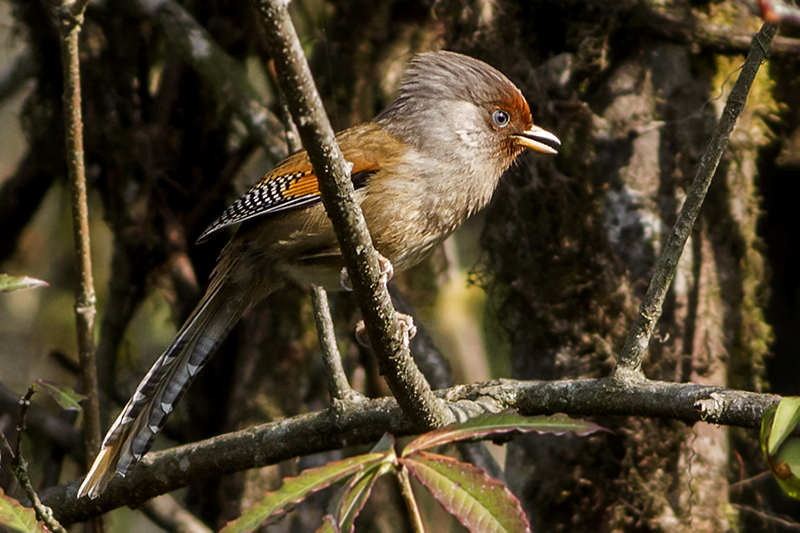
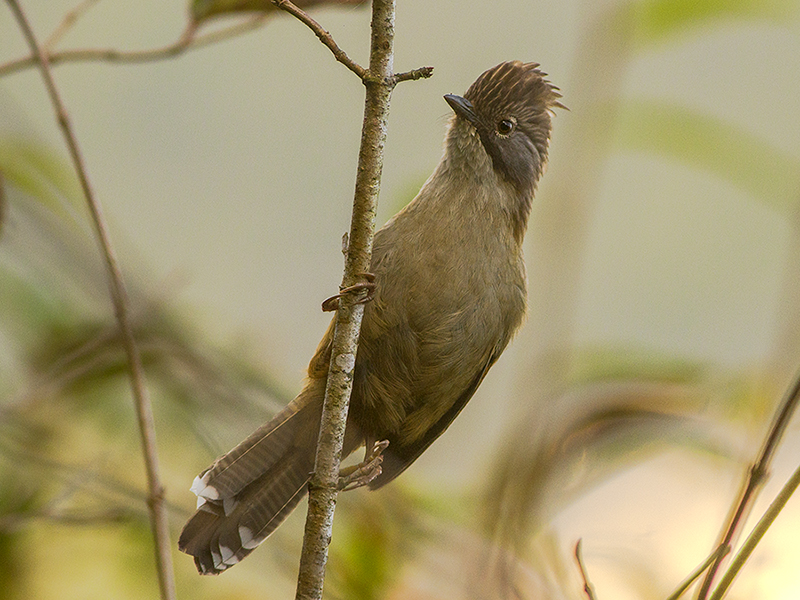
The Streak-throated Barwing is a medium-sized bird, measuring approximately 24 cm in length. Its most distinctive field mark is the streaked throat, which gives the bird its name. The plumage is predominantly brown with a rich, rufous wash on the wings and tail, providing effective camouflage among the forest foliage. The bird's underparts are paler, often displaying fine streaks that blend seamlessly into the background.
Males and females exhibit similar plumage, making gender differentiation in the field challenging. Juveniles, however, tend to have a duller appearance, with less defined streaking and a more subdued coloration overall. The bird's eyes are dark, accentuating its sharp gaze, while its bill is short and dark, suited for its insectivorous diet.
In flight, the Streak-throated Barwing exhibits a rapid, fluttering motion, typical of many forest-dwelling passerines. When perching, it often adopts a slightly hunched posture, with its tail slightly cocked. This posture, combined with its distinctive plumage, helps distinguish it from similar species such as the Rusty-fronted Barwing, which lacks the throat streaks and displays different wing coloration.
Having trouble telling birds apart? Upload a photo to our bird identification tool for an instant species match.
Streak-throated Barwing Habitat and Range
Preferred Habitat
The Streak-throated Barwing predominantly inhabits montane forests, showing a preference for areas with dense undergrowth. These habitats are typically found at elevations between 1,200 and 2,800 meters, where the climate is cooler and more humid. In countries like Myanmar and Thailand, the barwing can often be found in protected areas and national parks, which provide the necessary ecological conditions for its survival.
The bird's habitat preferences include subtropical or tropical moist montane forests, where it can find abundant food sources and suitable nesting sites. During the breeding season, these birds may move to slightly higher elevations where food availability is greater. While the Streak-throated Barwing is primarily associated with forested areas, it occasionally ventures into scrublands and secondary growth forests, particularly when searching for food.
Unlike some species that have adapted to urban environments, the Streak-throated Barwing remains predominantly rural, relying on undisturbed forest habitats to thrive. The loss of these habitats due to logging and agricultural expansion poses a significant threat to their populations, highlighting the importance of conservation efforts to protect these vital ecosystems.
Geographic Range
The Streak-throated Barwing's range is predominantly within Southeast Asia, covering parts of Myanmar, Thailand, Laos, and Vietnam. It thrives in the montane regions of these countries, where the specific climatic and ecological conditions support its lifestyle. The bird's breeding range is primarily concentrated in these areas, where it can find suitable nesting sites and abundant food resources.
During the non-breeding season, the Streak-throated Barwing may exhibit altitudinal migration, moving to lower elevations in search of food as the colder months set in. However, this movement is generally within the same geographic regions, rather than long-distance migration. The bird tends to remain within its established range throughout the year, exhibiting more localized movements compared to long-distance migratory species.
Population density hotspots for the Streak-throated Barwing are often found in protected areas and national parks, such as Doi Inthanon National Park in Thailand. These regions provide a sanctuary where the birds can continue their ecological roles without significant human interference. Conservation efforts in these areas are crucial to maintaining their populations, ensuring that the Streak-throated Barwing remains a vibrant part of the montane forest ecosystems.
Want to know which birds visit your area? Browse our backyard birds by location guides for region-specific species lists.
What Does the Streak-throated Barwing Eat?
The Streak-throated Barwing has an insectivorous diet, primarily feeding on a variety of insects and other small invertebrates found within its forest habitat. This bird forages actively among the branches and foliage, using its sharp bill to glean insects from leaves and bark. Its diet includes beetles, caterpillars, and small arachnids, which it captures with swift, precise movements.
Seasonal changes impact the bird's diet, with an increased consumption of fruits and seeds during the rainy season when these resources become more abundant. The Streak-throated Barwing is known to forage in mixed-species flocks, which can increase foraging efficiency and reduce competition for food. This social foraging strategy allows the bird to exploit a wider range of food sources and reduces the likelihood of predator attacks.
Prey size varies, but the barwing generally targets small to medium-sized insects, adapting its foraging techniques to the availability of prey. Feeding activity peaks during the cooler morning and late afternoon hours, when insect activity is also heightened. By maintaining a versatile diet and flexible foraging strategies, the Streak-throated Barwing ensures its survival in the diverse montane forest ecosystems.
Streak-throated Barwing Behavior and Social Structure
The Streak-throated Barwing exhibits a complex social structure, often forming small groups outside the breeding season. These groups, or flocks, can include other species, providing mutual benefits such as increased vigilance against predators and enhanced foraging success. Within these flocks, the barwing maintains a hierarchical social order, with dominant individuals leading the group.
Territorial behavior becomes more pronounced during the breeding season. Males engage in vocalizations and displays to establish and defend nesting territories. Courtship displays include a series of calls and physical posturing, often accompanied by wing-flicking and tail-spreading to attract mates. Once paired, these birds exhibit strong pair bonds, which are essential for successful breeding.
Daily activity patterns of the Streak-throated Barwing are influenced by environmental conditions, with increased activity during cooler periods of the day. The bird's response to predators involves a combination of vocal alarms and group mobbing behavior, where multiple individuals collaborate to drive predators away from the flock. This cooperation highlights the bird's adaptability and the benefits of its social structure in ensuring survival and reproductive success.
Streak-throated Barwing Nesting and Reproduction
The Streak-throated Barwing constructs its nest in dense foliage, often choosing a sheltered location within a shrub or small tree. The nest is a cup-shaped structure made from twigs, leaves, and moss, providing camouflage and protection from predators. This strategic nesting choice reduces the risk of predation and exposure to harsh weather conditions.
Clutch size typically ranges from three to five eggs, which are incubated by both parents over a period of approximately two weeks. The eggs are pale with speckled markings, blending well with the nest environment. Both male and female participate in feeding the chicks, showcasing strong parental cooperation. The fledging period lasts another two weeks, during which the parents continue to provide food and protection.
The Streak-throated Barwing may produce one to two broods per breeding season, depending on environmental conditions and food availability. This reproductive strategy allows the species to maximize its chances of raising viable offspring in the often-unpredictable montane forest climate. Parental roles are well-defined, with each bird contributing to nest maintenance, defense, and chick rearing.
Streak-throated Barwing Sounds and Vocalizations
The Streak-throated Barwing produces a series of melodious, flute-like notes that are both rhythmic and clear. Its primary song consists of three to four repeated notes, typically delivered from a perch high in the canopy. These calls serve both to establish territories and attract mates during the breeding season.
In addition to its primary song, the Streak-throated Barwing issues a variety of call notes, including soft chirps and whistles used for communication within flocks. Alarm calls are sharp and insistent, designed to alert other birds to the presence of potential threats. During the dawn chorus, the barwing's song can often be heard intermingling with those of other forest species, contributing to the vibrant acoustic environment of its habitat.
The quality of its vocalizations, with their flute-like clarity and rhythmic structure, makes the Streak-throated Barwing's song easily distinguishable from other bird species. This distinctiveness is a key tool for birders and ornithologists in identifying this species within its dense montane forest home.
Interesting Facts About the Streak-throated Barwing
- 1The Streak-throated Barwing's song can carry over a distance of 100 meters, making it a prominent sound in its habitat.
- 2During the non-breeding season, the barwing often joins mixed-species flocks, which can include up to 10 different bird species.
- 3The Streak-throated Barwing was first described scientifically in the 19th century, contributing to the understanding of montane forest avifauna.
- 4These birds can exploit up to three different feeding niches, adjusting their diet based on seasonal availability.
- 5The Streak-throated Barwing's breeding season aligns with the onset of the rainy season, ensuring abundant food for their chicks.
- 6Their nests are often located at heights of 2-4 meters, providing safety from ground predators.
- 7Despite its name, the Streak-throated Barwing is not always easy to spot, as its plumage provides excellent camouflage among the forest foliage.
Streak-throated Barwing Conservation Status
The IUCN currently lists the Streak-throated Barwing as a species of Least Concern, benefiting from its relatively stable population. However, localized declines have been noted due to habitat destruction, particularly from logging and agricultural expansion. These activities fragment the bird's montane forest habitat, threatening its long-term sustainability. Conservation efforts focus on habitat preservation, with several national parks and protected areas serving as key refuges for the species. These efforts aim to maintain the integrity of its montane forest environment, ensuring that the ecological conditions necessary for its survival remain intact. While the overall population trend is stable, continuous monitoring is essential to detect any changes that might indicate emerging threats. By supporting conservation initiatives and promoting sustainable land use practices, we can help secure the future of the Streak-throated Barwing and the delicate ecosystems it inhabits.