Streaked Barwing
Actinodura souliei
Order: Passeriformes / Family: Leiothrichidae

Wikimedia Commons
About the Streaked Barwing
The Streaked Barwing, scientifically known as Actinodura souliei, is a fascinating bird species belonging to the family Leiothrichidae. This medium-sized bird is renowned for its intricately patterned plumage and is typically found in the lush evergreen forests of Southeast Asia. The species inhabits regions that offer a rich understory and abundant insect life, which are crucial for its survival. It thrives in countries such as China, Laos, Vietnam, and Myanmar, often at elevations ranging from 800 to 2,500 meters. This altitudinal preference helps the Streaked Barwing exploit diverse ecological niches, from lower montane forests to densely vegetated valleys. The Streaked Barwing provides an essential ecological function as both a predator of insects and a potential prey item for larger avian species. This dual role contributes to a balanced ecosystem, helping control insect populations and providing nourishment for higher trophic levels. Its presence in these forests also indicates a healthy and biodiverse habitat, as the Streaked Barwing requires intact forest areas away from human disturbances. Seasonally, the Streaked Barwing may exhibit minor altitudinal movements, generally in response to climatic conditions and food availability. During the breeding season, typically from April to July, these birds are more vocal and conspicuous, engaging in elaborate territorial calls and displays. As the seasons transition, they might descend slightly, seeking warmer microclimates and continuous food supplies. The Streaked Barwing's adaptability to various forest types underscores its resilience, yet it remains sensitive to large-scale habitat destruction and fragmentation. Conservation of its natural habitats is crucial to ensuring the long-term survival of this remarkable bird.
The Streaked Barwing belongs to the family Leiothrichidae, within the order Passeriformes. These birds typically live average 5-7 years with a max recorded of 9 years.
How to Identify a Streaked Barwing
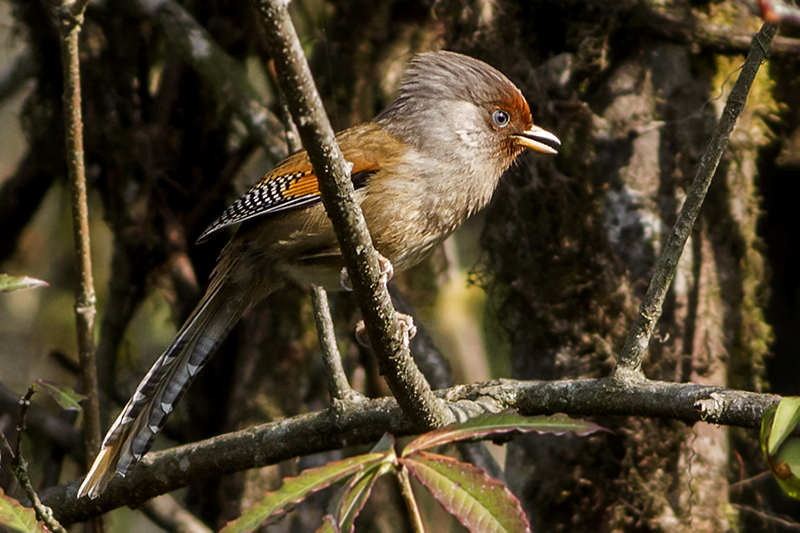
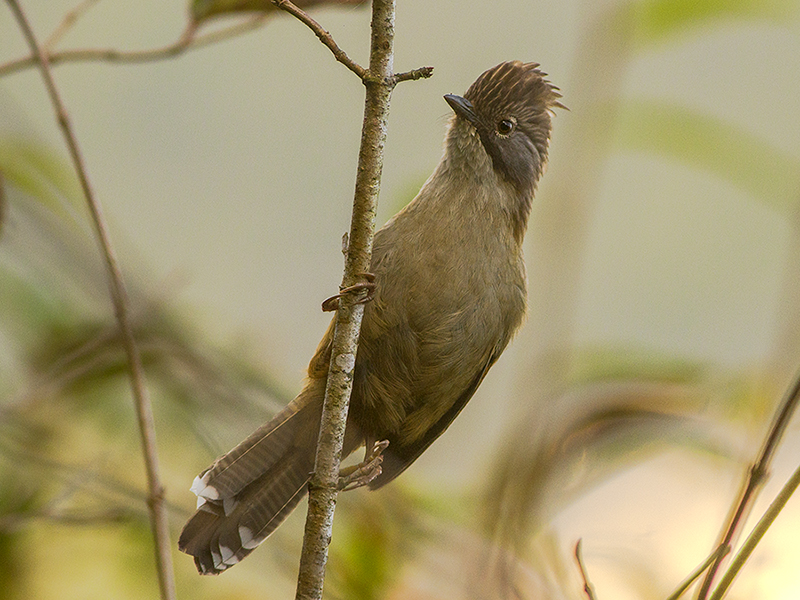
The Streaked Barwing displays a striking appearance, with a predominantly brown plumage accented by prominent streaks running across its body. These streaks are most noticeable on its head, chest, and back, lending the bird its common name. Adults typically measure around 22-25 cm in length, with a wingspan of approximately 30 cm, showcasing a medium size relative to other forest birds. The bird's wings and tail feature a subtle rufous tint, adding to its distinctive coloration. Juvenile Streaked Barwings resemble adults but may exhibit less pronounced streaking and slightly duller plumage, a common trait among many bird species. Male and female Streaked Barwings are similar in appearance, making field identification of gender challenging without closer examination during the breeding season. In flight, the Streaked Barwing presents a somewhat rounded silhouette, with its wings held slightly downward. Its flight pattern is generally direct and agile, facilitating nimble navigation through dense forest canopies. When perched, the bird maintains an upright posture, often flicking its tail in a characteristic manner. Confusion with similar species, such as the Rusty-fronted Barwing, can occur, but the Streaked Barwing's distinctive streaked pattern and habitat preferences help differentiate it. Observers should note the specific streaking on the head and chest to confirm identification.
Having trouble telling birds apart? Upload a photo to our bird identification tool for an instant species match.
Streaked Barwing Habitat and Range
Preferred Habitat
The Streaked Barwing primarily occupies evergreen and mixed deciduous forests, where dense thickets provide ample cover and foraging opportunities. These birds are often found at elevations between 800 and 2,500 meters, favoring areas with a rich understory. In China, they are prevalent in the southwestern provinces like Yunnan and Sichuan. In Vietnam, they inhabit the Annamite Range, a biodiversity hotspot. Seasonal habitat shifts are minor, typically involving slight altitudinal movements in response to environmental conditions. While the Streaked Barwing prefers untouched forest areas, it can occasionally be observed on the peripheries of rural landscapes. However, it is rarely found in urban environments, as it relies on the dense foliage and insect populations native to its forest habitats. Conservation of these habitats is vital, as deforestation poses a significant threat to its survival. The bird's presence often indicates a healthy forest ecosystem, making its protection a priority for biodiversity conservation efforts.
Geographic Range
The Streaked Barwing's range predominantly includes the montane forests of Southeast Asia. It breeds across a relatively narrow band, primarily confined to the southern and southwestern parts of China, including Yunnan and Sichuan provinces. The bird's range extends into northern Vietnam, Laos, and Myanmar, inhabiting the lush forests of the Annamite Range. While it does not undertake long migration journeys, the Streaked Barwing may perform minor altitudinal migrations within its range to adapt to seasonal changes. Population densities vary, with higher concentrations in regions with optimal habitat conditions, such as the dense evergreen forests of Yunnan. In these hotspots, the presence of the Streaked Barwing contributes to the region's rich avian diversity. While the bird is relatively stable within its known range, habitat destruction and fragmentation remain the primary challenges to its continued existence, making habitat conservation crucial to maintaining its populations.
Want to know which birds visit your area? Browse our backyard birds by location guides for region-specific species lists.
What Does the Streaked Barwing Eat?
The Streaked Barwing maintains a diet primarily composed of insects and other small invertebrates, which it expertly forages from the forest understory and leaf litter. Its feeding habits are characterized by active gleaning, where the bird meticulously searches foliage for prey items. During the breeding season, its dietary needs increase, and it may consume larger quantities of protein-rich insects to support chick rearing. In addition to insects, the Streaked Barwing may occasionally consume small fruits and berries, especially during periods when insect availability declines. This dietary flexibility aids its survival across various habitats and seasonal changes. Foraging occurs primarily during daylight hours, with peak activity in the early morning and late afternoon. The bird's keen eyesight and agile flight enable it to capture even the most elusive insects, contributing to its role as an effective pest controller within its ecosystem. By understanding the Streaked Barwing's dietary requirements, conservationists can better protect the diverse habitats that sustain its food sources.
Streaked Barwing Behavior and Social Structure
The Streaked Barwing exhibits a range of behaviors typical of social and territorial forest birds. It often forms small, loose flocks consisting of 5-10 individuals, particularly outside the breeding season. These flocks facilitate cooperative foraging and provide increased vigilance against potential predators. During the breeding season, pairs become more territorial, vocally defending their chosen nesting areas with loud, intricate calls. Courtship behavior in the Streaked Barwing includes vocalizations, synchronized flights, and mutual preening, strengthening pair bonds. The species displays a strong territorial instinct, with males often engaging in song duels to assert dominance over their territories. Flocking patterns vary seasonally, with larger groups forming in response to food availability and environmental conditions. The Streaked Barwing's response to predators includes alarm calls and evasive maneuvers, often diving into dense cover to avoid capture. Daily activity patterns are diurnal, with peak activities occurring during cooler parts of the day, aligning with periods of increased prey activity. Understanding these behaviors provides insight into the species' ecological needs and can inform conservation strategies.
Streaked Barwing Nesting and Reproduction
The Streaked Barwing constructs cup-shaped nests, expertly woven from twigs, grass, and leaves, often lined with softer materials for insulation. These nests are typically sited within dense foliage, providing concealment from predators. Preferred nesting locations include low shrubs or small trees, at heights ranging from 1-5 meters above ground. The breeding season spans April to July, during which time the female lays a clutch of 3-4 eggs. Both parents participate in incubation, which lasts approximately 14-16 days. After hatching, the chicks are altricial, requiring intensive parental care and feeding. Fledging occurs around 12-14 days post-hatching, with both parents continuing to feed the young until they become independent. The Streaked Barwing usually raises one brood per season, though in optimal conditions, a second brood may be attempted. This reproductive strategy balances the demands of nurturing young with the environmental constraints of its habitat.
Streaked Barwing Sounds and Vocalizations
The Streaked Barwing's vocalizations are a distinctive feature, characterized by a series of melodious and complex notes. Its primary song consists of a rapid sequence of high-pitched whistles interspersed with trills, often delivered from a concealed perch within dense foliage. Call notes vary from sharp 'chip' sounds used in communication to more elaborate calls during courtship or territorial disputes. Alarm calls are sharp and piercing, serving to alert conspecifics to potential threats. At dawn, the Streaked Barwing participates in a chorus, its song contributing to the vibrant soundscape of its forest habitat. The bird's vocal repertoire plays a crucial role in social interactions and territorial defense, making it a vital aspect of its behavioral ecology.
Interesting Facts About the Streaked Barwing
- 1The Streaked Barwing's name derives from the distinctive streaks that adorn its plumage, a trait that aids in camouflage within its forest environment.
- 2Despite its striking appearance, the Streaked Barwing often remains elusive, preferring to forage in dense understory and avoiding open areas.
- 3During the breeding season, Streaked Barwing pairs engage in elaborate vocal duets, strengthening their pair bonds and asserting territorial claims.
- 4The Streaked Barwing's diet flexibility, including occasional fruit consumption, helps it adapt to varying food availability in its habitat.
- 5Known for its social behavior, the Streaked Barwing often forms small flocks outside the breeding season, enhancing its foraging efficiency.
- 6In its native range, the Streaked Barwing serves as an indicator species, reflecting the health and biodiversity of its forest ecosystem.
- 7Researchers studying the Streaked Barwing have noted its role in controlling insect populations, highlighting its ecological importance as a natural pest controller.
Streaked Barwing Conservation Status
The Streaked Barwing is currently listed as Least Concern by the IUCN, with a stable population trend. However, ongoing habitat loss due to logging and agricultural expansion poses significant threats. Conservation efforts focus on protecting critical habitats, particularly in biodiversity-rich areas like the Annamite Range. Historical data suggest that while the species has maintained stability, localized declines can occur in heavily disturbed regions. Efforts to curb deforestation and promote sustainable land-use practices are essential to preserving the habitats that sustain the Streaked Barwing and its ecological roles. Continued monitoring and habitat protection will be key to ensuring the long-term survival of this species.