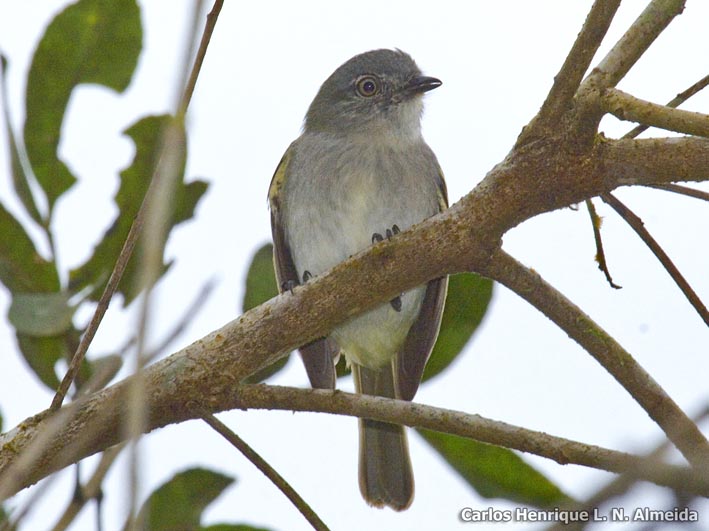
Streaked Flycatcher
Myiodynastes maculatus
Order: Passeriformes / Family: Tyrannidae

Wikimedia Commons
About the Streaked Flycatcher
The Streaked Flycatcher (Myiodynastes maculatus) is a striking member of the Tyrannidae family, known for its distinctive streaked plumage and robust presence in diverse habitats across the tropical Americas. This bird is a common sight in the lowland tropical forests, woodlands, and even suburban areas from southern Mexico to Argentina. Its adaptability to various environments, including secondary growth forests and plantations, underscores its ecological significance as both a predator of insects and a consumer of small fruits. The Streaked Flycatcher plays a crucial role in controlling insect populations, making it an integral part of the ecosystem. Seasonal behaviors include local movements in response to food availability, although it generally remains a resident species throughout its range. During the breeding season, typically coinciding with the rainy season, their activity heightens as they establish territories and engage in courtship displays. These birds are also known for their loud, distinctive calls that fill the forest canopy, challenging other species for auditory dominance. The Streaked Flycatcher contributes to seed dispersal through its fruit consumption, thus supporting plant diversity in its habitat. Its presence in both pristine and disturbed environments highlights its resilience and ecological versatility. This adaptability, however, does not entirely shield the Streaked Flycatcher from environmental threats like deforestation and habitat fragmentation, which can impact its population dynamics. Nevertheless, its current widespread distribution suggests a stable population, offering birdwatchers ample opportunities to observe this charismatic species in its natural setting. As a result, the Streaked Flycatcher serves as an important indicator for the health of tropical ecosystems, reflecting the intricate balance between avian biodiversity and habitat integrity.
The Streaked Flycatcher belongs to the family Tyrannidae, within the order Passeriformes. These birds typically live average 6 years with a maximum recorded of 9 years..
How to Identify a Streaked Flycatcher
The Streaked Flycatcher is a medium-sized bird measuring around 22 cm in length. Its plumage is predominantly brown with bold, dark streaks on the head, back, and underparts, providing excellent camouflage against the dappled forest light. The wings and tail are darker, with white edges that become visible when the bird is in flight. Adult males and females exhibit similar plumage, making gender differentiation in the field challenging. However, juveniles can be distinguished by their slightly duller coloration and less pronounced streaking. In comparison to similar species, such as the Piratic Flycatcher, the Streaked Flycatcher is larger and exhibits more extensive streaking on the underparts. Its flight silhouette is characterized by broad wings and a relatively long tail, which it uses to perform agile maneuvers while foraging. When perched, this flycatcher often adopts an upright posture, scanning its surroundings for prey. Its distinctive streaked appearance and vocalizations help differentiate it from other sympatric flycatchers, allowing for reliable identification in the field.
Having trouble telling birds apart? Upload a photo to our bird identification tool for an instant species match.
Streaked Flycatcher Habitat and Range
Preferred Habitat
The Streaked Flycatcher thrives in a variety of habitats, from lowland tropical forests to secondary growth woodlands and even human-altered landscapes such as gardens and plantations. It is most commonly found at elevations up to 1,800 meters. Its adaptability allows it to inhabit both humid and semi-arid regions, provided there is sufficient tree cover. During the breeding season, these birds show a preference for more densely vegetated areas, which offer ample nesting sites and feeding opportunities. In urban environments, the Streaked Flycatcher often frequents parks and suburban gardens, where it benefits from the increased availability of fruiting trees and insect prey. While generally resident, some populations may undertake short-distance movements in response to seasonal changes in food availability.
Geographic Range
The Streaked Flycatcher's range extends from the southern tip of Mexico through Central America, encompassing countries such as Belize, Guatemala, and Costa Rica, and down through South America to Brazil, Bolivia, and northern Argentina. This expansive range makes it one of the more widespread tyrant flycatchers in the Americas. The bird occupies both the eastern and western flanks of the Andes, showing adaptability to various climatic conditions. Although primarily a resident species, some individuals may migrate locally, particularly in response to food resources or climatic changes. Notably, the Amazon Basin provides a dense population hotspot, where the habitat's complexity supports a rich assemblage of avian life. In terms of density, it is more common in regions with ample forest cover and less frequent in heavily urbanized or intensively farmed lands.
Want to know which birds visit your area? Browse our backyard birds by location guides for region-specific species lists.
What Does the Streaked Flycatcher Eat?
The Streaked Flycatcher maintains a varied diet, primarily consuming insects and small arthropods, which it captures in swift aerial pursuits. This flycatcher often perches patiently, using a sit-and-wait strategy to spot prey before launching into flight. It catches a range of insects including beetles, grasshoppers, and moths, as well as spiders. During certain seasons, particularly when fruits are abundant, the Streaked Flycatcher supplements its diet with berries and small fruits, aiding in its energy intake. This dietary flexibility allows it to thrive in a wide array of habitats, even those where insect prey might become scarce. The bird's ability to switch between insectivory and frugivory highlights its adaptability and ecological role as both a predator and seed disperser. Its feeding activity typically peaks during the cooler morning and late afternoon hours, coinciding with increased insect activity.
Streaked Flycatcher Behavior and Social Structure
The Streaked Flycatcher exhibits intriguing social and territorial behaviors. Typically solitary or seen in pairs, these birds establish territories that they defend vigorously against intruders, especially during the breeding season. Territorial disputes often involve vocal displays and aerial chases. During courtship, males engage in elaborate displays that include vocalizations and acrobatic flights to attract mates. Once paired, the bond between mates is strong, with both partners participating in nest building and chick-rearing. Outside the breeding season, Streaked Flycatchers may join mixed-species foraging flocks, benefitting from the collective vigilance against predators. Their response to threats includes emitting sharp alarm calls and taking evasive flight into dense foliage, where they can deftly maneuver away from predators. Daily activity patterns are diurnal, with peak periods of activity occurring in the early morning and late afternoon, aligning with optimal foraging conditions.
Streaked Flycatcher Nesting and Reproduction
The nesting habits of the Streaked Flycatcher reveal its adaptability and resourcefulness. Nests are primarily built in tree cavities or artificial structures like fence posts and nest boxes, showcasing their ability to exploit available resources. The nest itself is constructed from twigs, leaves, and grasses, forming a cup-shaped structure that provides a safe environment for the eggs. Clutch size typically ranges from 2 to 3 eggs. Both parents share the responsibility of incubation, which lasts about 14 to 16 days. After hatching, the chicks remain in the nest for approximately 18 to 20 days, during which both parents diligently provide food and protection. The Streaked Flycatcher often raises two broods per year, taking advantage of the prolonged wet season in tropical regions that ensures abundant food supply for their growing young.
Streaked Flycatcher Sounds and Vocalizations
The Streaked Flycatcher is notable for its loud, piercing calls, which include a distinctive series of clear whistles and harsh notes. Its primary song consists of a repetitive, melodic phrase that carries well through the forest canopy. These vocalizations play a key role in territory establishment and mate attraction. Alarm calls are sharper and more abrupt, designed to alert mates and other birds to potential threats. At dawn, the Streaked Flycatcher participates in the morning chorus, adding its voice to the symphony of tropical birds. Its calls, somewhat reminiscent of a squeaky gate, are easily recognizable and help distinguish it from other flycatchers sharing its range.
Interesting Facts About the Streaked Flycatcher
- 1The Streaked Flycatcher can consume both insects and fruit, showcasing a dietary flexibility rare among tyrant flycatchers.
- 2With a range extending over 6,000 kilometers, from Mexico to Argentina, this bird is one of the most widespread flycatchers.
- 3Its distinctive calls resemble the sound of a squeaky gate, making it easily identifiable by sound in its dense forest habitat.
- 4Streaked Flycatchers often use empty woodpecker cavities for nesting, demonstrating resourcefulness in choosing nest sites.
- 5This species can adapt to urban environments, often seen in city parks and suburban gardens, where it benefits from diverse food sources.
- 6The Streaked Flycatcher participates in mixed-species foraging flocks, helping it reduce predation risk while increasing feeding efficiency.
- 7Their long wings and tails enable agile flight, allowing them to adeptly catch insects in mid-air, often among the forest canopy.
Streaked Flycatcher Conservation Status
Currently, the Streaked Flycatcher holds a stable status according to the IUCN Red List, largely due to its wide distribution and adaptability to various habitats. However, ongoing threats such as deforestation, habitat degradation, and urban expansion pose potential risks to its populations. Conservation efforts aimed at preserving tropical forests and promoting sustainable land use practices are crucial in ensuring the long-term survival of this species. Historical data suggests that the Streaked Flycatcher has maintained a relatively stable population over the past decades, despite localized declines in heavily impacted areas.
Other Tyrannidae Species


Birds Similar to the Streaked Flycatcher
These species are often confused with the Streaked Flycatcher due to similar appearance or overlapping range.