Striated Laughingthrush
Garrulax striatus
Order: Passeriformes / Family: Leiothrichidae

Wikimedia Commons
About the Striated Laughingthrush
The Striated Laughingthrush (Garrulax striatus) is a bird of remarkable adaptability and charm, inhabiting the lush montane forests of the Himalayas. It belongs to the family Leiothrichidae, a group known for their vibrant social behaviors and intricate vocalizations. Found in countries like India, Nepal, Bhutan, and Myanmar, the Striated Laughingthrush reveals a preference for the subtropical and temperate zones. This bird has become an integral part of the rich avian tapestry of the Himalayan biodiversity hotspots. The Striated Laughingthrush plays a critical role in these ecosystems, participating in seed dispersal and insect control. These birds often forage in the understory and midstory layers of the forest, contributing to the ecological equilibrium. Throughout the year, the Striated Laughingthrush exhibits notable behavioral changes. In the breeding season, which typically spans from April to August, they become more territorial and vocal, using calls to establish dominance and attract mates. Outside of breeding times, these birds are more gregarious. They often join mixed-species flocks, which enhances their foraging efficiency and provides protection from predators. The Striated Laughingthrush showcases a remarkable ability to adapt to seasonal shifts. During the monsoon season, their activity is more vigorous, aligning with the increased availability of food resources. In the colder months, they may descend to lower elevations where conditions remain milder. Their adaptability to various forest types, from oak and rhododendron to pine forests, underscores their resilience. This bird's presence in the Himalayan forests is not only a testament to its adaptability but also highlights the importance of these habitats for conserving avian diversity.
The Striated Laughingthrush belongs to the family Leiothrichidae, within the order Passeriformes. These birds typically live average 6-8 years, with a maximum recorded of 14 years..
How to Identify a Striated Laughingthrush
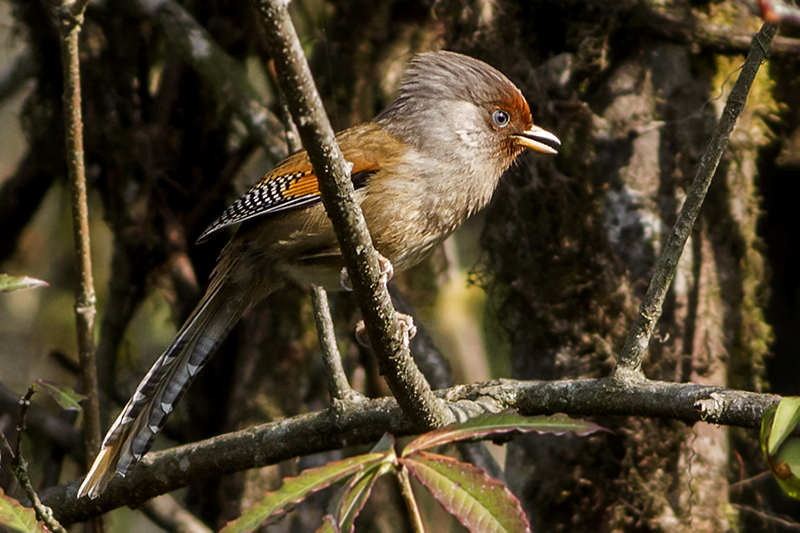
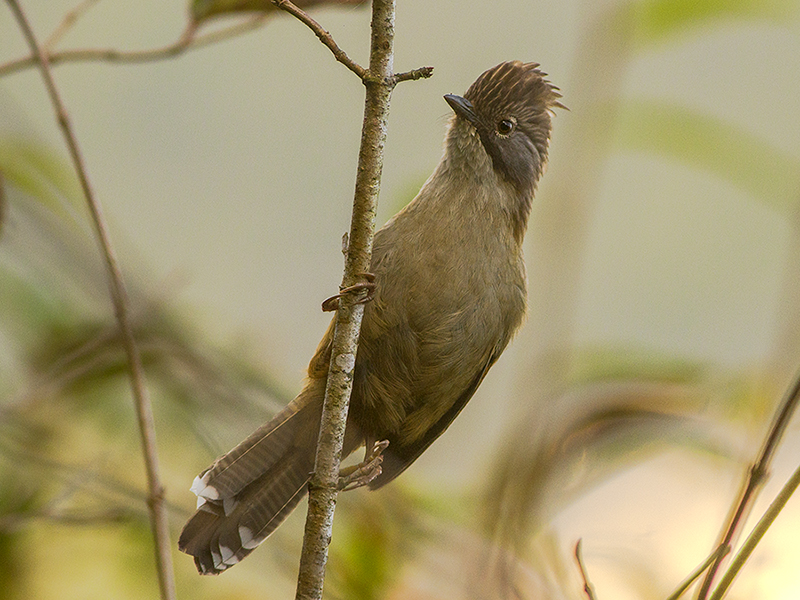
The Striated Laughingthrush is a medium-sized bird, measuring approximately 26-28 cm in length. Its plumage is a blend of earthy tones, with the most distinctive feature being the striated pattern on its face and chest. The crown and nape are a warm rufous, contrasting with the white streaks that run down the sides of its face. The wings and back display a mixture of brown and olive hues, providing excellent camouflage among the forest foliage. The tail is long and slightly graduated with subtle barring. Juveniles resemble adults but have less distinct streaking, appearing more uniformly brown. There is little sexual dimorphism, making males and females difficult to distinguish in the field. However, subtle differences, such as slightly brighter plumage in males during the breeding season, can be noted by experienced birders. In flight, the Striated Laughingthrush exhibits a fluttering pattern, with wings making quick, rapid beats. When perched, it often appears upright and alert, scanning its surroundings for potential threats or food. Confusion may arise with similar species like the Chestnut-crowned Laughingthrush, but the Striated Laughingthrush can be differentiated by its more pronounced striations and less intense chestnut coloration.
Having trouble telling birds apart? Upload a photo to our bird identification tool for an instant species match.
Striated Laughingthrush Habitat and Range
Preferred Habitat
The Striated Laughingthrush predominantly inhabits dense, humid forests across the Himalayan range. It thrives in montane broadleaf and mixed coniferous forests, often found at elevations between 1500 and 3000 meters. In regions such as Sikkim and Arunachal Pradesh, they favor forests rich in oak, rhododendron, and bamboo. Seasonal habitat shifts are observed, with birds descending to lower altitudes during harsh winters. Their habitat preference includes areas with thick undergrowth and plentiful shrubbery, which provide ample cover and foraging opportunities. While primarily forest dwellers, they occasionally venture into adjacent scrublands and forest edges, particularly when food becomes scarce. Unlike some of their urban-adapting relatives, Striated Laughingthrushes remain largely tied to forested areas and avoid heavily urbanized environments.
Geographic Range
The Striated Laughingthrush has a distribution range primarily across the Himalayas, extending from Pakistan's northern regions through to northeastern India, and into parts of Nepal, Bhutan, and northern Myanmar. Within India, their presence is particularly noted in states such as Himachal Pradesh, Uttarakhand, Sikkim, and Arunachal Pradesh. They are considered a resident species with some altitudinal migration, moving downwards during winter months. In areas like Darjeeling and Kalimpong, these birds are considered fairly common, contributing to the dense avian populations in these biodiversity-rich areas. The population density of the Striated Laughingthrush is typically highest in undisturbed forest regions, where they can form loose colonies. Their range does not extend significantly into lowland plains or arid regions, highlighting their specialization in montane forest ecosystems.
Want to know which birds visit your area? Browse our backyard birds by location guides for region-specific species lists.
What Does the Striated Laughingthrush Eat?
The diet of the Striated Laughingthrush is omnivorous, with a preference for insects and fruits. Insects such as beetles, caterpillars, and ants form a crucial part of their diet, particularly during the breeding season when protein demands are high. They employ a foraging technique that involves hopping through dense undergrowth and leaf litter, overturning debris to uncover hidden prey. During the fruiting season, they consume berries and small fruits, aiding in seed dispersal. Notable fruit sources include species of wild figs and berries from shrubs like Viburnum. The Striated Laughingthrush also consumes seeds, particularly those of grasses and small plants, adding to their dietary diversity. Feeding occurs primarily in the early morning and late afternoon when they are most active. Their adaptable diet allows them to exploit various food resources throughout the year, contributing to their resilience in fluctuating environmental conditions.
Striated Laughingthrush Behavior and Social Structure
The Striated Laughingthrush exhibits complex social behaviors, often forming small groups outside the breeding season. These groups, typically consisting of 6-12 individuals, engage in cooperative foraging and mutual preening, strengthening social bonds. During the breeding season, pairs become more territorial, with males displaying courtship behaviors such as feeding potential mates and vocal duets. These birds are active throughout the day, with peak activity during the cooler hours of morning and late afternoon. Their response to predators includes a mix of vocal alarms and evasive flight into dense cover. The Striated Laughingthrush is known for its vocal mimicry, occasionally imitating calls of other forest birds. They are not particularly migratory but do exhibit local movements in response to food availability and weather conditions. Their flocking behavior provides safety in numbers, reducing predation risk from raptors and other predators.
Striated Laughingthrush Nesting and Reproduction
Nesting for the Striated Laughingthrush occurs predominantly from April to August. They construct cup-shaped nests in dense shrubbery or low trees, often between 1 and 3 meters above ground, providing protection from predators. The nests are crafted from twigs, leaves, and moss, lined with softer materials like feathers and plant down. Clutch size typically ranges from 2 to 4 eggs, with both parents sharing incubation duties over a period of about 14 days. After hatching, the chicks are altricial, requiring extensive parental care. Fledging occurs approximately 14-16 days post-hatching, with parents continuing to feed and protect the young for several weeks thereafter. The Striated Laughingthrush usually raises one brood per year, although in favorable conditions, a second brood may be attempted.
Striated Laughingthrush Sounds and Vocalizations
The Striated Laughingthrush is renowned for its rich vocal repertoire, characterized by melodious whistles and harsh chattering notes. The primary song is a series of clear, flute-like whistles, often delivered in a descending pattern and repeated in quick succession. Their calls include a variety of harsh 'chack' and 'chirr' sounds, used for maintaining contact within flocks and alerting to potential threats. During dawn, a chorus of their melodic calls echoes through the forest, contributing to the vibrant soundscape of the Himalayan woodlands. Alarm calls are sharp and rapid, serving as a warning to nearby conspecifics. The vocalizations of the Striated Laughingthrush are not only crucial for communication but also play a role in establishing territory and social hierarchy.
Interesting Facts About the Striated Laughingthrush
- 1The Striated Laughingthrush's scientific name, Garrulax striatus, reflects its garrulous nature and distinctive striped plumage.
- 2This bird is part of the Leiothrichidae family, which includes species known for their complex social structures and vocalizations.
- 3Striated Laughingthrushes can mimic the calls of other birds, showcasing their adaptability and intelligence.
- 4The species plays a significant ecological role in seed dispersal, influencing forest dynamics in their habitats.
- 5During courtship, males may present food to females as part of their pair-bonding rituals, demonstrating their commitment.
- 6Their vocalizations are often used in local folklore and traditional music, reflecting their cultural significance.
- 7Striated Laughingthrushes are more often heard than seen, as their striped plumage provides excellent camouflage in forest undergrowth.
Striated Laughingthrush Conservation Status
The Striated Laughingthrush is currently listed as Least Concern by the IUCN, reflecting its relatively stable population. However, habitat degradation and deforestation pose significant threats. In regions like the Eastern Himalayas, rapid expansion of agriculture and urbanization continue to encroach upon their natural habitats. Conservation efforts focus on habitat preservation and forest management, vital for maintaining population stability. Historically, the Striated Laughingthrush has managed to adapt to some human-induced changes, yet ongoing habitat loss necessitates continued monitoring. Conservationists emphasize the importance of protecting key forest areas to ensure the survival of this species and other forest-dependent wildlife.