Striped Laughingthrush
Trochalopteron virgatum
Order: Passeriformes / Family: Leiothrichidae

Wikimedia Commons
About the Striped Laughingthrush
The Striped Laughingthrush, or Trochalopteron virgatum, is a captivating bird species belonging to the family Leiothrichidae. This bird thrives in the subtropical and temperate forests of the Himalayan region, stretching across countries such as India, Nepal, Bhutan, and parts of China. Its ecological role is significant as it contributes to seed dispersal and insect population control. The Striped Laughingthrush is a year-round resident in its habitat, exhibiting strong territorial behaviors. During the breeding season, it becomes particularly vocal, using its song to establish territory and attract mates. Unlike migratory birds, it does not exhibit large-scale seasonal movements but may show some altitudinal shifts depending on the weather and food availability. These birds are often found in mixed-species foraging flocks, which enhances their ability to locate food while providing protection from predators. Their presence in the ecosystem indicates a healthy forest environment, as they are sensitive to habitat degradation. Their role as seed dispersers supports forest regeneration, while their insect diet helps control pest populations. The Striped Laughingthrush's vibrant, streaked plumage makes it a favorite among birdwatchers visiting the Himalayan regions. Observing these birds in their natural habitat offers insight into the complex interrelationships within forest ecosystems and highlights the importance of conserving these environments for the continued survival of species like the Striped Laughingthrush.
The Striped Laughingthrush belongs to the family Leiothrichidae, within the order Passeriformes. These birds typically live average 6-9 years with a maximum recorded of 13 years..
How to Identify a Striped Laughingthrush
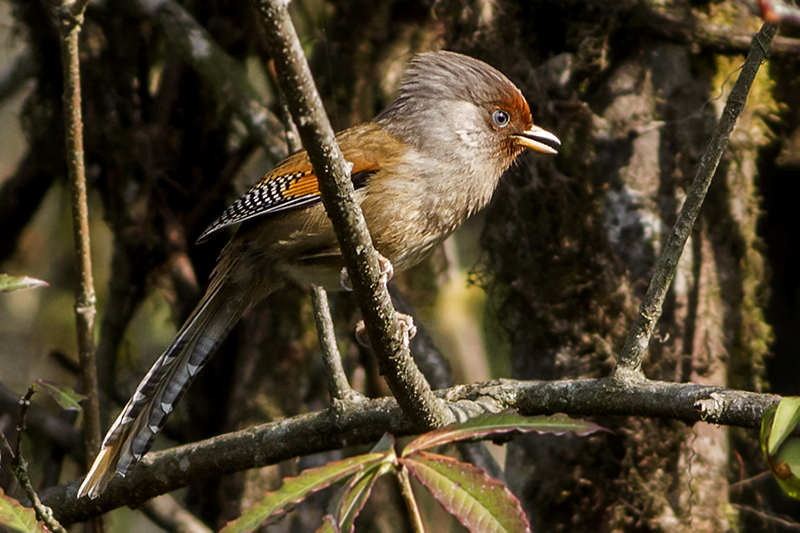
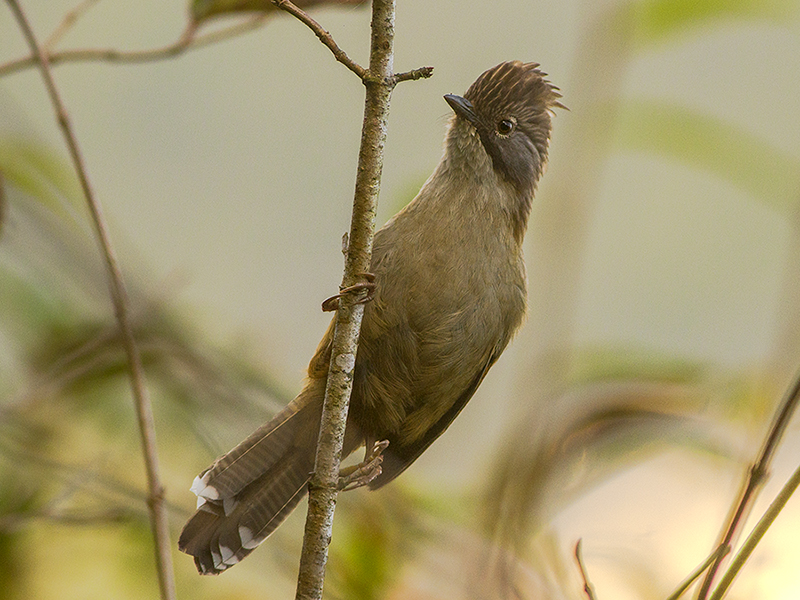
The Striped Laughingthrush is easily recognized by its rich brown plumage adorned with prominent black and white streaks across its face and neck. Adults exhibit a distinct white throat patch, which contrasts with the darker streaks on their upper parts. The bird's underparts are generally paler brown, providing a subtle transition from its striking head pattern. Juveniles, in contrast, have less defined streaks and a more uniformly brown appearance, lacking the sharp contrast seen in adults. Both males and females share similar plumage, making sexual differentiation challenging in the field. One of the primary identification challenges is distinguishing the Striped Laughingthrush from similar species within the same region, such as the Streaked Laughingthrush. However, the latter typically exhibits more extensive streaking and a distinct rufous tone on the wings. The Striped Laughingthrush has a relatively short tail, which it often fans when perched. In flight, the bird's silhouette is characterized by rapid wingbeats and a slightly undulating pattern, common among many forest-dwelling songbirds.
Having trouble telling birds apart? Upload a photo to our bird identification tool for an instant species match.
Striped Laughingthrush Habitat and Range
Preferred Habitat
The Striped Laughingthrush primarily inhabits dense, humid montane forests of the Himalayas, favoring areas with thick undergrowth and abundant leaf litter. It can be found at elevations ranging from 1,500 to 3,200 meters, often residing in rhododendron and oak forests. Seasonal habitat shifts are minimal, though some individuals may move to lower elevations during harsh winter months. While predominantly a forest species, the Striped Laughingthrush occasionally ventures into adjacent scrublands or overgrown tea plantations, especially when searching for food. Unlike some adaptable bird species, it is rarely seen in urban environments, preferring the secluded, unspoiled nature of its natural habitat. Its preference for dense forest underbrush makes it less visible than other species, yet its vocalizations often reveal its presence.
Geographic Range
The Striped Laughingthrush's range extends across the Himalayan region, covering parts of northern India, Nepal, Bhutan, and southern Tibet in China. In India, it is primarily found in the states of Himachal Pradesh, Uttarakhand, and Sikkim. Being a non-migratory species, the Striped Laughingthrush does not undertake long-distance seasonal migrations, although some altitudinal movements occur during extreme weather conditions. Population density is notably higher in regions with well-preserved forests, such as the protected areas within Bhutan and Nepal. These regions serve as crucial strongholds for the species, providing them with the necessary habitat and food resources. The Striped Laughingthrush is not typically found in open landscapes, preferring the shelter and resources offered by dense forest environments.
Want to know which birds visit your area? Browse our backyard birds by location guides for region-specific species lists.
What Does the Striped Laughingthrush Eat?
The Striped Laughingthrush's diet primarily consists of insects, such as beetles and caterpillars, which it avidly seeks out in the leaf litter and on tree branches. This insectivorous diet is complemented by a variety of fruits and berries, especially in the non-breeding season when insects are less abundant. The bird's feeding technique involves brisk foraging, often in small groups, where individuals hop and scratch through the underbrush to uncover hidden prey. They have also been observed hanging upside down from branches to reach fruits or insects. The Striped Laughingthrush feeds throughout the day, showing peaks of activity during the early morning and late afternoon when temperatures are cooler and insect activity is heightened.
Striped Laughingthrush Behavior and Social Structure
The Striped Laughingthrush is a social bird, often seen in small family groups or mixed-species flocks. Its social structure is relatively fluid outside the breeding season, allowing individuals to join transient foraging groups. Territorial behavior intensifies during breeding, with pairs establishing and vigorously defending their chosen territory. Courtship involves a combination of vocal displays and physical posturing, with males often seen bowing and fanning their tails to attract females. Their response to predators includes alarm calls and, when necessary, mobbing behavior where multiple birds collaborate to drive away threats. Daily activity patterns reveal a preference for the cooler hours of the day, with rest periods during the hottest times.
Striped Laughingthrush Nesting and Reproduction
The nesting habits of the Striped Laughingthrush involve constructing a cup-shaped nest using twigs, leaves, and moss, often situated in low bushes or on the ground in dense vegetation. Both male and female contribute to nest building, although the female primarily incubates the eggs. A typical clutch consists of 2-4 eggs, with an incubation period of about 14-16 days. Once hatched, the chicks fledge in approximately 12-14 days, during which time both parents are actively involved in feeding and protecting the young. The species typically raises one brood per year, although in favorable conditions, a second brood may be attempted.
Striped Laughingthrush Sounds and Vocalizations
The Striped Laughingthrush is renowned for its melodious and varied song, consisting of a series of rich, fluting notes delivered with a rhythmic cadence. Its song is both complex and continuous, often resembling the sound of a distant flute. In addition to its primary song, the bird produces a range of call notes, including sharp 'chack' sounds used for communication within flocks. Alarm calls are distinctly harsher and quicker, serving as a warning to other birds of potential threats. During the dawn chorus, the Striped Laughingthrush is one of the most vocal participants, its song echoing through the forest as it marks its territory.
Interesting Facts About the Striped Laughingthrush
- 1The Striped Laughingthrush's song can be heard from over 100 meters away, even in dense forest.
- 2Despite its name, the Striped Laughingthrush is more likely to be heard than seen due to its secretive nature.
- 3These birds can live up to 10 years in the wild, a testament to their adaptability and resilience.
- 4The Striped Laughingthrush often forages in mixed-species flocks, enhancing its foraging efficiency.
- 5With nearly 30% of its diet consisting of fruit, the Striped Laughingthrush plays a key role in seed dispersal.
- 6Their nests are often artfully camouflaged, built in dense thickets to avoid detection by predators.
- 7Unlike many birds, the Striped Laughingthrush does not migrate, remaining in its home range year-round.
Striped Laughingthrush Conservation Status
According to the IUCN Red List, the Striped Laughingthrush is currently listed as Least Concern, with population trends considered stable. However, habitat destruction due to logging, agriculture, and urban expansion poses a potential threat. Conservation efforts focus on habitat preservation and mitigating deforestation, particularly in regions where the bird's habitat overlaps with human development. Historically, the population has remained relatively stable, benefiting from large areas of uninterrupted forest in its range. Continued conservation measures are essential to ensure that this stability is maintained.