Sumatran Laughingthrush
Garrulax bicolor
Order: Passeriformes / Family: Leiothrichidae

Wikimedia Commons
About the Sumatran Laughingthrush
The Sumatran Laughingthrush (Garrulax bicolor) is an enchanting species found exclusively on the island of Sumatra in Indonesia. This bird belongs to the Leiothrichidae family and is renowned for its distinctive vocalizations and striking appearance. The lush montane forests of Sumatra provide an ideal habitat for the Sumatran Laughingthrush, which thrives in elevations ranging from 1000 to 2800 meters. These forests, rich in biodiversity, offer a haven for this species, contributing to its ecological role as both seed disperser and insect predator.
The significance of the Sumatran Laughingthrush extends beyond its ecological contributions. It serves as an indicator species, reflecting the health of its montane forest habitat. Its presence signifies a relatively intact ecosystem, while declines might indicate environmental degradation. The bird plays a crucial role in seed dispersal, thus aiding forest regeneration, and its predation on insects helps maintain ecological balance.
Seasonal behaviors of the Sumatran Laughingthrush are subtle yet crucial. While not migratory, it exhibits some movement in response to food availability and climatic conditions. During the dry season, it may descend to lower elevations in search of sustenance. Breeding typically aligns with the rainy season, when food is abundant, ensuring ample resources for offspring. This species' vivid vocalizations are most prominent during the breeding season, serving as both mate attraction and territorial defense mechanism.
In recent years, the Sumatran Laughingthrush has faced increasing pressures from habitat loss and illegal capture for the pet trade, leading to its current classification as 'Critically Endangered' by the IUCN. Conservation efforts are underway to protect its habitat and curb illegal trade, emphasizing the need for sustainable practices and community engagement. The bird's fate is intertwined with the preservation of Sumatra's unique forest ecosystems, highlighting the importance of comprehensive conservation strategies.
The Sumatran Laughingthrush belongs to the family Leiothrichidae, within the order Passeriformes. These birds typically live typically 5-10 years, with a maximum recorded of 12 years..
How to Identify a Sumatran Laughingthrush
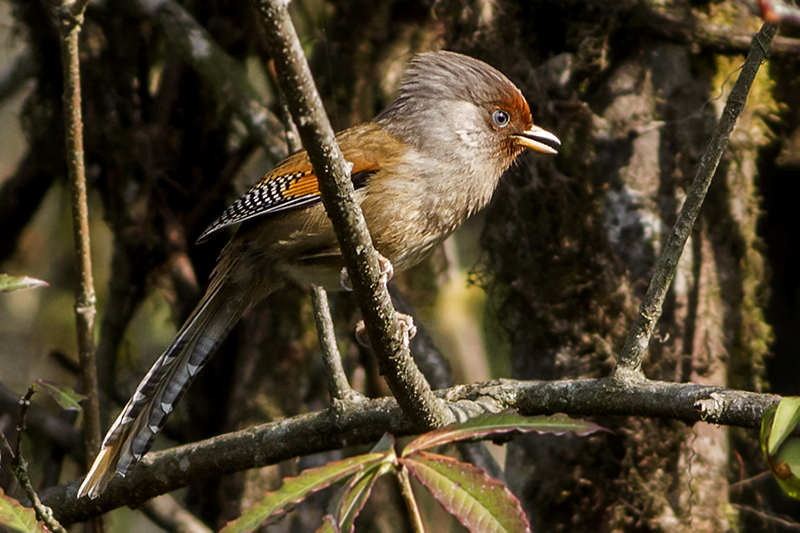
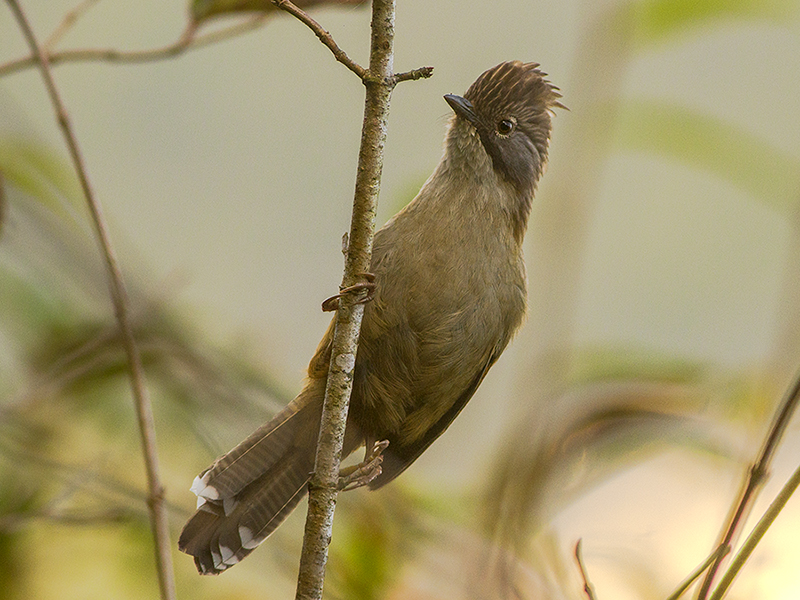
The Sumatran Laughingthrush boasts a striking black-and-white plumage that makes it relatively easy to identify. Adults exhibit a predominantly white face, throat, and underparts, contrasted by black back, wings, and tail. The stark dichotomy in coloration gives the bird its 'bicolor' species name.
Juveniles resemble adults but have a duller plumage, with the white areas slightly tinged with gray. Males and females are similar in appearance, making sex differentiation in the field challenging without behavioral cues such as courtship displays. The Laughingthrush's distinguishing feature is its bold and crisp black-and-white contrast, unlike any other species within its range.
In flight, the Sumatran Laughingthrush displays a strong, steady wingbeat. Its perching posture is upright, often observed on branches in dense foliage. This species is occasionally confused with the similar-looking Black Laughingthrush (Garrulax lugubris), but the latter lacks the striking white facial markings, providing a clear field distinction.
Having trouble telling birds apart? Upload a photo to our bird identification tool for an instant species match.
Sumatran Laughingthrush Habitat and Range
Preferred Habitat
The Sumatran Laughingthrush inhabits the montane forests of Sumatra, thriving in elevations between 1000 and 2800 meters. These forests, characterized by dense canopy and rich understory, provide essential cover and feeding opportunities. The bird favors areas with abundant foliage, where it can forage and nest with relative safety from predators.
Seasonal habitat shifts occur as the bird may descend to lower elevations during the dry season, seeking food and water. While primarily a forest dweller, it occasionally ventures into degraded habitats and edge environments, though it avoids urban settings. The bird's reliance on intact forest ecosystems emphasizes the importance of conserving these habitats amid increasing deforestation pressures.
Geographic Range
The Sumatran Laughingthrush is endemic to Sumatra, Indonesia, with no known populations outside this island. Its range is confined to the central and southern highlands, where suitable montane forest habitats exist. Breeding occurs within this range, with no significant migratory movements outside the island.
Population density hotspots include the montane forests of the Barisan Mountains, where conservation efforts focus on habitat protection. The bird's limited range and habitat specificity make it particularly vulnerable to environmental changes and habitat destruction. Despite being non-migratory, any shifts in forest composition or quality can impact its distribution within its already restricted range.
Want to know which birds visit your area? Browse our backyard birds by location guides for region-specific species lists.
What Does the Sumatran Laughingthrush Eat?
The Sumatran Laughingthrush primarily feeds on a diet of insects and small invertebrates, supplemented by fruit and seeds. This varied diet allows it to adapt to seasonal changes in food availability. During the rainy season, insects form the bulk of its diet, providing protein essential for breeding and rearing chicks.
The Laughingthrush employs a foraging technique that involves gleaning insects from foliage and occasionally catching prey mid-air. It is also known to forage on the forest floor, turning over leaves in search of hidden insects. Prey size ranges from small ants and beetles to larger caterpillars and spiders. Feeding typically occurs during daylight hours, with peaks in activity during early morning and late afternoon.
Sumatran Laughingthrush Behavior and Social Structure
The Sumatran Laughingthrush exhibits complex social behaviors, often found in small flocks outside the breeding season. These flocks engage in cooperative feeding and exhibit a structured social hierarchy. Territorial behavior is prominent during the breeding season when pairs become highly vocal, defending their nesting area against intruders.
Courtship displays involve mutual preening and vocal duets, strengthening pair bonds. The bird's response to predators includes alarm calls that alert conspecifics, often resulting in mobbing behavior to deter threats. Daily activity patterns involve active foraging in the morning and late afternoon, with periods of rest during the heat of the day. This species demonstrates remarkable adaptability in its social interactions, crucial for survival in its dynamic forest environment.
Sumatran Laughingthrush Nesting and Reproduction
The Sumatran Laughingthrush constructs cup-shaped nests, using materials such as twigs, leaves, and moss. These nests are typically situated in dense foliage, often in shrubs or small trees, providing concealment from predators. The nesting location is crucial for protection, typically chosen within a territory defended vigorously by the breeding pair.
Clutch size generally ranges from 2 to 3 eggs, with both parents sharing incubation duties that last approximately 14 to 16 days. After hatching, both parents feed the chicks, which fledge around 14 days post-hatching. The species typically raises one brood per year, though breeding success is highly dependent on food availability and environmental conditions. Parental roles are well-defined, with cooperative care ensuring higher survival rates for offspring.
Sumatran Laughingthrush Sounds and Vocalizations
The Sumatran Laughingthrush is named for its characteristic 'laughing' call, a series of repeated phrases that can be described as rich and melodious. Its primary song consists of a rolling series of clear, flute-like notes, often punctuated by harsher, chattering calls.
Alarm calls are sharp and staccato, serving to alert nearby birds of potential threats. During the dawn chorus, its song stands out, often forming a prominent part of the forest soundscape. Comparatively, its vocalizations are more resonant than those of other Laughingthrush species, providing a distinctive auditory cue for identification.
Interesting Facts About the Sumatran Laughingthrush
- 1The Sumatran Laughingthrush's 'laughing' call is not only a territorial signal but also plays a role in social cohesion within flocks.
- 2Despite their striking appearance, Sumatran Laughingthrushes often go unseen due to their preference for dense forest foliage.
- 3These birds have a mutualistic relationship with certain fruiting trees, aiding in seed dispersal through their frugivorous diet.
- 4Local folklore in Sumatra often features the Laughingthrush, highlighting its cultural significance and iconic vocalizations.
- 5Sumatran Laughingthrushes exhibit a unique hopping gait when foraging on the forest floor, contrasting with their strong flight.
Sumatran Laughingthrush Conservation Status
The Sumatran Laughingthrush is currently classified as 'Critically Endangered' on the IUCN Red List, largely due to habitat loss and illegal trapping for the pet trade. Population trends show a steep decline over recent decades, exacerbated by deforestation and habitat fragmentation. Conservation efforts include habitat protection, anti-poaching initiatives, and education programs aimed at reducing demand for wild-caught birds. Historical population changes reflect a once-abundant species now struggling due to anthropogenic pressures. Collaborative international efforts are vital to reverse current trends and ensure the species' survival.