
Sungrebe
Heliornis fulica
Order: Gruiformes / Family: Heliornithidae
Wikimedia Commons
About the Sungrebe
The Sungrebe, known scientifically as Heliornis fulica, is a unique and intriguing bird belonging to the family Heliornithidae. This bird inhabits tropical and subtropical regions, primarily in Central and South America, and exhibits remarkable adaptations for an aquatic lifestyle. Its lobed feet serve as a critical adaptation, enabling it to maneuver adeptly through water, akin to other members of the Gruiformes order. The Sungrebe is a relatively solitary bird, often seen gliding smoothly across the surfaces of rivers and ponds in areas like the Amazon Basin, which stretches across multiple countries including Brazil, Peru, and Colombia.
The ecological significance of the Sungrebe is multifaceted. As a part of the Heliornithidae family, it shares its lineage with the finfoots, a group known for their semi-aquatic habits and elaborate courtship displays. The Sungrebe plays a role in the ecosystems it inhabits by controlling aquatic insect populations, which form a substantial part of its diet. Its presence in these ecosystems can indicate healthy water bodies, as it requires undisturbed habitats with abundant food sources.
Seasonally, the Sungrebe's behavior changes, although it does not undertake long migrations like some other aquatic birds. Instead, it may shift locations within its range based on water levels and food availability. During the breeding season, it becomes more territorial, and its vocalizations become more pronounced. In terms of ecological role, the Sungrebe contributes to nutrient cycling in aquatic environments by preying on insects and dispersing seeds from the fruits it consumes. Its continued presence and health in these regions serve as an indicator of ecological balance, and its behaviors offer insights into the dynamics of tropical and subtropical aquatic ecosystems.
The Sungrebe belongs to the family Heliornithidae, within the order Gruiformes. These birds typically live average lifespan is around 10 years in the wild..
How to Identify a Sungrebe
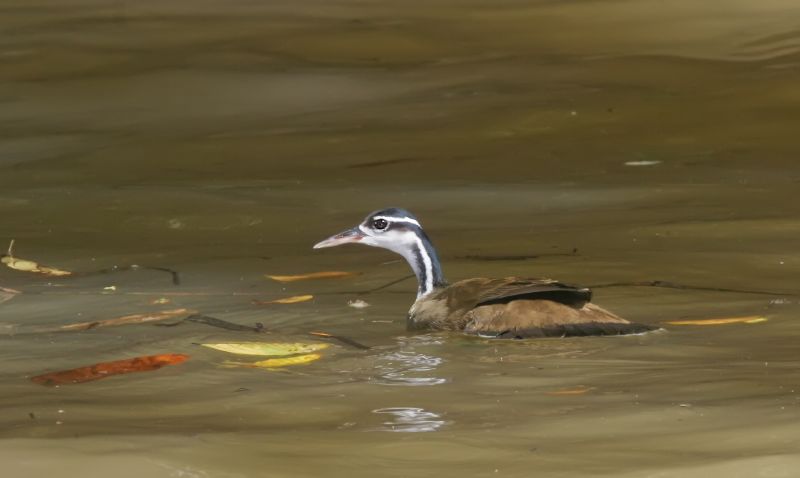
The Sungrebe, Heliornis fulica, presents a distinct set of field marks that aid in its identification. Adult Sungrebes display a striking combination of gray, brown, and white plumage. The upperparts are mottled brown, providing camouflage amidst the dappled light of forested waterways. Its face features a distinctive black stripe running from the base of the beak through the eye, contrasting sharply with the white throat and cheeks. The underparts are primarily white, offering a clear distinction from other aquatic species.
In terms of sexual dimorphism, male and female Sungrebes appear similar, though females are marginally smaller. Juveniles resemble adults but lack the full intensity of the stripe pattern and may appear duller overall. The lobed feet of the Sungrebe are a key identifying feature, shared with only a few other bird species. These lobes aid in swimming but are not as pronounced as the fully webbed feet seen in some waterbirds.
In flight, the Sungrebe displays a silhouette typical of ground-dwelling birds, with short, rounded wings and a relatively elongated neck. Its flight is swift and direct, often low over the water, making it more visible against the backdrop of riparian vegetation. When perched, the Sungrebe remains close to water, often on low branches or submerged logs, where it can quickly return to the safety of the water if threatened.
Having trouble telling birds apart? Upload a photo to our bird identification tool for an instant species match.
Sungrebe Habitat and Range
Preferred Habitat
The Sungrebe inhabits a range of aquatic environments, favoring slow-moving freshwater systems. It thrives in tropical and subtropical regions, with a particular affinity for lowland rivers, oxbow lakes, and swampy areas. These habitats provide the dense vegetation necessary for foraging and nesting, and they offer protection from predators. The Sungrebe's preferred elevation range stretches from sea level to approximately 1,000 meters, although it is predominantly found in low-lying areas.
Seasonal shifts in habitat may occur due to fluctuating water levels. During periods of high water, the Sungrebe may venture into flooded forests or temporarily inundated areas, exploiting new foraging opportunities. Its presence in urban environments is rare, as the bird requires undisturbed ecosystems with minimal human interference.
In rural settings, the Sungrebe remains a symbol of pristine waterways. It is less frequently encountered in heavily altered landscapes, such as agricultural zones, where the loss of habitat and pollution can deter its presence. Its reliance on healthy aquatic systems underscores the importance of conserving these environments.
Geographic Range
The Sungrebe's range is primarily concentrated in Central and South America, where it occupies a wide array of tropical and subtropical habitats. Its breeding range extends throughout the Amazon Basin, including countries such as Brazil, Peru, Ecuador, and Colombia. In Central America, it is found in countries like Costa Rica and Panama, typically in lowland areas.
The bird's range does not exhibit pronounced migratory patterns. Instead, the Sungrebe may relocate locally within its range in response to environmental conditions, such as water levels and food availability. Its year-round presence in these regions makes it an integral part of the local avian community.
Population density hotspots for the Sungrebe align with undisturbed waterways, particularly in regions with extensive river systems and dense vegetation. In countries like Brazil, large tracts of protected rainforest provide ideal conditions for sustaining healthy Sungrebe populations. However, its exact distribution can be patchy, with populations concentrated in areas where optimal habitat conditions are met.
Want to know which birds visit your area? Browse our backyard birds by location guides for region-specific species lists.
What Does the Sungrebe Eat?
The Sungrebe's diet primarily consists of aquatic insects, which it captures with remarkable dexterity. It forages by swimming slowly along the water's surface, using its keen eyesight to detect prey. The bird employs a quick, darting motion of its head to snatch insects from the water or from vegetation floating on the surface. This method of foraging minimizes disturbance and allows the Sungrebe to maintain a low profile, reducing its visibility to predators.
Beyond insects, the Sungrebe's diet includes small fish, crustaceans, and a variety of aquatic invertebrates. The bird's diet is somewhat flexible, adapting to seasonal changes in prey availability. During certain times of the year, it may consume more plant material, such as seeds and fruits, supplementing its protein intake.
The Sungrebe's feeding schedule is diurnal, with peak activity occurring during the early morning and late afternoon. This timing takes advantage of the increased movement of aquatic prey during these cooler parts of the day. The Sungrebe's ability to shift its diet based on availability demonstrates its adaptability within the often fluctuating aquatic environments it inhabits.
Sungrebe Behavior and Social Structure
The Sungrebe exhibits a range of behaviors that reflect its adaptation to aquatic life. It is generally a solitary bird, often seen alone or in pairs, although small groups may form during non-breeding periods. Territorial behavior becomes more pronounced during the breeding season, with males defending their chosen stretch of water through vocalizations and displays.
Courtship displays are intricate, involving a series of visual and auditory signals. Males may perform a series of head bobs and wing flutters to attract females, accompanied by soft calls. Once a pair forms, they engage in mutual preening and synchronized swimming as part of their bonding rituals.
The Sungrebe's response to predators is one of stealth and agility. It can dive quickly and swim submerged to evade threats, surfacing only when safe. Its daily activity is characterized by periods of foraging interspersed with rest and preening. The bird often basks in the sun on logs or low branches, regulating body temperature and maintaining its plumage.
Flocking patterns are minimal, as the Sungrebe favors independence, particularly during feeding. However, during migration or in response to environmental changes, larger gatherings may occur, although these are typically transient. Its behavior reflects a balance between the need for solitude and the advantages of occasional social interactions.
Sungrebe Nesting and Reproduction
The Sungrebe builds its nest in dense vegetation near water, often using overhanging branches or shrubs to provide concealment and protection from predators. The nest itself consists of a loose platform of twigs, leaves, and other plant material, cleverly camouflaged to blend with the surrounding environment.
A typical clutch consists of two to four eggs, with incubation duties primarily falling to the female. Incubation lasts approximately 21 to 24 days, during which the male may assist by bringing food to the nesting female or taking brief turns incubating. Once hatched, the chicks are precocial, covered in down and capable of leaving the nest soon after birth.
Fledging occurs within a few weeks, as the young Sungrebes rapidly develop their swimming abilities. Parental roles are shared, with both parents involved in feeding and protecting the young. The number of broods per year can vary, though typically one to two broods are raised, depending on environmental conditions and resource availability.
Sungrebe Sounds and Vocalizations
The Sungrebe's vocalizations include a series of soft, whistling notes that can carry over water, used primarily during territorial disputes or courtship. The primary song consists of a rhythmic sequence of whistles, often described as melodious and gentle. These calls play a crucial role in maintaining pair bonds and establishing territory boundaries.
Apart from the song, the Sungrebe emits various call notes, including low-pitched grunts and clicks, which serve as contact calls between mates or family members. Alarm calls are more abrupt and sharp, used to signal danger and prompt evasive action.
The Sungrebe participates in a dawn chorus, where its calls intermingle with those of other early risers, creating a rich tapestry of sound typical of tropical waterways. These vocalizations, though not as complex as those of songbirds, are an integral aspect of the Sungrebe's communication repertoire.
Interesting Facts About the Sungrebe
- 1The Sungrebe is one of the few bird species with a unique anatomical adaptation: lobed, not webbed, feet that aid in swimming.
- 2Unlike many waterbirds, Sungrebes are known for their secretive nature, often remaining hidden among dense vegetation.
- 3Sungrebe males participate in a remarkable parental behavior, carrying chicks in special pouches beneath their wings.
- 4The Sungrebe is the only member of its genus, Heliornis, emphasizing its distinct evolutionary path.
- 5Heliornis fulica can be found in both the Amazon Basin and Central America's lowland forests, showcasing its wide habitat tolerance.
- 6Sungrebes are rarely seen in flight, preferring to evade threats by diving and swimming underwater.
- 7Their diet adapts seasonally, switching from insects to more plant material when necessary.
Sungrebe Conservation Status
The IUCN currently lists the Sungrebe as a species of Least Concern, with stable population trends across much of its range. Despite this status, the bird faces threats from habitat destruction, particularly due to deforestation and water pollution in Central and South America. Conservation efforts focus on protecting critical habitats, such as tropical forests and wetlands, which serve as the Sungrebe's primary living spaces. Projects aimed at sustainable development and pollution reduction contribute to maintaining healthy populations of this bird. Historically, the Sungrebe has maintained a relatively stable presence, though localized declines have occurred due to environmental degradation. Continued efforts are necessary to ensure the protection of its habitats from ongoing threats such as agricultural expansion and climate change.

