Taiwan Hwamei
Garrulax taewanus
Order: Passeriformes / Family: Leiothrichidae

Wikimedia Commons
About the Taiwan Hwamei
The Taiwan Hwamei, scientifically known as Garrulax taewanus, is a captivating songbird endemic to Taiwan. This medium-sized bird is a member of the Leiothrichidae family and is renowned for its melodious song that resonates through the dense forest canopies where it resides. The Taiwan Hwamei plays a critical role in its ecosystem, acting as both a seed disperser and insect predator. Primarily found in the subtropical and tropical montane forests of central and southern Taiwan, the bird thrives in areas with dense undergrowth, which provides ample cover and foraging opportunities. The Taiwan Hwamei's ecological significance is underscored by its interactions within the habitat. By feeding on insects and small fruits, the Hwamei contributes to controlling insect populations and facilitates seed dispersal, which is vital for plant regeneration. These birds are often observed in pairs or small family groups, exhibiting complex social behaviors that reflect their adaptability to the dynamic forest environment. In addition, they play a part in the food web as prey for larger avian predators and terrestrial mammals. Seasonal behaviors of the Taiwan Hwamei include heightened vocal activities during the breeding season, which typically peaks from March to June. This period coincides with the lushest growth in the forest, providing abundant food resources. During this time, males frequently engage in elaborate singing bouts that not only serve to attract mates but also establish and defend territories. Despite its relatively stable populations, the Taiwan Hwamei faces challenges such as habitat loss due to deforestation and land conversion for agriculture. Conservation efforts focus on preserving its natural habitat and mitigating the impacts of human disturbances. The bird's resilience and adaptability make it a symbol of Taiwan's rich avian biodiversity.
The Taiwan Hwamei belongs to the family Leiothrichidae, within the order Passeriformes. These birds typically live average 6-8 years, with a maximum recorded of 13 years..
How to Identify a Taiwan Hwamei
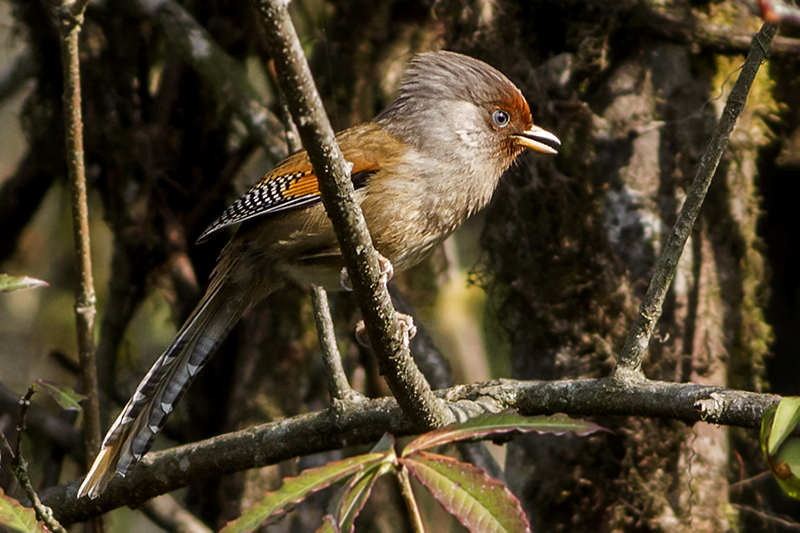
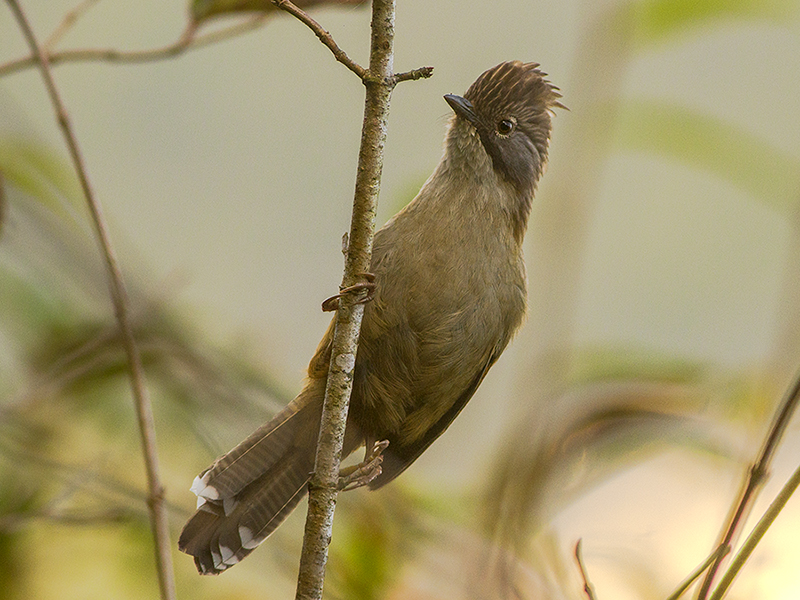
The Taiwan Hwamei is easily identifiable by its striking plumage. Adults exhibit a rich brown coloration with prominent dark streaks running across the head and back. A notable white eye-ring adds a distinctive feature to their appearance, contrasting sharply against the darker feathers. Juveniles resemble adults but with slightly duller plumage and less defined streaking, allowing for easier identification at different life stages. Males and females are similar in appearance, making sexual dimorphism minimal. However, during the breeding season, males may exhibit slightly brighter plumage as they engage in courtship displays. Birders might confuse the Taiwan Hwamei with its close relatives, such as the Chinese Hwamei, but the latter has a more subdued eye-ring and different vocalizations. Observing the flight silhouette, the Taiwan Hwamei presents a rounded wing structure and a relatively short tail. When perched, it often adopts an upright posture, accentuating its streaked plumage. These field marks are crucial for accurate identification, especially in dense forest habitats where visual observation can be challenging.
Having trouble telling birds apart? Upload a photo to our bird identification tool for an instant species match.
Taiwan Hwamei Habitat and Range
Preferred Habitat
The Taiwan Hwamei inhabits a variety of forested environments, primarily favoring subtropical and tropical montane forests. These habitats, located at elevations ranging from 500 to 2,000 meters, provide the dense undergrowth that the Hwamei requires for foraging and nesting. The bird is particularly abundant in the central mountain ranges of Taiwan, such as the Alishan and Yushan areas. Seasonal habitat shifts are minimal, as the Taiwan Hwamei is largely sedentary, taking advantage of the year-round availability of resources. While primarily a forest dweller, the Hwamei can occasionally be found at the edges of forested areas and, less frequently, in urban green spaces where patches of suitable vegetation exist. However, its presence in urban areas is limited compared to more adaptable bird species.
Geographic Range
The Taiwan Hwamei's range is confined exclusively to Taiwan, making it an endemic species. Its breeding range includes the island's central and southern mountainous regions, where it occupies a range of altitudes from 500 to 2,000 meters. Unlike some other passerines, the Taiwan Hwamei does not exhibit extensive migratory behavior, remaining within its established territories year-round. Population density is highest in the central mountain ranges, where suitable habitat conditions are most prevalent. Despite its limited geographic range, the Taiwan Hwamei is relatively common within its habitat, benefiting from protected areas and national parks that safeguard significant portions of its environment.
Want to know which birds visit your area? Browse our backyard birds by location guides for region-specific species lists.
What Does the Taiwan Hwamei Eat?
The diet of the Taiwan Hwamei primarily consists of insects and other small invertebrates, which it skillfully forages from the forest undergrowth. In addition to insects, the Hwamei consumes a variety of fruits and seeds, particularly during seasons when insect prey is less abundant. This dietary flexibility aids in its survival across different seasons, ensuring a stable food supply. The bird employs a foraging technique characterized by hopping and probing through leaf litter and vegetation, using its sharp beak to uncover hidden prey. Prey size typically ranges from small beetles to larger caterpillars, showcasing the bird's adaptability in feeding. Feeding occurs throughout the day, with peaks during the early morning and late afternoon when temperatures are moderate and prey is more active.
Taiwan Hwamei Behavior and Social Structure
The Taiwan Hwamei exhibits a range of fascinating behaviors that reflect its social and ecological interactions. Primarily observed in pairs or small family groups, the bird demonstrates strong territorial behavior, especially during the breeding season. Males engage in elaborate vocal displays to establish territory boundaries and attract mates. These vocalizations are crucial for maintaining pair bonds and deterring rivals. Flocking behavior is less common, as the Hwamei tends to maintain a degree of territorial exclusivity. In response to predators, the Taiwan Hwamei relies on its agility and dense habitat for protection, often retreating to thick underbrush when threatened. Daily activity patterns include active foraging sessions interspersed with periods of rest, particularly during the hottest parts of the day. The Taiwan Hwamei's social structure is relatively stable, with monogamous pair bonds that persist over multiple breeding seasons.
Taiwan Hwamei Nesting and Reproduction
Nesting for the Taiwan Hwamei involves constructing a cup-shaped nest using a variety of natural materials such as twigs, leaves, and grasses. These nests are typically situated in dense shrubs or small trees, providing concealment from predators. Location preferences include the lower levels of the forest undergrowth, where cover is ample and accessibility to food resources is optimal. The typical clutch size ranges from three to five eggs, with the incubation period lasting approximately two weeks. Both parents participate in incubation and feeding, ensuring the rapid growth and development of the chicks. Fledging occurs about two weeks after hatching, with the young becoming increasingly independent thereafter. The Taiwan Hwamei often raises two broods per year, optimizing reproductive success in its stable forest habitat.
Taiwan Hwamei Sounds and Vocalizations
The Taiwan Hwamei is celebrated for its rich and melodious song, characterized by a series of whistles and trills that vary in pitch and rhythm. The primary song is complex and fluid, often lasting several seconds. Call notes are softer, consisting of short chips or whistles used for communication between mates or signaling alarm. Alarm calls are sharper and more abrupt, alerting conspecifics to potential threats. During the dawn chorus, males prominently perform their songs, establishing their presence in the territory. The Taiwan Hwamei's vocalizations are reminiscent of the thrush family, with a musical quality that adds to the auditory landscape of its forest home.
Interesting Facts About the Taiwan Hwamei
- 1The Taiwan Hwamei's name 'Hwamei' means 'painted eyebrow' in Chinese, referring to its distinctive eye-ring.
- 2Despite its limited range, the Taiwan Hwamei is a popular cage bird in Taiwan due to its attractive song.
- 3The Taiwan Hwamei is one of the few bird species endemic to Taiwan, highlighting its unique biodiversity.
- 4In traditional Chinese culture, the Taiwan Hwamei's song is often associated with tranquility and harmony.
- 5With a length of about 24 centimeters, the Taiwan Hwamei is considered medium-sized among passerines.
- 6The Taiwan Hwamei's song repertoire includes over 20 different song variations, showcasing its vocal versatility.
- 7Taiwan's national parks play a critical role in protecting the habitat of the Taiwan Hwamei and other endemic species.
Taiwan Hwamei Conservation Status
The conservation status of the Taiwan Hwamei is currently classified as Near Threatened by the IUCN. Population trends indicate a stable population, though threats from habitat destruction and fragmentation persist. Primary threats include deforestation for agriculture and urban expansion, which reduce available habitat. Conservation efforts focus on habitat preservation and restoration, with several national parks and protected areas in Taiwan offering refuge for the species. Historical population changes have been relatively minor, as the Taiwan Hwamei has adapted to a variety of forest conditions. Continued conservation action is essential to maintain its habitat and ensure the species' long-term survival.