Trochalopteron hennickei
Trochalopteron hennickei
Order: Passeriformes / Family: Leiothrichidae
About the Trochalopteron hennickei
Trochalopteron hennickei, commonly known as the Blue-winged Laughingthrush, is a medium-sized songbird belonging to the Leiothrichidae family. This bird is primarily found in the montane forests of southern China, specifically in the provinces of Yunnan, Guangxi, and Guizhou, as well as in northern Vietnam. These regions offer the dense, subtropical forest habitats that the species prefers. The Blue-winged Laughingthrush plays a crucial role in its ecosystem, acting as both a seed disperser and an insect predator, which helps maintain a balanced forest environment. Despite its relatively limited range, this bird is a significant part of the biodiversity in these areas, contributing to the ecological complexity of the montane forests. Seasonally, the Blue-winged Laughingthrush is known to engage in altitudinal migration, moving to lower elevations during the cooler months in search of food and more favorable climatic conditions. This seasonal behavior ensures its survival in the varying temperatures and conditions of its montane habitat. The Trochalopteron hennickei is a social species, often observed in small groups or pairs. This social structure is beneficial for mutual protection against predators and for locating food sources. The bird's ecological role extends to its interactions with other species, as it often shares its habitat with various other forest-dwelling birds and mammals. The Blue-winged Laughingthrush's presence in these regions also makes it a species of interest for ornithologists and birdwatchers, who are drawn to its vibrant colors and melodious song. Understanding the distribution, behavior, and ecology of Trochalopteron hennickei provides valuable insights into the health and dynamics of its montane forest ecosystem.
The Trochalopteron hennickei belongs to the family Leiothrichidae, within the order Passeriformes. These birds typically live 5-7 years with a maximum recorded of 8 years..
How to Identify a Trochalopteron hennickei
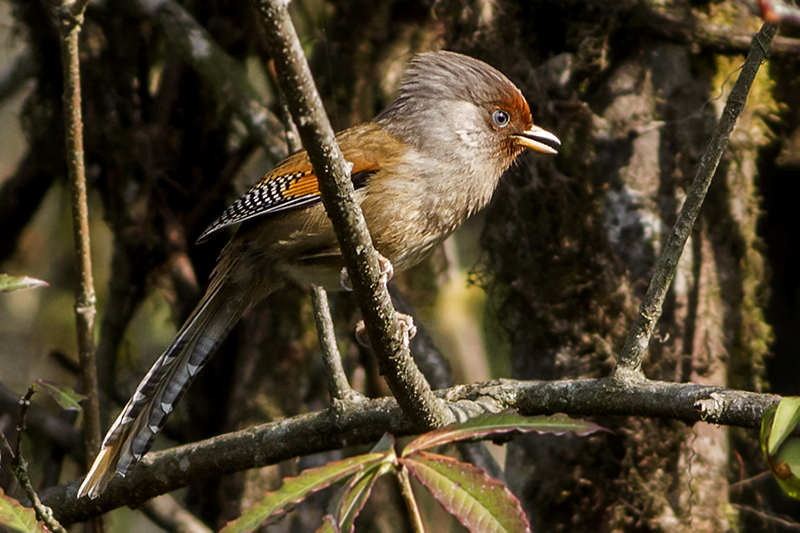
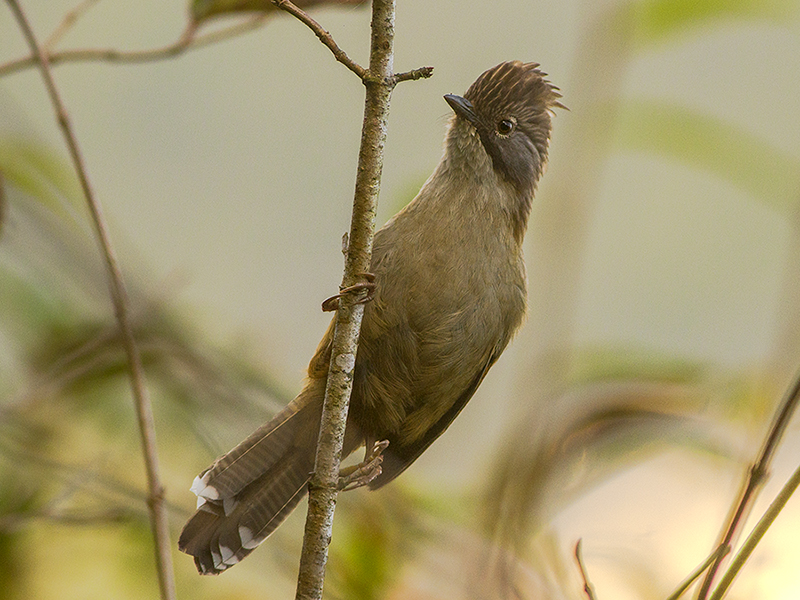
The Blue-winged Laughingthrush is easily identified by its striking plumage. The adult bird features a rich blue coloration on its wings and tail, contrasting with a predominantly gray body. The head is adorned with a black mask and white throat, adding to its distinctive appearance. Juveniles lack the full vibrancy of adults, displaying more muted tones of gray and blue. Males and females are similar in appearance, though males may be slightly larger. This bird can be confused with the closely related Black-faced Laughingthrush, but the latter lacks the blue wing feathers that define Trochalopteron hennickei. When in flight, the Blue-winged Laughingthrush shows a broad, rounded silhouette with a short tail, which differs from the slimmer profiles of other forest birds. Its perching posture is upright, often with tail slightly cocked. Field marks such as the blue wing patches and the black-and-white head pattern are the best identifiers when observing this species in its natural habitat.
Having trouble telling birds apart? Upload a photo to our bird identification tool for an instant species match.
Trochalopteron hennickei Habitat and Range
Preferred Habitat
Trochalopteron hennickei inhabits subtropical montane forests, preferring dense undergrowth and bamboo thickets. These environments provide ample cover and abundant food resources. The species is typically found at elevations ranging from 1,000 to 2,500 meters. During colder months, it may descend to lower altitudes, remaining within forested areas that offer similar dense vegetation. While primarily a forest dweller, the Blue-winged Laughingthrush avoids urban areas and open fields, staying close to the protective cover of its natural habitat. In its preferred forest settings, it frequently occupies regions rich in shrubs and small trees, where it can forage and nest with minimal disturbance.
Geographic Range
The Blue-winged Laughingthrush is endemic to a relatively restricted range in southern China and northern Vietnam. Its breeding range is concentrated in Yunnan, Guangxi, and Guizhou provinces, extending into adjacent areas of northern Vietnam. This species is largely sedentary, with some populations engaging in altitudinal migration rather than long-distance movements. During winter, it descends to lower elevations within the same geographic range. Population density is highest in regions where suitable montane forest habitats are abundant. Despite its limited range, it is not considered migratory in the traditional sense, as it does not undertake extensive seasonal migrations.
Want to know which birds visit your area? Browse our backyard birds by location guides for region-specific species lists.
What Does the Trochalopteron hennickei Eat?
The diet of Trochalopteron hennickei primarily consists of insects and other invertebrates, supplemented by fruits and seeds. During the breeding season, the bird's diet shifts to include more protein-rich insects, which are vital for chick development. Foraging occurs mainly in the understory and on the forest floor, where the bird uses its strong beak to sift through leaf litter and shrubs. It is an opportunistic feeder, often seen probing bark and crevices for hidden prey. The diet varies with availability, and during certain times of the year, the Blue-winged Laughingthrush may consume a significant amount of berries and small fruits, aiding in seed dispersal.
Trochalopteron hennickei Behavior and Social Structure
Trochalopteron hennickei exhibits a highly social behavior, typically forming small flocks outside of the breeding season. Within these groups, individuals communicate through a variety of vocalizations, which play a crucial role in maintaining social bonds and coordinating activities. The bird exhibits strong territorial behavior during the breeding season, with pairs aggressively defending their nesting areas from intruders. Courtship displays involve both visual and vocal elements, with males often seen performing elaborate songs to attract mates. Flocking patterns change seasonally, with larger groups forming during non-breeding periods for enhanced foraging efficiency and predator vigilance. The Blue-winged Laughingthrush is primarily diurnal, with peak activity occurring during the early morning and late afternoon. When faced with potential threats, it relies on dense vegetation for cover and may emit alarm calls to alert fellow flock members.
Trochalopteron hennickei Nesting and Reproduction
The Blue-winged Laughingthrush builds a cup-shaped nest, typically constructed from twigs, leaves, and grasses, lined with softer materials like feathers or moss. Nests are usually placed in dense undergrowth or low branches, providing concealment from predators. The typical clutch size ranges from 2 to 4 eggs, which are pale blue or greenish with darker speckles. Both parents participate in incubation, which lasts approximately 14 to 16 days. After hatching, chicks remain in the nest for about two weeks before fledging. Parental care extends beyond fledging, with both adults continuing to feed and protect their young. This species generally raises one brood per year, although favorable conditions may lead to a second.
Trochalopteron hennickei Sounds and Vocalizations
The song of the Blue-winged Laughingthrush is a melodious series of clear, flute-like notes, often delivered in rapid succession. These songs serve as both territorial displays and mating calls. In addition to its primary song, the species produces a variety of call notes, including soft whistles and harsh chattering sounds used for communication within flocks. Alarm calls are sharp and piercing, designed to alert others to the presence of predators. During the dawn chorus, the bird's song stands out for its rhythmic and musical quality, evoking the sound of a woodwind instrument.
Interesting Facts About the Trochalopteron hennickei
- 1The Blue-winged Laughingthrush can mimic the songs of other bird species, a talent that aids in territory establishment.
- 2Despite its melodious calls, the Blue-winged Laughingthrush often goes unnoticed due to its preference for dense undergrowth.
- 3The species' name, 'laughingthrush', comes from its song, which resembles human laughter.
- 4Trochalopteron hennickei was first described scientifically in the late 19th century, making it a relatively recent discovery.
- 5The bird's striking blue plumage is the result of structural coloration, not pigments.
- 6Blue-winged Laughingthrushes often engage in 'anting', a behavior where they rub ants on their feathers.
- 7These birds have a diverse diet that changes seasonally, showcasing their adaptability to food availability.
Trochalopteron hennickei Conservation Status
The IUCN currently lists the Blue-winged Laughingthrush as Near Threatened, with populations showing a declining trend due to habitat loss and fragmentation. The primary threat to this species is deforestation, driven by agricultural expansion and logging. Conservation efforts focus on habitat preservation, including the establishment of protected areas within its range. Despite these challenges, the species remains relatively adaptable, provided that sufficient forest cover is maintained. Historical population data suggest that numbers have decreased over the past few decades, highlighting the need for continued conservation attention.