Variegated Laughingthrush
Trochalopteron variegatum
Order: Passeriformes / Family: Leiothrichidae

Wikimedia Commons
About the Variegated Laughingthrush
The Variegated Laughingthrush (Trochalopteron variegatum) is a captivating member of the Leiothrichidae family, known for its complex and striking plumage. This species inhabits the lush forests of the Himalayas, providing an essential role in the region's ecological web. With their preference for dense undergrowth, these birds contribute significantly to seed dispersal and insect population control. Primarily found at elevations ranging from 1500 to 3000 meters, the Variegated Laughingthrush thrives in the temperate and subtropical forests of countries like India, Nepal, and Bhutan. Seasonal behaviors of this species include altitudinal migration, where individuals may move to lower elevations during the colder months to escape the harsh winter conditions of the higher Himalayas. This migration ensures their survival and allows them to exploit different food resources throughout the year. The Variegated Laughingthrush plays a crucial role in its ecosystem by participating in mutualistic relationships with plants, acting as both a predator and a prey species. Its diet primarily consists of insects and fruits, making it a valuable participant in controlling pest populations and aiding in seed dispersal. Observers often note its active foraging behavior, where it uses its strong legs to hop and scuttle through leaf litter, seeking out insects. This bird's presence indicates a healthy forest ecosystem, and its reliance on undisturbed habitats underscores the importance of conservation efforts in the region. As part of the larger laughingthrush group, the Variegated Laughingthrush shares certain behavioral traits with its relatives, such as their complex vocalizations. These vocal abilities are not just for communication within the species but also serve as a territorial signal to other birds in the vicinity. The laughter-like calls resonate through the forests, contributing to the acoustic landscape of their habitat. Observing their interactions provides insights into the social dynamics of forest-dwelling species, emphasizing the need to preserve these environments.
The Variegated Laughingthrush belongs to the family Leiothrichidae, within the order Passeriformes. These birds typically live average 6-8 years with a maximum recorded of 12 years..
How to Identify a Variegated Laughingthrush
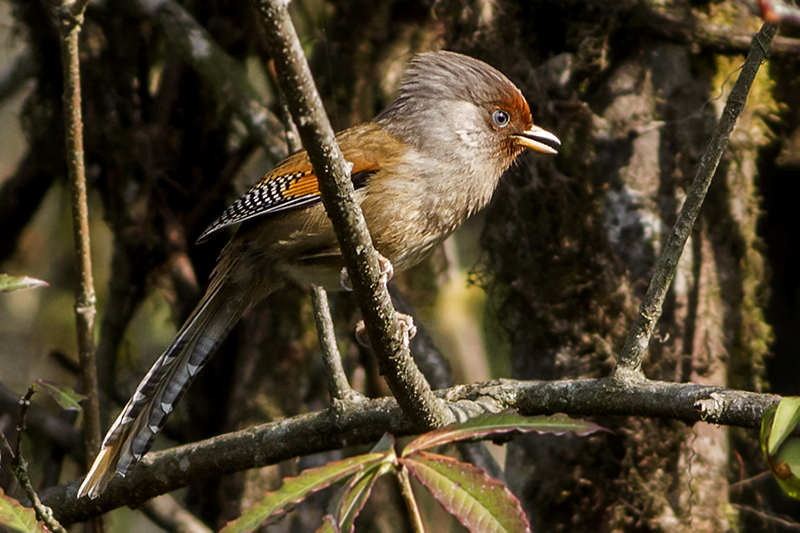
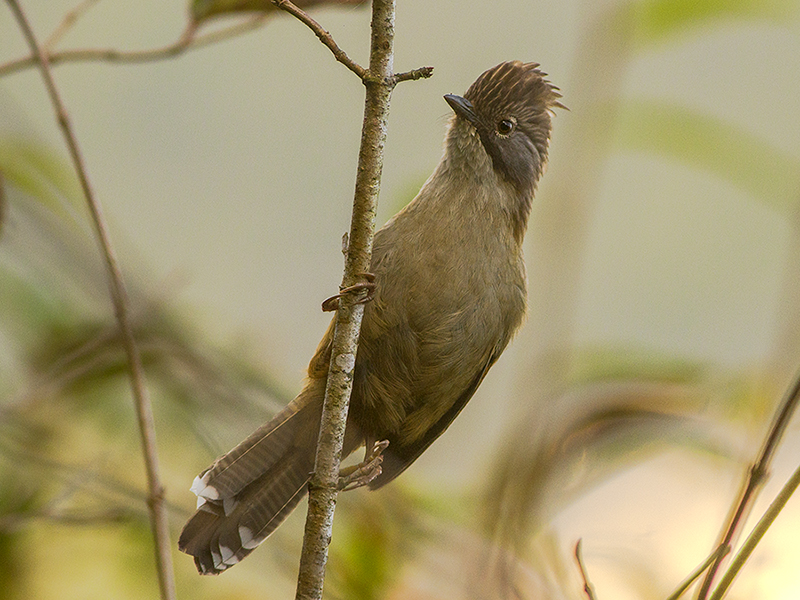
The Variegated Laughingthrush is easily identifiable by its rich, variegated plumage. Adults exhibit a harmonious blend of browns, grays, and whites, with a distinct pattern that resembles fine brush strokes. The most striking feature is the chestnut-brown cap that contrasts with the grayish face and throat. Their underparts are a muted brown, with subtle streaking that enhances their camouflage in dense foliage. Juvenile birds are similar in appearance but generally have duller tones and less defined markings. While both sexes look alike, there are slight differences, with males often displaying more pronounced coloration during the breeding season. Unlike some of its relatives, the Variegated Laughingthrush does not exhibit significant sexual dimorphism. When perched, this bird maintains an alert posture, often with its tail slightly cocked. In flight, it shows a relatively rounded silhouette with broad wings, enabling agile maneuvering through forest canopies. In comparison to similar species like the Spotted Laughingthrush, the Variegated Laughingthrush's lack of prominent spots and its more subdued color palette help differentiate it. Careful observation is key to distinguishing these subtle differences, especially in overlapping territories.
Having trouble telling birds apart? Upload a photo to our bird identification tool for an instant species match.
Variegated Laughingthrush Habitat and Range
Preferred Habitat
The Variegated Laughingthrush thrives in temperate and subtropical forests, favoring areas with dense undergrowth. It often inhabits the mid-altitude forests of the Himalayas, where the vegetation provides ample cover and foraging opportunities. These birds show a preference for mixed broadleaf and coniferous forests, which offer a rich diversity of food sources. During the warmer months, they are typically found at elevations between 1500 and 3000 meters. In winter, they may descend to lower altitudes, seeking warmth and available resources. While they predominantly inhabit rural forested areas, they can occasionally be seen in semi-urban environments where gardens and parks mimic their natural habitat. The Variegated Laughingthrush avoids open fields and grasslands, relying instead on the dense thickets and underbrush for cover and sustenance.
Geographic Range
The breeding range of the Variegated Laughingthrush is concentrated in the Himalayan region, spanning across northern India, Nepal, and Bhutan. These birds are residents of this mountainous corridor, where they find suitable conditions for breeding and feeding. During winter, some populations may undertake short-distance altitudinal migrations to lower elevations, particularly in the foothills of the Himalayas. This seasonal movement is primarily in response to temperature changes and food availability. Although they are not long-distance migrants, their presence across various elevations allows them to exploit a range of habitats throughout the year. The population density of the Variegated Laughingthrush is typically higher in regions with extensive forest cover, such as the eastern Himalayas, where they benefit from less disturbed habitats.
Want to know which birds visit your area? Browse our backyard birds by location guides for region-specific species lists.
What Does the Variegated Laughingthrush Eat?
The Variegated Laughingthrush primarily feeds on a varied diet of insects and fruits. Insects constitute a significant portion of their diet during the breeding season, providing essential protein for growing chicks. They actively forage on the forest floor and in the underbrush, using their strong legs and keen eyesight to uncover hidden prey. This ground-feeding behavior involves scratching through leaf litter to expose insects, spiders, and other small invertebrates. During the non-breeding season, their diet shifts more towards fruits and berries, which are abundant in the forests they inhabit. They have a particular preference for the fruits of native plant species, which they help disperse through their feeding activities. The Variegated Laughingthrush typically forages in small groups, moving through their territory with a combination of hopping and short flights. This social feeding behavior not only aids in locating food but also provides protection against potential predators.
Variegated Laughingthrush Behavior and Social Structure
The Variegated Laughingthrush exhibits complex social behavior, often found in small groups or family units. These groups maintain territories that they defend through vocal displays and physical presence. Their territorial behavior is most pronounced during the breeding season when pairs establish and defend nesting sites. Courtship displays include a series of vocal exchanges and mutual preening, strengthening pair bonds. Outside the breeding season, they may form larger flocks, allowing for cooperative foraging and enhanced predator vigilance. The Variegated Laughingthrush is diurnal, with peak activity occurring during the early morning and late afternoon. This schedule maximizes their foraging efficiency while avoiding the midday heat. In response to predators, these birds employ a combination of alarm calls and evasive flight, retreating to dense cover to avoid detection.
Variegated Laughingthrush Nesting and Reproduction
The Variegated Laughingthrush constructs its nest in dense shrubs or low trees, typically at a height of 1 to 3 meters above the ground. The nest is a cup-shaped structure made from twigs, leaves, and moss, providing a secure environment for the eggs and chicks. Clutch size generally ranges from 2 to 4 eggs, which are pale blue with brownish speckles. Both parents share incubation duties, which last approximately 14 to 16 days. After hatching, the chicks remain in the nest for about 12 to 15 days before fledging. Parental care extends beyond fledging, with adults feeding and protecting the young until they are fully independent. The Variegated Laughingthrush typically raises one brood per year, although favorable conditions may allow for a second.
Variegated Laughingthrush Sounds and Vocalizations
The primary song of the Variegated Laughingthrush is a series of melodious notes that rise and fall in pitch, resembling laughter. These vocalizations are complex and varied, serving both to establish territory and for communication within groups. Their calls include a range of whistles and chattering sounds, often used as contact calls between individuals. When alarmed, they emit harsh, scolding notes to alert others of potential danger. The dawn chorus, a feature of their vocal behavior, fills the forest with their distinctive songs, marking the beginning of the day's activities.
Interesting Facts About the Variegated Laughingthrush
- 1Variegated Laughingthrushes are known to form mixed-species flocks with other laughingthrushes, enhancing foraging efficiency.
- 2Their complex vocalizations can include over 30 different song types, allowing for sophisticated communication.
- 3Despite their vibrant plumage, Variegated Laughingthrushes are often difficult to spot due to their secretive nature in dense foliage.
- 4They have been observed using tools, such as sticks, to pry insects from tree bark, showcasing advanced cognitive abilities.
- 5The diet of Variegated Laughingthrushes shifts seasonally, with increased fruit consumption during the winter months when insects are scarce.
- 6Their name derives from their laughter-like calls, which can be heard echoing through the Himalayan forests early in the morning.
- 7Variegated Laughingthrushes contribute to forest regeneration by dispersing seeds of various plant species through their droppings.
Variegated Laughingthrush Conservation Status
The Variegated Laughingthrush is currently listed as Least Concern by the IUCN, with stable population trends. However, habitat loss due to deforestation poses a significant threat to their long-term survival. Conservation efforts focus on preserving forest habitats and maintaining biodiversity in the Himalayan region. Historical population changes have been influenced by both natural and anthropogenic factors, emphasizing the need for continued monitoring and habitat protection.