
Vietnamese Cutia
Cutia legalleni
Order: Passeriformes / Family: Leiothrichidae

Wikimedia Commons
About the Vietnamese Cutia
The Vietnamese Cutia, Cutia legalleni, is an enchanting bird belonging to the Leiothrichidae family, known for its vibrant colors and melodious vocalizations. This species is found primarily in the subtropical and tropical montane forests of Vietnam and occasionally in Laos, thriving in elevations ranging from 1,200 to 2,800 meters. The Vietnamese Cutia plays a pivotal role in its ecosystem by contributing to seed dispersion and insect population control. Its presence is an indicator of healthy forest ecosystems, particularly in regions such as the Annamite Range. With a preference for dense, moist forests, the Vietnamese Cutia contributes to the biodiversity of these habitats, engaging in crucial ecological interactions. During the breeding season, typically from April to June, the Vietnamese Cutia becomes more vocally active, using its songs to establish territories and attract mates. Outside the breeding season, it may form small flocks, increasing its foraging efficiency. The species' significance extends beyond ecology, as it holds cultural importance in local folklore, symbolizing beauty and harmony in some communities. As pressures from habitat loss and fragmentation increase, understanding the Vietnamese Cutia's ecological role becomes crucial for conservation efforts.
The Vietnamese Cutia belongs to the family Leiothrichidae, within the order Passeriformes. These birds typically live average 5 years, with a max recorded at 8 years..
How to Identify a Vietnamese Cutia
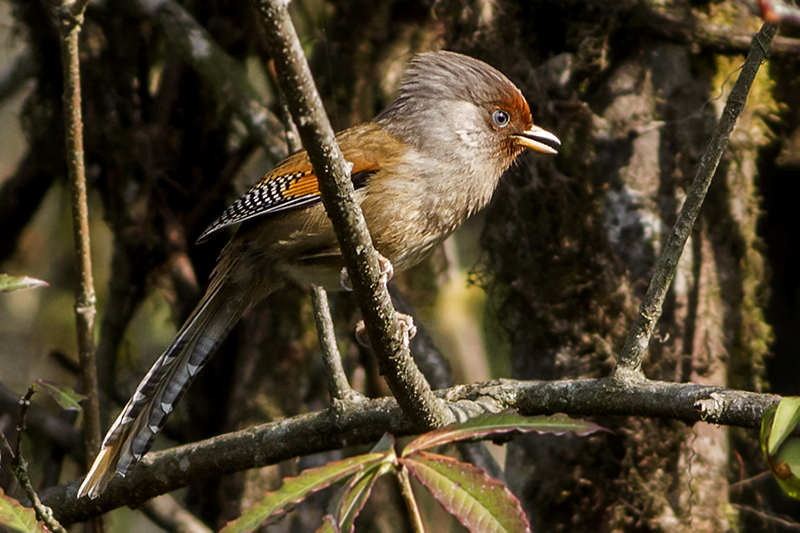
The Vietnamese Cutia is a medium-sized bird, approximately 22 cm in length, with distinctively colorful plumage. Adults display a striking combination of blue-gray head and back, contrasted with a rufous-orange breast and flanks. The wings feature bold black and white barring, making them conspicuous in flight. Juvenile birds resemble adults but have duller coloration and less defined markings. Males and females appear similar, though females may exhibit slightly less vibrant plumage. In flight, the Vietnamese Cutia shows a unique silhouette with broad wings and a relatively short tail. When perched, it often adopts a horizontal posture, allowing an unobstructed view of its vivid colors. The bird's striking appearance can lead to confusion with other members of the Leiothrichidae family, such as the Chestnut-tailed Minla, but careful observation of the distinct wing pattern and tail length facilitates accurate identification.
Having trouble telling birds apart? Upload a photo to our bird identification tool for an instant species match.
Vietnamese Cutia Habitat and Range
Preferred Habitat
The Vietnamese Cutia inhabits subtropical and tropical montane forests, favoring areas with dense undergrowth and abundant foliage. It thrives at elevations between 1,200 and 2,800 meters, often found in the Annamite Range and similar habitats. The species prefers primary forests but can adapt to secondary forests if the environment offers sufficient cover and food resources. Seasonal habitat shifts are minimal, although the bird may move slightly in response to food availability and weather conditions. In comparison to urban settings, the Vietnamese Cutia is predominantly rural, rarely venturing into human-modified landscapes. Its reliance on forested environments makes it particularly vulnerable to habitat destruction.
Geographic Range
The Vietnamese Cutia primarily resides in Vietnam, with a range extending into parts of Laos. It occupies regions within the Annamite Range, where the montane forest provides ideal conditions. The species does not undergo long-distance migrations, maintaining a relatively stable presence year-round within its range. However, during the breeding season, individuals may move to slightly higher elevations. Population density is highest in pristine forest habitats, where human disturbance is minimal. Although not widespread, localized populations do exist in areas with suitable environmental conditions.
Want to know which birds visit your area? Browse our backyard birds by location guides for region-specific species lists.
What Does the Vietnamese Cutia Eat?
The Vietnamese Cutia's diet consists mainly of insects, seeds, and berries, reflecting its omnivorous nature. During the breeding season, it prioritizes protein-rich insects and larvae, which are vital for chick development. As seasons change, the bird shifts to consuming more plant material, including seeds and fruits available in its forest habitat. Foraging techniques include gleaning from foliage and branches, as well as probing bark crevices for hidden insects. The Vietnamese Cutia typically forages during early morning and late afternoon, aligning its activity with the availability of food resources. Prey items range in size but generally consist of small insects and arthropods.
Vietnamese Cutia Behavior and Social Structure
The Vietnamese Cutia exhibits complex social and territorial behaviors. Outside the breeding season, it is often seen in small, cohesive flocks, which enhance foraging success and predator vigilance. During the breeding season, pairs become territorial, defending their chosen areas with vocal displays and physical presence. Courtship involves elaborate singing and display flights, strengthening pair bonds. The Vietnamese Cutia is generally diurnal, with peak activity observed at dawn and dusk. When faced with predators, it employs alarm calls to alert nearby flock members, often retreating to dense cover for protection. Its social nature and varied vocalizations play a crucial role in communication and group cohesion.
Vietnamese Cutia Nesting and Reproduction
The Vietnamese Cutia constructs cup-shaped nests using twigs, leaves, and moss, often placing them in dense foliage or on tree branches for concealment. Nesting sites are typically located at mid-canopy levels, providing both safety from ground predators and proximity to food resources. A typical clutch consists of 3 to 5 eggs, with incubation lasting approximately 14 days. Both parents participate in incubation and feeding, showcasing a strong cooperative breeding strategy. Fledglings leave the nest about two weeks after hatching, remaining under parental care for several more weeks as they develop independence. The species usually raises one brood per year, aligning reproductive efforts with peak food availability.
Vietnamese Cutia Sounds and Vocalizations
The Vietnamese Cutia's song is a series of melodious whistles and trills, often described as flute-like in quality. These vocalizations are used primarily during the breeding season for mate attraction and territory defense. In addition to its primary song, the Vietnamese Cutia produces a variety of call notes, including sharp, contact calls and softer, conversational chatter within flocks. Alarm calls are sharp and piercing, serving as a warning to conspecifics of nearby threats. The dawn chorus, a prominent feature of the Vietnamese Cutia's behavior, showcases its vocal prowess and contributes to its role in the acoustic landscape of its forest habitat.
Interesting Facts About the Vietnamese Cutia
- 1The Vietnamese Cutia's name is derived from a local term meaning 'colorful bird,' reflecting its vibrant plumage.
- 2Unlike many songbirds, both male and female Vietnamese Cutias participate in singing, showcasing a unique duet behavior.
- 3The Vietnamese Cutia's diet shifts seasonally, with a preference for protein-rich insects during breeding.
- 4This bird is an effective seed disperser, aiding in the regeneration of its montane forest habitat.
- 5The Vietnamese Cutia can adapt to secondary forests, provided they offer sufficient resources and cover.
- 6Despite its colorful appearance, the Vietnamese Cutia often goes unnoticed due to its preference for dense foliage.
- 7The species' melodious song is a critical component of its courtship and territorial displays during the breeding season.
Vietnamese Cutia Conservation Status
Currently listed as a species of least concern by the IUCN, the Vietnamese Cutia faces threats primarily from habitat loss and fragmentation due to deforestation and land conversion. Although its population appears stable, continued habitat destruction could pose significant risks. Conservation efforts focus on habitat protection through the establishment of protected areas and sustainable forestry practices. Monitoring population trends and habitat quality remains crucial for ensuring the long-term survival of this species. Historical data suggest a stable population, but vigilance is necessary to prevent future declines.
Other Leiothrichidae Species


Birds Similar to the Vietnamese Cutia
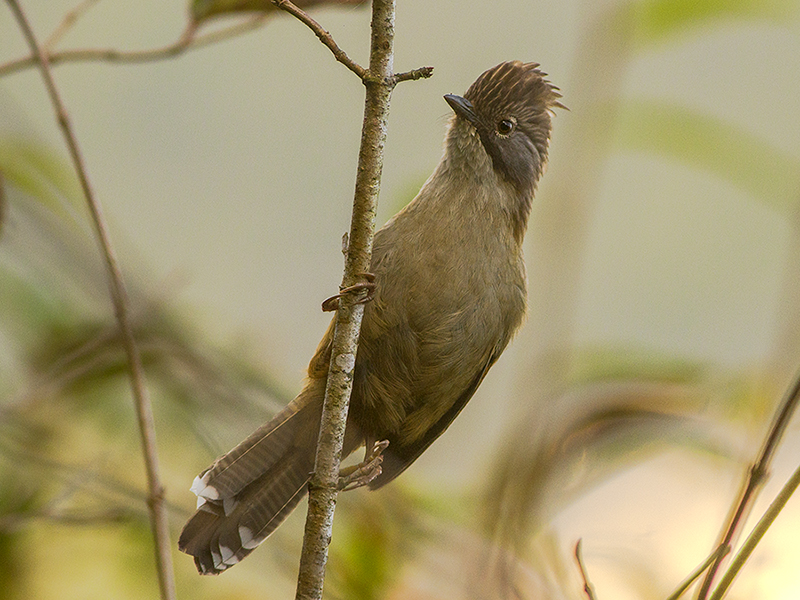
These species are often confused with the Vietnamese Cutia due to similar appearance or overlapping range.

