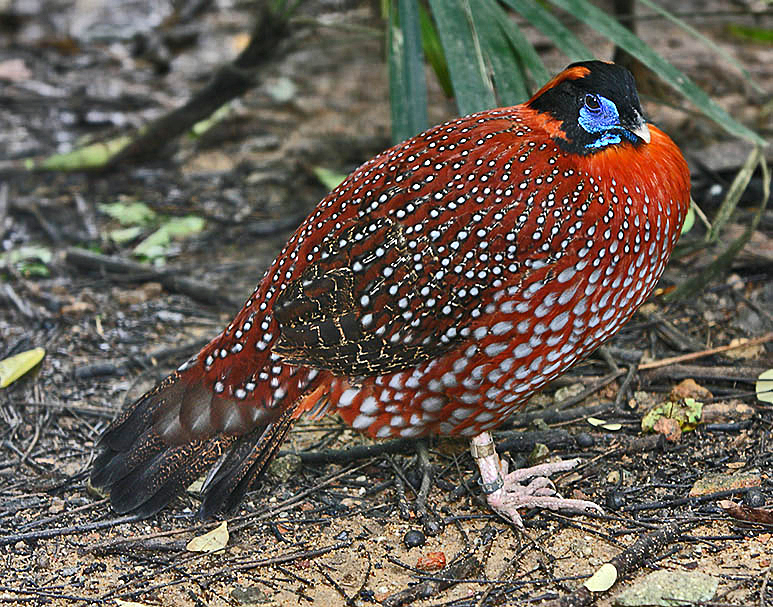
Western Tragopan
Tragopan melanocephalus
Order: Galliformes / Family: Phasianidae

Wikimedia Commons
About the Western Tragopan
The Western Tragopan (Tragopan melanocephalus) is a striking bird within the pheasant family, known for its exquisite and colorful plumage. This species inhabits the dense, temperate coniferous and broadleaf forests of the western Himalayas, a region rich in biodiversity. Found primarily in Pakistan and the northwestern regions of India, including Kashmir, Himachal Pradesh, and parts of Uttarakhand, the Western Tragopan occupies a niche environment that supports its survival. The bird plays a significant role in its ecosystem, contributing to the biological diversity and serving as an indicator of forest health. Tragopan melanocephalus has evolved to thrive in montane forests at altitudes ranging from 2,400 to 3,600 meters. During winter, some birds may descend to lower elevations to find food and escape harsh conditions. Its presence in these ecosystems indicates a healthy forest structure, as it relies heavily on a diverse understory for both food and cover. The Western Tragopan is not only a symbol of the rich avifauna of the Himalayas but is also crucial in seed dispersion and forest dynamics. The bird's seasonal behaviors are marked by its breeding activities, which occur from April to June. Displaying a fascinating courtship ritual, the male tragopan showcases its vibrant plumage and produces a series of calls to attract females. The breeding season coincides with the period of greatest food availability, ensuring a rich supply of resources for the growing chicks. Outside of the breeding season, Western Tragopans are generally shy and elusive, making them a challenging subject for ornithologists and birdwatchers alike. Nonetheless, their presence, although hard to detect, is vital for understanding the complex interplay of species within the Himalayan ecosystem.
The Western Tragopan belongs to the family Phasianidae, within the order Galliformes. These birds typically live 10-15 years in the wild, with a maximum recorded lifespan of 18 years..
How to Identify a Western Tragopan
The Western Tragopan is recognized for its distinctive plumage, which sets it apart from other pheasants. Males boast a captivating combination of black plumage with white speckles, a vibrant red neck wattle, and a head adorned with a black crest. The striking red and blue facial skin adds to its unmistakable appearance. In contrast, females are more cryptically colored with brown and black feathers, providing effective camouflage against predators. Juvenile Western Tragopans resemble females but with more pronounced spotting, which diminishes as they reach maturity. One of the most notable differences between males and females is size, with males being slightly larger. Similar species, such as the Satyr Tragopan, may cause confusion. However, the Western Tragopan's black coloration with white speckling on the body is a distinguishing field mark. In flight, the bird's rounded wings and short tail are apparent, though it prefers to remain on the ground or low perches. When perched, the Western Tragopan exhibits a characteristic posture with its body held horizontally and head slightly elevated, which aids in observation and predator detection.
Having trouble telling birds apart? Upload a photo to our bird identification tool for an instant species match.
Western Tragopan Habitat and Range
Preferred Habitat
The Western Tragopan inhabits the temperate forests of the western Himalayas, thriving in montane regions with dense undergrowth. Its preferred habitats include mixed coniferous forests dominated by species such as fir, spruce, and oak, interspersed with rhododendron and bamboo thickets. Elevation is a critical factor, with the species found between 2,400 and 3,600 meters, though some populations may move to lower altitudes during winter months. These birds display seasonal habitat shifts, seeking denser cover and food resources in winter while occupying higher elevations in summer. The Western Tragopan is strictly forest-dwelling and shows no affinity for urban areas, relying on the secluded, pristine conditions of its natural habitat for survival. The presence of adequate cover and abundant food sources are essential for its well-being, and any degradation of these habitats can severely impact its populations.
Geographic Range
The Western Tragopan's range is limited to the western Himalayan region, specifically within Pakistan and northwestern India. In Pakistan, populations exist in the Khyber Pakhtunkhwa province, notably in the Palas Valley and the Indus Kohistan region. In India, the bird inhabits the forests of Jammu and Kashmir, Himachal Pradesh, and parts of Uttarakhand. This tragopan does not undertake long-distance migrations, though some altitudinal movement occurs as individuals descend to lower elevations in response to snow cover and food scarcity during winter. Population density varies across its range, with certain areas like the Palas Valley being recognized as hotspots due to relatively stable populations. Despite its limited geographic range, the Western Tragopan's presence is patchy, and its populations are often isolated, making it vulnerable to habitat fragmentation and other anthropogenic pressures.
Want to know which birds visit your area? Browse our backyard birds by location guides for region-specific species lists.
What Does the Western Tragopan Eat?
The Western Tragopan's diet primarily consists of a variety of plant materials, including leaves, shoots, seeds, and berries, which it forages from the forest floor. Seasonal changes significantly influence its diet, with an increased reliance on seeds and berries during the summer and autumn months when these resources are plentiful. In winter, the tragopan may consume more evergreen leaves and bark due to the scarcity of other food sources. This bird uses its robust bill to break open seeds and access the nutritious contents within. The Western Tragopan also supplements its diet with insects and small invertebrates, especially during the breeding season, when protein intake is crucial for chick development. Foraging typically occurs during early morning and late afternoon, allowing the bird to avoid the peak heat of the day while remaining vigilant for predators.
Western Tragopan Behavior and Social Structure
Western Tragopans exhibit a range of interesting behaviors, particularly during the breeding season. Males engage in elaborate courtship displays, fanning their tails, inflating their neck wattles, and emitting a series of soft, hooting calls to attract females. These displays occur in designated lekking areas, where multiple males compete for the attention of females. Outside the breeding season, Western Tragopans lead largely solitary lives, although they may form small groups in winter when food resources become scarce. Despite their shy nature, they display strong territorial behavior, with males defending their breeding territories vigorously. Their daily activities revolve around foraging, preening, and resting, with a preference for remaining in dense cover to avoid predators. When threatened, the Western Tragopan is more likely to rely on its cryptic coloration and remain motionless rather than flee.
Western Tragopan Nesting and Reproduction
Western Tragopans prefer to nest on the ground, often selecting well-concealed sites beneath dense shrubbery or within a clump of tall grass. Nests are typically constructed from a variety of twigs, leaves, and grasses, forming a simple bowl-shaped structure. The average clutch size ranges from three to five eggs, which are pale buff with reddish-brown speckles. Incubation lasts approximately 28 to 30 days and is solely the responsibility of the female. Once hatched, the chicks are precocial, meaning they can leave the nest and forage with the mother almost immediately. Fledging occurs about two weeks after hatching, although the young remain under parental supervision for several months. Typically, the Western Tragopan produces one brood per year, although exceptional conditions may allow for a second.
Western Tragopan Sounds and Vocalizations
The vocalizations of the Western Tragopan are distinctive yet understated. The primary song of the male consists of a series of low, resonant hoots that resemble the sound of a distant owl. These calls are most commonly heard during the breeding season, especially at dawn and dusk, when males are most active in their courtship displays. The alarm call is a sharp, repeated 'ki-ki-ki,' used to alert other birds to the presence of potential predators. While not as vocally prominent as some other bird species, the Western Tragopan's calls are an integral part of its breeding rituals and territorial behavior.
Interesting Facts About the Western Tragopan
- 1The Western Tragopan is sometimes called the 'horned pheasant' due to the fleshy horn-like structures that males display during courtship.
- 2This species was first described scientifically in 1829 by the British ornithologist John Gould, a prominent figure in avian taxonomy.
- 3The Western Tragopan can live up to 10 years in the wild, a notable lifespan for a bird of its size and ecological niche.
- 4Unlike many birds, the Western Tragopan's courtship display involves the inflation of colorful throat wattles, a rare feature among pheasants.
- 5The Western Tragopan is one of only five tragopan species worldwide, all of which are primarily found in Asia.
- 6The bird's striking plumage has made it a target for poaching, contributing to its status as a vulnerable species.
- 7The Western Tragopan's presence is often an indicator of pristine forest environments, making it a vital species for ecological monitoring.
Western Tragopan Conservation Status
The Western Tragopan is currently classified as Vulnerable on the IUCN Red List. Its population trend is decreasing, primarily due to habitat loss, fragmentation, and hunting pressure. The rapid deforestation in the western Himalayas poses a significant threat to its survival, as does encroachment from human settlements and agriculture. Conservation efforts are underway, focusing on habitat protection and the establishment of protected areas. Local conservation initiatives, often involving community engagement, aim to reduce hunting pressures and promote sustainable forest management. Historical data suggests that the Western Tragopan's range has contracted over the past century, underscoring the urgency of continued conservation actions.
Other Phasianidae Species


Birds Similar to the Western Tragopan
These species are often confused with the Western Tragopan due to similar appearance or overlapping range.