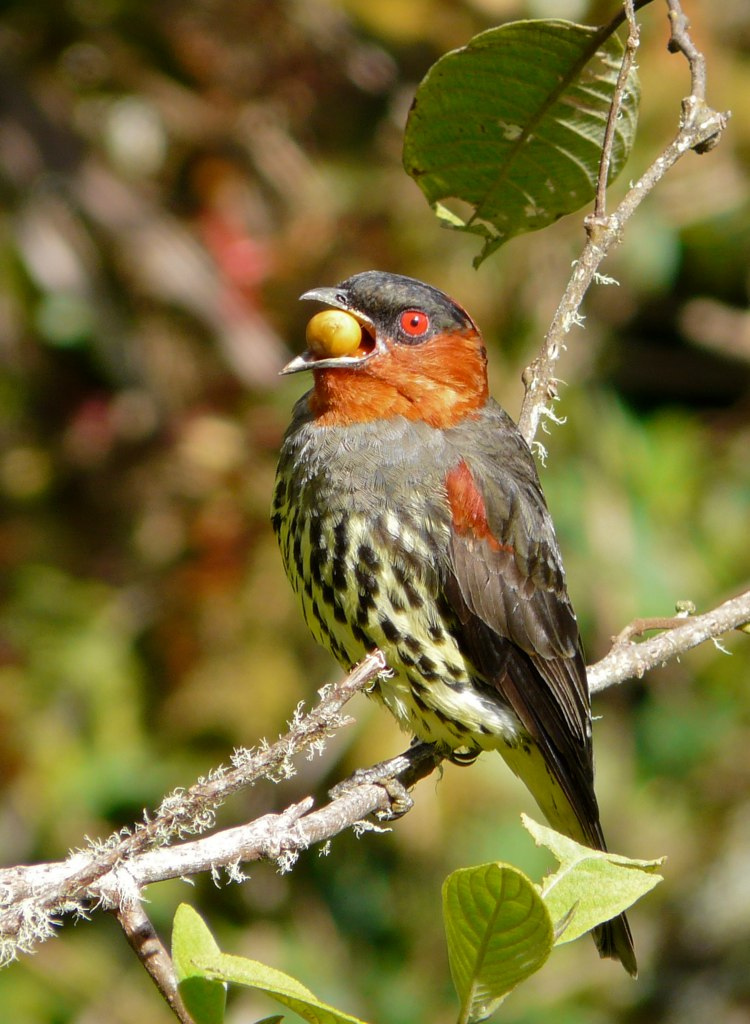
White Bellbird
Procnias albus
Order: Passeriformes / Family: Cotingidae

Wikimedia Commons
About the White Bellbird
The White Bellbird (Procnias albus) captivates ornithologists and bird enthusiasts alike with its striking appearance and unique vocalizations. This bird, belonging to the Cotingidae family, is most notable for producing the loudest known bird call, a feat that has garnered significant attention in the scientific community. The White Bellbird inhabits the montane forests of northern South America, predominantly found in regions of the Guianas, Venezuela, and parts of northern Brazil. These areas, characterized by dense, moist forest canopies, provide an ideal setting for the White Bellbird's solitary nature. During the breeding season, the male White Bellbird separates itself from others to establish territory and attract mates. The male's call is not just a tool for mate attraction but also serves a critical role in delineating this territory. This species plays an essential ecological role as both a seed disperser and a prey item for larger predators. The White Bellbird's diet, primarily fruit-based, facilitates the spread of seeds across its habitat, contributing to the forest's biodiversity. The bird's presence indicates a healthy ecosystem, as it requires an environment rich in fruiting trees for sustenance. While the White Bellbird is not currently listed as endangered, habitat destruction poses a potential threat. Deforestation in South America could impact the species' population, emphasizing the need for conservation efforts to preserve these vital habitats. The White Bellbird's seasonal behaviors, particularly during breeding, offer insights into the dynamics of montane forest ecosystems, underscoring the importance of preserving these natural landscapes.
The White Bellbird belongs to the family Cotingidae, within the order Passeriformes. These birds typically live average 9 years with a maximum recorded of 15 years..
How to Identify a White Bellbird
The White Bellbird stands out with its stark white plumage, a feature mostly seen in adult males. This white coloration provides a striking contrast against the lush green foliage of its forest habitat. In contrast, females exhibit a more subdued, olive-green plumage with streaked underparts, aiding in camouflage. Juveniles resemble females in coloration until they molt into adult plumage. The male's most distinguishing feature is the prominent wattle that extends from the forehead. This fleshy structure, not present in females, is used during courtship displays. When observing the White Bellbird, birders should note its posture. When perched, it maintains an upright position, often on an exposed branch, where it's easier to project its call. In flight, its silhouette is fairly compact, with a short tail and broad wings, characteristics that can help differentiate it from other similarly-sized forest birds. While confusion with other Cotinga species is possible, the combination of the male's pure white plumage and its loud call are definitive identifiers.
Having trouble telling birds apart? Upload a photo to our bird identification tool for an instant species match.
White Bellbird Habitat and Range
Preferred Habitat
The White Bellbird is native to the high-elevation montane forests of northern South America. It thrives in tropical rainforests, particularly those that offer dense, humid environments with abundant fruiting trees. This bird prefers altitudes ranging from 500 to 2,000 meters, frequently occupying the canopy where it can sing and scout for food. Unlike some other bird species, the White Bellbird shows little inclination towards urban areas, remaining largely in undisturbed forested regions. Seasonal habitat shifts are minimal, as these birds are not migratory. However, during the breeding season, males may choose slightly different territories within the forest to optimize their vocal displays.
Geographic Range
The White Bellbird's range is confined to the northern regions of South America, including the countries of Venezuela, Guyana, Suriname, French Guiana, and northern Brazil. It occupies the tropical montane forests in these areas year-round, with no significant migratory behavior noted. Population density tends to be highest in regions with extensive primary forest cover, where human disturbance is minimal. The bird's presence in these areas can often indicate healthy forest ecosystems with a rich diversity of fruiting trees, which are essential for its diet.
Want to know which birds visit your area? Browse our backyard birds by location guides for region-specific species lists.
What Does the White Bellbird Eat?
The White Bellbird predominantly consumes fruit, making it an important seed disperser within its ecosystem. It shows a preference for large, fleshy fruits, which it plucks from the treetops. Seasonal variations can influence its diet, as it may shift to different fruit sources depending on availability. Occasionally, the White Bellbird may supplement its diet with small insects or other protein sources, although these are not primary food items. Foraging typically occurs during daylight hours, with peak activity in the early morning and late afternoon when fruit availability is optimal.
White Bellbird Behavior and Social Structure
The White Bellbird exhibits solitary behavior, particularly outside of the breeding season. Males become highly territorial during breeding, using their loud calls to establish dominance and attract females. These calls, which can exceed 120 decibels, serve both as a mating call and as a warning to rival males. Courtship displays involve the male showcasing its white plumage and wattle, often accompanied by a series of vocalizations and physical posturing. The White Bellbird is diurnal, with most activity occurring during daylight. It remains vigilant against predators, taking flight at the first sign of danger. Flocking behavior is rare, as these birds prefer solitary or paired existence.
White Bellbird Nesting and Reproduction
White Bellbird nesting habits include constructing small, cup-shaped nests from twigs, leaves, and lichens. These nests are typically situated high in the canopy, often on a horizontal branch that provides concealment from predators. The female primarily builds the nest and incubates the eggs, usually laying a clutch of one to two eggs. The incubation period lasts approximately 23 to 25 days, during which the female remains on the nest while the male defends the territory. The chicks fledge after about four weeks, with both parents involved in feeding and caring for the young. Generally, the species produces one brood per breeding season.
White Bellbird Sounds and Vocalizations
The White Bellbird is best known for its piercingly loud call, a repetitive 'bong' sound that can be heard over a kilometer away. This call, used primarily by males, resembles the rhythmic clanging of a bell, with each note lasting several seconds. Call notes are distinct and can vary slightly in pitch depending on the individual. During the dawn chorus, these calls are most prevalent, filling the forest with their resonant sound. Alarm calls are less musical, often consisting of harsh, short bursts to alert others to danger.
Interesting Facts About the White Bellbird
- 1The White Bellbird's call has been measured at over 120 decibels, louder than a chainsaw.
- 2Males of the species sing the loudest calls known in the avian world, used to attract females.
- 3White Bellbirds are found only in the montane forests of northern South America, not migrating elsewhere.
- 4The male's striking white plumage contrasts with the female's olive-green, providing camouflage.
- 5Despite their loud calls, White Bellbirds tend to be solitary, interacting mainly during breeding season.
- 6The White Bellbird shares its habitat with other cotinga species, contributing to a rich biodiversity.
- 7The bird's diet primarily consists of fruit, aiding in seed dispersal throughout the forest ecosystem.
White Bellbird Conservation Status
The White Bellbird currently holds a status of Least Concern on the IUCN Red List, with populations considered stable. However, ongoing deforestation in parts of its range poses a significant threat to its habitat. Conservation efforts focus on preserving the montane forest ecosystems that are vital to its survival. Protected areas in regions like the Guiana Shield offer some refuge, though continued efforts to curb habitat destruction are crucial. Historical data suggests that while local populations may fluctuate, overall numbers have remained relatively consistent.