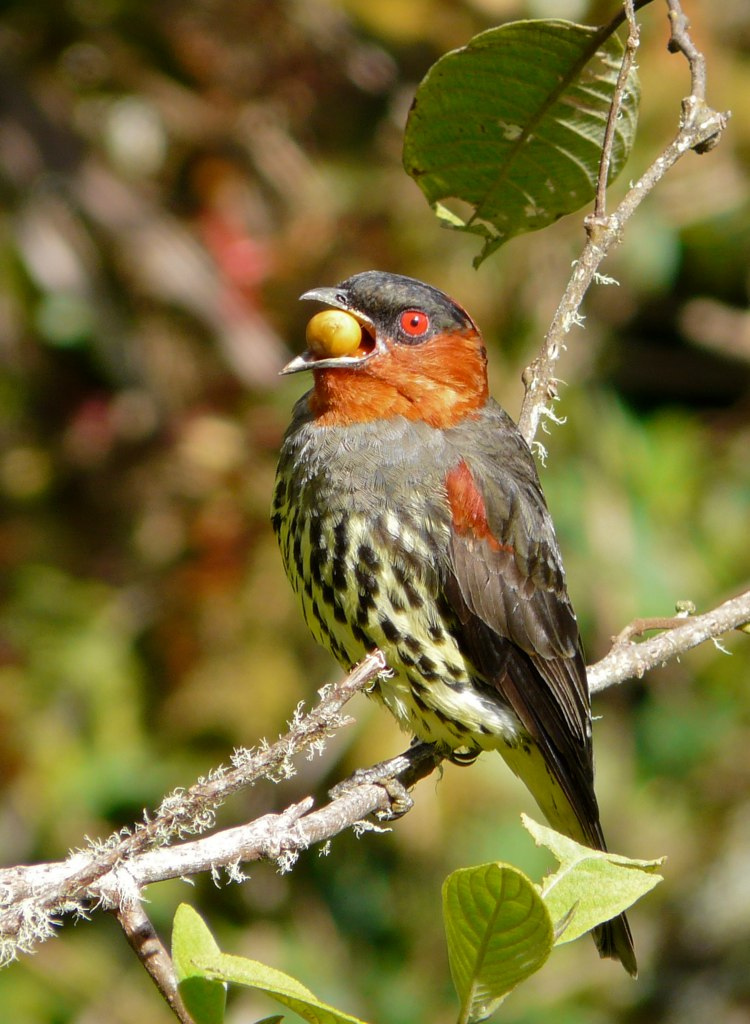
White-browed Purpletuft
Iodopleura isabellae
Order: Passeriformes / Family: Cotingidae

Wikimedia Commons
About the White-browed Purpletuft
The White-browed Purpletuft, scientifically known as Iodopleura isabellae, is a captivating member of the Cotingidae family. This small passerine bird is native to the lush tropical regions of South America, primarily in Colombia and Venezuela. Its vibrant purple plumage, accented with distinctive white eyebrows, makes it an eye-catching resident of the upper canopy. Despite its vivid coloration, the White-browed Purpletuft is often elusive, blending seamlessly into its dense forest environment. This bird plays a crucial role in its ecosystem as a seed disperser, contributing to the health and regeneration of the forest. The White-browed Purpletuft frequents the humid lowland and montane forests, where it exhibits a preference for areas with a high density of fruiting trees. It thrives in regions such as the Sierra Nevada de Santa Marta and the eastern Andes. Its presence in these biodiversity hotspots underscores its ecological significance. Seasonal behaviors include altitudinal migrations, where the bird moves to higher elevations during the breeding season in search of optimal nesting sites. During the non-breeding season, it descends to lower elevations, following the fruiting cycles of its preferred trees. The White-browed Purpletuft's reliance on specific habitats makes it sensitive to deforestation and habitat fragmentation. Conservation efforts focus on preserving its natural habitat and mitigating threats from agricultural expansion. Overall, the White-browed Purpletuft represents a vital component of the tropical forest ecosystems, highlighting the interconnectedness of avian species and their habitats.
The White-browed Purpletuft belongs to the family Cotingidae, within the order Passeriformes. These birds typically live average 5 years with a maximum recorded of 9 years.
How to Identify a White-browed Purpletuft
Identifying the White-browed Purpletuft involves noting its distinct plumage and behavior. Adult males and females share similar coloration, featuring a vibrant purple body with pronounced white eyebrows that give the bird its name. The purple hue is more intense in males, especially during the breeding season, while females may exhibit a slightly duller shade. Juveniles are distinguishable by their less saturated coloration and more muted white eyebrows. When observed in flight, the White-browed Purpletuft presents a compact silhouette with rapid wingbeats, typical of small passerines. Its short tail and rounded wings aid in agile maneuvering through the forest canopy. On perches, the bird maintains an upright posture, often sitting quietly while foraging for fruits. Its resemblance to other cotingas is mitigated by the unique combination of its white eyebrows and purple plumage. Similar species may include the Purple-throated Cotinga, but the latter lacks the signature white eyebrow and has a more robust build. Observers can differentiate the White-browed Purpletuft by its smaller size and distinctive coloration, aiding in accurate field identification.
Having trouble telling birds apart? Upload a photo to our bird identification tool for an instant species match.
White-browed Purpletuft Habitat and Range
Preferred Habitat
The White-browed Purpletuft inhabits tropical and subtropical moist lowland forests. It thrives in regions with dense canopy cover and abundant fruiting trees, such as the Amazon Basin and the slopes of the Andes. This bird occupies elevations ranging from 500 to 2000 meters, depending on the season. During the breeding season, the White-browed Purpletuft favors higher elevations for nesting. In contrast, the non-breeding season sees a shift to lower elevations, where food availability is more consistent. The bird shows limited presence in urban areas, preferring the tranquility and resources of undisturbed forests. Habitat fragmentation poses a significant threat, necessitating conservation efforts to preserve these vital areas. The White-browed Purpletuft's reliance on specific forest types makes it a key indicator of environmental health.
Geographic Range
The range of the White-browed Purpletuft encompasses the northern regions of South America, including Colombia, Venezuela, and parts of the Amazon Basin. It is primarily a resident bird, with altitudinal migrations rather than long-distance movements. During the breeding season, it can be found in the foothills and mountainous regions of the Andes, particularly in the Sierra Nevada de Santa Marta. In contrast, the non-breeding season finds it in lowland forests, such as those in the Orinoco River basin. The White-browed Purpletuft is not considered a migratory species, although it may undertake local movements in response to food availability. Population densities are often higher in regions with abundant fruiting trees, making these areas hotspots for observation. However, deforestation and habitat destruction have led to localized declines in some parts of its range.
Want to know which birds visit your area? Browse our backyard birds by location guides for region-specific species lists.
What Does the White-browed Purpletuft Eat?
The diet of the White-browed Purpletuft primarily consists of fruits, making it a frugivorous species. It favors small, fleshy fruits from a variety of tree species, which it skillfully plucks from branches. During the breeding season, the abundance of fruits dictates its foraging locations, often leading it to higher elevations. In addition to fruits, the White-browed Purpletuft occasionally consumes insects, particularly during periods of fruit scarcity. This dietary flexibility allows it to adapt to seasonal changes in food availability. Foraging typically occurs in the early morning and late afternoon, aligning with peak fruiting times. When searching for food, the White-browed Purpletuft often joins mixed-species flocks, benefiting from the collective vigilance and increased access to resources. Its role as a seed disperser is crucial for maintaining the diversity and regeneration of its forest habitat.
White-browed Purpletuft Behavior and Social Structure
The White-browed Purpletuft exhibits fascinating social and territorial behaviors. It is generally found in pairs or small family groups, displaying a tendency towards monogamous pair bonds. During the breeding season, these birds become more territorial, defending their nesting sites from intruders. Courtship involves elaborate displays, where males show off their vibrant plumage and perform short, fluttering flights to attract females. Flocking behavior is more common outside the breeding season, with the White-browed Purpletuft occasionally joining mixed-species groups. This behavior enhances foraging efficiency and predator vigilance. Daily activity patterns include periods of active foraging interspersed with rest and social interactions. The bird's response to predators involves swift, agile flights to dense cover, demonstrating its adaptability and awareness. Its keen eyesight and alert posture aid in early detection of threats.
White-browed Purpletuft Nesting and Reproduction
The nesting habits of the White-browed Purpletuft reflect its preference for concealed, well-protected sites. Nests are typically cup-shaped and constructed from fine twigs, leaves, and moss, often situated high in the forest canopy. These nests offer camouflage and protection from predators. The clutch size ranges from 2 to 3 eggs, with both parents sharing incubation duties. The incubation period lasts approximately 14 to 16 days, followed by a fledging period of 18 to 21 days. During this time, both parents actively feed and protect the chicks. The White-browed Purpletuft typically raises one brood per year, although favorable conditions may lead to a second brood. Parental roles are well-defined, with females primarily incubating while males focus on provisioning food. The nestling period is crucial for chick survival, demanding constant vigilance and care from the parents.
White-browed Purpletuft Sounds and Vocalizations
The vocalizations of the White-browed Purpletuft are characterized by a series of short, melodious notes. Its primary song consists of a rhythmic sequence of whistles and trills, often described as a soft, musical warble. These songs serve both territorial and courtship functions, with males frequently singing from elevated perches. Call notes are sharp and distinct, used for communication between mates and signaling alarm. The alarm calls are harsher and more rapid, alerting others to potential threats. During the dawn chorus, the White-browed Purpletuft's song contributes to the vibrant symphony of the forest, marking its presence among the canopy. Compared to other cotingas, its song is more subdued but no less enchanting, reflecting its subtle yet essential role in the avian community.
Interesting Facts About the White-browed Purpletuft
- 1The White-browed Purpletuft is one of the few birds with a purple primary plumage, making it visually striking.
- 2This bird's white eyebrow is a key feature that distinguishes it from other cotingas in its range.
- 3White-browed Purpletufts are known to engage in altitudinal migrations rather than long-distance travel.
- 4Their role as seed dispersers is crucial for maintaining the diversity and regeneration of tropical forests.
- 5The White-browed Purpletuft's song is a melodious warble, contrasting with the louder calls of many cotingas.
- 6Both male and female White-browed Purpletufts participate equally in feeding and caring for their young.
- 7Despite their colorful appearance, these birds are often difficult to spot due to their canopy-dwelling habits.
White-browed Purpletuft Conservation Status
The White-browed Purpletuft is currently classified as Near Threatened by the IUCN. Its population trend shows a gradual decline, primarily due to habitat loss from deforestation and agricultural expansion. Conservation efforts focus on protecting its forest habitats through the establishment of reserves and sustainable land-use practices. Historical population changes highlight the impact of human activity on its range and numbers. Conservation organizations are working to raise awareness about the importance of preserving the White-browed Purpletuft's environment to prevent further declines. Monitoring programs aim to gather data on population trends and habitat conditions, guiding future conservation strategies. Despite challenges, the White-browed Purpletuft's resilience offers hope for its continued survival, provided that effective conservation measures are implemented.