White-rumped Falcon
Polihierax insignis
Order: Falconiformes / Family: Falconidae

Wikimedia Commons
About the White-rumped Falcon
The White-rumped Falcon (Polihierax insignis) is an exceptionally fascinating raptor belonging to the Falconidae family and the Falconiformes order. Despite its diminutive size, this bird represents a unique blend of agility and predatory prowess. It inhabits a range of environments across Southeast Asia, primarily thriving in open woodlands and savannas, where it plays a crucial role as both a predator and a prey species within the ecosystem. The White-rumped Falcon is easily recognized by its distinct white rump, which stands out prominently against its otherwise dark plumage. This distinctive feature is particularly visible in flight, making it easier to identify in its natural habitat. The bird’s ecological significance cannot be overstated, as it helps to regulate insect populations and maintain the balance within its ecosystem. While the White-rumped Falcon is not as widely studied as some other raptors, its presence serves as an indicator of environmental health, particularly in the regions it inhabits. The bird’s preferred habitats range from the lowland forests of Thailand and Myanmar to the more arid landscapes of Laos and Cambodia. These diverse environments provide it with ample opportunities to hunt and breed, showcasing its adaptability and resilience. Seasonal behaviors of the White-rumped Falcon also offer fascinating insights into its life cycle. During the breeding season, which typically occurs in the early months of the year, these falcons become more territorial and exhibit increased vocalizations. This period of heightened activity contrasts with the less conspicuous behaviors seen during non-breeding times, when the birds may be more solitary and elusive. The White-rumped Falcon’s role in its ecosystem extends beyond its predatory activities. As both predator and prey, it occupies a central position in the food web, influencing the population dynamics of other species. Its interactions with other wildlife, including competition with larger raptors and evasion of predators, reflect the complex interdependencies that characterize its ecosystem. Understanding these dynamics is crucial for conservation efforts, ensuring that the White-rumped Falcon continues to thrive in its natural habitat.
The White-rumped Falcon belongs to the family Falconidae, within the order Falconiformes. These birds typically live average 5-8 years, with a maximum recorded of 10 years.
How to Identify a White-rumped Falcon
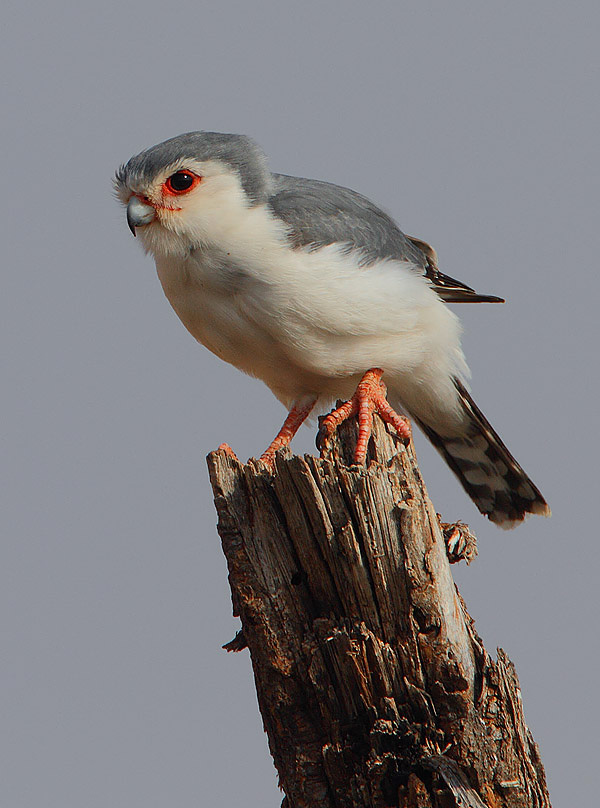
The White-rumped Falcon can be identified by several key characteristics that distinguish it from other raptors. Adults display a distinctive white rump patch that contrasts with their predominantly dark upperparts, including the back and wings. Their underparts are generally lighter, often presenting a subtle grayish tone, which can be seen when the bird is in flight. Males and females of this species are similar in appearance, though females tend to be slightly larger. Juveniles resemble adults but may exhibit more streaked or mottled plumage, particularly on the underparts, which can aid in distinguishing them from mature birds. In terms of size, the White-rumped Falcon falls into the small raptor category, with a wingspan ranging from 20 to 24 inches. Its compact size allows for agile and swift flight, a trait particularly useful for capturing prey. The bird's silhouette in flight is characterized by its pointed wings and relatively short tail, features that can help observers differentiate it from similar species. Perching posture of the White-rumped Falcon is another identifying feature. It often adopts a relaxed stance on open branches or utility poles, scanning the environment for potential prey. This behavior, combined with its sharp, hooked beak and keen eyesight, underscores its role as an efficient predator. While these field marks are useful for identification, observers should be cautious of potential confusion with other small falcons or similar-sized birds of prey, particularly in regions where several species coexist.
Having trouble telling birds apart? Upload a photo to our bird identification tool for an instant species match.
White-rumped Falcon Habitat and Range
Preferred Habitat
The White-rumped Falcon predominantly inhabits open woodlands and savanna regions across Southeast Asia. It favors areas where scattered trees provide hunting perches and where open spaces facilitate its hunting style. Regions such as the lowland forests of Thailand, the dry open landscapes of Myanmar, and the mixed woodlands of Cambodia and Laos provide ideal habitats. The species typically prefers elevations ranging up to 1,200 meters, although it is more commonly found at lower altitudes. Seasonal habitat shifts are minimal, as the bird is largely resident year-round in its range. However, it may adjust its location slightly within its habitat in response to food availability or environmental changes. Unlike some raptors, the White-rumped Falcon is not commonly found in urban areas, preferring rural and semi-rural settings where human disturbance is limited. This preference for naturally undisturbed environments makes it a less frequent sight in heavily urbanized regions, although it may occasionally venture into agricultural areas where open terrain is available.
Geographic Range
The range of the White-rumped Falcon covers several countries in Southeast Asia. It is primarily found in Myanmar, Thailand, Laos, Cambodia, and Vietnam. Within these countries, its distribution is patchy, often concentrated in areas that offer suitable habitat conditions. The bird’s presence is most notable in the forested regions of northern and central Thailand, as well as in the dry forests of eastern Myanmar. During the breeding season, the population density may increase in specific locales where nesting sites are abundant. However, the White-rumped Falcon is not migratory, remaining within its range throughout the year. This resident behavior suggests a strong territorial nature, which limits its movements to within its established home range. Population density hotspots can be found in regions where conservation efforts have maintained suitable habitats, such as protected areas in Thailand and Cambodia. In these areas, the falcon benefits from a stable food supply and reduced human interference.
Want to know which birds visit your area? Browse our backyard birds by location guides for region-specific species lists.
What Does the White-rumped Falcon Eat?
The diet of the White-rumped Falcon primarily consists of insects and small vertebrates. It is an adept hunter, employing a sit-and-wait strategy from perches to spot potential prey. Common food items include grasshoppers, crickets, and beetles, which form the bulk of its diet. The falcon also preys on small birds and occasionally takes small mammals, such as rodents, especially during times when insect prey is less abundant. Seasonal diet changes are influenced by prey availability, with a greater reliance on insects during the wet season when they are more plentiful. The White-rumped Falcon prefers to hunt during the early morning and late afternoon, when prey is most active, and temperatures are cooler. Its foraging techniques include short, rapid flights to capture insects on the wing and pouncing on ground-dwelling prey from a perch. Prey size typically ranges from 1 to 5 centimeters, reflecting the falcon’s preference for manageable, energy-efficient targets.
White-rumped Falcon Behavior and Social Structure
The White-rumped Falcon exhibits a solitary social structure, although pairs may be observed during the breeding season. These birds are territorial and will actively defend their chosen nesting area from intruders, including other raptors. Courtship displays are characterized by aerial acrobatics and vocalizations, which strengthen pair bonds and establish territory boundaries. Flocking behavior is generally absent, as these falcons prefer to hunt and roost alone or in pairs. In response to predators, the White-rumped Falcon relies on evasive flight maneuvers and its keen eyesight to avoid threats. Its daily activity patterns include periods of rest during the hottest parts of the day, with increased hunting activity in the cooler morning and late afternoon hours. The falcon’s territorial nature and solitary lifestyle are well-suited to its open woodland and savanna habitats, where it can efficiently exploit available resources.
White-rumped Falcon Nesting and Reproduction
The White-rumped Falcon typically nests in tree cavities, often utilizing abandoned woodpecker holes or natural crevices. Nesting site selection is influenced by the availability of suitable cavities, as these provide protection from predators and environmental elements. The bird’s clutch size usually ranges from 2 to 4 eggs, which are incubated primarily by the female, while the male provides food. The incubation period lasts approximately 28 to 30 days, during which the female remains vigilant at the nest site. Fledging occurs about 30 to 35 days after hatching, with both parents actively involved in feeding and protecting the young chicks. The White-rumped Falcon generally produces one brood per year, although favorable conditions may occasionally allow for a second brood. Parental roles are clearly defined, with the female focusing on direct care of the offspring and the male primarily responsible for foraging.
White-rumped Falcon Sounds and Vocalizations
The primary vocalizations of the White-rumped Falcon consist of a series of high-pitched, rapid calls. These calls serve various purposes, including communication between mates and territorial defense. The most common sound is a repeated 'ki-ki-ki' call, which can be heard during the breeding season as part of courtship and territorial displays. Alarm calls are sharper and more insistent, often described as a rapid 'kek-kek-kek,' which can alert other birds to potential danger. The White-rumped Falcon is not known for a melodious song, but its calls are distinctive and carry well over the open habitats it frequents. During the dawn chorus, these calls may be more frequent as the birds establish their presence and communicate with potential mates.
Interesting Facts About the White-rumped Falcon
- 1The White-rumped Falcon is one of the smallest members of the Falconidae family, measuring only about 20-25 cm in length.
- 2It is named for its conspicuous white rump, a feature that is particularly visible during flight and helps in identification.
- 3Unlike many raptors, the White-rumped Falcon does not migrate, staying within its limited range throughout the year.
- 4This falcon species is particularly adept at catching insects mid-air, showcasing impressive aerial agility.
- 5The White-rumped Falcon has a unique breeding strategy, often utilizing existing cavities rather than building its own nests.
White-rumped Falcon Conservation Status
The White-rumped Falcon is currently listed as Near Threatened by the IUCN. Its population trend is declining, primarily due to habitat loss and degradation. Deforestation and the conversion of land for agriculture have significantly reduced suitable habitats, impacting the bird’s breeding and foraging opportunities. Conservation efforts are focused on protecting remaining forested areas and promoting sustainable land-use practices. Historical population changes have been influenced by fluctuating environmental conditions and human activities, emphasizing the need for ongoing monitoring and habitat restoration initiatives to ensure the species' survival.
Other Falconidae Species


Birds Similar to the White-rumped Falcon
These species are often confused with the White-rumped Falcon due to similar appearance or overlapping range.