White-speckled Laughingthrush
Garrulax bieti
Order: Passeriformes / Family: Leiothrichidae

Wikimedia Commons
About the White-speckled Laughingthrush
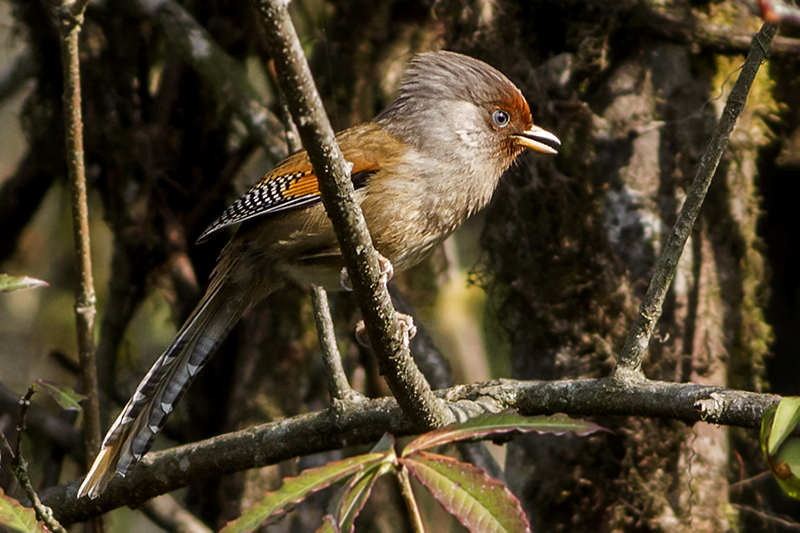
The White-speckled Laughingthrush (Garrulax bieti) is a captivating bird of the family Leiothrichidae, found predominantly in the mountainous regions of southwestern China. Its presence in the temperate and subtropical forests of Yunnan and Sichuan provinces highlights its preference for dense, shrubby understory. This bird is not just a visual delight but plays a significant role in the ecosystem as both a seed disperser and an insect predator. The White-speckled Laughingthrush thrives in its high-altitude habitat, often found between 2,000 and 3,500 meters above sea level, where it forages in mixed flocks during the non-breeding season. Seasonal behaviors include forming large, social groups in winter, which helps them navigate and survive the colder months. In spring, these birds disperse into pairs, establishing territories for breeding. Their ecological role extends to controlling insect populations and aiding in forest regeneration through their seed-spreading activities. The White-speckled Laughingthrush, like many other species in its genus, is known for its complex vocalizations, which are both a means of social interaction and territorial defense. This bird's presence within its limited range makes it a species of interest for both ornithologists and conservationists, particularly as habitat alteration poses a threat to its population. Conservation efforts are crucial to maintaining the delicate balance of the ecosystems where this laughingthrush resides, ensuring that its essential roles within the forest community continue undisturbed.
The White-speckled Laughingthrush belongs to the family Leiothrichidae, within the order Passeriformes. These birds typically live around 7-10 years, with the potential to reach up to 12 years in the wild..
How to Identify a White-speckled Laughingthrush
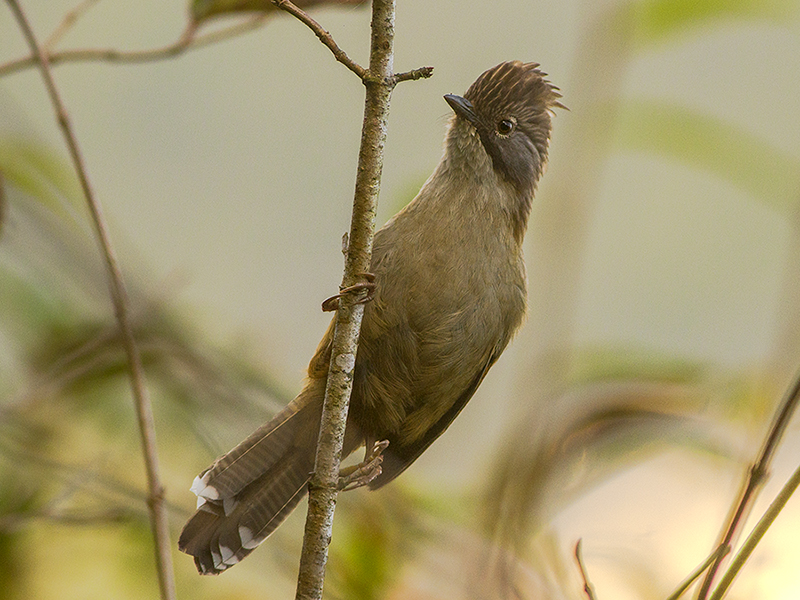
The adult White-speckled Laughingthrush is characterized by its olive-brown body, marked with striking white speckles that give the bird its name. These speckles are particularly prominent on the head and upperparts, providing a distinctive field mark that sets it apart from other laughingthrush species. Males and females are similar in plumage, making visual sex differentiation challenging without behavioral cues. Juveniles resemble adults but may have less pronounced speckling and a more subdued overall coloration. The bird's robust body and rounded wings contribute to a strong, purposeful flight, though it often prefers to move through the underbrush on foot rather than fly. When perched, the White-speckled Laughingthrush displays a characteristic posture, often cocking its tail slightly upwards and flicking it. Its vocalizations, which include a variety of musical notes and chatter, further assist in identification. Confusion with similar species such as the Black-faced Laughingthrush can occur, but the white speckling and the distinctive vocal repertoire are reliable differentiators.
Having trouble telling birds apart? Upload a photo to our bird identification tool for an instant species match.
White-speckled Laughingthrush Habitat and Range
Preferred Habitat
The White-speckled Laughingthrush primarily inhabits montane forests, thriving in areas with a dense undergrowth of bamboo and rhododendron. These habitats provide both the cover and food resources necessary for their survival. Typically found at elevations ranging from 2,000 to 3,500 meters, they occupy regions such as the Hengduan Mountains, where the environment is characterized by steep slopes and lush, temperate vegetation. Seasonal shifts may occur, with the birds descending to lower elevations during harsh winter conditions. Unlike some related species, the White-speckled Laughingthrush exhibits limited adaptability to urban or highly altered landscapes, preferring the seclusion of forested areas. Its reliance on pristine habitats underscores the importance of conservation in maintaining these crucial environments.
Geographic Range
The range of the White-speckled Laughingthrush is restricted to the mountainous regions of southwestern China, specifically within the provinces of Yunnan and Sichuan. This bird, being non-migratory, remains within its range year-round, although it may move altitudinally in response to seasonal changes. While it does not undertake long-distance migrations, these altitudinal movements ensure access to food resources throughout the year. Population densities are generally higher in undisturbed forest areas, with hotspots in the Hengduan Mountains known for their rich biodiversity. The limited geographical range of this species makes it more susceptible to habitat loss and environmental changes, necessitating targeted conservation measures.
Want to know which birds visit your area? Browse our backyard birds by location guides for region-specific species lists.
What Does the White-speckled Laughingthrush Eat?
The diet of the White-speckled Laughingthrush consists primarily of insects and other invertebrates, with a secondary reliance on fruits and seeds. This omnivorous diet allows flexibility depending on seasonal availability. In the warmer months, the bird actively forages for beetles, caterpillars, and ants, using its strong bill to probe the leaf litter and bark crevices. During autumn and winter, when insect abundance diminishes, fruits and seeds become more prominent in their diet. The laughingthrush often participates in mixed-species foraging flocks, which increases its foraging efficiency and reduces the risk of predation. Its feeding activity peaks in the early morning and late afternoon, taking advantage of cooler temperatures and heightened insect activity.
White-speckled Laughingthrush Behavior and Social Structure
The White-speckled Laughingthrush exhibits complex social behavior. Outside the breeding season, it forms large flocks, sometimes numbering up to 20 individuals, which forage and roost together. These flocks provide safety in numbers, reducing the risk of predation. Territorial during the breeding season, pairs claim and defend specific areas, using loud vocalizations to communicate their presence and deter intruders. Courtship displays are subtle, often involving mutual preening and synchronized movements. In response to predators, this species emits sharp alarm calls and may engage in mobbing behavior to drive off the threat. Diurnally active, the White-speckled Laughingthrush follows a pattern of early morning and late afternoon activity, resting during the heat of the day.
White-speckled Laughingthrush Nesting and Reproduction
White-speckled Laughingthrushes build cup-shaped nests, often constructed from twigs, moss, and leaves, lined with softer materials such as feathers and grass. These nests are typically located in dense shrubbery or low trees, providing concealment from predators. The typical clutch size ranges from two to four eggs, which are pale blue with brownish speckles. Both parents participate in incubation, which lasts approximately 14 to 16 days. Once hatched, the chicks are altricial and remain in the nest for about two weeks before fledging. Parents continue to feed and protect the fledglings for several weeks post-fledging. The species generally has one to two broods per year, depending on environmental conditions and food availability.
White-speckled Laughingthrush Sounds and Vocalizations
The vocalizations of the White-speckled Laughingthrush are both diverse and melodious. Its primary song consists of a series of rich, musical notes that vary in pitch and tempo, often described as a bubbling or warbling laughter. These songs serve to establish territory and attract mates. In addition to the primary song, this bird produces a variety of call notes, ranging from soft chirps to sharp, piercing alarms used to warn of predators. During the dawn chorus, the laughingthrush is particularly vocal, contributing to the symphony of sounds that characterize its mountainous habitat. Its calls often interweave with those of other forest birds, creating a complex acoustic environment.
Interesting Facts About the White-speckled Laughingthrush
- 1The White-speckled Laughingthrush forms flocks that can include up to 20 individuals during the non-breeding season.
- 2This bird's song is often compared to human laughter, a trait shared with other laughingthrush species.
- 3White-speckled Laughingthrushes are known to participate in mixed-species foraging flocks, enhancing their feeding efficiency.
- 4Despite their social nature in winter, these birds become fiercely territorial during the breeding season.
- 5The White-speckled Laughingthrush's diet shifts seasonally, relying more on fruits and seeds in winter as insects become scarce.
White-speckled Laughingthrush Conservation Status
Currently classified as Near Threatened by the IUCN, the White-speckled Laughingthrush faces ongoing threats from habitat loss and fragmentation due to logging and agricultural expansion. Though not yet in significant decline, its limited range makes it vulnerable to environmental changes. Conservation efforts focus on preserving its montane forest habitats through the establishment of protected areas and sustainable land-use practices. Historical population data suggests stability in undisturbed regions, but continued monitoring and habitat management are essential to prevent future declines. Engaging local communities in conservation initiatives can further bolster efforts to protect this intriguing species.