
White-tailed Tityra
Tityra leucura
Order: Passeriformes / Family: Cotingidae

Wikimedia Commons
About the White-tailed Tityra
The White-tailed Tityra, or Tityra leucura, is a unique bird species found primarily in the tropical forests of South America. Known for its striking appearance and distinctive calls, this bird plays a significant role in its ecosystem. Tityras are part of the Cotingidae family, a group of passerine birds renowned for their diverse colors and vocalizations. The White-tailed Tityra is often observed in the Amazon Basin, which spans across several countries, including Brazil, Peru, and Bolivia. It thrives in humid lowland forests, where it contributes to seed dispersal through its frugivorous diet. The presence of the White-tailed Tityra in these regions indicates a healthy, biodiverse forest. This bird's ecological role is crucial as it helps maintain the balance of forest ecosystems. Seasonal behaviors of the White-tailed Tityra include breeding during the wet season when food is abundant. Unlike many other Cotingidae species, the White-tailed Tityra does not migrate long distances but may exhibit local movements in search of food. Its population is generally stable, although habitat destruction poses a potential threat. Observers often spot the bird perched on high branches, where it vocalizes with a series of harsh, nasal calls.
The White-tailed Tityra belongs to the family Cotingidae, within the order Passeriformes. These birds typically live average 5-6 years, with some reaching up to 10 years..
How to Identify a White-tailed Tityra
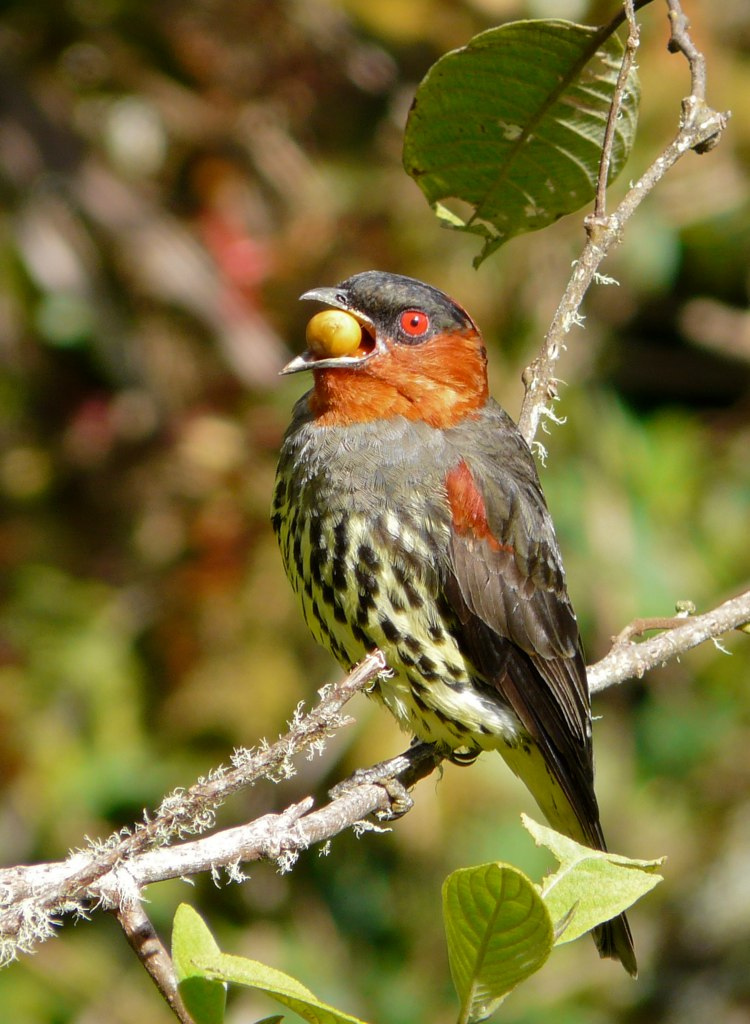
The White-tailed Tityra is medium-sized with a distinctive white tail, which gives the bird its name. Adult males have a striking black cap that extends from the forehead to the nape, contrasting sharply with their pale gray body. Females, on the other hand, possess a slightly duller plumage with a less pronounced cap. Juveniles resemble adult females but with an even duller overall appearance. The White-tailed Tityra's bill is stout and slightly hooked, perfect for its fruit-based diet. In flight, the bird's broad wings and relatively short tail are noticeable. When perched, the White-tailed Tityra maintains an upright stance, often scanning its surroundings. This bird can be confused with the Masked Tityra, but the latter has more extensive black facial markings. The White-tailed Tityra's distinct tail pattern and cap are key field marks for accurate identification.
Having trouble telling birds apart? Upload a photo to our bird identification tool for an instant species match.
White-tailed Tityra Habitat and Range
Preferred Habitat
The White-tailed Tityra inhabits tropical and subtropical forests, primarily lowland rainforests. It prefers areas with dense canopy cover, where it can easily find food and shelter. This bird is often found in the Amazon Basin and occasionally in secondary forests or forest edges. It is typically seen at elevations below 1,200 meters. The White-tailed Tityra shows a preference for undisturbed forest habitats but can adapt to fragmented landscapes. Unlike some bird species, it is rarely found in urban areas or highly disturbed environments. Seasonal habitat shifts are minimal, as this bird tends to remain within its established range.
Geographic Range
The White-tailed Tityra's range spans across northern South America. It is predominantly found in Brazil, Peru, and Bolivia, with some populations in Colombia and Ecuador. This bird is a year-round resident in these regions and does not undergo long-distance migrations. However, it may move locally in response to food availability. Population density is highest in the Amazon Basin, where the habitat remains largely intact. In areas with significant deforestation, the White-tailed Tityra's presence may decline. Despite this, the species remains widespread within its range, thanks to large tracts of suitable habitat.
Want to know which birds visit your area? Browse our backyard birds by location guides for region-specific species lists.
What Does the White-tailed Tityra Eat?
The White-tailed Tityra's diet primarily consists of fruits and berries, which it forages from the forest canopy. It favors figs and other soft fruits but will also consume insects and small invertebrates when available. Seasonal changes in fruit availability can influence its diet, with a higher intake of insects during the breeding season to meet protein demands. The White-tailed Tityra employs a perch-and-swoop technique to capture food, often scanning from a high vantage point before making its move. Prey size typically ranges from small beetles to larger caterpillars. Feeding generally occurs during the early morning and late afternoon, coinciding with peak activity periods.
White-tailed Tityra Behavior and Social Structure
The White-tailed Tityra is a socially flexible bird, often seen alone or in pairs during the breeding season. Males engage in vocal displays to establish territory and attract mates, using harsh, nasal calls. Courtship involves aerial displays and mutual feeding. Outside the breeding season, the White-tailed Tityra may join mixed-species foraging flocks, benefiting from the increased vigilance against predators. The bird exhibits some territoriality, defending key feeding and nesting sites. It remains active throughout the day, with peak activities during cooler morning and late afternoon hours. The bird's response to predators includes a series of alarm calls and evasive flights.
White-tailed Tityra Nesting and Reproduction
The White-tailed Tityra typically nests in tree cavities, either natural or excavated by other species. It prefers locations high above the ground to protect against predators. Nests are often lined with leaves and soft plant materials. The female lays 2-3 eggs per clutch, which she incubates for about 15-17 days. Both parents participate in feeding the chicks, which fledge approximately 3 weeks after hatching. The White-tailed Tityra usually raises one brood per year, although favorable conditions might lead to a second. Parental roles are shared, with both male and female actively involved in chick rearing.
White-tailed Tityra Sounds and Vocalizations
The White-tailed Tityra's primary song consists of a series of harsh, nasal notes that can carry over long distances. These calls often serve as communication between mates or as territorial signals. Their call notes are short and buzzy, with a rhythmic quality that sets them apart from other forest sounds. Alarm calls are more intense and rapid, designed to alert mates of potential threats. During the dawn chorus, the White-tailed Tityra's calls intermingle with those of other forest birds, creating a complex soundscape. Compared to the melodious songs of many passerines, the Tityra's vocalizations are more functional than musical.
Interesting Facts About the White-tailed Tityra
- 1The White-tailed Tityra is one of the few species in the Cotingidae family with no significant sexual dimorphism.
- 2Unlike many birds, the White-tailed Tityra can often be seen perched alone, scanning for fruit rather than insects.
- 3The White-tailed Tityra's call is often described as harsh and nasal, setting it apart from many melodious tropical species.
- 4This bird has a relatively short incubation period, with eggs hatching after just 15-17 days.
- 5The White-tailed Tityra often nests in abandoned woodpecker cavities, making use of these ready-made shelters.
White-tailed Tityra Conservation Status
The White-tailed Tityra is currently listed as Least Concern by the IUCN, with a stable population trend. Despite its relatively secure status, ongoing habitat destruction poses a potential threat. Deforestation in the Amazon Basin could fragment populations and reduce available habitat. Conservation efforts focus on preserving large tracts of rainforest to ensure the species' continued survival. Historical data suggest that the White-tailed Tityra has maintained stable numbers over the past decades, benefiting from its adaptability to secondary forests. Continued monitoring and habitat protection remain critical for its future conservation.
Other Cotingidae Species



Birds Similar to the White-tailed Tityra
These species are often confused with the White-tailed Tityra due to similar appearance or overlapping range.

