
White-whiskered Laughingthrush
Trochalopteron morrisonianum
Order: Passeriformes / Family: Leiothrichidae

Wikimedia Commons
About the White-whiskered Laughingthrush
The White-whiskered Laughingthrush, scientifically known as Trochalopteron morrisonianum, is a bird of remarkable beauty and ecological significance, native to the high-altitude forests of Taiwan. This bird is an integral part of the Taiwanese avian community, found mostly in montane forests. The species thrives in elevations ranging from 1,800 to 3,500 meters, primarily above the treeline in temperate broadleaf and mixed forests. Its presence in these high-altitude ecosystems underscores its adaptation to cold and rugged environments. The bird's ecological role includes seed dispersion and insect population control, making it a valuable player in maintaining the health of its habitat.
The White-whiskered Laughingthrush is a member of the family Leiothrichidae, known for its gregarious nature and complex vocalizations. Its common name derives from the prominent white streaks on its face that resemble whiskers. These streaks contrast sharply against its predominantly grayish-brown plumage, making it easily recognizable. The bird's significance extends beyond mere ecological contributions; it is a cultural icon in Taiwan, where it is celebrated for its melodious calls.
Seasonally, the White-whiskered Laughingthrush shows some altitudinal movement, although it does not migrate long distances. During colder months, it may descend slightly to lower elevations within its montane range. This subtle shift helps it avoid the harshest winter conditions. Observers can often spot these birds foraging in mixed-species flocks during non-breeding seasons, contributing to the dynamic avian communities of Taiwan's mountainous regions. Its adaptability and resilience in the face of seasonal changes highlight its role as a resident species in these challenging environments.
The White-whiskered Laughingthrush belongs to the family Leiothrichidae, within the order Passeriformes. These birds typically live typically 5-7 years in the wild, with some individuals living up to 10 years..
How to Identify a White-whiskered Laughingthrush
The White-whiskered Laughingthrush is medium-sized, measuring approximately 26 to 28 cm in length with a wingspan of about 35 cm. Adult plumage is characterized by a rich, dark brown body, which lightens towards a grayish underbelly. The most striking feature is its white 'whiskers'-distinct white markings that streak from the base of the bill to beyond the eye. These markings are key identifiers, setting it apart from other laughingthrush species.
Juveniles resemble adults but have slightly duller plumage, lacking the full intensity of the white facial streaks seen in mature birds. Both sexes appear similar, with no significant sexual dimorphism, making it challenging to differentiate males from females in the field. In terms of posture, the White-whiskered Laughingthrush often adopts a slightly hunched stance when foraging or perching, adding to its characteristic silhouette.
While in flight, the bird displays a somewhat rounded wing shape, with broad strokes that appear leisurely and deliberate. This flight pattern, combined with its distinctive facial markings, helps birders identify it from a distance. An observer might confuse it with the Rufous-capped Laughingthrush, but the latter lacks the prominent white whiskers and has a more rufous cap, aiding in differentiation.
Having trouble telling birds apart? Upload a photo to our bird identification tool for an instant species match.
White-whiskered Laughingthrush Habitat and Range
Preferred Habitat
The White-whiskered Laughingthrush primarily inhabits montane forests of Taiwan, favoring areas with dense undergrowth and bamboo thickets. These forests are typically found at elevations between 1,800 and 3,500 meters. Within this range, the bird prefers temperate broadleaf and mixed forest types, which provide ample cover and food resources.
During the breeding season, it often stays at higher elevations where human disturbance is minimal. In contrast, during colder months, it may move to slightly lower elevations within the montane environment, seeking areas where food remains abundant and conditions are less severe. Unlike many birds, the White-whiskered Laughingthrush does not frequent urban or suburban areas, remaining mostly within its preferred forested habitats.
Its presence is less common in heavily disturbed areas, underscoring the bird's reliance on relatively intact forest ecosystems. These habitats not only support the bird's dietary needs but also serve as important breeding grounds, ensuring the continuation of its population.
Geographic Range
The White-whiskered Laughingthrush is endemic to Taiwan, where it occupies a relatively narrow range confined to the central and northern mountain ranges of the island. These include well-known locations such as Yushan (Jade Mountain) and Hehuanshan, where the bird is a year-round resident.
Its breeding range is consistent with its general habitat preferences, remaining within montane forest areas throughout the year. Because the species is non-migratory, it does not engage in long-distance movements, although altitudinal shifts within its range occur seasonally.
Population density is highest in undisturbed forest areas, with birds often seen in small, localized flocks. These flocks increase in size during non-breeding periods when individuals join mixed-species foraging groups. The bird's presence can be sparse in regions where deforestation or habitat fragmentation has occurred, highlighting its reliance on continuous forest cover.
Want to know which birds visit your area? Browse our backyard birds by location guides for region-specific species lists.
What Does the White-whiskered Laughingthrush Eat?
The diet of the White-whiskered Laughingthrush is omnivorous, consisting primarily of insects and other invertebrates, which it gleans from foliage and the forest floor. This diet plays a crucial role in controlling insect populations within its habitat. In addition to insects, the bird consumes a variety of fruits and seeds, particularly during the autumn and winter months when insect availability declines.
Its feeding technique involves both ground foraging and foliage gleaning, often seen hopping and fluttering among low branches and the undergrowth. The White-whiskered Laughingthrush uses its strong bill to uncover insects hidden in bark crevices or leaf litter, displaying a level of dexterity that aids in its survival.
The seasonal variation in food availability influences its diet, with a heavier reliance on plant material during colder months. This adaptability ensures a steady food supply throughout the year, allowing the bird to thrive in its montane environment despite seasonal changes.
White-whiskered Laughingthrush Behavior and Social Structure
Social and gregarious, the White-whiskered Laughingthrush often forms small flocks outside the breeding season, contributing to its complex social structure. These flocks, sometimes mixed with other species, provide safety in numbers and enhance foraging success.
Territorial behavior becomes more pronounced during the breeding season, with pairs defending their chosen areas vigorously. This territoriality is less evident during non-breeding seasons, when birds are more tolerant of conspecifics.
Courtship displays include mutual preening and soft vocalizations, strengthening pair bonds. The birds are diurnal, with peak activity during early mornings and late afternoons. In response to predators, they exhibit mobbing behavior, often calling loudly to alert other birds of potential threats.
White-whiskered Laughingthrush Nesting and Reproduction
The White-whiskered Laughingthrush builds cup-shaped nests, using materials such as twigs, moss, and leaves, often lining them with softer materials like feathers. Nests are typically constructed low in shrubs or small trees, well-concealed within dense vegetation to protect against predators.
A typical clutch consists of three to four eggs, with both parents sharing incubation duties over a period of about two weeks. Once hatched, the chicks remain in the nest for another two weeks before fledging. Both parents participate in feeding and caring for the young, ensuring high survival rates.
The species usually raises one brood per year, although favorable conditions may lead to a second. Parental roles are well-defined, with both sexes contributing equally to nesting and rearing activities.
White-whiskered Laughingthrush Sounds and Vocalizations
The primary song of the White-whiskered Laughingthrush is a series of melodious whistles and warbles, often described as cheerful and complex. These vocalizations are integral to establishing territory and attracting mates during the breeding season.
Call notes are varied, including short, sharp 'tsee-tsee' sounds used for communication within flocks. Alarm calls are more strident and serve as warnings to other birds about potential predators.
The dawn chorus, particularly vibrant during the spring, features the bird's full repertoire, filling the montane forests with its lively and intricate melodies. It shares similarities with the vocalizations of other laughingthrushes, yet its rhythm and clarity make it distinctive.
Interesting Facts About the White-whiskered Laughingthrush
- 1The White-whiskered Laughingthrush is exclusive to Taiwan, making it an endemic species with a limited geographical range.
- 2It is named for the striking white whisker-like streaks on its face, which are key identifiers among laughingthrushes.
- 3Despite its colorful name, the bird's plumage is predominantly brown and gray, with white facial features being its most vibrant trait.
- 4The species is non-migratory but exhibits altitudinal movements, adjusting to seasonal changes in its montane environment.
- 5In mixed-species flocks, the White-whiskered Laughingthrush often takes a leading role, guiding other birds during foraging.
- 6Its vocalizations are considered some of the most melodious among Taiwan's montane bird species, often heard at dawn.
- 7This bird contributes to forest health by dispersing seeds and controlling insect populations, highlighting its ecological importance.
White-whiskered Laughingthrush Conservation Status
The White-whiskered Laughingthrush is currently listed as Least Concern by the IUCN, with a stable population trend. However, habitat destruction poses a significant threat, particularly deforestation for agriculture and development. Conservation efforts focus on protecting Taiwan's montane forests, with several protected areas established to preserve these ecosystems. Historical population changes have been minimal, due in part to the bird's adaptability and the comparatively intact nature of its preferred habitats. Ongoing monitoring and habitat preservation are crucial to ensure the survival of this iconic species, with local and international initiatives working towards sustainable habitat management.
Other Leiothrichidae Species

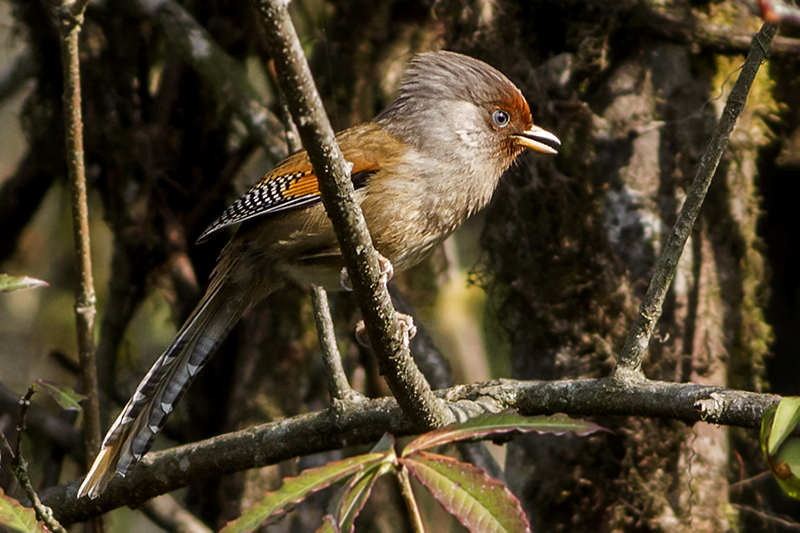

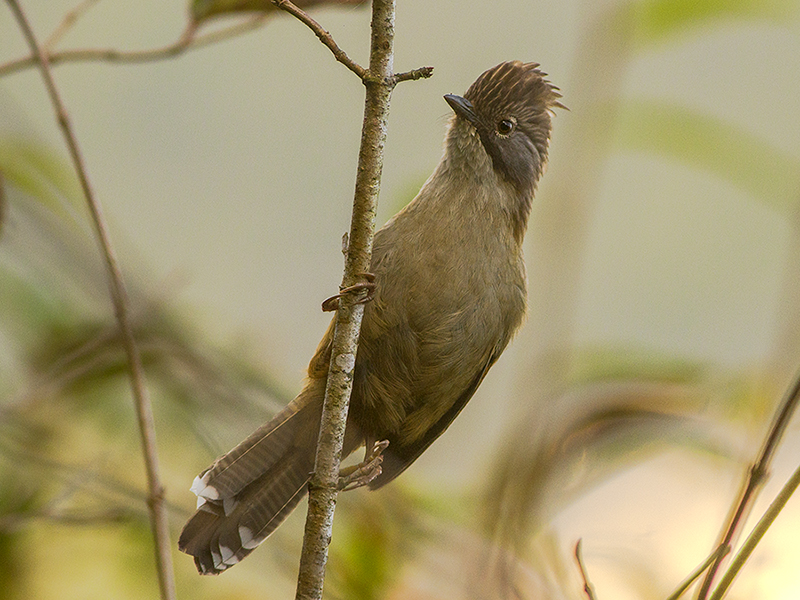
Birds Similar to the White-whiskered Laughingthrush
These species are often confused with the White-whiskered Laughingthrush due to similar appearance or overlapping range.

