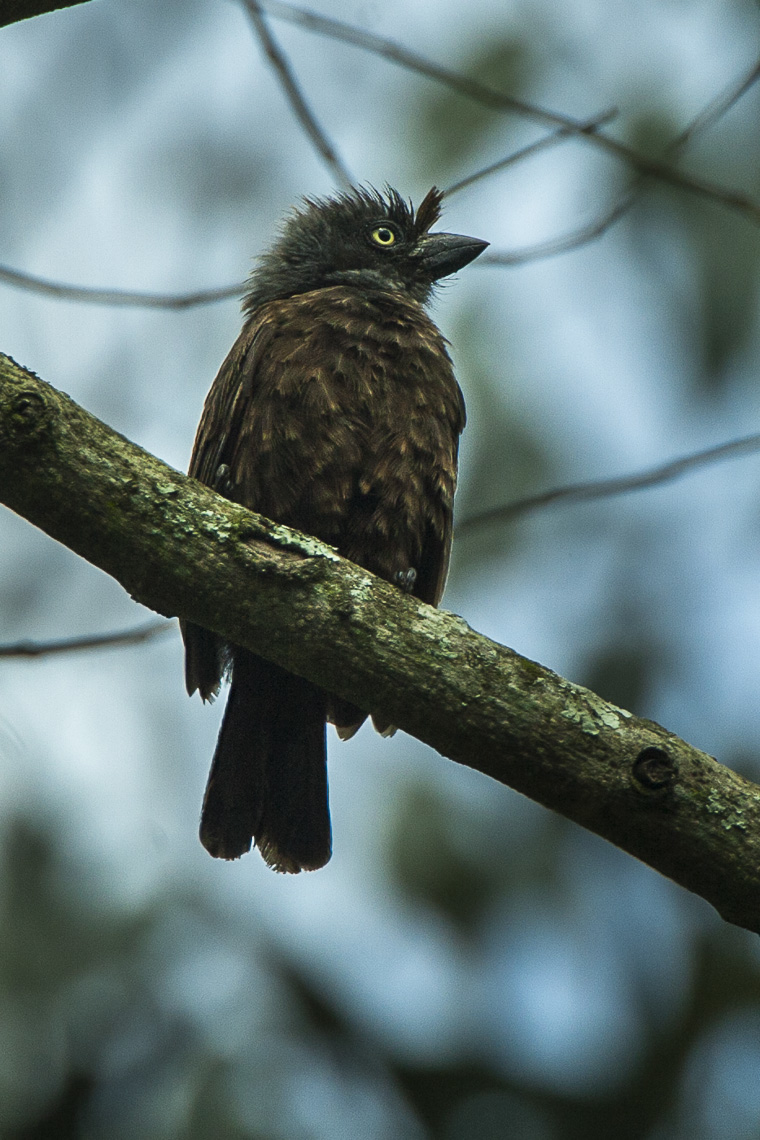
Whyte's Barbet
Stactolaema whytii
Order: Piciformes / Family: Lybiidae

Wikimedia Commons
About the Whyte's Barbet
Whyte's Barbet, scientific name Stactolaema whytii, is a remarkable resident of the southeastern African regions, including Malawi and parts of Mozambique. This small to medium-sized bird, part of the Lybiidae family, plays a significant role in its ecosystem as both a predator of insects and a seed disperser. The Whyte's Barbet is particularly known for its vibrant plumage, which aids in camouflage among the leafy canopies where it primarily resides. Its presence is a vital indicator of healthy woodland ecosystems. This species thrives in miombo woodlands, a type of savanna woodland rich in biodiversity, and contributes to the complex ecological networks within these habitats. The barbet's role as a pollinator and seed disperser is crucial, as it often consumes nectar and fruit, inadvertently assisting in plant reproduction and forest sustainability. Seasonal behaviors of Whyte's Barbet are influenced by food availability. During the rainy season, when insects and fruits are abundant, these birds become more active, often seen foraging energetically throughout the day. In the dry season, their diet shifts more towards fruits, and their activity patterns may slow as they conserve energy. The Whyte's Barbet is a non-migratory species, maintaining territories throughout the year. Its presence in these regions underscores the interconnectedness of avian species and their habitats. The barbet's significance extends beyond its ecological roles. It serves as a cultural symbol within local communities, often featured in folklore and traditional songs. Despite its relatively stable population, the Whyte's Barbet faces challenges from habitat destruction due to logging and agricultural expansion. Conservation efforts aimed at preserving miombo woodlands are essential to ensure the continued survival of this species. Protecting these habitats not only benefits the barbet but also supports the diverse array of flora and fauna that depend on this ecosystem.
The Whyte's Barbet belongs to the family Lybiidae, within the order Piciformes. These birds typically live average 5 years, with some living up to 8 years in the wild..
How to Identify a Whyte's Barbet
The Whyte's Barbet is distinguished by its striking coloration and robust build, making it fairly easy to identify in the field. Adults display a vivid green back and wings, contrasted with a bright yellow underbelly. The head is adorned with a blend of green and yellow, while the throat and upper breast show a subtle white patch that stands out against the more vibrant colors. Juvenile barbets are similar in appearance but tend to have duller and less distinct coloration, aiding in their camouflage. Males and females exhibit similar plumage, making sexual dimorphism in this species minimal. However, males might appear slightly larger and more robust. In comparison to similar species, the Whyte's Barbet can be confused with other barbets like the Green Barbet, but its unique combination of yellow and green, along with its specific vocalizations, help set it apart. In flight, the barbet's rounded wings and short tail provide a distinctive silhouette. When perching, it often adopts a slightly hunched posture, which is typical of the Lybiidae family.
Having trouble telling birds apart? Upload a photo to our bird identification tool for an instant species match.
Whyte's Barbet Habitat and Range
Preferred Habitat
Whyte's Barbet primarily inhabits miombo woodlands, a type of savanna woodland characterized by the presence of Brachystegia trees. These habitats are predominantly found in southeastern Africa, particularly in Malawi and Mozambique. The species tends to favor elevations ranging from 500 to 1500 meters, where the woodland structure supports its dietary and nesting needs. During different seasons, the Whyte's Barbet remains within these woodlands, showcasing a preference for undisturbed forest patches. While it is primarily rural in its habitat choice, the barbet occasionally ventures into suburban areas if adequate tree cover and food sources are available. The bird tends to avoid heavily urbanized zones due to the lack of suitable nesting sites and food availability.
Geographic Range
Whyte's Barbet is endemic to southeastern Africa, with its range primarily encompassing Malawi and adjacent areas of Mozambique. It is a resident breeder in these regions, meaning it does not undergo extensive migratory movements. The barbet's presence is largely concentrated in areas where miombo woodlands thrive. Within its range, population densities vary, with higher concentrations found in regions with well-preserved woodland habitats. Although the species is not considered migratory, local movements within its range may occur in response to food availability, particularly during periods of resource scarcity. The Whyte's Barbet's range is relatively stable, although habitat fragmentation poses a threat to its distribution.
Want to know which birds visit your area? Browse our backyard birds by location guides for region-specific species lists.
What Does the Whyte's Barbet Eat?
The diet of Whyte's Barbet is diverse, reflecting its role as both a predator and a seed disperser. Primarily frugivorous, the barbet consumes a variety of fruits, including figs and berries, which are abundant in its miombo woodland habitat. In addition to fruits, the bird feeds on insects, particularly during the rainy season when insect activity peaks. The barbet employs a gleaning technique, picking insects off leaves and branches with precision. Its diet may also include small seeds and occasionally nectar, which it feeds on using its specialized bill. Seasonal changes in food availability prompt shifts in diet composition, with a heavier reliance on fruits in the dry season. This adaptability in feeding habits ensures the barbet's survival across different environmental conditions.
Whyte's Barbet Behavior and Social Structure
The social structure of Whyte's Barbet is characterized by its territorial nature, with individuals or pairs maintaining and defending territories throughout the year. Courtship displays involve vocalizations and physical displays, such as wing fluttering and head bobbing, to attract mates. After pairing, barbets often remain together, sharing responsibilities like territory defense and foraging. While generally solitary or found in pairs, the barbet may occasionally form small flocks during non-breeding seasons when food is abundant. These flocks are typically loose associations, with individuals maintaining their territorial instincts. When faced with predators, the Whyte's Barbet employs alarm calls and may engage in mobbing behavior to deter threats. Daily activity patterns show peak foraging in the early morning and late afternoon, with periods of rest during the hottest parts of the day.
Whyte's Barbet Nesting and Reproduction
Whyte's Barbet is a cavity nester, utilizing natural tree hollows or excavating its own nests in deadwood. The preferred nesting sites are typically located in mature Brachystegia trees within miombo woodlands. The barbet lines its nest cavity with plant fibers and leaves, creating a cushioned environment for its clutch. Clutch sizes generally range from two to four eggs, with both parents involved in incubation, which lasts approximately 14 to 16 days. After hatching, the fledging period extends for about three weeks, during which both parents feed the young. Feeding consists mainly of soft fruits and regurgitated insects. The species commonly produces one brood per year, although favorable conditions may lead to a second brood.
Whyte's Barbet Sounds and Vocalizations
The vocalizations of Whyte's Barbet are distinctive, contributing significantly to its identification in the field. Its primary song features a series of melodious, repetitive notes that rise and fall in pitch, creating a musical quality that resonates through the woodland. Call notes often include a sharp 'tuk-tuk-tuk' sound, used in communication between pairs or as an alarm signal. The barbet's alarm calls are more rapid and urgent, serving as a warning to other birds of nearby threats. During the dawn chorus, the Whyte's Barbet's song is particularly prominent, signaling territory presence and readiness to mate. The rhythm and tone of its calls can be likened to a soft wooden percussion instrument.
Interesting Facts About the Whyte's Barbet
- 1Whyte's Barbet can peck up to 20 times per second when excavating its nesting cavity, showcasing its remarkable strength.
- 2The species is named after Alexander Whyte, a Scottish naturalist who contributed significantly to African ornithology in the 19th century.
- 3Whyte's Barbet's diet includes over 30 species of fruit, highlighting its role in plant seed dispersal within its habitat.
- 4Despite its vivid colors, the barbet's plumage provides excellent camouflage in the dappled light of the miombo woodland canopy.
- 5The barbet's primary song can be heard up to a kilometer away, emphasizing its importance in territorial claims and communication.
- 6Whyte's Barbet has a unique grooming behavior, using ants to help remove parasites from its feathers, a process known as 'anting'.
- 7The bird's presence is often an indicator of forest health, as it requires diverse and abundant food sources to thrive.
Whyte's Barbet Conservation Status
According to the IUCN Red List, Whyte's Barbet is currently classified as Least Concern, with a stable population trend. Despite this status, the species faces threats from habitat destruction, primarily due to logging and agricultural expansion in miombo woodlands. Conservation efforts focus on preserving these woodlands, which are critical not only for the barbet but for numerous other species. Organizations work towards sustainable land management practices and the establishment of protected areas. Historical population data suggest a relatively stable trend, although localized declines occur where habitat loss is most severe.