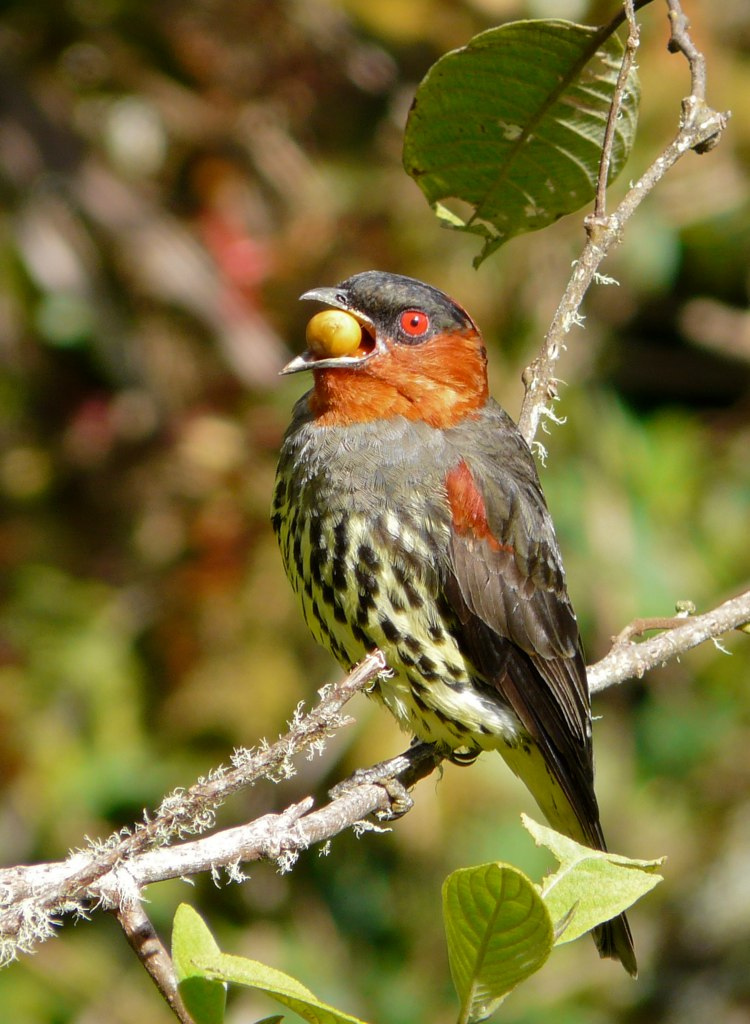
Wing-barred Piprites
Piprites chloris
Order: Passeriformes / Family: Cotingidae

Wikimedia Commons
About the Wing-barred Piprites
The Wing-barred Piprites, scientifically known as Piprites chloris, is a small passerine bird belonging to the Cotingidae family. It is primarily found in the dense and humid lowland rainforests of South America. Its vibrant green plumage and distinctive wing bars make it a unique and captivating presence in its native habitat. This bird occupies a significant ecological niche in the rainforest ecosystem, contributing to insect population control through its diet. The Wing-barred Piprites is primarily found in regions such as the Amazon Basin, extending into parts of Brazil, Colombia, Venezuela, and Ecuador. These dense tropical rainforests provide a rich and diverse habitat that supports the bird's insectivorous diet. The bird's survival is closely tied to these ecosystems, which are under threat from deforestation and habitat loss. During the breeding season, which usually coincides with the rainy season, the Wing-barred Piprites becomes more vocal and active. Its presence is often announced by its distinctive calls, which play a crucial role in territorial defense and attracting mates. As a part of its ecological role, the Wing-barred Piprites helps control insect populations, which in turn affects the entire food chain within its habitat. The bird's activity peaks during the early morning and late afternoon, aligning with the times when insects are most active. Despite its small size, the Wing-barred Piprites is a vital component of the rainforest ecosystem, contributing to the biodiversity and health of its environment. Conservation efforts are crucial for maintaining the populations of this and other rainforest species, as their habitats face increasing pressures from human activities.
The Wing-barred Piprites belongs to the family Cotingidae, within the order Passeriformes. These birds typically live average 6 years with a maximum recorded of 10 years..
How to Identify a Wing-barred Piprites
The Wing-barred Piprites showcases a vibrant green plumage, setting it apart from many other forest-dwelling birds. Its most distinctive features are the prominent white wing bars, which are visible in both males and females. These wing bars are a key field mark for identifying the species in the dense foliage of its rainforest habitat. Adult birds typically exhibit a brighter green coloration compared to juveniles, which may appear slightly duller. While there is little sexual dimorphism in terms of plumage, males can be slightly larger than females. The bird's small size and compact body contribute to its quick and agile movements among the tree canopies. In flight, the Wing-barred Piprites displays a rapid, fluttering wingbeat, often interspersed with glides. When perched, it maintains an upright posture, often seen foraging at mid-levels of the forest. Similar species include other greenish birds like the Green Manakin, but the Wing-barred Piprites is distinguished by its wing bars and lack of black in its plumage.
Having trouble telling birds apart? Upload a photo to our bird identification tool for an instant species match.
Wing-barred Piprites Habitat and Range
Preferred Habitat
The Wing-barred Piprites thrives in the humid, lowland rainforests of South America. It prefers primary forests with dense understory and a closed canopy, providing ample cover and feeding opportunities. These birds are typically found at elevations ranging from sea level to about 1,000 meters. While they primarily inhabit undisturbed forest areas, they can occasionally be observed in secondary growth forests, especially if these areas are adjacent to primary forests. There are no significant seasonal shifts in habitat preference as they are non-migratory, residing year-round in their chosen territories. The species is less frequently observed in urban or heavily disturbed areas, as it relies heavily on the complex structure of untouched rainforests for survival.
Geographic Range
The range of the Wing-barred Piprites spans several South American countries, primarily concentrated within the Amazon Basin. It is found in Brazil, Colombia, Venezuela, Ecuador, and Peru. In Brazil, its presence is notable in the northern and central regions, particularly within the Amazon Rainforest. The bird does not migrate, maintaining a stable residence within its tropical habitat throughout the year. Population densities are highest in undisturbed rainforest areas, where the abundance of prey and optimal breeding conditions support their numbers. Although not considered rare, their populations are localized to regions where suitable forest habitats remain intact.
Want to know which birds visit your area? Browse our backyard birds by location guides for region-specific species lists.
What Does the Wing-barred Piprites Eat?
The Wing-barred Piprites primarily feeds on insects, which it captures through a variety of foraging techniques. Its diet consists of small arthropods, including caterpillars, beetles, and ants. During the rainy season, the abundance of insects allows the bird to feed more actively, supporting its energetic breeding activities. Foraging occurs primarily at mid-levels of the forest, where the bird flits between branches and foliage, often employing a hover-gleaning method to snatch insects off leaves and twigs. While insects form the core of its diet, the Wing-barred Piprites may occasionally consume small fruits, especially when insect availability declines. The bird's feeding schedule is most active during the early morning and late afternoon hours when insect activity peaks.
Wing-barred Piprites Behavior and Social Structure
The Wing-barred Piprites is a solitary bird, often observed alone or in pairs during the breeding season. Its territorial behavior is most evident during this time, as males become more vocal and engage in displays to attract females and defend their territories from rivals. Territorial disputes are typically resolved through vocalizations rather than physical confrontations. Courtship displays include a series of calls and subtle wing movements that highlight the distinctive wing bars. The bird does not form large flocks, preferring to maintain individual territories within its forested habitat. Its response to predators involves quick, evasive movements and retreat into dense foliage. Daily activity patterns are characterized by bursts of activity during early morning and late afternoon, coinciding with peak insect activity.
Wing-barred Piprites Nesting and Reproduction
The nesting habits of the Wing-barred Piprites involve constructing small, cup-shaped nests situated in the fork of a tree branch. These nests, built primarily from small twigs, leaves, and plant fibers, are well-concealed within the dense foliage of the rainforest. The female lays a clutch of 2 to 3 eggs, which she incubates for approximately 14 days. Once hatched, both parents participate in feeding the chicks, delivering a steady supply of insects to the nest. The fledging period lasts about 15 to 18 days, after which the young birds leave the nest but remain under parental care for several weeks. Typically, the Wing-barred Piprites raises one brood per year, although favorable conditions may occasionally permit a second.
Wing-barred Piprites Sounds and Vocalizations
The Wing-barred Piprites produces a distinctive series of musical notes, characterized by a rhythmic, clear, and melodious quality. Its primary song consists of short phrases that may repeat rapidly, creating a vibrant and lively soundscape within its rainforest habitat. Call notes vary from sharp, high-pitched chips to a softer, more musical tone used in courtship and territorial announcements. Alarm calls are sharper and more abrupt, serving as a warning signal to nearby conspecifics. During the dawn chorus, the bird's song can be heard resonating through the forest, often as one of the first vocalizations of the morning.
Interesting Facts About the Wing-barred Piprites
- 1The Wing-barred Piprites was first described in 1837, highlighting its long-standing recognition among ornithologists.
- 2Despite its small size, the Wing-barred Piprites can be surprisingly territorial, defending its area with persistent vocalizations.
- 3The bird's distinctive wing bars are not only a key identification mark but also play a role in courtship displays.
- 4While primarily insectivorous, the Wing-barred Piprites occasionally consumes small fruits, showcasing its dietary flexibility.
- 5The bird's rapid, fluttering flight aids in navigating the dense rainforest canopy where it resides.
- 6The Wing-barred Piprites' song is one of the first to be heard at dawn, marking its presence in the rainforest soundscape.
- 7Despite its vibrant colors, the bird's small size and quick movements make it a challenging subject for photographers.
Wing-barred Piprites Conservation Status
The Wing-barred Piprites is currently listed as Least Concern by the IUCN, with stable population trends. However, ongoing deforestation and habitat loss pose significant threats to its rainforest habitat. Conservation efforts are focused on protecting large tracts of rainforest and promoting sustainable land use practices. Historical population data indicate a stable presence in the Amazon Basin, but continued vigilance and habitat protection are essential. Local conservation initiatives, along with international cooperation, aim to preserve the complex ecosystems that support this and other rainforest species.