
Yellow-bellied Fairy-Fantail
Chelidorhynx hypoxantha
Order: Passeriformes / Family: Stenostiridae
Wikimedia Commons
About the Yellow-bellied Fairy-Fantail
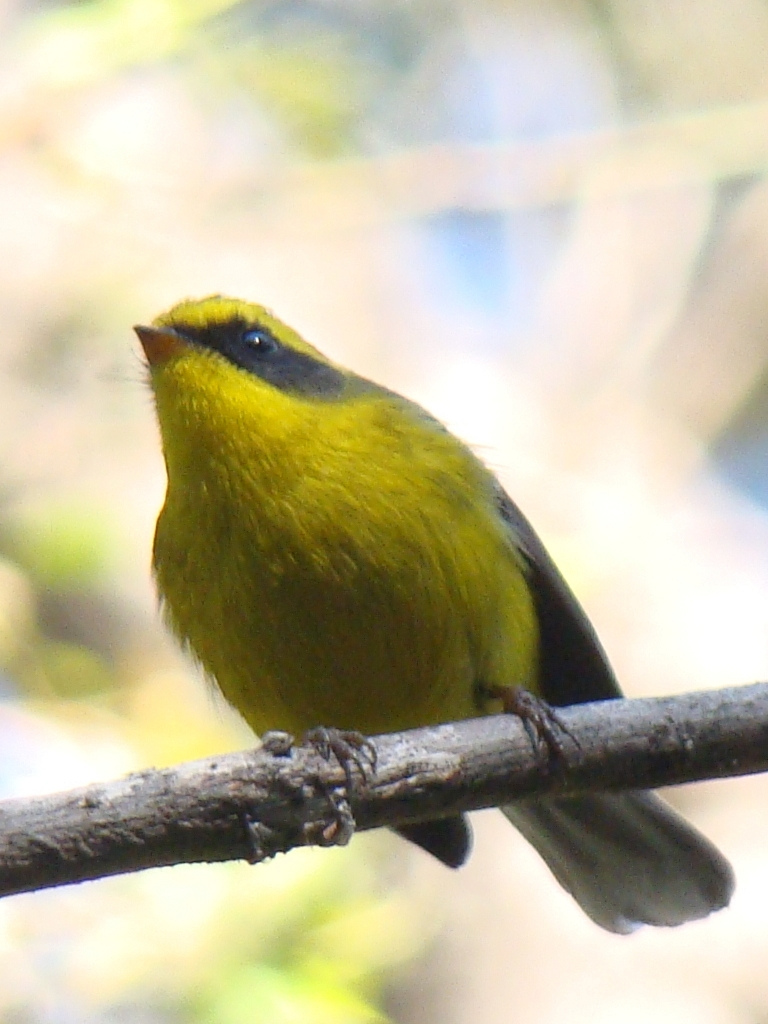
The Yellow-bellied Fairy-Fantail, scientifically known as Chelidorhynx hypoxantha, is a captivating member of the family Stenostiridae. This small passerine bird exhibits a striking appearance, characterized by its bright yellow underparts, which contrast beautifully with its grayish upperparts. The fantail's dynamic foraging behavior and its charming appearance make it a favorite among birders and naturalists. Found predominantly in the montane forests of the Himalayas, its range extends through northern India, Bhutan, Nepal, and into Myanmar, where it thrives in the subtropical and tropical moist forests. The Yellow-bellied Fairy-Fantail plays a crucial ecological role as an insectivore, helping to control insect populations within its habitat. Its presence is a key indicator of the health of the forest ecosystems it inhabits. In these habitats, the bird is often seen flitting through the canopy in search of insects, demonstrating its agility and speed. During the breeding season, which typically occurs from April to June, the Yellow-bellied Fairy-Fantail becomes more conspicuous as it engages in territorial displays and vocalizations. Outside of the breeding season, it may join mixed-species foraging flocks, which allows it to exploit a wider range of food resources and enhances its chances of avoiding predators. Its vocalizations, though not as loud or complex as some other songbirds, are a blend of melodious whistles and trills that add to the auditory landscape of its forest home. This bird is a vital part of its ecosystem, both as a predator of insects and as prey for larger avian predators. The Yellow-bellied Fairy-Fantail's adaptability to different altitudes and its ability to exploit various microhabitats within the forest make it a resilient species, capable of surviving in the dynamic Himalayan environment.
The Yellow-bellied Fairy-Fantail belongs to the family Stenostiridae, within the order Passeriformes. These birds typically live average 4-5 years with a maximum recorded of 7 years..
How to Identify a Yellow-bellied Fairy-Fantail
The Yellow-bellied Fairy-Fantail is easily recognized by its vibrant yellow belly, which serves as a key field mark for birders in its range. Adults exhibit grayish upperparts and a distinct white supercilium, or 'eyebrow,' that provides contrast against their darker head. The tail is notably long and often fanned, a trait that aids in its agile aerial maneuvers. Juveniles resemble adults but may display slightly duller plumage. There is minimal sexual dimorphism, meaning males and females look similar, though males might have slightly brighter coloration during the breeding season. When perched, the Yellow-bellied Fairy-Fantail often flicks its tail, a behavior typical of its family. In flight, its small size and rapid wing beats give it a distinctive silhouette. Despite its small size, it maintains a robust presence in its habitat. Compared to similar species, which may share its range, the combination of its yellow belly and constant tail flicking makes it relatively easy to identify.
Having trouble telling birds apart? Upload a photo to our bird identification tool for an instant species match.
Yellow-bellied Fairy-Fantail Habitat and Range
Preferred Habitat
The Yellow-bellied Fairy-Fantail inhabits subtropical and tropical moist montane forests, primarily within the altitudinal range of 1500 to 3500 meters. These forests, rich in biodiversity, provide the dense canopy cover and abundant insect prey that the fairy-fantail requires. In regions like Bhutan and northern India, it prefers the mid to upper canopy layers, where it can skillfully maneuver through the foliage. Seasonal shifts in habitat use are minimal, but during harsher weather, it may descend to lower elevations. Unlike some other species, the Yellow-bellied Fairy-Fantail is rarely found in urban areas, preferring the seclusion and resources of undisturbed forest environments.
Geographic Range
The range of the Yellow-bellied Fairy-Fantail extends across several countries in South Asia. It breeds in the dense montane forests of the Himalayas, with significant populations in India, Nepal, Bhutan, and northern Myanmar. In India, it is commonly found in the states of Arunachal Pradesh and Sikkim, where the montane forests provide ideal conditions. The bird is largely sedentary, though some altitudinal migration may occur as individuals move slightly lower in elevation during the winter months. Population densities are highest in regions with extensive, undisturbed forest cover, such as protected areas in Bhutan and Nepal. The Yellow-bellied Fairy-Fantail does not undertake long-distance migrations, making it a year-round resident within its range.
Want to know which birds visit your area? Browse our backyard birds by location guides for region-specific species lists.
What Does the Yellow-bellied Fairy-Fantail Eat?
As an insectivore, the Yellow-bellied Fairy-Fantail primarily consumes small insects and arthropods. Its diet includes a variety of flies, beetles, and caterpillars, which it captures with impressive agility. Seasonal diet changes are minimal, though it may take advantage of insect abundance during certain times of the year. The fairy-fantail employs a foraging technique known as 'gleaning,' where it picks insects off leaves and branches while in mid-flight. Its feeding schedule is diurnal, with peak activity occurring during the early morning and late afternoon when insect prey is most active. The small size of its prey allows the bird to maintain a high rate of success while foraging.
Yellow-bellied Fairy-Fantail Behavior and Social Structure
The Yellow-bellied Fairy-Fantail exhibits fascinating behavioral traits that reflect its adaptability and social nature. It is generally non-territorial, particularly outside the breeding season, when it often joins mixed-species flocks. This social behavior provides mutual benefits such as increased foraging efficiency and predator detection. During the breeding season, male fairy-fantails perform aerial displays and vocalizations to attract mates and establish breeding territories. Courtship involves intricate flight patterns and the presentation of food to potential mates. Although not aggressive, the bird may defend its breeding territory from other insectivorous birds. Daily activity patterns show peaks in the early morning and late afternoon, aligning with the availability of insect prey. In response to predators, the Yellow-bellied Fairy-Fantail relies on its agility to evade capture, often retreating into dense foliage.
Yellow-bellied Fairy-Fantail Nesting and Reproduction
The nesting habits of the Yellow-bellied Fairy-Fantail are intriguing and well-adapted to its forest environment. It constructs a small, cup-shaped nest using materials like moss, lichen, and soft plant fibers, camouflaging it effectively against the forest backdrop. Nests are typically located in the fork of a tree branch, anywhere from 2 to 10 meters above the ground. The female lays a clutch of 3 to 4 eggs, which she incubates for about 12 to 14 days. Both parents participate in feeding and caring for the hatchlings, which fledge approximately two weeks after hatching. The species may produce one or two broods per year, depending on environmental conditions and food availability.
Yellow-bellied Fairy-Fantail Sounds and Vocalizations
The Yellow-bellied Fairy-Fantail's vocalizations are a delightful mix of whistles and trills, often described as a series of soft, musical notes. Its primary song features a rhythm of quick, ascending notes that end abruptly, forming a distinctive signature among the forest birds. Call notes are typically softer and used for communication within a flock. Alarm calls, though rarely heard, consist of sharp, short notes that alert others to potential threats. During the dawn chorus, the fairy-fantail's song contributes to the symphony of sounds that define its montane forest habitat.
Interesting Facts About the Yellow-bellied Fairy-Fantail
- 1The Yellow-bellied Fairy-Fantail can perform acrobatic maneuvers in the air, often compared to a gymnast's agility.
- 2Despite its small size, the Yellow-bellied Fairy-Fantail is a voracious predator of insects, consuming dozens daily.
- 3During the breeding season, males sing more frequently and are more visible, showcasing their bright plumage.
- 4The species' range is limited to a specific altitude band, making it a true montane forest specialist.
- 5Yellow-bellied Fairy-Fantails are known to join mixed-species flocks, enhancing their foraging efficiency.
- 6The bird's tail flicking is not only a visual cue but also a behavior used to flush insects from leaves.
- 7Yellow-bellied Fairy-Fantails have been observed to adjust their nesting height based on predator presence.
Yellow-bellied Fairy-Fantail Conservation Status
The Yellow-bellied Fairy-Fantail is currently listed as Least Concern by the IUCN, with stable population trends across its range. The primary threats to this species include habitat loss due to deforestation and land conversion. Conservation efforts are focused on preserving the montane forest ecosystems that support this and other species. Protected areas in India, Bhutan, and Nepal play a crucial role in maintaining healthy populations. Historical data suggest that while some local populations may have fluctuated, the overall numbers have remained relatively stable due to the bird's adaptability and resilience.
Other Stenostiridae Species


Birds Similar to the Yellow-bellied Fairy-Fantail
These species are often confused with the Yellow-bellied Fairy-Fantail due to similar appearance or overlapping range.