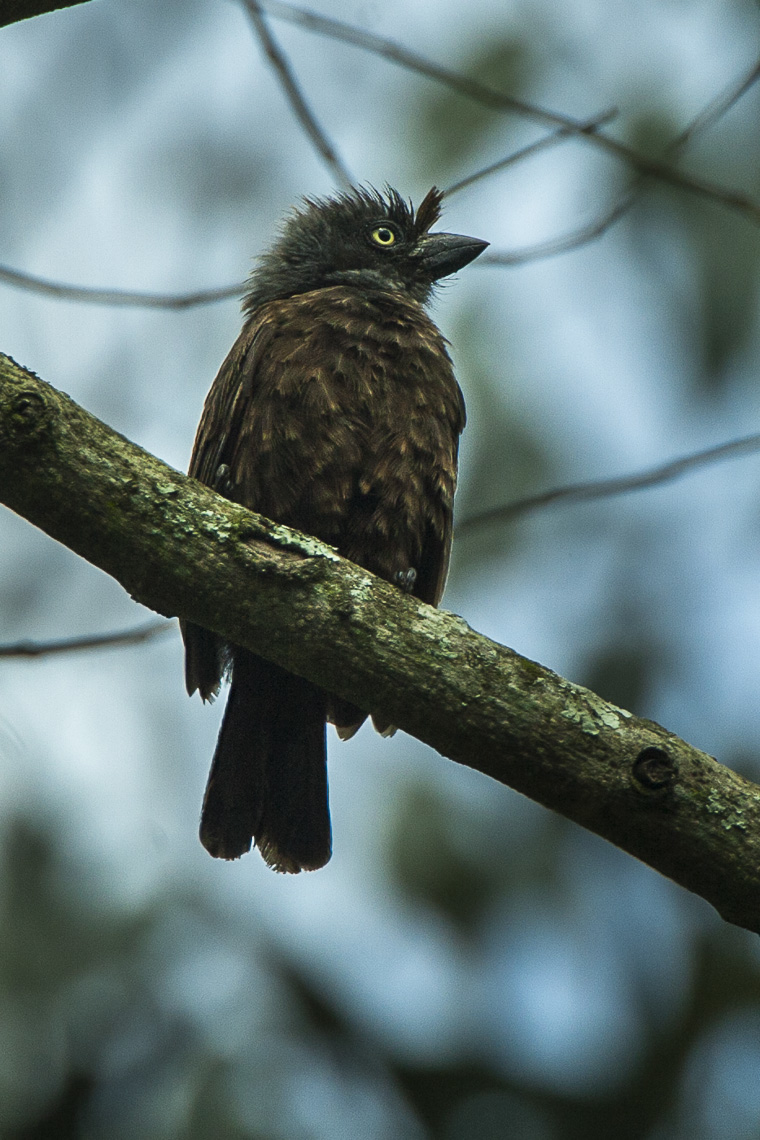
Yellow-breasted Barbet
Trachyphonus margaritatus
Order: Piciformes / Family: Lybiidae

Wikimedia Commons
About the Yellow-breasted Barbet
The Yellow-breasted Barbet (Trachyphonus margaritatus) is a striking bird belonging to the family Lybiidae. Found predominantly in the savannas and open woodlands of sub-Saharan Africa, this species is known for its vibrant plumage and distinctive vocalizations. With a range that extends from Senegal and Gambia in West Africa to Ethiopia and Kenya in the east, the Yellow-breasted Barbet is a common fixture in these regions. Its presence in diverse habitats underscores its adaptability, thriving in areas with scattered trees and scrub where it can find food and suitable nesting sites. The ecological role of the Yellow-breasted Barbet is significant, as it contributes to seed dispersal and the control of insect populations. By consuming various fruits and insects, it aids in maintaining the ecological balance of its habitat. Its role as a seed disperser is particularly important for the regeneration of certain plant species, which rely on birds for the spread of their seeds. Seasonally, the Yellow-breasted Barbet does not undertake long migrations. However, it may make local movements in response to food availability and habitat conditions. During the breeding season, which varies regionally, the barbet becomes more vocal and territorial, establishing breeding territories where it raises its young. This seasonal behavior highlights the bird's adaptability to changing environmental conditions and resource availability. The significance of the Yellow-breasted Barbet extends beyond its ecological contributions. Its presence in the savannas and woodlands of Africa makes it an important species for birdwatchers and naturalists. Its striking appearance and distinctive calls make it a sought-after sighting for those exploring these regions. Additionally, the species plays a role in the cultural heritage of some communities, where its calls and behaviors are often incorporated into folklore and local narratives. Through its ecological roles and cultural significance, the Yellow-breasted Barbet represents a vital component of the biodiversity in its range.
The Yellow-breasted Barbet belongs to the family Lybiidae, within the order Piciformes. These birds typically live average 5-7 years, with a maximum recorded of 10 years..
How to Identify a Yellow-breasted Barbet
The Yellow-breasted Barbet is a medium-sized bird, characterized by its vibrant yellow breast, which contrasts sharply with its darker upperparts. Adult plumage is predominantly yellow on the underside, with a distinctive black head and small red markings around the eyes. This combination of colors makes it easily distinguishable in its natural habitat. Juveniles, however, exhibit duller plumage, lacking the full intensity of the adults' coloration. In terms of sexual dimorphism, there is little difference between males and females, making it challenging to distinguish them in the field. The overall coloration and patterning are consistent between the sexes. When perched, the Yellow-breasted Barbet displays a stocky silhouette, with a short neck and a large head relative to its body size. Its powerful bill is adapted for its diet of fruits and insects. In flight, the bird exhibits a direct and purposeful flight pattern, with rapid wingbeats interspersed with gliding. Similar species confusion is minimal due to its unique combination of black, yellow, and red plumage. However, birdwatchers might confuse it with other barbets in the region, particularly those with overlapping ranges. The distinctive yellow breast remains an identifying feature that sets it apart from other species.
Having trouble telling birds apart? Upload a photo to our bird identification tool for an instant species match.
Yellow-breasted Barbet Habitat and Range
Preferred Habitat
The Yellow-breasted Barbet inhabits a variety of open woodland and savanna habitats, thriving in areas with scattered trees and bushes. It often occurs at elevations ranging from sea level to about 2,000 meters. This bird is adaptable to both rural and semi-urban environments, provided there is sufficient tree cover for nesting and feeding. During the wet season, the Yellow-breasted Barbet may shift to areas with more dense vegetation to take advantage of increased food availability. In contrast, the dry season sees it in more open areas, where it can exploit the reduced competition for resources. While primarily associated with rural landscapes, the species can occasionally be found in suburban gardens and parks, particularly in areas where traditional savanna habitat has been encroached upon by human development.
Geographic Range
The Yellow-breasted Barbet's range spans across sub-Saharan Africa, from Senegal and Gambia in the west to Ethiopia and Kenya in the east. Within this range, it occupies a variety of habitats, extending into parts of northern Uganda and the southern fringes of the Sahel. The species is non-migratory, though it may undertake local movements in response to environmental conditions or food availability. Regions such as the savannas of Nigeria and the woodlands of Sudan serve as population density hotspots, where the bird is frequently observed. The barbet's presence across this vast range highlights its adaptability to different ecological zones, from dry savannas to more humid woodlands.
Want to know which birds visit your area? Browse our backyard birds by location guides for region-specific species lists.
What Does the Yellow-breasted Barbet Eat?
The Yellow-breasted Barbet primarily feeds on fruits and insects, demonstrating a flexible diet that allows it to adapt to seasonal changes in food availability. Fruits such as figs and berries form the bulk of its diet, which it supplements with a variety of insects, including beetles and ants. This dietary flexibility ensures that the bird can exploit a wide range of food sources throughout the year. During the dry season, when fruit availability may decrease, the barbet increases its consumption of insects, which it forages for by probing tree bark and leaf litter. The bird typically feeds during the early morning and late afternoon, taking advantage of cooler temperatures and increased insect activity. Its foraging technique involves short flights between feeding sites, where it uses its strong bill to pluck fruit or capture insects.
Yellow-breasted Barbet Behavior and Social Structure
The Yellow-breasted Barbet exhibits a range of behaviors that reflect its social and territorial nature. This species is generally monogamous, forming long-term pair bonds that are maintained across breeding seasons. Territorial behavior is pronounced, with pairs aggressively defending their nesting sites from intruders. Vocalizations play a key role in territory defense, with the barbet producing a series of loud, repetitive calls to ward off competitors. Courtship displays involve mutual preening and the exchange of food items between mates, reinforcing pair bonds. While the Yellow-breasted Barbet is usually seen in pairs, it may join small mixed-species flocks outside the breeding season. This flocking behavior allows it to benefit from cooperative foraging and increased vigilance against predators. The bird's daily activity pattern includes periods of rest during the hottest parts of the day, with feeding concentrated in the cooler hours of morning and late afternoon.
Yellow-breasted Barbet Nesting and Reproduction
The nesting habits of the Yellow-breasted Barbet involve the construction of nests in tree cavities, often in dead branches or trunks. The birds excavate these cavities themselves, using their powerful bills to chip away at the wood. Nests are typically located at heights ranging from 2 to 10 meters above ground, providing protection from ground predators. The typical clutch size consists of 2 to 4 eggs, which are incubated by both parents over a period of approximately 14 to 16 days. Following hatching, both parents share responsibilities for feeding and caring for the chicks, which fledge after about 30 to 35 days. The species is capable of raising two broods per year, depending on food availability and environmental conditions, allowing for rapid population growth in favorable years.
Yellow-breasted Barbet Sounds and Vocalizations
The primary song of the Yellow-breasted Barbet is a series of rhythmic, repetitive notes that carry across its savanna habitat. These calls are characterized by a clear, ringing quality and are often delivered in rapid succession. The bird also produces a variety of call notes, including softer contact calls and sharper alarm calls used to signal the presence of predators. During the dawn chorus, the barbet's song becomes more pronounced, as males assert their territories and attract mates. Its vocal repertoire is comparable to other barbets in the region, yet its distinctive pattern and pitch make it recognizable to those familiar with its calls.
Interesting Facts About the Yellow-breasted Barbet
- 1The Yellow-breasted Barbet's call can be heard from over 500 meters away, making it one of the more vocal species in its habitat.
- 2Unlike many birds, the Yellow-breasted Barbet digs its own nesting cavity, a task that can take several days to complete.
- 3This barbet is known to use its strong bill not only for feeding but also for aggressive displays against intruders.
- 4Yellow-breasted Barbets play a role in controlling insect populations, as they consume a significant number of beetles and ants.
- 5Despite their vibrant colors, Yellow-breasted Barbets can be surprisingly difficult to spot when perched among foliage.
- 6The barbet's nesting cavities provide shelter for other species, contributing to the biodiversity of its ecosystem.
- 7Yellow-breasted Barbets have been observed engaging in mutual grooming, a behavior that strengthens pair bonds.
Yellow-breasted Barbet Conservation Status
The conservation status of the Yellow-breasted Barbet is currently listed as Least Concern by the IUCN, with population trends considered stable. Despite habitat loss in some areas due to agriculture and urban expansion, the species remains widespread and relatively common across its range. Primary conservation threats include deforestation and habitat degradation, which can reduce available nesting sites and food resources. Conservation efforts focused on preserving savanna and woodland habitats are crucial for maintaining healthy populations. Historical data suggest that the population has remained stable over recent decades, underscoring the species' resilience and adaptability.