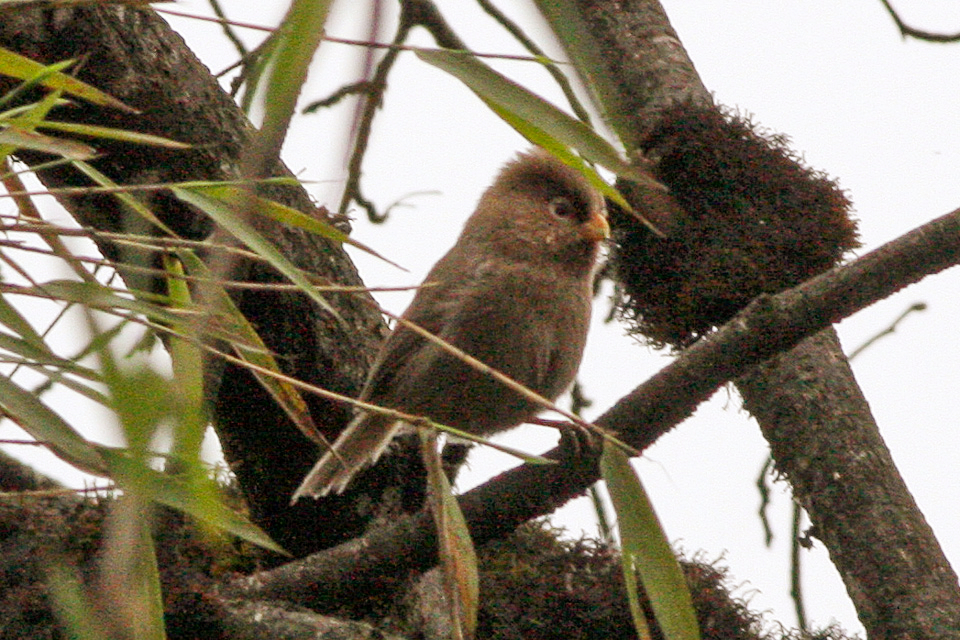
African Desert Warbler
Sylvia deserti
Order: Passeriformes / Family: Sylviidae

Wikimedia Commons
About the African Desert Warbler
The African Desert Warbler, Sylvia deserti, belongs to the family Sylviidae within the order Passeriformes. It thrives in the arid and semi-arid regions of North Africa, including parts of the Sahara Desert. This small passerine bird is an expert at surviving harsh desert conditions, making its home in areas often considered inhospitable to life. The African Desert Warbler is a vital component of its ecosystem, contributing to the control of insect populations and serving as a prey species for larger birds of prey. During the breeding season, which typically occurs in spring, these warblers are highly territorial, defending their chosen patch of desert scrub with vigor. They are well-adapted to the extreme temperature fluctuations characteristic of desert climates, displaying an impressive tenacity in their foraging and nesting behaviors. Beyond its ecological role, the African Desert Warbler holds cultural significance in various North African communities, where it is sometimes celebrated in local folklore as a symbol of resilience and adaptability. Its presence in the desert landscape signals the health of the local ecosystem, as these birds are sensitive to changes in habitat conditions. The adaptability of the African Desert Warbler is evident in its ability to exploit sparse vegetation, such as acacia shrubs, for both nesting and foraging. This bird's preference for open spaces with scattered bushes highlights its specialized adaptations to desert life. During the non-breeding season, the African Desert Warbler may undertake local movements in response to food availability, though it is generally considered a resident species. Its behavior during these times reflects a balance between energy conservation and the need to locate sufficient resources in a challenging environment. The African Desert Warbler is a testament to nature's ingenuity, showcasing the ability of life to flourish in even the most extreme conditions.
The African Desert Warbler belongs to the family Sylviidae, within the order Passeriformes. These birds typically live typically 2-4 years, with a maximum recorded of 6 years..
How to Identify a African Desert Warbler
The African Desert Warbler is a small bird, approximately 12 centimeters in length, with a wingspan of around 15 centimeters. Its plumage is primarily a pale sandy color, providing excellent camouflage against the desert landscape. This coloration is complemented by a slightly darker tail and wing feathers. The bird's underparts are a lighter cream color, which can appear almost white in bright sunlight. One of the key identifying features of the African Desert Warbler is its distinct eye ring, which is a pale yellowish color. Juvenile warblers resemble adults but may have a more mottled appearance, lacking the crispness of adult plumage. Males and females are similar in appearance, making them difficult to distinguish in the field. However, during the breeding season, males may exhibit slightly more vibrant plumage as part of their courtship displays. In flight, the African Desert Warbler presents a streamlined silhouette with rapid wingbeats, well-suited to darting through sparse vegetation. When perched, it often holds its tail slightly raised, a characteristic posture that can aid in identification. While the African Desert Warbler might be confused with other Sylvia species, its uniquely pale plumage and desert habitat help set it apart from its relatives. Observers should note the bird's behavior and habitat, as these can provide additional clues to its identity.
Having trouble telling birds apart? Upload a photo to our bird identification tool for an instant species match.
African Desert Warbler Habitat and Range
Preferred Habitat
The African Desert Warbler primarily inhabits arid and semi-arid regions, favoring areas with sparse vegetation such as desert scrub and open plains dotted with acacia or tamarisk bushes. These habitats are often found at low elevations, although the bird can also be found in slightly elevated areas where similar vegetation is present. The warbler's habitat choice is influenced by the availability of insects, which constitute its primary food source. During wetter seasons, when vegetation is more lush, the warbler may expand its range to include areas with denser plant cover. However, it avoids densely wooded or forested areas, preferring the open spaces where its pale plumage offers the best camouflage. While primarily a resident of rural and remote desert landscapes, the African Desert Warbler occasionally ventures into areas where human activity has altered the natural environment, although it generally shies away from urban settings. This bird's adaptation to desert life is evident in its ability to thrive in extremely hot and dry conditions, where temperatures can fluctuate widely between day and night.
Geographic Range
The African Desert Warbler is predominantly found in North Africa, with its range extending across several countries including Morocco, Algeria, Tunisia, Libya, and Egypt. It is also present in parts of the Sahara Desert, where it occupies suitable habitats across vast stretches of arid land. The bird's range is largely shaped by the availability of desert scrub and open, sparsely vegetated areas that provide both food and nesting sites. In terms of population density, the African Desert Warbler is more commonly observed in regions with a higher prevalence of its preferred habitat, such as the semi-arid fringes of the Sahara. Unlike many other warbler species, the African Desert Warbler is largely non-migratory, though it may exhibit local movements in response to changes in food availability or climatic conditions. These movements are typically limited in scope, as the bird is well-adapted to the constant challenges of desert life. The African Desert Warbler's breeding range is consistent with its overall distribution, as it does not undertake long-distance migrations.
Want to know which birds visit your area? Browse our backyard birds by location guides for region-specific species lists.
What Does the African Desert Warbler Eat?
The diet of the African Desert Warbler primarily consists of insects, which it captures with agility and precision. It forages predominantly on the ground or within low vegetation, using quick movements to flush out prey. The warbler's diet includes a variety of small insects such as ants, beetles, and spiders, which are abundant in its arid habitat. During the breeding season, the demand for protein-rich food increases, leading the warbler to intensify its foraging efforts. While insects constitute the bulk of the African Desert Warbler's diet, it may also consume seeds or plant material when insect prey is scarce. This opportunistic feeding behavior allows the warbler to adapt to fluctuations in food availability, ensuring its survival in the harsh desert environment. Feeding typically occurs during the cooler parts of the day, such as early morning and late afternoon, to avoid the intense heat of midday. The warbler's foraging strategy involves scanning its surroundings from a low perch, then quickly darting to capture prey, a technique well-suited to its agile nature.
African Desert Warbler Behavior and Social Structure
The African Desert Warbler exhibits a range of behaviors adapted to its arid environment. It is primarily solitary or found in pairs, especially during the breeding season when territoriality becomes pronounced. Males engage in song flights and vocal displays to establish and defend territories, often perching conspicuously atop shrubs while singing. Courtship involves males displaying their plumage and performing fluttering flights to attract females. Once paired, the warbler exhibits strong pair bonds, with both partners actively participating in nesting and rearing duties. Outside the breeding season, the African Desert Warbler may form loose associations with other small insectivorous birds, particularly when foraging. These temporary groupings can enhance foraging efficiency and provide additional vigilance against predators. The warbler remains highly alert to potential threats, employing swift, low flights to escape predators such as falcons or larger birds of prey. Daily activities are largely dictated by temperature extremes, with the warbler resting during the hottest parts of the day and becoming more active during cooler periods. This behavioral adaptation helps it conserve energy while maximizing foraging efficiency.
African Desert Warbler Nesting and Reproduction
The African Desert Warbler constructs a modest cup-shaped nest, typically situated low in a shrub or bush. The nest is intricately woven from fine grasses, plant fibers, and occasionally, animal hair, providing a secure and well-insulated environment for the eggs. The location of the nest is carefully chosen to offer protection from predators and harsh weather conditions. The female lays a clutch of 3 to 5 eggs, which are pale with fine speckling. Both parents share incubation duties, which last approximately 11 to 14 days. After hatching, the young remain in the nest for about 10 to 12 days before fledging. During this time, both parents are actively involved in feeding and caring for the chicks, making frequent trips to gather insects. The African Desert Warbler typically raises one to two broods per year, depending on environmental conditions and food availability. The choice of nesting materials and site location reflects the bird's adaptation to desert conditions, ensuring that the young are adequately sheltered and able to develop in a challenging climate.
African Desert Warbler Sounds and Vocalizations
The vocalizations of the African Desert Warbler are distinctive, characterized by a series of melodious trills and warbles. The primary song is a rapid, high-pitched sequence that may be likened to the tinkling of small bells or the sound of a babbling brook. These songs serve a dual purpose: attracting mates and establishing territory among competing males. In addition to its primary song, the warbler produces various call notes, including short, sharp 'tchik' sounds used for communication between pairs or as contact calls. Alarm calls are harsher and more abrupt, serving as a warning to nearby birds of potential threats. During the dawn chorus, the African Desert Warbler's song is particularly prominent, contributing to the vibrant soundscape of the desert mornings.
Interesting Facts About the African Desert Warbler
- 1The African Desert Warbler can tolerate temperatures that exceed 40 degrees Celsius, showcasing its remarkable adaptability to extreme heat.
- 2This warbler's pale plumage provides excellent camouflage, blending seamlessly with the sandy desert environment to avoid predators.
- 3The African Desert Warbler is known for its ability to conserve water, relying on metabolic water derived from its insect-based diet.
- 4Despite its small size, the African Desert Warbler plays a crucial role in controlling insect populations within its desert habitat.
- 5During courtship, male warblers perform elaborate song flights, showcasing their agility and vocal prowess to attract mates.
- 6The African Desert Warbler often nests in thorny shrubs, which offer protection from predators and a stable platform for its delicate nest.
- 7Unlike many passerine birds, the African Desert Warbler does not undertake long migrations, remaining largely resident within its arid range.
African Desert Warbler Conservation Status
The African Desert Warbler is currently classified as Least Concern by the IUCN, with a stable population trend. Despite its relatively secure status, the species faces threats from habitat degradation due to overgrazing, land conversion, and climate change, which can alter the availability of suitable habitats. Conservation efforts focus on maintaining and protecting critical habitats, particularly in areas where human activity has led to significant environmental changes. Historical data suggest that the warbler's population has remained stable over recent decades, although localized declines may occur in regions experiencing severe habitat disruption. Continued monitoring and habitat preservation efforts are essential to ensure the long-term survival of this resilient species.