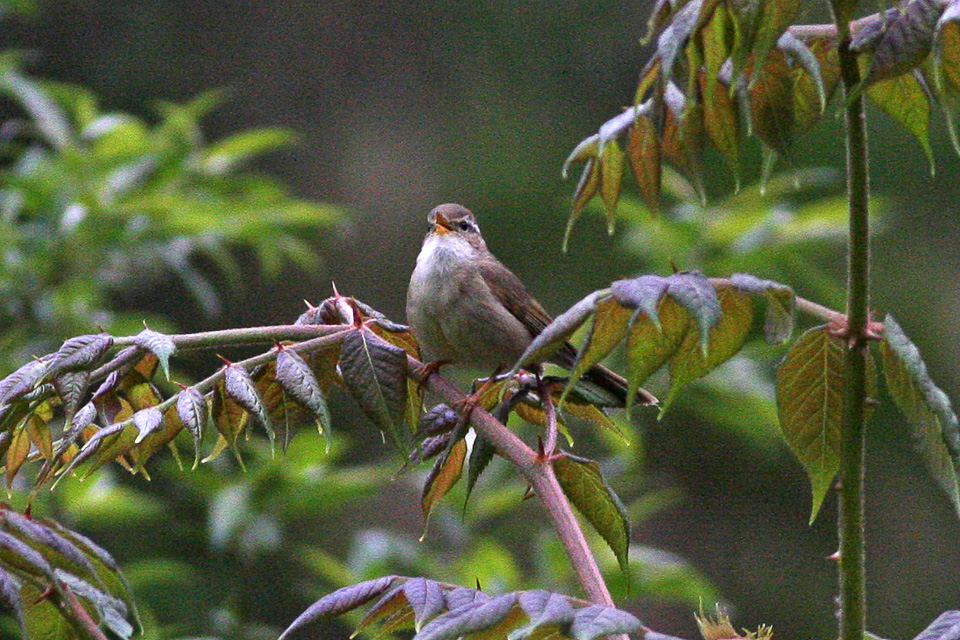
Alpine Leaf Warbler
Phylloscopus occisinensis
Order: Passeriformes / Family: Phylloscopidae

Wikimedia Commons
About the Alpine Leaf Warbler
The Alpine Leaf Warbler, scientifically known as Phylloscopus occisinensis, thrives in the mountainous regions of Central Asia, predominantly found in the Himalayas. This small passerine bird is a member of the Phylloscopidae family and is distinguished by its adaptability to high-altitude environments. It plays a crucial ecological role as both a predator of insect pests and a prey species for larger birds and mammals. The Alpine Leaf Warbler is often observed in coniferous and mixed forests at elevations ranging from 2,000 to 4,500 meters, where it contributes to the control of insect populations. The presence of this warbler indicates a healthy ecosystem, as it requires intact forest habitats with abundant insect life for sustenance. During the breeding season, which extends from May to July, the Alpine Leaf Warbler engages in elaborate courtship displays and vocalizations to attract mates. Its song, a rapid series of high-pitched notes, is a familiar sound in the dense forests it inhabits. As autumn approaches, the warbler migrates to lower altitudes, moving towards the foothills and valleys. This seasonal movement is crucial for its survival, as it follows the availability of food sources. The Alpine Leaf Warbler's adaptability to different elevations throughout the year ensures its continued presence across a range of habitats. Its significance extends beyond its ecological role, as it serves as an indicator species for environmental changes. Fluctuations in its population can signal shifts in climate patterns or habitat degradation. Conservationists monitor its numbers closely, particularly in areas where deforestation and human encroachment threaten its natural habitat. The Alpine Leaf Warbler's resilience and adaptability make it a valuable subject of study for ornithologists and conservationists alike.
The Alpine Leaf Warbler belongs to the family Phylloscopidae, within the order Passeriformes. These birds typically live 5 years on average, with some living up to 7 years..
How to Identify a Alpine Leaf Warbler
The Alpine Leaf Warbler is characterized by its vibrant green upperparts and paler yellowish underparts. It measures approximately 10 centimeters in length, with a wingspan of about 16 to 20 centimeters. Adults display a distinct white wing bar that differentiates them from similar species. Juveniles are slightly duller in color, lacking the pronounced wing bar seen in their adult counterparts. There is little sexual dimorphism, with males and females appearing alike in the field. However, males are often more vocal, especially during the breeding season. The Alpine Leaf Warbler's flight is agile and fluttering, typical of Phylloscopus warblers. When perched, it maintains an upright posture, often flicking its wings and tail. This behavior, along with its distinctive coloration, aids in its identification. Its close resemblance to the Greenish Warbler can lead to confusion; however, the Alpine Leaf Warbler's habitat preference for higher altitudes and its song help differentiate it. Observers should note the bird's quick movements and characteristic calls when attempting identification in the field.
Having trouble telling birds apart? Upload a photo to our bird identification tool for an instant species match.
Alpine Leaf Warbler Habitat and Range
Preferred Habitat
The Alpine Leaf Warbler inhabits montane and subalpine forests, favoring coniferous and mixed woodlands. It is typically found at elevations between 2,000 and 4,500 meters, although seasonal migrations may bring it to lower altitudes. During the breeding season, it seeks out dense forested areas with abundant understory vegetation, which provides both food and nesting sites. In winter, it descends to lower elevations, often inhabiting open woodlands and forest edges. Unlike many warblers, it is not commonly found in urban areas, preferring the tranquility and resources of rural and remote mountainous regions. Its presence in specific habitat types makes it a key species for ecological studies related to mountain forest ecosystems.
Geographic Range
The Alpine Leaf Warbler's breeding range is centered in the Himalayan regions of Bhutan, Nepal, and northern India, extending into parts of Tibet and China. During the non-breeding season, it migrates to lower altitudes within the same geographical range, often reaching the foothills and valleys of these regions. It is not known to travel long distances during migration, as its movements are primarily vertical within the mountainous landscape. Population density is highest in areas with extensive forest cover and minimal human disturbance, such as the protected national parks in Nepal and Bhutan. Its restricted range and preference for specific habitats make it less common in other parts of Asia.
Want to know which birds visit your area? Browse our backyard birds by location guides for region-specific species lists.
What Does the Alpine Leaf Warbler Eat?
The Alpine Leaf Warbler primarily feeds on insects and other small invertebrates, which it gleans from foliage and bark. Its diet includes caterpillars, beetles, and spiders, which are abundant in its forest habitat. During the breeding season, it increases its feeding activity to meet the demands of raising young. In winter, when insect availability decreases, it adapts by consuming seeds and berries, although animal prey remains its preferred food source. The warbler employs a methodical foraging technique, moving quickly through trees and shrubs, picking insects off leaves and branches. This active foraging behavior is essential for meeting its high metabolic needs.
Alpine Leaf Warbler Behavior and Social Structure
Alpine Leaf Warblers exhibit a complex social structure, often observed in small flocks outside the breeding season. They are territorial during the breeding months, with males establishing and defending territories through song and displays. Courtship involves intricate aerial displays and persistent singing to attract mates. Flocking behavior becomes prominent as the breeding season ends, providing safety in numbers against predators. These warblers are diurnal, with peak activity in the early morning and late afternoon. They display agility and alertness, responding quickly to potential threats by retreating into dense foliage. Their daily routine involves extensive foraging interspersed with rest periods.
Alpine Leaf Warbler Nesting and Reproduction
The Alpine Leaf Warbler constructs cup-shaped nests, typically placed low in shrubbery or among the roots of trees. The nest is made from grass, moss, and feathers, providing insulation and camouflage. Females lay 3 to 5 eggs per clutch, which they incubate for about 12 to 14 days. Both parents participate in feeding the chicks, which fledge approximately 14 to 16 days after hatching. The species usually raises one brood per year, although favorable conditions may result in a second. Parental roles are shared, with both sexes contributing to nesting duties, which is crucial for the survival of the offspring.
Alpine Leaf Warbler Sounds and Vocalizations
The Alpine Leaf Warbler's primary song is a series of rapid, high-pitched notes that rise and fall in pitch. This melodious, rhythmic sequence is often heard at dawn and during courtship displays. Its call notes are shorter and sharper, used for communication among individuals within a flock. Alarm calls are distinct, consisting of repeated high-pitched chips that alert others to danger. These vocalizations contribute to the warbler's ability to maintain social cohesion and defend territory. The song, reminiscent of a flute, is a characteristic sound of high-altitude forests, aiding in its identification.
Interesting Facts About the Alpine Leaf Warbler
- 1The Alpine Leaf Warbler weighs between 6 and 8 grams, making it one of the lighter warblers found in the Himalayas.
- 2It can be distinguished from similar species by its unique song that consists of 10-15 rapid notes.
- 3The Alpine Leaf Warbler has a relatively short lifespan in the wild, averaging around 2 to 3 years.
- 4During migration, this warbler descends over 2,500 meters in altitude to reach its wintering grounds.
- 5Its presence in an area indicates a healthy forest ecosystem, as it relies on a rich insect population.
- 6Alpine Leaf Warblers are known to hybridize with closely related Phylloscopus species, leading to interesting genetic studies.
- 7The species was first described in the early 20th century and remains a subject of interest among ornithologists.
Alpine Leaf Warbler Conservation Status
The Alpine Leaf Warbler is currently listed as Least Concern by the IUCN, with a stable population trend. However, habitat loss due to deforestation and climate change poses potential threats. Conservation efforts focus on protecting its forest habitats, particularly in the Himalayan region. Establishing protected areas and promoting sustainable forestry practices are crucial for its long-term survival. Historical population data indicate stability, though continued monitoring is necessary to detect changes in response to environmental pressures.