
Yellow-streaked Warbler
Phylloscopus armandii
Order: Passeriformes / Family: Phylloscopidae
Wikimedia Commons
About the Yellow-streaked Warbler
The Yellow-streaked Warbler, scientifically known as Phylloscopus armandii, is a small passerine bird belonging to the family Phylloscopidae. This warbler is an integral part of the rich avifauna of Asia, with a distribution that primarily spans the temperate forests of eastern and central China. It is also found in the Himalayan foothills, extending from northeastern India to Bhutan and Nepal. Known for its vibrant yet subtle coloration, the Yellow-streaked Warbler plays a significant role in the ecosystems it inhabits by controlling insect populations and serving as prey for larger predatory birds.
During the breeding season, the Yellow-streaked Warbler is often found in dense deciduous and mixed forests, favoring areas with ample undergrowth and proximity to water sources. It displays a preference for altitudes ranging from 800 to 2,500 meters, particularly in the Himalayas. In the non-breeding season, this warbler migrates to lower elevations and may be observed in less dense woodlands, scrublands, and even urban parks, showcasing its adaptability to varied habitats.
Ecologically, the Yellow-streaked Warbler contributes to seed dispersal through its interactions with fruiting plants, though its primary diet consists of insects and other small invertebrates. The bird aids in maintaining a balanced ecosystem by keeping insect populations in check. With its melodious song, the Yellow-streaked Warbler also enriches the acoustic landscape of its habitat, playing a critical role in communication and mate attraction.
The Yellow-streaked Warbler belongs to the family Phylloscopidae, within the order Passeriformes. These birds typically live average 3-5 years, with a max recorded of 7 years..
How to Identify a Yellow-streaked Warbler
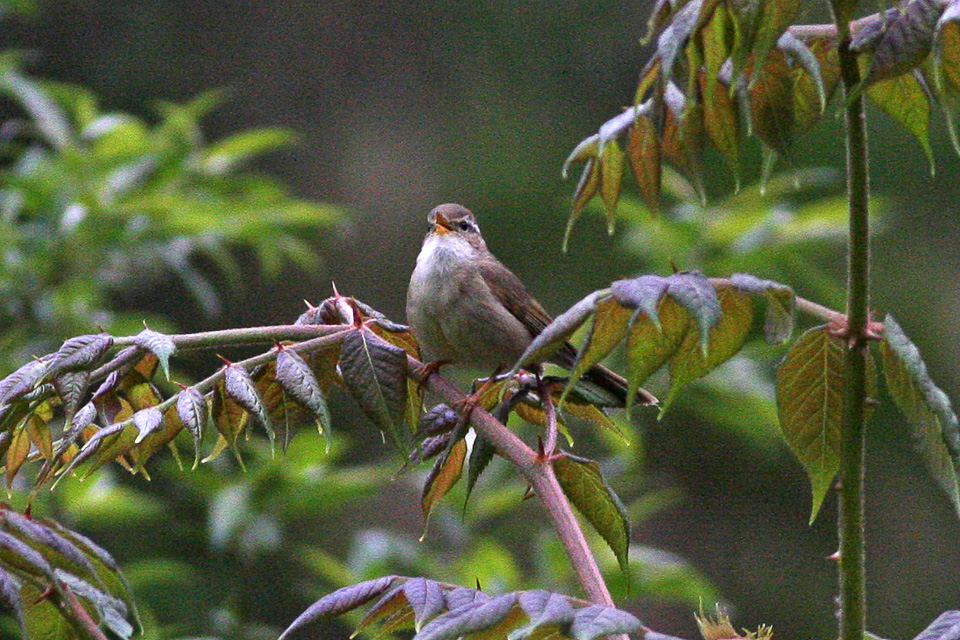
In terms of identification, the Yellow-streaked Warbler is a medium-sized warbler, measuring approximately 10 to 12 centimeters in length. Its most distinctive field marks include the yellow streaks running along its olive-green back, which give the bird its common name. The underparts are generally buffy-white, with a slight yellowish wash on the flanks. The bird exhibits a prominent whitish supercilium, or eyebrow stripe, which is particularly noticeable against its darker crown and eye line.
Juvenile Yellow-streaked Warblers are similar in appearance to adults but with less distinct streaking and a duller overall coloration. Males and females are largely indistinguishable in the field, as both sexes share similar plumage patterns and colors. In flight, the Yellow-streaked Warbler displays a swift and direct flight pattern, characterized by rapid wingbeats.
When perched, this warbler often maintains a horizontal stance, flicking its wings and tail intermittently. This behavior, along with its distinct vocalizations, can aid birders in distinguishing it from other similar species, such as the Greenish Warbler or the Blyth's Leaf Warbler, which lack the characteristic yellow streaking.
Having trouble telling birds apart? Upload a photo to our bird identification tool for an instant species match.
Yellow-streaked Warbler Habitat and Range
Preferred Habitat
The Yellow-streaked Warbler inhabits a variety of forested environments, including temperate deciduous and mixed forests with dense undergrowth. It is often found in regions with abundant water sources, such as near streams and rivers, where insect prey is plentiful. During the breeding season, it prefers altitudes ranging from 800 to 2,500 meters, especially in the Himalayan regions and parts of central China.
In the non-breeding season, the warbler may descend to lower elevations and occupy more open woodlands, scrublands, and even urban parks. This adaptability allows it to exploit a range of habitats throughout the year, although it is typically more common in rural and semi-natural areas than urban centers. Seasonal habitat shifts are primarily driven by changes in food availability and climatic conditions.
Geographic Range
The breeding range of the Yellow-streaked Warbler encompasses a broad swath of eastern and central China, extending westward into the Himalayan foothills of northeastern India, Bhutan, and Nepal. In these regions, the bird occupies forested habitats at moderate to high elevations where it breeds from late spring to early summer.
During migration, the Yellow-streaked Warbler travels to lower elevations, wintering in southern parts of its breeding range and occasionally reaching northern Myanmar and Southeast Asia. Migration corridors typically follow major river valleys and low mountain passes, facilitating access to suitable wintering habitats.
Within its range, population densities are highest in areas with extensive forest cover and minimal human disturbance. However, the warbler has shown some resilience to habitat modification, occasionally appearing in orchards and secondary forests.
Want to know which birds visit your area? Browse our backyard birds by location guides for region-specific species lists.
What Does the Yellow-streaked Warbler Eat?
The Yellow-streaked Warbler's diet primarily consists of insects and other small invertebrates, which it captures through a combination of gleaning and flycatching techniques. During the breeding season, the warbler actively forages in the canopy and understory, targeting caterpillars, beetles, and spiders that are abundant in forested habitats.
Seasonal dietary shifts occur as the warbler migrates to lower elevations in the non-breeding season. During this time, it may supplement its diet with small berries and fruits, exploiting the availability of these resources in more open habitats. The bird's foraging schedule is largely diurnal, with peak feeding activity occurring during the early morning and late afternoon.
The Yellow-streaked Warbler is adept at exploiting various microhabitats within its range, including leaf litter, bark crevices, and foliage, allowing it to maintain a varied and flexible diet throughout the year.
Yellow-streaked Warbler Behavior and Social Structure
The Yellow-streaked Warbler exhibits a range of behaviors typical of Phylloscopidae, including territoriality during the breeding season. Males establish and defend territories through song displays, engaging in vocal duels with neighboring males to assert dominance. Courtship involves a series of flight displays and vocalizations, with males often presenting food items to potential mates as part of the bonding process.
Outside the breeding season, the Yellow-streaked Warbler is more social, often joining mixed-species foraging flocks. This behavior enhances foraging efficiency and provides safety in numbers from predators. The warbler is primarily active during daylight hours, with periods of rest during the hottest parts of the day.
In response to predators, the warbler employs a variety of anti-predator strategies, including rapid, evasive flight and the use of alarm calls to alert other birds. Its small size and agility make it adept at avoiding avian predators, while its cryptic plumage provides camouflage against ground-based threats.
Yellow-streaked Warbler Nesting and Reproduction
The nesting behavior of the Yellow-streaked Warbler involves constructing cup-shaped nests primarily from grass, moss, and leaves, often lined with feathers or plant down for insulation. Nests are typically located in low shrubs or small trees, usually positioned 1 to 3 meters above ground to reduce predation risk.
Clutch size ranges from 3 to 5 eggs, with the female primarily responsible for incubation, which lasts about 12 to 14 days. During this period, the male may assist by providing food to the female. Once hatched, both parents participate in feeding and caring for the chicks, which fledge approximately 12 to 15 days after hatching. The Yellow-streaked Warbler often raises two broods per year, depending on environmental conditions and food availability.
Parental roles are evenly distributed, with both sexes engaged in nest defense and chick-rearing activities. The choice of nesting sites is influenced by the availability of suitable vegetation and proximity to food resources.
Yellow-streaked Warbler Sounds and Vocalizations
The primary song of the Yellow-streaked Warbler is a series of high-pitched, melodious trills interspersed with short, sharp notes. This cheerful and repetitive song serves as a territorial and mate attraction signal during the breeding season. Its rhythm and quality are often described as similar to a rapid, tinkling stream.
In addition to its song, the warbler emits various call notes, including soft 'chip' sounds used for communication between mates and within flocks. Alarm calls are more abrupt and harsh, designed to alert conspecifics to the presence of predators.
During the dawn chorus, the Yellow-streaked Warbler's song is especially prominent, contributing to the vibrant soundscape of its forest habitats. Its vocalizations can be distinguished from similar species by their distinct pattern and frequency.
Interesting Facts About the Yellow-streaked Warbler
- 1The Yellow-streaked Warbler can sing up to 300 notes per minute during peak breeding season.
- 2Despite its small size, the Yellow-streaked Warbler migrates over 1,000 kilometers from breeding to wintering grounds.
- 3A study showed that the Yellow-streaked Warbler's song frequency can vary by up to 20% depending on its habitat density.
- 4The Yellow-streaked Warbler's nest is meticulously constructed, taking up to 7 days to complete with thousands of individual materials.
- 5During non-breeding season, Yellow-streaked Warblers have been observed in mixed-species flocks with over 20 different bird species.
- 6The Yellow-streaked Warbler contributes to pest control by consuming up to 200 insects per day during peak breeding season.
- 7This warbler's distinct yellow streaks serve as a visual cue for mate selection, enhancing reproductive success.
Yellow-streaked Warbler Conservation Status
The Yellow-streaked Warbler is currently listed as a species of Least Concern on the IUCN Red List, with a stable population trend. Although habitat destruction due to logging and agricultural expansion poses a threat in some parts of its range, the warbler's adaptability has allowed it to persist in altered landscapes. Conservation efforts focus on preserving key forest habitats and promoting sustainable land-use practices. Protected areas within its range, such as national parks and wildlife reserves, play a crucial role in safeguarding its breeding and wintering grounds. Historically, the Yellow-streaked Warbler's population has remained relatively stable, with no significant declines reported. Continued monitoring and habitat management are essential to ensure the long-term survival of this species in its native regions.


