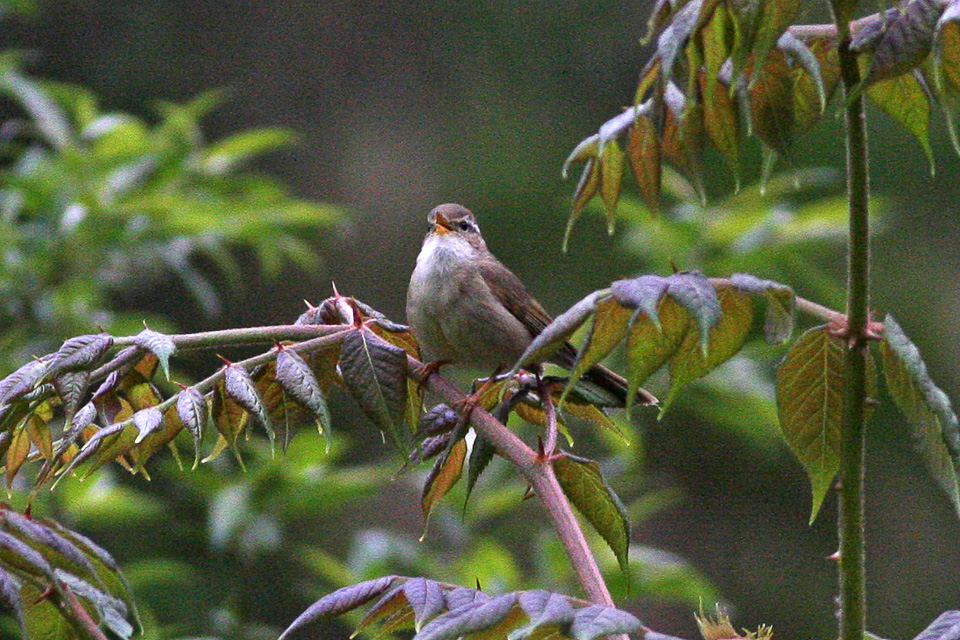
Arctic Warbler
Phylloscopus borealis
Order: Passeriformes / Family: Phylloscopidae

Wikimedia Commons
About the Arctic Warbler
The Arctic Warbler, with its scientific name Phylloscopus borealis, is a fascinating member of the family Phylloscopidae. This small passerine is renowned for its extensive migratory patterns, covering vast distances between its breeding and wintering grounds. Breeding occurs predominantly in northern regions, including Scandinavia, Siberia, and parts of Alaska. These birds prefer dense, shrubby forests, particularly those composed of birch and willow, which offer ample cover and abundant food resources. During the breeding season, these habitats provide the necessary environment for rearing young, offering protection from predators and proximity to insect prey.
In ecological terms, the Arctic Warbler plays a significant role as both prey and predator. It helps control insect populations, particularly caterpillars, through its voracious feeding habits. In turn, it serves as prey for larger avian predators, thus maintaining the delicate balance of the ecosystems it inhabits. Its song is a staple of the northern forests during the breeding season, a high-pitched, repetitive trill that echoes through the trees.
The Arctic Warbler is a highly adaptable species, capable of surviving in the harsh conditions of the Arctic Circle, where temperatures can fluctuate dramatically. Its migration is among the longest of any warbler, with some individuals traveling over 8,000 kilometers to wintering areas in Southeast Asia, including the Philippines, Thailand, and Malaysia. This remarkable journey underscores the bird's resilience and adaptability, traits that have allowed it to thrive across such a broad range of environments.
The Arctic Warbler belongs to the family Phylloscopidae, within the order Passeriformes. These birds typically live average 4-6 years, with a maximum recorded of 10 years..
How to Identify a Arctic Warbler
The Arctic Warbler is a small songbird, typically measuring between 12 to 13 centimeters in length, with a wingspan of approximately 19 to 24 centimeters. Adult plumage is characterized by olive-green upperparts and whitish underparts, providing effective camouflage against the leafy backdrops of its habitat. One of its most distinctive features is a prominent white or pale yellow stripe above the eye, a key field mark that aids in its identification.
Juvenile Arctic Warblers bear a close resemblance to adults but often exhibit slightly duller plumage. Males and females are similar in appearance, making visual sex differentiation challenging without close examination. The Arctic Warbler is often confused with other Phylloscopus species, such as the Willow Warbler and the Common Chiffchaff, due to their similar sizes and coloration. However, the Arctic Warbler's eye stripe and distinct vocalizations help distinguish it from these relatives.
In flight, the Arctic Warbler exhibits quick, agile movements, with a tendency to flit between branches and hover briefly while foraging. When perching, it often displays a characteristic tail flick, a behavior common among Phylloscopus warblers.
Having trouble telling birds apart? Upload a photo to our bird identification tool for an instant species match.
Arctic Warbler Habitat and Range
Preferred Habitat
The Arctic Warbler predominantly inhabits forests in northern latitudes, favoring birch and willow woodlands. It thrives in areas with dense shrubbery, which provide both food and shelter. During the breeding season, it can be found in the taiga and tundra regions, often at elevations ranging from sea level to approximately 2,000 meters.
In winter, the Arctic Warbler migrates to tropical and subtropical forests in Southeast Asia. It shows a preference for lowland forests, but can also adapt to secondary growth and forest edges. While it is more commonly associated with rural or wild areas, the Arctic Warbler can occasionally be found in urban parks and gardens, where tree cover is ample.
Geographic Range
The Arctic Warbler boasts a vast breeding range, extending across the boreal forests of Scandinavia, Russia, and Alaska. It breeds from northern Norway and Finland eastwards through Siberia to the Bering Sea region. During migration, it traverses a wide corridor across Asia to reach its wintering grounds in Southeast Asia.
Wintering populations are primarily located in the Philippines, Indonesia, Malaysia, and southern Thailand. The bird’s migratory routes are complex, often crossing major geographical barriers such as the Himalayas and the vast expanse of the Asian continent. Although it is not considered abundant in any particular area, the Arctic Warbler can be locally common in suitable habitats within its range.
Want to know which birds visit your area? Browse our backyard birds by location guides for region-specific species lists.
What Does the Arctic Warbler Eat?
The diet of the Arctic Warbler is primarily insectivorous, consisting mainly of small insects and arthropods. During the breeding season, it feeds extensively on caterpillars, beetles, and flies, which are abundant in its forest habitats. The bird employs a methodical foraging technique, gleaning insects from leaves and branches with precision.
In addition to insects, the Arctic Warbler occasionally consumes spiders and other small invertebrates. During migration and in its wintering grounds, its diet may also include small fruits and seeds, supplementing the reduced availability of insect prey. The Arctic Warbler typically forages alone or in mixed-species flocks, often during early morning and late afternoon when insect activity is highest.
Arctic Warbler Behavior and Social Structure
The Arctic Warbler is primarily a solitary bird during the breeding season, although it may form loose flocks during migration and in winter. Its territorial behavior is pronounced, with males establishing and defending breeding territories through song.
Courtship displays include singing from exposed perches and engaging in aerial displays to attract females. Once paired, the male and female often remain together for the duration of the breeding season, sharing responsibilities such as territory defense. In response to predators, the Arctic Warbler may employ distraction displays to draw attention away from its nest.
Daily activity patterns are diurnal, with peak activity occurring during the early morning and late afternoon. The Arctic Warbler’s adaptability allows it to exploit various food sources and habitats throughout its extensive range.
Arctic Warbler Nesting and Reproduction
The Arctic Warbler constructs a dome-shaped nest on or near the ground, typically hidden in dense vegetation or among fallen leaves. Nest materials include grass, moss, and leaves, providing camouflage and insulation.
Clutch size ranges from 4 to 6 eggs, which are incubated predominantly by the female. The incubation period lasts approximately 12 to 14 days, after which both parents participate in feeding the hatchlings. Young Arctic Warblers fledge around 12 to 14 days post-hatching, but parental care may continue for several weeks thereafter.
The species typically produces one brood per year, although in optimal conditions, a second brood may occasionally be attempted.
Arctic Warbler Sounds and Vocalizations
The Arctic Warbler's song is a high-pitched, rapid trill, often described as metallic and insect-like. It serves both to establish territory and attract a mate. The bird's call notes are sharp and distinctive, consisting of short, repeated 'chip' sounds.
Alarm calls are more urgent and staccato, designed to alert mates and deter potential threats. During the dawn chorus, the Arctic Warbler's song adds a lively melody to the symphony of forest sounds, standing out due to its rhythmic consistency and clarity.
Interesting Facts About the Arctic Warbler
- 1The Arctic Warbler is one of the few songbirds that breeds in the Arctic Circle, showcasing its remarkable adaptability.
- 2Each year, the Arctic Warbler migrates over 8,000 kilometers, a testament to its endurance and navigation skills.
- 3Despite its name, the Arctic Warbler spends more than half its life in tropical Southeast Asia during the non-breeding season.
- 4The Arctic Warbler was only confirmed as a breeding species in Alaska in the 1970s, highlighting the importance of ongoing ornithological research.
- 5Unlike many warblers, the Arctic Warbler constructs its nest on the ground, utilizing dense vegetation for concealment.
Arctic Warbler Conservation Status
The Arctic Warbler is currently listed as Least Concern by the IUCN, with population trends appearing stable. However, habitat loss due to deforestation in its wintering grounds poses a potential threat. Conservation efforts focus on protecting vital habitats across its range, particularly in Southeast Asia. While historical data suggests population stability, ongoing monitoring is essential to address any emerging threats and ensure the continued survival of this resilient species.