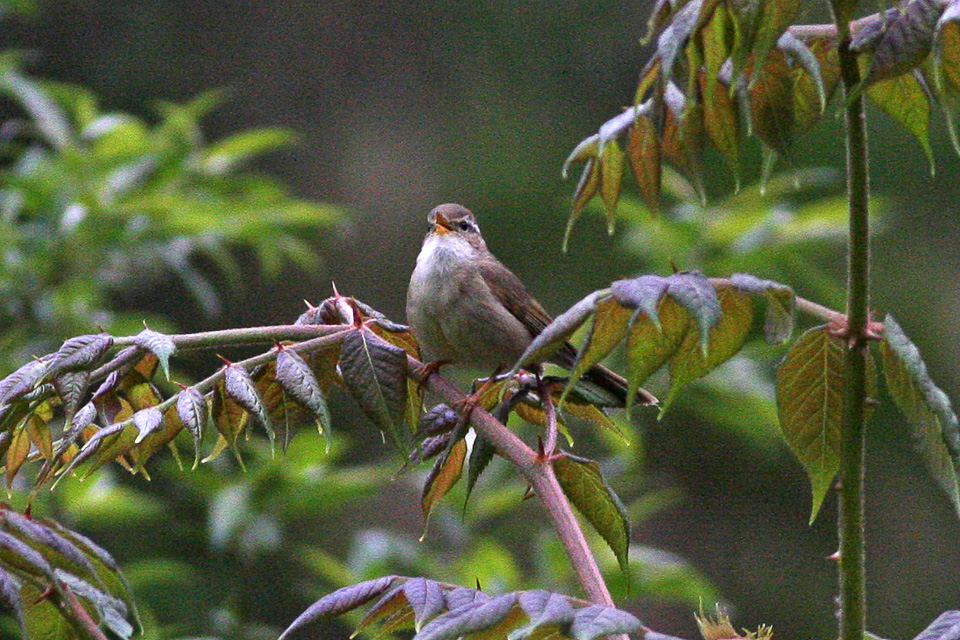
Tickell's Leaf Warbler
Phylloscopus affinis
Order: Passeriformes / Family: Phylloscopidae

Wikimedia Commons
About the Tickell's Leaf Warbler
Tickell's Leaf Warbler (Phylloscopus affinis) is a small passerine bird that belongs to the family Phylloscopidae. Named after the British ornithologist Samuel Tickell, this warbler is known for its lively presence in the forests and shrubby areas of the Himalayan region. It holds ecological importance as a significant insectivore in these ecosystems. The bird predominantly inhabits the subtropical and temperate zones of countries like India, Bhutan, Nepal, and parts of Tibet. During the breeding season, Tickell's Leaf Warbler is often spotted in the dense undergrowth and forest edges, where it plays a crucial role in pest control by feeding on insects and larvae. The warbler's presence signals a healthy, biodiverse environment.
In the context of its ecological role, Tickell's Leaf Warbler contributes significantly as both a prey and predator within its habitat. Its diet consists mainly of small insects and arthropods, which it captures with remarkable agility. In turn, the warbler itself serves as a food source for larger avian predators, thereby maintaining the balance within the food web. During the non-breeding season, the warbler migrates to lower altitudes, where it inhabits open woodlands and scrublands. This seasonal movement is pivotal, as it helps in the redistribution of nutrient-rich insect populations, aiding other species in these ecosystems.
The bird's affinity for the Himalayan region makes it a species of interest to conservationists and ornithologists. Its migratory patterns, driven by climate and food availability, underscore the need for cross-border conservation efforts to ensure the preservation of its habitats. As a bioindicator, the presence and health of Tickell's Leaf Warbler populations can provide insights into the overall environmental health of its native regions.
The Tickell's Leaf Warbler belongs to the family Phylloscopidae, within the order Passeriformes. These birds typically live average 3-5 years with a maximum recorded lifespan of 7 years..
How to Identify a Tickell's Leaf Warbler
Tickell's Leaf Warbler is a small, agile bird, measuring approximately 10 cm in length. Its plumage is primarily greenish-olive on the upperparts, with paler yellow underparts, providing excellent camouflage amidst foliage. Notable field marks include a distinct yellowish supercilium and a faint wing bar that can be observed when the bird is perched. The wings and tail are short, which aid in its rapid, flitting movements through dense vegetation.
Juvenile Tickell's Leaf Warblers closely resemble adults but tend to have a duller plumage. There is minimal sexual dimorphism, making it challenging to distinguish between males and females in the field. However, males are often slightly brighter in coloration during the breeding season, an adaptation for courtship displays. The warbler's small size and quick movements can lead to confusion with other Phylloscopus species, such as the Greenish Warbler, but its sharper calls and distinctive plumage help in accurate identification.
In flight, Tickell's Leaf Warbler exhibits a fluttering pattern, with rapid wingbeats interspersed with short glides. When perched, it often adopts a horizontal posture, with its tail slightly cocked, aiding in its identification from a distance. Observers should note its preference for staying near the ground or at mid-canopy levels, where its greenish tones blend seamlessly with the foliage.
Having trouble telling birds apart? Upload a photo to our bird identification tool for an instant species match.
Tickell's Leaf Warbler Habitat and Range
Preferred Habitat
Tickell's Leaf Warbler inhabits a range of environments that suit its feeding and breeding needs. Primarily found in the Himalayan foothills, it thrives in subtropical and temperate forests, particularly in areas with dense undergrowth and shrubby vegetation. The bird is commonly seen at elevations ranging from 1,500 to 3,000 meters. However, during winter, it descends to lower altitudes, inhabiting open woodlands and scrublands.
The warbler demonstrates a preference for deciduous and mixed forests, where it can easily forage for insects. While generally avoiding urban areas, it may occasionally be spotted in rural gardens and orchards, especially if they are adjacent to natural woodland. Seasonal shifts in habitat are driven by temperature changes and food availability, which influence its altitudinal migration within its range.
The presence of Tickell's Leaf Warbler in a habitat is a positive indicator of a rich, insect-abundant environment, which supports its dietary needs and offers suitable conditions for breeding and rearing young.
Geographic Range
Tickell's Leaf Warbler has a breeding range primarily in the Himalayan region, encompassing countries like India, Bhutan, Nepal, and extending into parts of Tibet. During the breeding season, the warbler is found in the lush, forested areas of these regions, thriving in the cool, temperate climate. As winter approaches, the bird undertakes altitudinal migration to lower, warmer areas, often moving southward into the peninsular regions of India.
The warbler's migration corridors are largely altitudinal, rather than latitudinal, taking advantage of the varied elevations of the Himalayas to find suitable wintering habitats. In its winter range, Tickell's Leaf Warbler is observed in open woodlands, scrublands, and occasionally in cultivated areas, where it continues its insectivorous habits. While not as densely populated as some other warbler species, local populations can be abundant, particularly in undisturbed forest areas with high insect activity.
Conservationists and ornithologists monitor these migration patterns closely, as changes can indicate shifts in climate or habitat availability. Ensuring the protection of both breeding and wintering habitats across its range is critical to the species' survival.
Want to know which birds visit your area? Browse our backyard birds by location guides for region-specific species lists.
What Does the Tickell's Leaf Warbler Eat?
Tickell's Leaf Warbler primarily feeds on a diet rich in insects and other small arthropods, playing a crucial role in controlling insect populations in its habitat. Its diet includes caterpillars, beetles, and spiders, which it forages from the leaves and branches of trees and shrubs. The warbler employs a methodical gleaning technique, using its sharp eyesight to spot and snatch prey from foliage.
During the breeding season, the bird's diet shifts slightly to include a higher proportion of caterpillars and larvae, which provide the necessary protein for feeding its young. This seasonal dietary shift is essential for successful reproduction and chick development. In the non-breeding season, when insect availability may decline, the warbler may also consume small quantities of berries and plant matter to supplement its diet.
Tickell's Leaf Warbler forages actively throughout the day, with peak activity in the early morning and late afternoon when insects are most active. Its feeding habits have an indirect positive impact on the forest ecosystem, aiding in pest control and promoting plant health.
Tickell's Leaf Warbler Behavior and Social Structure
Tickell's Leaf Warbler exhibits a solitary or loosely social behavior, often seen foraging alone or in small groups. During the breeding season, males establish and defend territories through song, a critical behavior for attracting mates and deterring rivals. The warbler's song, a series of rapid, trilling notes, resonates through the forest, serving as both a territorial marker and a courtship display.
Courtship involves the male performing a fluttering flight, showcasing its plumage to potential mates. Once paired, the birds exhibit strong pair bonds, with both sexes participating in nest building and chick rearing. Outside the breeding season, Tickell's Leaf Warbler is more gregarious, occasionally forming mixed-species foraging flocks, which provide safety in numbers and increased foraging efficiency.
In response to predators, the warbler relies on its agility and camouflage, often freezing or darting into dense cover when threatened. Its alertness and quick reflexes are vital for survival in the predator-rich environments of the Himalayas. Daily activity patterns revolve around feeding and territory maintenance, with rest periods during the hottest parts of the day.
Tickell's Leaf Warbler Nesting and Reproduction
Tickell's Leaf Warbler constructs its nest in well-concealed locations, usually on the ground or low in dense shrubbery. The nest is a small, dome-shaped structure made of grass, leaves, and moss, providing excellent camouflage against predators. The interior is lined with softer materials like feathers and fine grass, ensuring warmth and comfort for the eggs and chicks.
Clutch size typically ranges from 3 to 5 eggs, which are white or pale cream in color, sometimes speckled with reddish-brown. Both parents share incubation duties, which last approximately 12 to 14 days. After hatching, the chicks are altricial, requiring constant care and feeding from both parents.
Fledging occurs about 10 to 12 days after hatching, with chicks leaving the nest but remaining dependent on their parents for food and protection for several additional weeks. Tickell's Leaf Warbler generally raises one brood per year, but in favorable conditions, a second brood is possible. The species' nesting success is influenced by factors such as predation and weather conditions, underscoring the importance of suitable and secure nesting sites.
Tickell's Leaf Warbler Sounds and Vocalizations
The primary song of Tickell's Leaf Warbler is a series of rapid, melodious trills that serve as both a territorial and courtship signal. This song is delivered with a fast tempo and a sweet, clear quality, often repeated in quick succession. The warbler's call notes are sharp and high-pitched, typically rendered as 'chip-chip' or 'tsip-tsip', used in communication between individuals or as an alarm signal.
During the dawn chorus, the warbler's song can be distinguished by its distinctive rhythm and pitch, cutting through the ambient sounds of the forest. Alarm calls are shorter and more urgent, alerting nearby conspecifics to potential dangers. The bird's vocalizations play a crucial role in its social interactions and territorial maintenance, with variations in song structure and frequency depending on the context.
Interesting Facts About the Tickell's Leaf Warbler
- 1Tickell's Leaf Warbler is named after Samuel Tickell, a British ornithologist who explored India in the 19th century.
- 2During the breeding season, the warbler's diet consists largely of caterpillars, crucial for chick development.
- 3This species is part of a diverse genus, Phylloscopus, which includes over 60 different warbler species worldwide.
- 4Tickell's Leaf Warbler migrates altitudinally, utilizing the varied elevations of the Himalayas for seasonal movement.
- 5The bird's rapid, trilling song can be a key identifier among the dense, insect-rich forests it inhabits.
- 6Despite its small size, this warbler plays a significant role in pest control, highlighting its ecological importance.
- 7The warbler's dome-shaped nest, built on the ground, is expertly camouflaged to protect against predators.
Tickell's Leaf Warbler Conservation Status
The IUCN currently classifies Tickell's Leaf Warbler as a species of Least Concern, with a stable population trend. However, habitat loss due to deforestation and land-use changes poses a potential threat to its long-term survival. Conservation efforts focus on protecting key habitats in the Himalayan region, emphasizing the importance of cross-border cooperation due to the warbler's migratory habits. Efforts to preserve forested areas and promote sustainable land management practices are crucial for maintaining the ecosystems that support this species. Historically, populations have remained stable, but continued monitoring is essential, especially in light of climate change and its impact on habitats and migration patterns. Public awareness and education about the importance of biodiversity and habitat conservation are vital in ensuring the future of Tickell's Leaf Warbler and similar species.