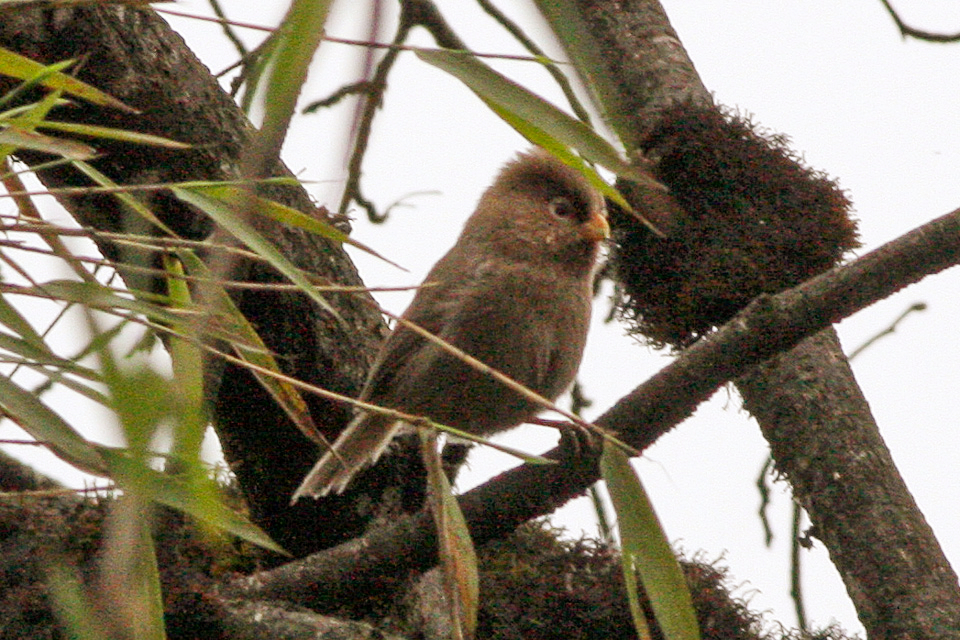
Arabian Warbler
Sylvia leucomelaena
Order: Passeriformes / Family: Sylviidae

Wikimedia Commons
About the Arabian Warbler
The Arabian Warbler (Sylvia leucomelaena) is a small passerine bird belonging to the Sylviidae family. With its distinctive gray plumage and white throat, it stands out in its desert habitat. This species is primarily found across the Arabian Peninsula, including Saudi Arabia, Oman, and the United Arab Emirates. It plays a crucial role in the desert ecosystem by controlling insect populations. The Arabian Warbler is particularly adapted to the harsh, arid environment, exhibiting behaviors and physical traits that enable it to thrive in such settings. Its presence indicates healthy desert ecosystems, as it relies on native flora and fauna for survival. The species shows high site fidelity, often returning to the same breeding territories annually. The Arabian Warbler's ecological role extends beyond insect control; it also serves as a prey species for local raptors and carnivorous mammals, integrating into the broader food web. During the breeding season, usually from February to April, this warbler becomes more vocal and active, displaying heightened territorial behavior. Outside of the breeding season, it remains relatively inconspicuous, blending into the desert landscape. This adaptability underscores the bird's significance, not only as a key species within its habitat but also as an indicator of environmental health in the arid regions it calls home.
The Arabian Warbler belongs to the family Sylviidae, within the order Passeriformes. These birds typically live typically around 5-6 years, with some individuals living up to 8 years..
How to Identify a Arabian Warbler
The Arabian Warbler exhibits a predominantly gray plumage that provides excellent camouflage against the desert background. The adult bird displays a sharp contrast between its gray body and white throat, which is a key identifying feature. Both male and female warblers look similar, making sex differentiation challenging in the field. Juveniles, on the other hand, show duller colors with a more muted throat patch. Unlike some of its cousins in the Sylvia genus, the Arabian Warbler lacks striking sexual dimorphism. In flight, it shows a slender silhouette with rounded wings and a long tail, often seen fluttering through thorny shrubs. When perched, it maintains a slightly upright posture, which can help in spotting it within its habitat. Confusion with similar species, such as the Asian Desert Warbler, can occur, but the latter typically has a more uniform sandy color without the distinctive white throat. Birders should note the Arabian Warbler's preference for lower shrub levels, often close to the ground, when distinguishing it from other sympatric warblers.
Having trouble telling birds apart? Upload a photo to our bird identification tool for an instant species match.
Arabian Warbler Habitat and Range
Preferred Habitat
The Arabian Warbler thrives in arid and semi-arid regions, predominantly residing in desert habitats characterized by sparse vegetation. It favors areas with scattered acacia trees and dense shrubs, which provide necessary cover and foraging grounds. Typically found at elevations ranging from sea level up to 2,000 meters, this warbler can adapt to various microhabitats within deserts. During the breeding season, it frequents regions with slightly denser vegetation, which offers nesting sites and protection from predators. Unlike many other birds, the Arabian Warbler rarely inhabits urban areas, preferring the solitude and expanse of its natural desert environment. Seasonal habitat shifts are minimal, as this species remains largely sedentary, taking advantage of the local resources available year-round. This preference for specific desert habitats makes it vulnerable to habitat degradation and changes in land use.
Geographic Range
The Arabian Warbler is predominantly found in the Arabian Peninsula, with its range extending across countries such as Saudi Arabia, Oman, Yemen, and the United Arab Emirates. Breeding populations are most concentrated in areas like the Dhofar region of southern Oman and the Asir Mountains in southwestern Saudi Arabia. Unlike many migratory warblers, the Arabian Warbler is largely sedentary, with little evidence of long-distance migration. Some local movements might occur in response to climatic changes or food availability, but these are typically short-range. Due to its limited range, the warbler's populations tend to be denser in suitable habitats within these countries. The bird's presence is especially notable in protected areas and reserves, where conservation efforts help maintain stable populations.
Want to know which birds visit your area? Browse our backyard birds by location guides for region-specific species lists.
What Does the Arabian Warbler Eat?
The Arabian Warbler primarily feeds on insects, making it a crucial insectivore in desert ecosystems. Its diet consists of beetles, caterpillars, and other arthropods, which it forages from the foliage of shrubs and small trees. During the warmer months, when insect activity peaks, the warbler can often be seen flitting through vegetation, catching prey mid-air or gleaning from leaves. It uses a variety of foraging techniques, including sallying and hovering, to access hard-to-reach prey. As the seasons change and insect abundance fluctuates, the warbler may supplement its diet with berries and small fruits, taking advantage of whatever resources are available in its arid habitat. The Arabian Warbler generally feeds during the cooler parts of the day, such as early morning and late afternoon, to avoid the harsh midday sun.
Arabian Warbler Behavior and Social Structure
The Arabian Warbler is a solitary bird outside of the breeding season, displaying territorial behavior especially during nesting. Males sing prominently from exposed perches to defend their territory and attract mates. During courtship, the male performs display flights and exhibits unique vocalizations to entice the female. Once paired, the warblers exhibit strong monogamous bonds, often returning to the same nesting sites each year. Their daily activity peaks during the cooler hours of dawn and dusk, as they avoid the peak desert temperatures. The species shows a keen alertness to predators, utilizing its camouflaged plumage to remain inconspicuous. Upon detecting threats, it emits sharp alarm calls to alert conspecifics. During non-breeding seasons, the warbler becomes more inconspicuous, blending seamlessly into the desert landscape.
Arabian Warbler Nesting and Reproduction
The Arabian Warbler constructs delicate cup-shaped nests using fine grasses and plant fibers, often lined with softer materials like feathers or wool. These nests are strategically placed within dense shrubs or thorny bushes, providing concealment from predators. The preferred nesting height ranges from 1 to 3 meters above the ground. During the breeding season, which generally spans from February to April, the female lays a clutch of 3 to 4 eggs. The incubation period lasts around 13 to 15 days, during which the female primarily incubates the eggs while the male provides food. After hatching, both parents share responsibilities in feeding the chicks, which fledge approximately 12 to 14 days post-hatching. The Arabian Warbler typically raises one brood per year, although successful early nesting might lead to a second attempt.
Arabian Warbler Sounds and Vocalizations
The Arabian Warbler's song is a melodious series of whistles and trills, often delivered from a prominent perch. The rhythm is fast-paced, with a clear, sweet quality that carries well across the desert landscape. Its call notes are sharp and metallic, used for communication between mates or to signal alarm. During the dawn chorus, the warbler's song becomes more frequent, serving as a territorial proclamation. Compared to other warblers, its song is less complex but highly distinctive, aiding in field identification. Alarm calls resemble a harsh 'churr' sound, alerting other birds to the presence of predators.
Interesting Facts About the Arabian Warbler
- 1The Arabian Warbler often reuses the same nesting site year after year, a testament to its site fidelity.
- 2Despite its small size, the Arabian Warbler plays a significant role in controlling insect populations in arid regions.
- 3This species is remarkably adapted to desert life, often remaining inactive during the hottest parts of the day.
- 4The Arabian Warbler's song can be heard over considerable distances, a crucial trait for establishing territory in sparse desert habitats.
- 5Despite being a desert dweller, the Arabian Warbler occasionally supplements its diet with berries and small fruits.
Arabian Warbler Conservation Status
Currently, the Arabian Warbler is listed as Least Concern by the IUCN, with stable population trends reported across its range. However, its reliance on specific desert habitats makes it susceptible to threats such as habitat degradation and land-use changes. Conservation efforts focus on habitat protection and monitoring population dynamics. Historically, the species has maintained stable numbers, but ongoing development in the Arabian Peninsula poses potential risks. Conservationists emphasize the need for continued habitat preservation to ensure the warbler's long-term survival.