Archbold's Newtonia
Newtonia archboldi
Order: Passeriformes / Family: Vangidae

Wikimedia Commons
About the Archbold's Newtonia
The Archbold's Newtonia, scientifically referred to as Newtonia archboldi, is a small passerine bird endemic to Madagascar. It belongs to the Vangidae family, which is notable for its diversity and adaptability. This species holds particular interest due to its specialized ecological niche and the critical role it plays in its native habitats. Primarily found in the dry deciduous forests and more arid regions of the island, the Archbold's Newtonia contributes to the intricate web of life within these ecosystems.
This bird's significance extends beyond its ecological role. It serves as an indicator species for the health of Madagascar's unique habitats, which are under constant threat from deforestation and human encroachment. The preservation of its environment is crucial not only for the Archbold's Newtonia but for the myriad other species with which it shares its habitat. This species is a testament to the island's evolutionary history, representing a lineage that has adapted to Madagascar's challenging climate and geography.
The Archbold's Newtonia is active throughout the year, with some seasonal variations in behavior. During the breeding season, which aligns with the island's rainy period, these birds become more vocal and visible as they establish territories and seek mates. In the dry season, their behavior shifts slightly as they focus on foraging to sustain themselves when resources become scarcer. This adaptability showcases their resilience and the critical balance they maintain within their ecosystem.
The Archbold's Newtonia belongs to the family Vangidae, within the order Passeriformes. These birds typically live average 5 years, with a maximum recorded of 8 years.
How to Identify a Archbold's Newtonia
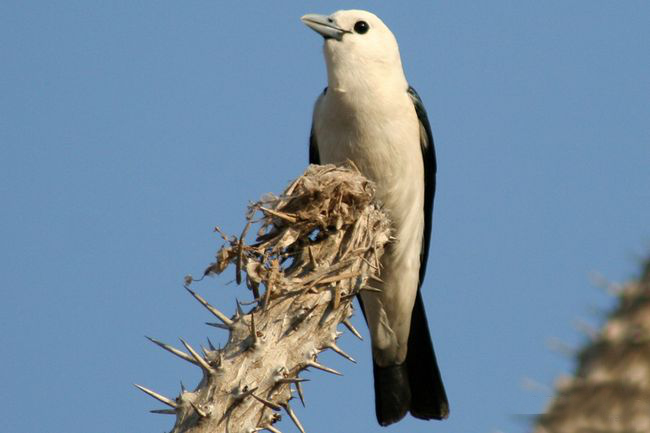
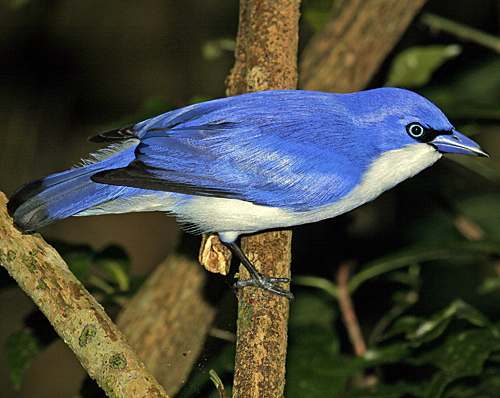
Identifying the Archbold's Newtonia involves noting several key characteristics. Adult birds typically display a subdued plumage, primarily consisting of brown and gray tones. This coloration provides effective camouflage against the forest floor and tree bark, an essential adaptation for avoiding predators. The bird's underparts are lighter, with a pale gray hue that blends seamlessly with its surroundings.
Juveniles can be distinguished from adults by their slightly duller plumage and the presence of faint streaking on their underparts. Unlike some bird species, there is minimal sexual dimorphism in the Archbold's Newtonia, meaning males and females appear similar in size and coloration, which can sometimes complicate field identification.
In flight, the Archbold's Newtonia exhibits a compact silhouette with rounded wings and a relatively short tail. Its perching posture is typically upright, often seen on low branches or among the understory. This bird can sometimes be confused with other members of the Vangidae family, but its distinct vocalizations and specific habitat preferences assist in differentiating it from similar species.
Having trouble telling birds apart? Upload a photo to our bird identification tool for an instant species match.
Archbold's Newtonia Habitat and Range
Preferred Habitat
The Archbold's Newtonia is primarily associated with the dry deciduous forests of Madagascar, thriving in regions that experience seasonal variations in rainfall. These forests provide a rich tapestry of foliage, offering ample foraging opportunities and shelter. The bird is particularly adept at navigating the dense understory of these forests, where it finds insects and other small prey.
Elevation-wise, the Archbold's Newtonia is often found at mid to low elevations, making use of the microhabitats within these ranges. While it predominantly inhabits rural and untouched forest areas, it can occasionally be spotted in fragmented habitats where human activity has altered the landscape.
Seasonal shifts in habitat use are minimal, largely because this species is well-adapted to its environment year-round. However, during periods of extreme drought or when food becomes scarce, the Archbold's Newtonia may venture slightly outside its usual range in search of sustenance, though it generally remains within the forested areas.
Geographic Range
The Archbold's Newtonia is endemic to Madagascar, with its range strictly confined to the island. Within Madagascar, it is primarily found in the northwestern and western regions, where dry deciduous forests dominate the landscape. Its distribution is patchy, largely dependent on the availability of suitable habitats.
During the breeding season, the Archbold's Newtonia is observed to be more concentrated in dense forest areas where resources are abundant. While it does not undertake long migrations, some local movements occur in response to changes in food availability and environmental conditions.
Population density hotspots for this species are closely tied to well-preserved forest areas. As such, regions like the Ankarana Special Reserve and the Ankarafantsika National Park are crucial conservation sites for maintaining viable populations of the Archbold's Newtonia. These areas provide the necessary ecological conditions to support the species' lifecycle.
Want to know which birds visit your area? Browse our backyard birds by location guides for region-specific species lists.
What Does the Archbold's Newtonia Eat?
The diet of the Archbold's Newtonia primarily consists of insects and other small invertebrates, a preference that aligns with its role as an insectivore. It employs a methodical foraging technique, gleaning prey from foliage and bark within its forest habitat. This bird's hunting strategy involves a combination of visual acuity and rapid movements to capture insects, spiders, and occasionally small arthropods.
Seasonal variations in diet do occur, particularly during the breeding season when the nutritional demands increase. During this time, the Archbold's Newtonia may expand its diet to include a broader range of insects, often targeting those that are more abundant due to the rains.
The size of prey typically ranges from small to medium, with the bird often favoring soft-bodied insects that are easier to process. Foraging activity peaks during the cooler morning and late afternoon hours, capitalizing on the availability of active prey items. This schedule allows the bird to avoid the midday heat while still meeting its dietary needs.
Archbold's Newtonia Behavior and Social Structure
Archbold's Newtonia displays a fascinating array of behaviors that are both social and territorial in nature. This small bird often forms loose associations with conspecifics, especially during non-breeding seasons, which aids in mutual protection and resource location. However, during the breeding season, the Archbold's Newtonia becomes fiercely territorial, with pairs establishing and defending specific areas from intruders.
Courtship displays are subtle but involve vocalizations and mutual preening between prospective mates. These interactions strengthen pair bonds and facilitate cooperative breeding efforts. Typically monogamous, the pairs work together to build nests and rear young.
Flocking patterns shift with the seasons. During the breeding season, pairs are more isolated, while in the non-breeding season, small flocks may form. This bird exhibits a robust response to predators, often relying on alarm calls to warn conspecifics of danger. Daily activity patterns center around foraging, with peak activity in the morning and late afternoon.
Archbold's Newtonia Nesting and Reproduction
The nesting habits of the Archbold's Newtonia reflect its adaptability and resourcefulness. Nests are typically constructed in the fork of small trees or shrubs, utilizing a variety of materials such as twigs, leaves, and occasionally spider silk to bind the structure together. This strategic placement ensures shelter from predators and environmental elements.
The typical clutch size ranges from two to three eggs, with incubation being a shared responsibility between both parents. The incubation period lasts approximately two weeks, during which the parents take turns warming the eggs and foraging for food.
Once hatched, the chicks remain in the nest for another two to three weeks before fledging. During this time, both parents are actively involved in feeding and caring for the young, ensuring their rapid development. The Archbold's Newtonia generally raises one brood per year, although in particularly favorable conditions, a second brood may be attempted.
Archbold's Newtonia Sounds and Vocalizations
The Archbold's Newtonia is known for its distinctive vocalizations, which play a crucial role in communication and territory establishment. Its primary song consists of a series of clear, high-pitched notes that rise and fall in a rhythmic pattern. This song is often described as having a melodious quality, reminiscent of a flute.
In addition to its song, the Archbold's Newtonia produces various call notes that serve different purposes. Short, sharp calls are used as contact notes between mates or group members, while harsher, repetitive calls signal alarm or distress.
During the dawn chorus, the Archbold's Newtonia's song is prominent, contributing to the symphony of sounds that fill the forest at first light. This bird's vocalizations are an integral part of its behavioral repertoire, facilitating interactions and maintaining social bonds.
Interesting Facts About the Archbold's Newtonia
- 1Archbold's Newtonia is named after the American ornithologist Richard Archbold, who was instrumental in studying Madagascar's avifauna.
- 2Despite being a small bird, the Archbold's Newtonia plays a crucial role in controlling insect populations within its habitat.
- 3The Archbold's Newtonia is exclusively found in Madagascar, highlighting the island's unique biodiversity and evolutionary processes.
- 4This species is part of the Vangidae family, known for its radiation and diversity across Madagascar's varied environments.
- 5Archbold's Newtonia is particularly vocal during the rainy season, using its song to attract mates and mark territory.
- 6Unlike many bird species, Archbold's Newtonia exhibits minimal sexual dimorphism, with males and females appearing nearly identical.
- 7The Archbold's Newtonia contributes to seed dispersal by consuming small fruits, aiding in the regeneration of its forest habitat.
Archbold's Newtonia Conservation Status
The Archbold's Newtonia currently holds a conservation status of Least Concern on the IUCN Red List, indicating a relatively stable population. However, this status masks underlying threats such as habitat destruction due to logging and agricultural expansion in Madagascar. These activities fragment the bird's habitat, posing significant risks to its long-term viability. Conservation efforts focus on habitat preservation, with several protected areas established to safeguard key habitats. Organizations are working to raise awareness and promote sustainable land use practices that benefit both the Archbold's Newtonia and the broader ecosystem. Historical population data suggest that while the bird's numbers have remained stable, ongoing threats necessitate continued vigilance and proactive conservation measures. Ensuring the future of this species requires a multifaceted approach that addresses both environmental and human factors.