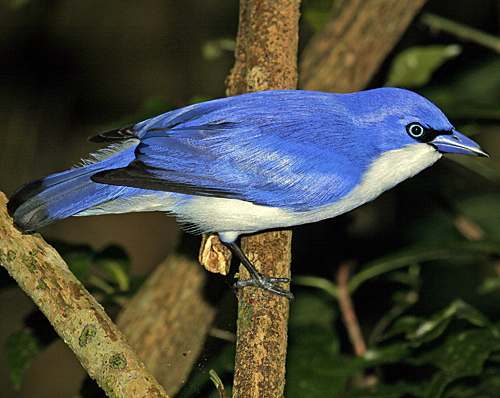
White-headed Vanga
Artamella viridis
Order: Passeriformes / Family: Vangidae
Wikimedia Commons
About the White-headed Vanga
The White-headed Vanga, scientifically known as Artamella viridis, is a fascinating bird species endemic to the island of Madagascar. This bird plays a significant role in the island's ecosystem as an insectivore, helping to control insect populations. Its presence is particularly noted in the eastern rainforests and the western dry deciduous forests of Madagascar, showcasing its adaptability to different forest environments. The White-headed Vanga is a member of the Vangidae family, a unique group of birds that demonstrates a wide variety of forms and behaviors. This bird is particularly interesting due to its specialization in feeding techniques and its striking plumage. The White-headed Vanga exhibits a clear pattern of seasonal behavior, with breeding typically occurring during the wet season, which spans from November to April. This timing coincides with the peak availability of food resources, ensuring that hatchlings have a better chance of survival. During the dry season, these birds may change their foraging strategies or shift slightly within their habitat range to adapt to the changing environment. The ecological role of the White-headed Vanga extends beyond its immediate diet. As an insectivorous bird, it helps maintain the delicate balance within its habitat by controlling insect populations, which in turn affects plant health and the broader ecosystem. Its presence in both primary and secondary forests indicates its role in both pristine and disturbed environments, highlighting its adaptability and importance in biodiversity conservation. The White-headed Vanga is not just an ecological player but also an indicator species. Changes in its population can reflect shifts in environmental health, making it a valuable species for monitoring ecosystem changes. Conservation efforts on Madagascar often consider the habitat needs of species like the White-headed Vanga to ensure that ecosystem management strategies are effective and comprehensive.
The White-headed Vanga belongs to the family Vangidae, within the order Passeriformes. These birds typically live average 7-10 years, with some individuals living longer in optimal conditions..
How to Identify a White-headed Vanga
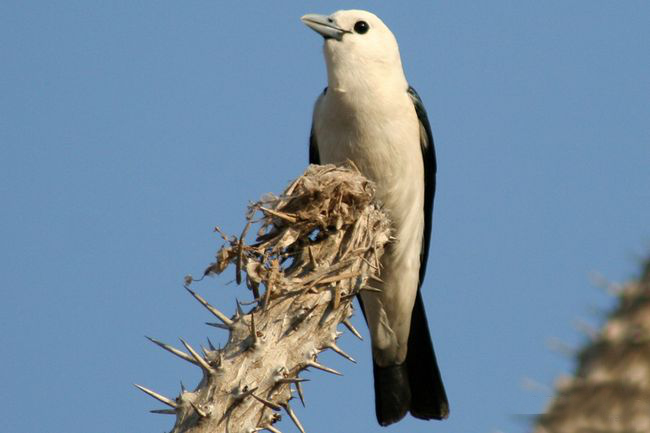
Identifying the White-headed Vanga in the field involves noting its distinctive white head, which sharply contrasts with its black wings and tail. Adult White-headed Vangas have a mostly white body with the exception of their stark black wings and tail, providing a bold, contrasting appearance that is unmistakable. Juveniles, on the other hand, may exhibit a slightly muted version of this coloration, with less pronounced contrasts and a more mottled appearance. Male and female White-headed Vangas do not show significant sexual dimorphism, making them difficult to distinguish by plumage alone. However, subtle differences in size or posture may be observed with careful study. In flight, the White-headed Vanga displays a robust silhouette with broad wings and a relatively short tail, characteristics that can help in identifying it from a distance. When perched, its posture is upright and alert, often observed scanning for prey among the branches. The bird's striking coloration minimizes confusion with other species, although at a distance, it could be mistaken for other similarly sized birds. However, the combination of the white head and contrasting black wings helps to differentiate it from other species within its range.
Having trouble telling birds apart? Upload a photo to our bird identification tool for an instant species match.
White-headed Vanga Habitat and Range
Preferred Habitat
The White-headed Vanga is primarily found in the forests of Madagascar, with a preference for both primary and secondary forest habitats. It thrives in the eastern rainforests, where the dense canopy and rich understory provide abundant foraging opportunities. Additionally, it inhabits the dry deciduous forests of the western part of the island, showcasing its ability to adapt to varying ecological conditions. This species usually occupies low to mid-elevations, ranging from sea level up to about 1,200 meters. Seasonal habitat shifts are minor for the White-headed Vanga, as it remains relatively stationary throughout the year. While it is more commonly associated with forested areas, it can occasionally be spotted in more open woodlands or areas undergoing reforestation, demonstrating some degree of flexibility in habitat selection. Its presence in urban areas is rare, as it prefers natural habitats where its feeding and breeding needs can be more easily met.
Geographic Range
The White-headed Vanga is endemic to Madagascar, primarily found throughout the eastern rainforests and the western dry deciduous forests of the island. Its range extends across the eastern slopes and into some parts of the highlands, with a presence recorded from the northern to the southern parts of the island. The breeding range of the White-headed Vanga is largely consistent with its overall distribution, as this species tends to inhabit the same areas year-round, showing little migratory behavior. Population density hotspots include the Masoala Peninsula and the rainforests around Andasibe-Mantadia National Park, where these birds can be more frequently observed. Unlike many birds that undertake long migrations, the White-headed Vanga remains within Madagascar throughout the year, capitalizing on its rich and diverse habitats. Its non-migratory lifestyle suggests strong site fidelity, with birds likely remaining within their established territories unless environmental pressures necessitate movement. This behavior highlights the importance of habitat conservation within its range to ensure the species' continued survival.
Want to know which birds visit your area? Browse our backyard birds by location guides for region-specific species lists.
What Does the White-headed Vanga Eat?
The White-headed Vanga primarily feeds on insects, making it an important insectivore within its ecosystem. Its diet consists of a variety of arthropods, including beetles, spiders, and caterpillars, which it skillfully extracts from foliage and tree bark. During the wet season, when insects are more abundant, the White-headed Vanga's diet becomes more diverse, incorporating a wider range of insects and their larvae. This seasonal abundance allows the bird to raise its young with a plentiful food supply. The foraging technique of the White-headed Vanga involves active searching among the branches and leaves, where it uses its slightly curved beak to probe for hidden prey. It may also engage in aerial sallying, catching insects in flight with impressive agility. Prey size can vary, but the bird generally targets medium-sized insects that provide a good balance of energy and ease of capture. Feeding typically occurs during daylight hours, with peak activity in the early morning and late afternoon when insects are most active. This diurnal feeding schedule allows the White-headed Vanga to maximize its foraging efficiency while avoiding the heat of the midday sun.
White-headed Vanga Behavior and Social Structure
The White-headed Vanga exhibits a range of fascinating behaviors, particularly in its social and territorial interactions. Generally solitary or found in pairs during the breeding season, this bird becomes more social outside of the breeding period, sometimes associating with mixed-species foraging flocks. This behavior helps reduce predation risk and increases foraging success, as different species utilize varying foraging niches. Territorial behavior is prominent during the breeding season, with pairs defending their chosen nesting sites aggressively against intruders. Vocalizations play a significant role in territory defense and mate attraction, with the White-headed Vanga using a series of sharp calls to communicate with mates and warn off rivals. Courtship displays may include mutual preening and synchronized movements, strengthening pair bonds. The response to predators involves a combination of vocal alarms and evasive flight, often retreating into dense foliage to avoid detection. Daily activity patterns are largely diurnal, with the bird active primarily during the cooler parts of the day. This pattern aligns with its foraging needs and helps it avoid the heat stress associated with the island's tropical climate.
White-headed Vanga Nesting and Reproduction
White-headed Vangas construct cup-shaped nests using twigs, leaves, and spider webs, which provide both structure and camouflage. These nests are typically located in the forks of trees, several meters above the ground, offering protection from ground-based predators. The preferred nesting sites are in well-vegetated areas, often near the edge of clearings or along forest paths. The White-headed Vanga typically lays a clutch of 2 to 4 eggs, with both parents sharing incubation duties. The incubation period lasts about 16 to 18 days, during which time the parents are diligent in maintaining the appropriate temperature and turning the eggs regularly. Once hatched, the chicks are altricial, requiring significant parental care. Both parents participate in feeding and brooding the young, ensuring they receive a steady supply of food. The fledging period lasts approximately 18 to 21 days, after which the young birds leave the nest but remain under parental supervision for a short period. White-headed Vangas usually have one brood per year, although favorable conditions might encourage a second attempt.
White-headed Vanga Sounds and Vocalizations
The primary song of the White-headed Vanga is a series of short, sharp whistles and trills, often delivered in quick succession. These vocalizations carry a rhythmic pattern, with each note clear and distinct, creating an unmistakable auditory signature. The bird's calls are used for a variety of purposes, including mate attraction, territory defense, and communication between pairs. Alarm calls are more abrupt and intense, designed to alert conspecifics to potential threats. During the early morning hours, the White-headed Vanga participates in the dawn chorus, its calls mingling with those of other forest birds to create a vibrant soundscape. The bird's vocal repertoire, while not as complex as some songbirds, is effective in conveying essential information within its environment.
Interesting Facts About the White-headed Vanga
- 1The White-headed Vanga is part of the Vangidae family, which includes a diverse array of shapes and sizes, showcasing extreme adaptive radiation on Madagascar.
- 2Despite its name, the White-headed Vanga is not closely related to the true vangas of Asia, highlighting convergent evolution in bird form and function.
- 3White-headed Vangas are known to join mixed-species flocks, benefiting from the increased vigilance against predators and enhanced foraging opportunities.
- 4This species is non-migratory and remains in Madagascar year-round, adapting its foraging techniques according to seasonal changes in insect availability.
- 5The White-headed Vanga uses spider webs as a key material in nest construction, providing both flexibility and strength to its cup-shaped nests.
White-headed Vanga Conservation Status
The White-headed Vanga is currently classified as Least Concern by the IUCN, with a population trend that appears stable. However, habitat destruction due to logging and agricultural expansion poses a significant threat to its long-term survival. Conservation efforts on Madagascar focus on protecting vital forest habitats, particularly in national parks and reserves. Initiatives to promote sustainable land use practices and reforestation projects aim to mitigate habitat loss. Historical population data is limited, but current efforts to monitor bird populations help track changes over time. Maintaining healthy forest ecosystems remains crucial for the conservation of the White-headed Vanga and other endemic species.