
Helmet Vanga
Euryceros prevostii
Order: Passeriformes / Family: Vangidae

Wikimedia Commons
About the Helmet Vanga
The Helmet Vanga, Euryceros prevostii, is a captivating bird native to Madagascar, known for its distinctive appearance and ecological significance. It belongs to the Vangidae family in the Passeriformes order. This medium-sized bird commands attention with its striking helmet-like blue bill, a feature that not only aids in identification but also hints at its specialized feeding habits. Its plumage is a rich combination of deep blue and chestnut, with a glossy sheen that catches the light in the dense forest canopies it inhabits.
Found primarily in the humid lowland and mid-altitude forests of northeastern Madagascar, the Helmet Vanga plays a vital role in the ecosystem as both a predator and a prey species. These birds contribute to the control of insect populations and act as dispersers of seeds, thus maintaining the ecological balance. Their presence is often an indicator of healthy, undisturbed forest environments, making them a species of interest for conservationists and ecologists studying the island's unique biodiversity.
The Helmet Vanga's behavior changes with the seasons, reflecting its adaptations to Madagascar's climate. During the breeding season, which typically aligns with the island's rainy season from November to April, these birds become more visible and vocal. Outside the breeding season, they may range over larger areas, taking advantage of seasonal food availability and participating in mixed-species foraging flocks. Such seasonal behaviors highlight their adaptability and the dynamic nature of their habitat use.
The ecological role of the Helmet Vanga is further emphasized by its interactions with other species in its habitat. Its presence in mixed-species flocks during the non-breeding season suggests a degree of social complexity and cooperation in resource acquisition. As a top insectivore within its niche, it helps regulate insect populations, while also serving as a prey item for larger birds of prey, thus fitting neatly into the food web of Madagascar's forest ecosystems.
The Helmet Vanga belongs to the family Vangidae, within the order Passeriformes. These birds typically live average 8-10 years with a max recorded of 15 years.
How to Identify a Helmet Vanga
The Helmet Vanga is immediately recognizable by its striking blue bill, which is helmet-like in shape and a key field mark for identification. The adult plumage is predominantly a rich chestnut color on the body with contrasting deep blue wings and tail. The head is a darker shade, almost black, setting off the bright blue bill even more strikingly. Males and females exhibit similar plumage, making sex differentiation challenging in the field.
Juveniles are slightly duller in color compared to adults, with a more muted chestnut hue and less glossy blue on the wings and tail. The bill of juvenile birds is not as vividly blue, often appearing more grayish-blue until they mature. This difference can aid in age identification during the breeding season when juveniles are more commonly seen.
Flight silhouette of the Helmet Vanga is distinctive with broad wings and a relatively short tail, contributing to a somewhat stocky appearance in flight. When perched, the bird's upright posture and the prominent blue bill are visible even at a distance, helping birders distinguish it from other forest inhabitants. While there are no close lookalikes in Madagascar's avifauna, its unique bill and coloration ensure little confusion with other species.
Having trouble telling birds apart? Upload a photo to our bird identification tool for an instant species match.
Helmet Vanga Habitat and Range
Preferred Habitat
The Helmet Vanga primarily inhabits the humid lowland and mid-altitude forests of northeastern Madagascar. These lush, dense forests provide the ideal environment for foraging and nesting. Typically found at elevations ranging from sea level to about 1,500 meters, they prefer areas with a rich understory and a canopy that offers both shelter and abundant food sources.
During the rainy season, the Helmet Vanga may venture into slightly higher elevations, following the availability of food and suitable nesting sites. In contrast, the dry season might see them remain in lower, more humid areas where water and food are more readily accessible. Unlike some other bird species, the Helmet Vanga does not adapt well to urban settings, maintaining a preference for pristine forest environments. Their presence is heavily reliant on the health and extent of Madagascar's forest landscapes, which are unfortunately under threat from deforestation and habitat fragmentation.
Geographic Range
The range of the Helmet Vanga is restricted to Madagascar, specifically within the northeastern part of the island. It is a resident species, meaning it does not undertake long-distance migrations but instead makes local movements in response to seasonal variations in food availability and breeding conditions. The breeding range is concentrated in the humid forests of the Masoala Peninsula and the surrounding areas, which are some of the few remaining large expanses of lowland rainforest in Madagascar.
Population density of the Helmet Vanga is highest in protected areas such as the Masoala National Park, where conservation efforts have helped preserve the natural habitat. While they are considered endemic to Madagascar, their distribution is patchy due to habitat specificity and the ongoing threat of habitat destruction. As a result, these birds are not found evenly across their range, with some pockets hosting higher densities than others.
Despite being non-migratory, Helmet Vangas may move locally within their range to exploit seasonal resources, particularly during the breeding season when they might occupy territories that offer optimal nesting and feeding conditions. These movements, however, are limited to the island, emphasizing their reliance on Madagascar's unique ecosystems.
Want to know which birds visit your area? Browse our backyard birds by location guides for region-specific species lists.
What Does the Helmet Vanga Eat?
The Helmet Vanga primarily feeds on insects, which it captures with its strong, uniquely shaped bill. This specialized bill allows the bird to probe and extract insects from crevices in tree bark and foliage, showcasing its adaptation to a life in dense forest environments. Beetles, caterpillars, and other arthropods form the bulk of its diet, but it may also consume small vertebrates and other invertebrates when available.
Seasonal changes influence the Helmet Vanga's diet, with a greater abundance of insects during the rainy season providing ample feeding opportunities. During this time, these birds can often be seen actively foraging in the forest canopy and understory, employing a methodical approach to search for hidden prey.
In addition to its primary insect diet, the Helmet Vanga occasionally consumes fruits and seeds, especially when insect availability declines. This dietary flexibility allows the bird to adapt to varying ecological conditions and maintain its nutritional requirements year-round. Typically, the Helmet Vanga forages alone or in pairs, but it may join mixed-species flocks outside the breeding season, which enhances its foraging efficiency and reduces the risk of predation.
Helmet Vanga Behavior and Social Structure
Helmet Vangas exhibit intriguing social behaviors, characterized by a generally solitary or paired lifestyle. During the breeding season, they become territorial, with pairs establishing and defending territories against intruders. Courtship displays include mutual preening and soft calls exchanged between mates, reinforcing pair bonds.
Outside of the breeding season, Helmet Vangas may join mixed-species foraging flocks, a behavior that provides safety in numbers and increased foraging success. These flocks often include a variety of insectivorous birds, allowing for efficient resource use and reducing competition among species. Such social behavior illustrates the Helmet Vanga’s adaptability and its role in the broader forest community.
The daily activity pattern of the Helmet Vanga includes active foraging during the cooler morning and late afternoon hours, with a period of reduced activity during the midday heat. When faced with predators, Helmet Vangas rely on their cryptic coloration and quick, evasive flight to escape danger. Alarm calls are used to alert nearby conspecifics and other birds to threats, highlighting their communication skills. Overall, the Helmet Vanga's behavior is a testament to its adaptability and ecological significance in Madagascar's forests.
Helmet Vanga Nesting and Reproduction
The Helmet Vanga constructs its nest high in the canopy, typically in a fork of a tree branch. The nest itself is a delicate structure made of twigs, leaves, and other plant materials, intricately woven to provide a secure environment for the eggs and chicks. Nesting sites are chosen for their seclusion and relative inaccessibility, deterring potential predators and ensuring the safety of the brood.
The clutch size of the Helmet Vanga usually consists of two to three eggs, which are incubated by both parents. The incubation period lasts about 18 to 20 days, during which time the parents take turns keeping the eggs warm while the other forages for food. This biparental care continues after hatching, with both parents involved in feeding and protecting the chicks.
Fledging occurs approximately 20 to 25 days after hatching, although the young birds remain dependent on their parents for several weeks post-fledging. During this time, the parents teach them essential survival skills, such as foraging techniques and predator avoidance. Typically, the Helmet Vanga raises one brood per year, although if conditions are favorable, a second brood may be attempted.
Helmet Vanga Sounds and Vocalizations
The primary song of the Helmet Vanga is a series of melodious whistles, clear and resonant, often delivered from a high perch in the forest canopy. These whistles vary in pitch and rhythm, providing an enchanting soundscape to the forest environment. The song serves multiple purposes, including territory defense and mate attraction, particularly during the breeding season.
Call notes of the Helmet Vanga include sharp, staccato clicks and soft, conversational murmurs exchanged between mates or group members. Alarm calls are harsher, with a high-pitched, rapid sequence of notes signaling the presence of predators or other threats. During the dawn chorus, the Helmet Vanga's song can be heard alongside other forest inhabitants, contributing to the complex acoustic tapestry of Madagascar's morning forests. The Helmet Vanga's vocal repertoire is distinctive and serves as an important tool for communication and survival in its densely vegetated habitat.
Interesting Facts About the Helmet Vanga
- 1The Helmet Vanga's striking blue bill is not just for show; its unique shape allows it to handle a wide variety of insect prey.
- 2Despite its vibrant colors, the Helmet Vanga can be surprisingly elusive, blending into the dense forest canopy of Madagascar.
- 3The Helmet Vanga's habitat is restricted to Madagascar, making it an endemic species with a highly specialized niche.
- 4Helmet Vangas are known to join mixed-species flocks, which can include up to 15 different bird species, enhancing foraging success.
- 5These birds play an essential role in their ecosystem by controlling insect populations, acting as a natural pest control.
- 6The Helmet Vanga's distinctive song, a series of melodious whistles, is often one of the first sounds heard in the morning.
- 7Both male and female Helmet Vangas participate equally in nest building, incubation, and feeding of the chicks.
Helmet Vanga Conservation Status
The Helmet Vanga is currently classified as Near Threatened on the IUCN Red List, with its population trend showing signs of decline. The primary threat to this species is habitat loss due to deforestation and land conversion for agriculture. Madagascar's forests are under significant pressure, and the fragmentation of these habitats poses a considerable risk to the Helmet Vanga's survival. Conservation efforts for the Helmet Vanga focus on habitat preservation and restoration. Protected areas, such as the Masoala National Park, play a crucial role in safeguarding critical habitats for this and other endemic species. Continued monitoring and research are essential to understanding population dynamics and implementing effective conservation strategies. Historically, the Helmet Vanga has faced fluctuating population levels due to varying degrees of habitat disturbance. Current conservation initiatives aim to stabilize and potentially increase population numbers through targeted habitat management and community engagement in conservation efforts. Ensuring the survival of the Helmet Vanga requires a concerted effort to address the broader environmental challenges facing Madagascar.
Other Vangidae Species
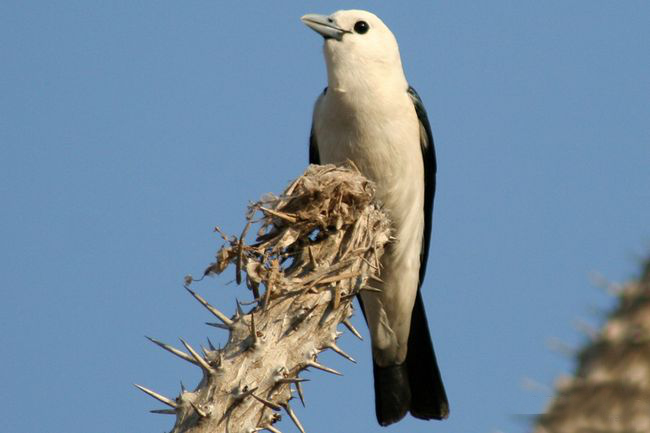


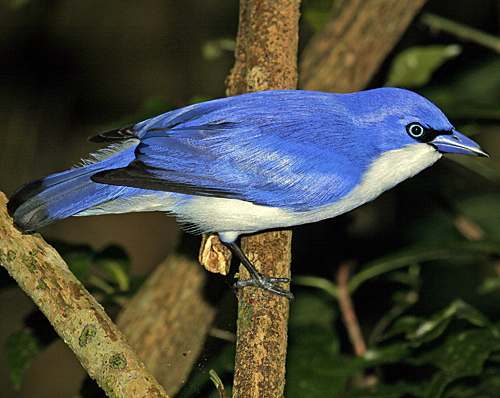
Birds Similar to the Helmet Vanga
These species are often confused with the Helmet Vanga due to similar appearance or overlapping range.
