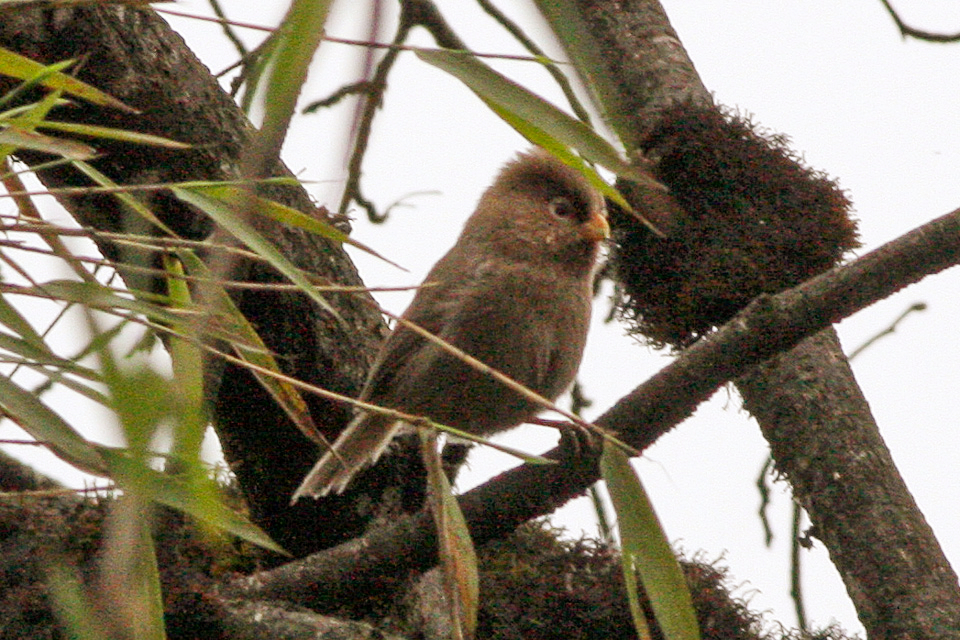
Asian Desert Warbler
Sylvia nana
Order: Passeriformes / Family: Sylviidae

Wikimedia Commons
About the Asian Desert Warbler
The Asian Desert Warbler, known scientifically as Sylvia nana, is a small passerine bird that has adapted remarkably well to the arid landscapes of its range. This bird thrives in the harsh conditions of desert and semi-desert regions, making it a fascinating subject for study among ornithologists and nature enthusiasts. Its presence is particularly notable in parts of Central Asia, the Middle East, and extending into northern Africa. The warbler is typically found in arid scrublands, desert fringes, and areas with sparse vegetation, where it skillfully navigates the challenging terrain. Its ecological role is significant as it contributes to insect population control and serves as prey for larger birds of prey. During the breeding season, which occurs from spring to early summer, the Asian Desert Warbler is particularly active. It engages in elaborate courtship displays, involving melodious songs and aerial acrobatics to attract mates. The species is monogamous, and pairs often form long-term bonds. The warbler's breeding success is closely tied to the availability of food resources, which can fluctuate based on seasonal rains. In winter, the Asian Desert Warbler migrates to slightly warmer areas, although some populations remain resident if conditions are favorable. These seasonal movements ensure that they can exploit different habitats and resources throughout the year, aiding in their survival and reproductive success. As a species, the Asian Desert Warbler exemplifies the resilience and adaptability of birds in extreme environments, playing a vital role in maintaining the ecological balance in the regions it inhabits.
The Asian Desert Warbler belongs to the family Sylviidae, within the order Passeriformes. These birds typically live average 3-5 years, with a maximum recorded of 6 years..
How to Identify a Asian Desert Warbler
The Asian Desert Warbler can be identified by its distinctive warm sandy brown upperparts and paler underparts, which blend seamlessly with its desert habitat. Adult plumage shows subtle grayish tones on the head, complementing a faint whitish eye-ring that adds to its visual charm. Males and females appear similar, although males may exhibit slightly brighter plumage during the breeding season. Juveniles resemble adults but tend to have more muted coloration, lacking the slightly glossy sheen seen in mature birds. When compared to similar species such as the Barred Warbler or the Lesser Whitethroat, the Asian Desert Warbler is smaller and more uniformly colored, with less prominent streaking or contrasting features. Its flight silhouette is characterized by rapid wingbeats and a slightly undulating flight pattern, typical of many warblers. The bird's perching posture is notably upright, often adopting a vigilant stance atop low shrubs or small trees. This posture, combined with its active feeding behavior, makes it a distinctive sight for those familiar with its habitat.
Having trouble telling birds apart? Upload a photo to our bird identification tool for an instant species match.
Asian Desert Warbler Habitat and Range
Preferred Habitat
The Asian Desert Warbler primarily inhabits arid and semi-arid regions, favoring environments such as steppe, scrubland, and desert fringes. It can be found at varying elevations, from lowland deserts to upland areas, provided the habitat offers sufficient cover and food resources. In these landscapes, the warbler is adept at navigating sparse vegetation, such as acacia bushes and scattered shrubs, which offer both foraging grounds and nesting sites. Seasonal habitat shifts occur as the warbler pursues areas with optimal conditions, particularly during breeding and wintering periods. While predominantly rural in distribution, the warbler occasionally ventures into peripheral urban areas where suitable habitats persist. Its adaptability to various desert environments underscores its capacity to thrive amidst challenging conditions.
Geographic Range
The Asian Desert Warbler breeds across a vast range extending from the steppes of Central Asia through the Middle East to the arid regions of northern Africa. Countries such as Kazakhstan, Iran, and Turkmenistan host significant breeding populations. During the non-breeding season, the warbler migrates southward to warmer locales, with wintering grounds in countries like Pakistan and India. Migration corridors often follow the contours of major desert biomes, allowing the warbler to exploit seasonal resources as it travels. Throughout its range, population densities vary, with hotspots often occurring in regions where food availability and habitat conditions are optimal. These areas provide crucial stopover points during migration, underscoring their ecological importance.
Want to know which birds visit your area? Browse our backyard birds by location guides for region-specific species lists.
What Does the Asian Desert Warbler Eat?
The Asian Desert Warbler's diet consists primarily of insects and other small invertebrates, which it actively forages among shrubs and low vegetation. This insectivorous diet includes beetles, caterpillars, spiders, and ants, with occasional consumption of seeds and berries, particularly during periods of food scarcity. Seasonal diet variations occur, with a marked increase in insect consumption during the breeding season to meet the nutritional demands of raising young. The warbler employs a variety of foraging techniques, including gleaning insects from foliage and performing short flights to catch airborne prey. Its nimble movements and keen eyesight enable effective hunting even in sparse environments, allowing it to capture prey ranging from tiny ants to larger beetles.
Asian Desert Warbler Behavior and Social Structure
The Asian Desert Warbler exhibits a social structure centered around monogamous pairs, particularly during the breeding season. Territorial behavior is prominent, with males establishing and defending territories through song and display flights. Courtship involves vocal and visual displays, with males showcasing their agility in flight and engaging in duet singing with females. Outside of the breeding season, the warbler tends to be more solitary, although it may join mixed-species flocks during migration. Flocking behavior provides safety in numbers and opportunities for cooperative foraging. The warbler's response to predators includes alarm calls and evasive flight maneuvers, relying on its agility to escape threats. Daily activity patterns are diurnal, with peak foraging occurring in the cooler morning and late afternoon hours, a strategy that helps avoid the intense midday desert heat.
Asian Desert Warbler Nesting and Reproduction
Nesting for the Asian Desert Warbler involves constructing a compact cup-shaped nest, typically situated low in a shrub or bush. The nest is crafted from plant fibers, grasses, and small twigs, lined with softer materials such as feathers and animal hair. Preferred nesting sites are often in dense vegetation, providing concealment from predators. Clutch size ranges from 3 to 5 eggs, with an incubation period lasting approximately 11 to 13 days. Both parents participate in incubation and feeding the hatchlings, demonstrating a cooperative breeding strategy. Fledging occurs around two weeks after hatching, with young birds remaining under parental care for a short period thereafter. The warbler typically raises one brood per year, although favorable conditions may allow for a second.
Asian Desert Warbler Sounds and Vocalizations
The Asian Desert Warbler's primary song is a melodious series of trills and warbles, delivered with a rhythmic and varied pitch. This song serves as both a territorial declaration and a courtship display. Call notes include sharp 'tack' sounds used for communication between mates and to alert of potential threats. Alarm calls are more urgent and repetitive, designed to warn of predators. During the dawn chorus, the warbler's song can be heard more prominently, blending with the vocalizations of other early risers. The musicality and complexity of its song make it a key identifier in the field, comparable to the warbling of the related Garden Warbler.
Interesting Facts About the Asian Desert Warbler
- 1The Asian Desert Warbler's small size, measuring about 12 cm in length, makes it one of the more diminutive members of the Sylviidae family.
- 2Unlike many birds, the Asian Desert Warbler can withstand extreme temperatures, often thriving in areas where daytime highs exceed 40°C.
- 3During courtship, male warblers are known to perform aerial displays that can last several minutes, showcasing their stamina and agility.
- 4The warbler's adaptability to arid environments is partly due to its ability to extract moisture from its insect prey, reducing its need for water.
- 5Despite its name, the Asian Desert Warbler is found not only in Asia but also in parts of northern Africa, demonstrating its wide ecological range.
- 6The species was first described in 1873 by Russian naturalist Nikolai Severtzov, highlighting its long history of scientific interest.
- 7Individual warblers often return to the same breeding territories year after year, demonstrating site fidelity and territorial loyalty.
Asian Desert Warbler Conservation Status
The Asian Desert Warbler is currently classified as Least Concern by the IUCN, with a stable population trend. Primary threats to the species include habitat degradation due to agricultural expansion and desertification. Conservation efforts focus on habitat preservation and sustainable land management practices to mitigate these impacts. Historical population assessments indicate fluctuations linked to climatic conditions, though no severe declines have been reported. Ongoing research and monitoring aim to ensure the warbler's continued resilience in the face of environmental challenges.