
Babax woodi
Babax woodi
Order: Passeriformes / Family: Leiothrichidae

Wikimedia Commons
About the Babax woodi
The Babax woodi, a captivating member of the Leiothrichidae family, inhabits the montane forests of Asia. Its presence is most notable in the subtropical and temperate regions of western China, particularly in Sichuan and Yunnan provinces. This bird, often referred to as the Chinese Babax, showcases the complex ecosystem dynamics of these regions. Its role in the ecosystem extends beyond mere presence; it acts as both predator and prey, contributing to the intricate web of life.
Babax woodi plays a pivotal role in seed dispersal. By foraging on various fruits and berries, it inadvertently aids in the propagation of plant species, facilitating forest regeneration. Furthermore, its diet includes insects, which helps control pest populations. This ecological balance underscores the importance of the Babax woodi in its native habitat.
Seasonal behaviors of Babax woodi include altitudinal migration, where it moves to lower elevations during the harsh winter months. This migration not only reflects the bird's adaptability but also highlights the changing climate conditions in these high-altitude areas. The species' presence serves as a bioindicator, revealing shifts in the environment that might otherwise go unnoticed.
In terms of conservation, the Babax woodi is currently not listed as endangered. However, habitat destruction due to deforestation and human encroachment poses a threat to its population stability. Conservation efforts focus on habitat protection and monitoring population trends to ensure this emblematic bird continues to thrive in its natural environment.
The Babax woodi belongs to the family Leiothrichidae, within the order Passeriformes. These birds typically live 5-7 years with limited data on maximum age.
How to Identify a Babax woodi
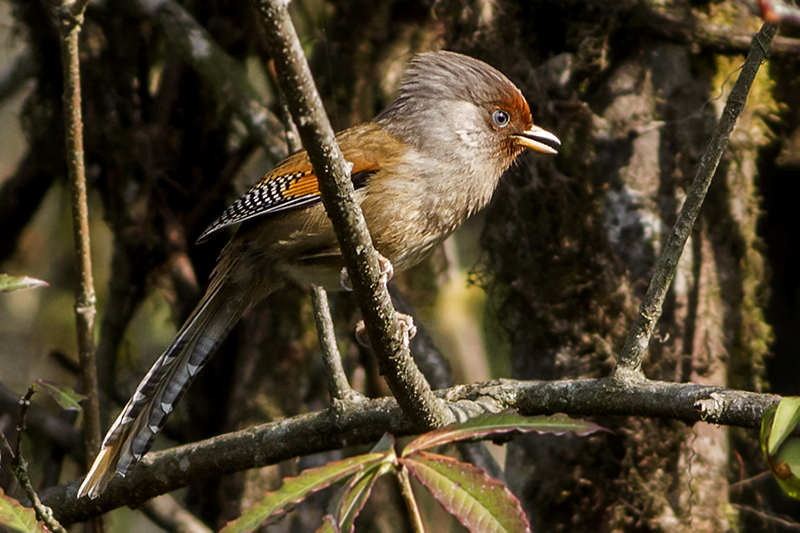
The Babax woodi is easily identified by its rich brown plumage, which exhibits a slightly rufous hue across the wings and back. Its underparts are lighter, with a distinct buffy tone that contrasts with the darker upper body. Adult birds have a noticeable white throat, adding to their distinctive appearance. The beak is slightly curved and dark, adapted for foraging on various food sources.
Juvenile Babax woodi are similar in appearance to adults but tend to have a more muted coloration, lacking the vibrant contrast seen in mature birds. There is minimal sexual dimorphism, as males and females appear largely similar in size and plumage, making field identification of sex challenging without behavioral context.
In flight, the Babax woodi's silhouette is characterized by broad, rounded wings that facilitate strong, direct flight. When perched, it often assumes an upright posture, displaying its striking throat patch prominently. While it might be confused with other members of the Leiothrichidae family, such as the Giant Babax, its smaller size and specific plumage patterns set it apart.
Having trouble telling birds apart? Upload a photo to our bird identification tool for an instant species match.
Babax woodi Habitat and Range
Preferred Habitat
Babax woodi predominantly inhabits montane forests, thriving in areas characterized by dense undergrowth and abundant foliage. These forests, located at elevations ranging from 1,500 to 3,500 meters, provide the ideal environment for foraging and nesting. Specific examples include the mixed coniferous and deciduous forests of Sichuan and Yunnan provinces.
During winter, the Babax woodi may descend to lower elevations to avoid the harsh conditions of the upper montane regions. This seasonal shift underscores its adaptability to varying environmental conditions. While primarily found in rural areas, the Babax woodi occasionally ventures into less disturbed urban fringes, where pockets of suitable habitat remain.
The bird's preference for dense vegetation makes it a rare sight in open areas or heavily urbanized locations. Its presence is a marker of healthy forest ecosystems, indicating a balanced environment capable of supporting diverse avian life.
Geographic Range
The Babax woodi's range is concentrated in the mountainous regions of southwestern China, with its primary stronghold in the provinces of Sichuan and Yunnan. These areas provide the unique blend of forested environments and climatic conditions necessary for its survival.
During the breeding season, Babax woodi inhabits the higher elevations of these provinces, taking advantage of the cooler, more stable climate. As winter approaches, altitudinal migration sees the bird moving to lower elevations, where milder conditions prevail.
Unlike some migratory birds, the Babax woodi does not exhibit long-distance migratory behavior. Instead, its movements are primarily local, dictated by the seasonal availability of food and suitable habitat. Population density tends to be higher in regions where forest cover is extensive and well-preserved, highlighting the importance of conserving these critical habitats.
Want to know which birds visit your area? Browse our backyard birds by location guides for region-specific species lists.
What Does the Babax woodi Eat?
The Babax woodi has an omnivorous diet, with a preference for both plant and animal matter. Its primary food sources include a variety of berries and fruits, such as those from the Viburnum and Rubus species, which are abundant in its forested habitat.
Insects also constitute a significant portion of the Babax woodi's diet, particularly during the breeding season when protein demands increase. The bird employs a technique known as 'gleaning', where it carefully picks insects from foliage, branches, and the forest floor. Common prey includes beetles, caterpillars, and other arthropods.
Seasonal changes influence the Babax woodi's diet. In the winter months, when insect availability decreases, it relies more heavily on seeds and dried fruits. This dietary flexibility allows the bird to adapt to the fluctuating food resources in its montane environment. Foraging typically occurs during daylight hours, with peak activity in the early morning and late afternoon.
Babax woodi Behavior and Social Structure
Socially, the Babax woodi exhibits a preference for small family groups rather than large flocks. These groups often consist of a breeding pair and their offspring, maintaining a cohesive unit throughout the year. Territorial behavior is pronounced, particularly during the breeding season, when males vocalize to defend their chosen area from rivals.
Courtship displays involve both visual and vocal elements. Males perform a series of calls and postures to attract a mate, emphasizing their white throat patch and contrasting plumage. Once paired, both sexes contribute to nest building and chick rearing, showcasing a cooperative approach to reproduction.
While generally shy and reclusive, the Babax woodi responds to predators with alarm calls and evasive flight. Its daily activity pattern is crepuscular, with heightened activity during dawn and dusk when foraging opportunities are optimal. The bird's behavior reflects its adaptation to a life in dense, forested environments, where stealth and vigilance are key to survival.
Babax woodi Nesting and Reproduction
The Babax woodi constructs cup-shaped nests using materials readily available in its environment, such as twigs, grasses, and leaves. These nests are strategically placed in dense shrubbery or low tree branches, providing both concealment and protection from predators.
A typical clutch consists of 3 to 5 eggs, which are incubated primarily by the female. The incubation period lasts approximately 14 to 16 days, during which the male frequently feeds the female and guards the territory. Once hatched, chicks remain in the nest for 12 to 14 days, receiving constant care and feeding from both parents.
The species typically raises one to two broods per year, depending on environmental conditions and food availability. The cooperative breeding strategy, involving both parents, ensures a higher survival rate for the offspring, contributing to the sustainability of the population in its natural habitat.
Babax woodi Sounds and Vocalizations
The primary song of the Babax woodi is a melodious series of whistles and trills, delivered with a rhythmic precision that is both captivating and distinctive. The pitch varies from medium to high, and the quality is often described as flute-like, resonating through the forest.
Call notes include sharp 'chi-chi' sounds, used for communication between family members and as an alarm signal when predators are near. During the dawn chorus, the Babax woodi's song is a prominent feature, heralding the break of day with its intricate vocalizations.
Compared to other members of its family, the Babax woodi's vocal repertoire is more varied, aiding in mate attraction and territorial defense. Its song, coupled with the surrounding forest ambiance, creates a soundscape unique to the montane habitats it calls home.
Interesting Facts About the Babax woodi
- 1The Babax woodi is named after the British ornithologist Frederic Wood, who first documented the species in the early 20th century.
- 2Unlike many songbirds, Babax woodi does not migrate long distances, instead moving locally between elevations.
- 3Babax woodi's melodious song is often mistaken for that of a larger bird due to its rich quality and volume.
- 4This bird plays a crucial role in seed dispersal, aiding in the growth of native plant species in its habitat.
- 5The Babax woodi can live up to 10 years in the wild, a testament to its adaptability and survival skills.
- 6Despite its shy nature, the Babax woodi's song can be heard up to a kilometer away in the quiet of the montane forests.
- 7Babax woodi's diet shift from insects to seeds in winter helps it survive in the harsh conditions of high altitudes.
Babax woodi Conservation Status
Currently, the Babax woodi is classified as Least Concern by the IUCN, with stable population trends. However, the primary threat to its continued well-being is habitat loss due to deforestation and land conversion for agriculture and urban development. Conservation efforts focus on preserving and restoring forest habitats, particularly in regions where deforestation rates are high. Protected areas, such as national parks and nature reserves, play a crucial role in safeguarding the habitat of the Babax woodi. Historical population changes have been minimal, thanks in part to the bird's ability to adapt to certain environmental pressures. Continued monitoring and habitat protection remain essential to ensure that the Babax woodi does not face increased threats in the future.
Other Leiothrichidae Species


Birds Similar to the Babax woodi
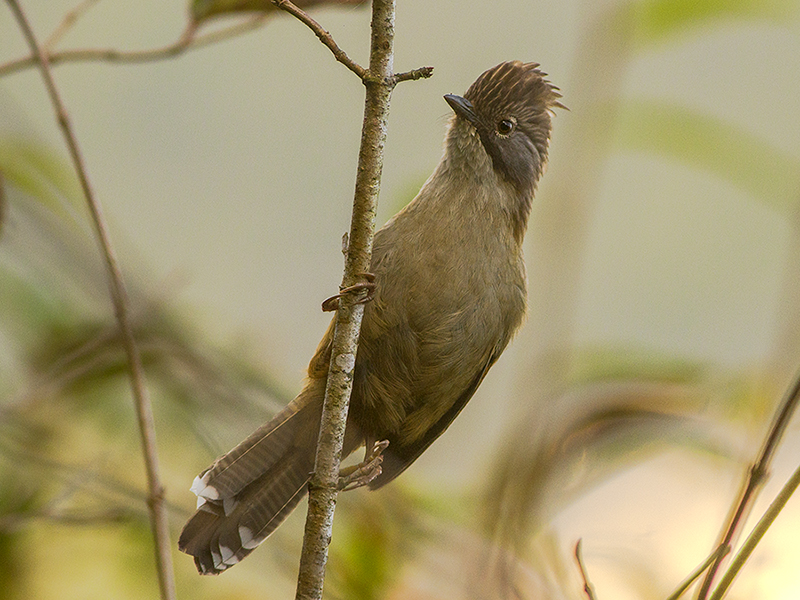
These species are often confused with the Babax woodi due to similar appearance or overlapping range.
