Barred Laughingthrush
Ianthocincla lunulata
Order: Passeriformes / Family: Leiothrichidae

Wikimedia Commons
About the Barred Laughingthrush
The Barred Laughingthrush (Ianthocincla lunulata) is a captivating member of the Leiothrichidae family, notable for its presence in the dense montane forests of Asia. This medium-sized bird, measuring around 26-28 cm in length, is especially remarkable for its melodious call, often described as a series of laughter-like notes that resonate through its habitat. Found predominantly in the mountainous regions of southern China, including the provinces of Yunnan and Sichuan, the Barred Laughingthrush thrives in subtropical or tropical moist montane forests, where it plays a crucial ecological role. The dense undergrowth and rich biodiversity of these forests provide the Barred Laughingthrush with ample shelter and food resources, allowing it to contribute to the ecosystem by participating in seed dispersal and insect population control. During the breeding season, which occurs from April to June, these birds become more conspicuous as they engage in vocal displays and territorial behaviors to attract mates and secure nesting sites. Outside of the breeding season, the Barred Laughingthrush may exhibit more communal behaviors, often seen foraging in flocks with other laughingthrush species. Its adaptability to varying altitudes within its montane forest habitat indicates a level of ecological plasticity, although its preference for specific forest types makes it sensitive to habitat destruction. Its presence serves as an indicator of forest health, making it a species of interest for conservationists aiming to preserve these unique Asian ecosystems.
The Barred Laughingthrush belongs to the family Leiothrichidae, within the order Passeriformes. These birds typically live average 5-8 years with max recorded at 12 years.
How to Identify a Barred Laughingthrush
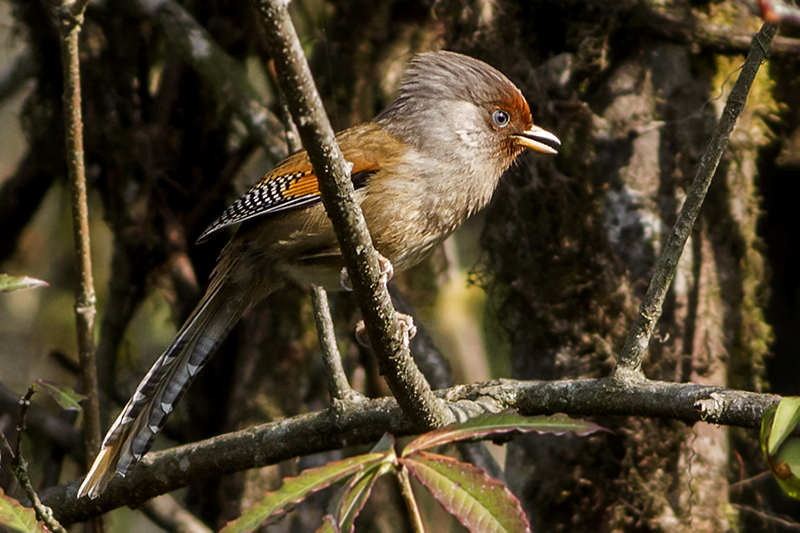
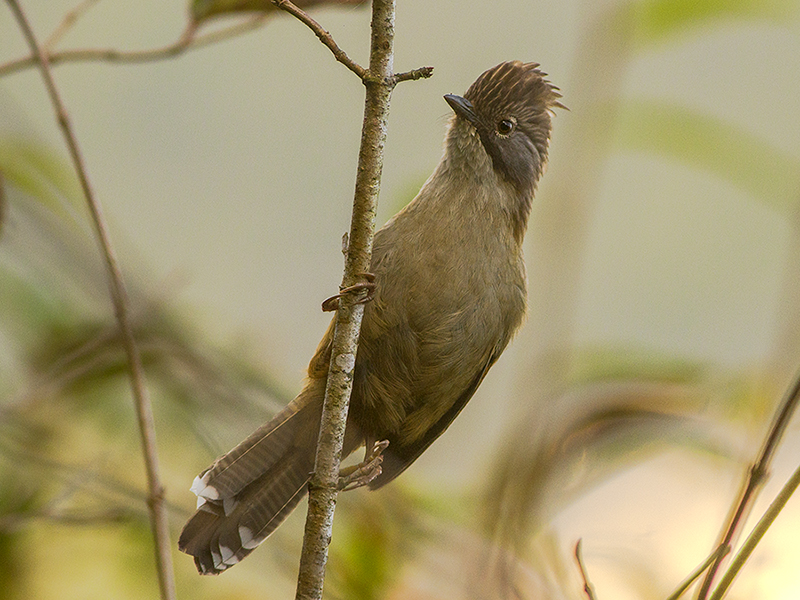
The Barred Laughingthrush is easily recognizable by its greyish-brown plumage, accentuated by bold black barring across its body, which provides excellent camouflage against the forest floor. Its head is adorned with a distinctive white throat and a dark mask that extends across the eyes, giving it a striking facial appearance. Both males and females share similar plumage, making gender differentiation challenging in the field. Juveniles resemble adults but often exhibit more subdued barring and a slightly duller overall coloration. In flight, the Barred Laughingthrush shows a rounded tail and broad wings, which assist in its agile maneuvers through dense foliage. When perched, the bird often adopts an upright posture, scanning its surroundings for potential threats or food sources. While confusion with other laughingthrush species is possible, the Barred Laughingthrush's unique combination of barred plumage and distinctive vocalizations aid in its identification.
Having trouble telling birds apart? Upload a photo to our bird identification tool for an instant species match.
Barred Laughingthrush Habitat and Range
Preferred Habitat
The Barred Laughingthrush primarily inhabits subtropical and tropical moist montane forests, thriving at elevations ranging from 1,200 to 3,000 meters. These forests, rich in biodiversity and dense in undergrowth, provide the ideal environment for foraging and nesting. Typically found in the mountainous regions of southern China, the Barred Laughingthrush prefers areas with thick vegetation that offer ample cover from predators. While it primarily occupies rural and forested regions, some populations may venture into adjacent secondary forests or plantations, especially when undisturbed by human activity. Seasonal shifts in habitat usage are minimal, with the species exhibiting strong site fidelity throughout the year.
Geographic Range
The Barred Laughingthrush's range is confined mainly to the mountainous regions of southern China, specifically within the provinces of Yunnan and Sichuan. It does not exhibit significant migratory behavior, instead remaining resident within its preferred montane habitats. Some local movements may occur in response to food availability or climatic conditions, but these are generally limited in scope. The population density varies, with higher concentrations found in pristine forest environments where human impact is minimal. The Barred Laughingthrush's range does not extend significantly beyond China, making it a region-specific species with conservation importance due to its restricted distribution.
Want to know which birds visit your area? Browse our backyard birds by location guides for region-specific species lists.
What Does the Barred Laughingthrush Eat?
The Barred Laughingthrush's diet consists predominantly of insects, which it skillfully extracts from leaf litter and undergrowth. It is an opportunistic feeder, supplementing its insect-based diet with fruits and seeds depending on seasonal availability. This dietary flexibility allows the Barred Laughingthrush to adapt to the changing resources of its montane forest habitat throughout the year. During colder months, when insect activity diminishes, the bird may rely more heavily on available fruit sources, which it forages by hopping adeptly among branches. Its feeding schedule is diurnal, with peak foraging activity occurring in the early mornings and late afternoons.
Barred Laughingthrush Behavior and Social Structure
The Barred Laughingthrush is a social bird, often observed foraging in small flocks, which may consist of mixed species. This flocking behavior not only aids in efficient foraging but also provides increased vigilance against predators. Territorial during the breeding season, the Barred Laughingthrush engages in vocal displays to defend its domain and attract a mate. Courtship involves intricate vocal exchanges and displays of plumage, with both sexes participating in nest building and chick rearing. The bird exhibits a curious demeanor, often exploring its surroundings with keen interest. In response to threats, the Barred Laughingthrush may emit a series of sharp alarm calls and take cover in dense vegetation, utilizing its cryptic plumage for concealment.
Barred Laughingthrush Nesting and Reproduction
The Barred Laughingthrush constructs its nest in dense undergrowth, typically choosing locations with ample cover to protect against predators. The nest is a cup-shaped structure, crafted from twigs, leaves, and moss, and lined with softer materials like feathers and fine grass. Clutch size generally ranges from two to four eggs, with both parents sharing incubation duties over a period of approximately 14-16 days. Once hatched, the chicks remain in the nest for about 12-14 days before fledging. The Barred Laughingthrush may attempt multiple broods in a single breeding season, depending on environmental conditions and food availability.
Barred Laughingthrush Sounds and Vocalizations
The Barred Laughingthrush is renowned for its rich vocal repertoire, characterized by melodious, laughter-like calls that echo through its forest habitat. The primary song consists of a series of clear, fluting notes that rise and fall in pitch, creating a musical sequence that can be heard over long distances. In addition to its song, the Barred Laughingthrush produces a variety of calls, including sharp, chattering notes used as contact calls between flock members. Alarm calls are more abrupt and harsh, serving as a warning signal to other birds about nearby predators. The species is especially vocal during the dawn chorus, when its songs contribute to the vibrant soundscape of the montane forest.
Interesting Facts About the Barred Laughingthrush
- 1The Barred Laughingthrush can mimic the calls of other bird species, adding complexity to its vocal repertoire.
- 2With a length of 26-28 cm, the Barred Laughingthrush is relatively large for a laughingthrush species.
- 3This species' melodious song has been likened to human laughter, giving it its common name.
- 4Barred Laughingthrushes often forage in mixed-species flocks, enhancing their foraging efficiency.
- 5The dense undergrowth of their montane forest habitats provides both food resources and protection from predators.
- 6During courtship, both male and female Barred Laughingthrushes participate in elaborate vocal displays.
- 7The Barred Laughingthrush's plumage pattern provides excellent camouflage against the forest floor.
Barred Laughingthrush Conservation Status
Currently, the Barred Laughingthrush is listed as Least Concern on the IUCN Red List, with its population trend considered stable. Primary threats to its habitat include deforestation and degradation due to logging and agricultural expansion. Conservation efforts focus on preserving suitable habitat within its range, including the protection of montane forests. Monitoring and research are essential to ensure the Barred Laughingthrush's continued survival, especially given its limited distribution. Historical records indicate stable population levels, but ongoing habitat changes necessitate continued conservation vigilance.