
White-crested Laughingthrush
Garrulax leucolophus
Order: Passeriformes / Family: Leiothrichidae

Wikimedia Commons
About the White-crested Laughingthrush
The White-crested Laughingthrush (Garrulax leucolophus) is a charismatic member of the Leiothrichidae family, easily recognized by its prominent white crest and gregarious nature. This medium-sized, gregarious bird thrives in the dense forests of Southeast Asia, notably across countries such as Thailand, Myanmar, and Vietnam. With its distinctive laughing call, the White-crested Laughingthrush is often heard before it is seen, as these birds travel in noisy flocks through the underbrush. Its adaptability to various forest types, from primary rainforests to disturbed secondary growth, makes it a resilient species, although habitat loss poses a potential threat.
As an important seed disperser and insect predator, the White-crested Laughingthrush plays a significant ecological role. By feeding on a variety of fruits and insects, it helps maintain the health of its ecosystem, promoting plant regeneration and controlling insect populations. These birds are active throughout the day, foraging in groups and communicating constantly with a variety of vocalizations. Their social structure is complex, with strong family bonds and cooperative breeding behaviors.
Seasonal behavior of the White-crested Laughingthrush includes shifts in flock dynamics during the breeding season, when pairs or small family groups may temporarily break away from larger flocks to focus on nesting. This species tends to be sedentary, with little evidence of long-distance migration. Their adaptability to forest edge habitats allows them to persist even as some areas undergo deforestation. However, in regions of intense habitat destruction, population densities can decline. Their presence often indicates a healthy, biodiverse forest environment.
The White-crested Laughingthrush belongs to the family Leiothrichidae, within the order Passeriformes. These birds typically live average 7 years with a max recorded of 10 years.
How to Identify a White-crested Laughingthrush
The White-crested Laughingthrush is a striking bird, with adults displaying a bold white crest that contrasts with their rich brown and chestnut plumage. The face is white, with a prominent black mask running through the eyes. The back and wings are a warm brown, while the chest and underparts are lighter, often with a subtle gradient from brown to white. In terms of sexual dimorphism, males and females appear similar, making them challenging to distinguish in the field.
Juvenile White-crested Laughingthrushes resemble adults but have a less pronounced crest and somewhat duller plumage. They gradually acquire the distinct adult pattern as they mature. In flight, this species shows a rounded silhouette with broad wings, flying in short bursts interspersed with glides. When perched, they often adopt an upright posture, accentuating their crest.
While the White-crested Laughingthrush is distinctive, it could be confused with other members of the Garrulax genus. However, the combination of its white crest, facial mask, and vocalizations usually suffices to set it apart. Unlike some of its relatives, the White-crested Laughingthrush's call is a loud, laughing series of notes, which is a reliable field mark.
Having trouble telling birds apart? Upload a photo to our bird identification tool for an instant species match.
White-crested Laughingthrush Habitat and Range
Preferred Habitat
The White-crested Laughingthrush inhabits a range of forest types, from dense primary rainforests to secondary growth and forest edges. It is frequently found in subtropical and tropical moist lowland forests, adapting well to areas of human disturbance such as plantations and gardens adjacent to forested areas. These birds are typically found from sea level up to elevations of around 1500 meters.
Seasonal habitat shifts are minimal, as the species is largely sedentary. Instead of long-distance migration, they may make local movements in response to food availability or breeding requirements. While primarily a resident of forested areas, the White-crested Laughingthrush occasionally ventures into more open, rural landscapes, though generally avoids highly urbanized zones. Their presence in a variety of habitats reflects their adaptability, although they show a preference for environments that offer dense cover and abundant food resources.
Geographic Range
The White-crested Laughingthrush has a broad range across Southeast Asia. Its breeding range extends through parts of the Indian subcontinent, including northeastern India and the foothills of the Himalayas, stretching eastward into Myanmar, Thailand, Laos, Vietnam, and southern China. The species is largely non-migratory, maintaining stable populations within these regions throughout the year.
This bird is particularly numerous in the moist, deciduous forests of the region, with population density hotspots in areas like the Khao Yai National Park in Thailand and the forests of northern Myanmar. Though once prevalent throughout much of its range, habitat destruction and fragmentation have caused localized declines. However, the species remains common in many protected areas, where it benefits from conservation efforts focused on preserving its forest habitat.
Want to know which birds visit your area? Browse our backyard birds by location guides for region-specific species lists.
What Does the White-crested Laughingthrush Eat?
The diet of the White-crested Laughingthrush is diverse, primarily consisting of insects, small invertebrates, and a variety of fruits. During the breeding season, insects and their larvae become particularly important, providing the protein necessary for chick development. The bird's foraging technique involves rummaging through leaf litter and foliage, often in noisy flocks, using their strong bills to probe and flick aside debris in search of prey.
They also consume fruits from various forest plant species, contributing to seed dispersal. The size of prey typically includes small insects like ants, beetles, and caterpillars, which are abundant in their forest habitats. Feeding usually occurs during daylight hours, particularly in the early morning and late afternoon when insects are most active. Seasonal changes in diet are driven by fruit availability, with some shifts to more insectivorous diets during periods when fruits are scarce.
White-crested Laughingthrush Behavior and Social Structure
The White-crested Laughingthrush is a highly social bird, often found in flocks ranging from 6 to 30 individuals. These flocks display complex social structures, with dominant breeding pairs and subordinate helpers. Adults engage in cooperative breeding, where non-breeding individuals assist in feeding and protecting the young. This social behavior is crucial for survival, enhancing protection against predators through increased vigilance and collective alarm calls.
Courtship displays are characterized by mutual preening and feeding between mates, strengthening pair bonds. Territorial behavior is evident during the breeding season, with pairs establishing and defending nesting sites within the flock's range. While generally non-territorial outside the breeding season, flocks may exhibit aggressive interactions with neighboring groups.
Their response to predators involves loud alarm calls and tight flock cohesion, often confusing and deterring potential threats. Daily activity patterns include active foraging during the early morning and late afternoon, with periods of rest and preening during the midday heat. Their vocalizations, a series of loud, joyous calls, play a significant role in maintaining group cohesion and communication.
White-crested Laughingthrush Nesting and Reproduction
White-crested Laughingthrushes build cup-shaped nests, typically woven from twigs, leaves, and grass. These nests are strategically placed in dense foliage, often in shrubs or small trees, at heights ranging from 1 to 3 meters above the ground. The choice of location provides concealment from predators and easy access to food resources.
The clutch size usually consists of 2 to 3 eggs, with both parents sharing the incubation duties, which last approximately 14 to 16 days. After hatching, the chicks remain in the nest for another 14 to 16 days before fledging. Parental roles are shared, with both male and female feeding and protecting the young. In some cases, additional flock members, often related to the breeding pair, assist in feeding and guarding the nestlings, exemplifying cooperative breeding behavior.
Typically, the White-crested Laughingthrush raises one brood per year, although in optimal conditions, a second brood may occur. The timing of breeding coincides with periods of abundant food availability, ensuring sufficient resources for chick survival.
White-crested Laughingthrush Sounds and Vocalizations
The primary song of the White-crested Laughingthrush is a series of loud, melodious notes that resemble human laughter. This complex vocalization, often heard in duets or chorus with family members, plays a critical role in social bonding and territory establishment. The rhythm is rapid, with a clear, rising and falling pitch that carries through the forest.
Call notes include a variety of chattering and chuckling sounds used for communication within the flock. Alarm calls are sharp and piercing, serving to alert the group to potential danger. During the dawn chorus, these birds contribute prominently, their laughter-like calls adding to the cacophony of the waking forest. The vocal repertoire of the White-crested Laughingthrush is a defining characteristic, with its distinctive sounds often drawing the attention of birders and nature enthusiasts.
Interesting Facts About the White-crested Laughingthrush
- 1White-crested Laughingthrushes are known for their strong family bonds, often including up to 30 individuals in a cooperative flock.
- 2The bird's distinctive 'laughing' call can carry over wide distances, often alerting birders to their presence long before they are seen.
- 3White-crested Laughingthrushes can adapt to secondary forests and disturbed areas, showcasing their resilience in changing environments.
- 4In some cultures, the White-crested Laughingthrush is believed to bring good fortune due to its cheerful sounds and social nature.
- 5This species participates in cooperative breeding, where non-breeding individuals assist in raising the young, a behavior not common in all birds.
- 6The White-crested Laughingthrush is a key player in seed dispersal, contributing to the health and regeneration of its forest habitats.
- 7Despite being a forest bird, it has adapted well to areas with human activity, including gardens and agricultural landscapes.
White-crested Laughingthrush Conservation Status
According to the IUCN Red List, the White-crested Laughingthrush is currently listed as a species of Least Concern, with a stable population trend. Despite its broad range and adaptability, habitat destruction due to deforestation and agricultural expansion poses a significant threat. Conservation efforts focus on preserving forest habitats and establishing protected areas, which are vital for maintaining healthy populations. Historically, the species benefited from its adaptability to disturbed habitats, allowing it to persist in areas where other forest-dwelling birds have declined. However, ongoing habitat fragmentation could challenge its resilience. Continued monitoring and habitat restoration are crucial to ensure the long-term survival of this vibrant species.
Other Leiothrichidae Species

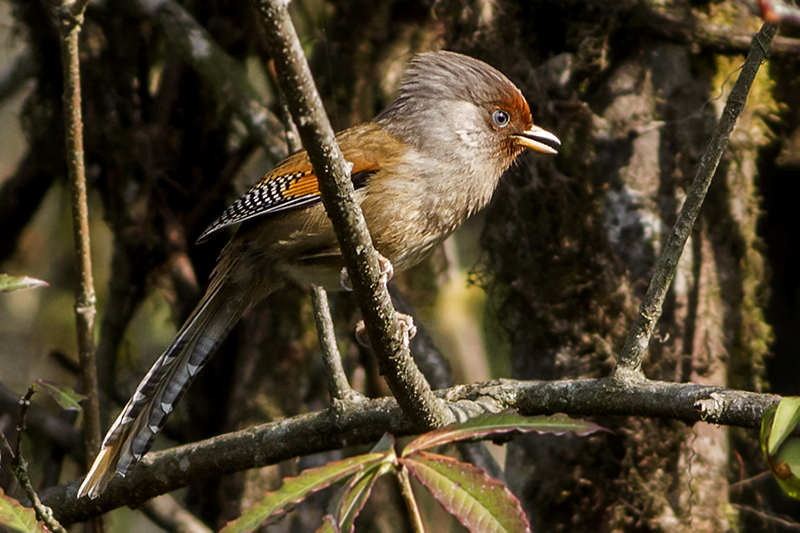

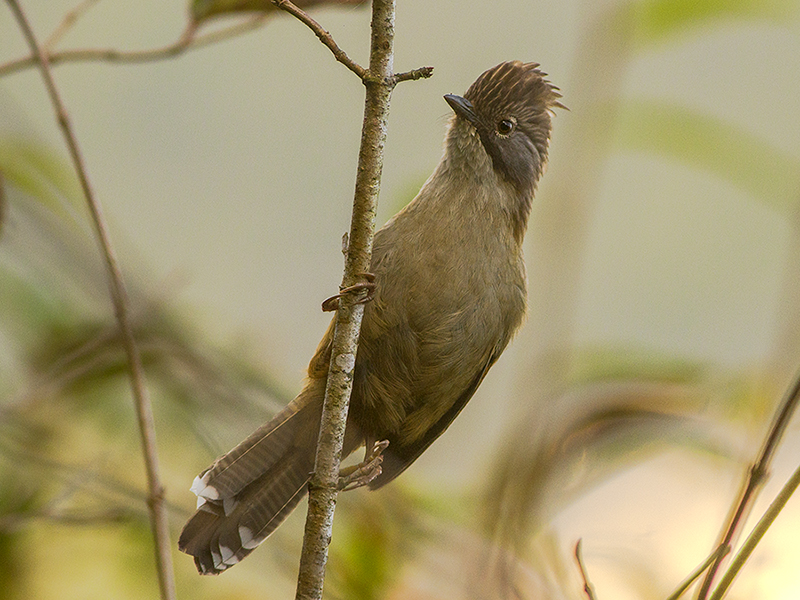
Birds Similar to the White-crested Laughingthrush
These species are often confused with the White-crested Laughingthrush due to similar appearance or overlapping range.

