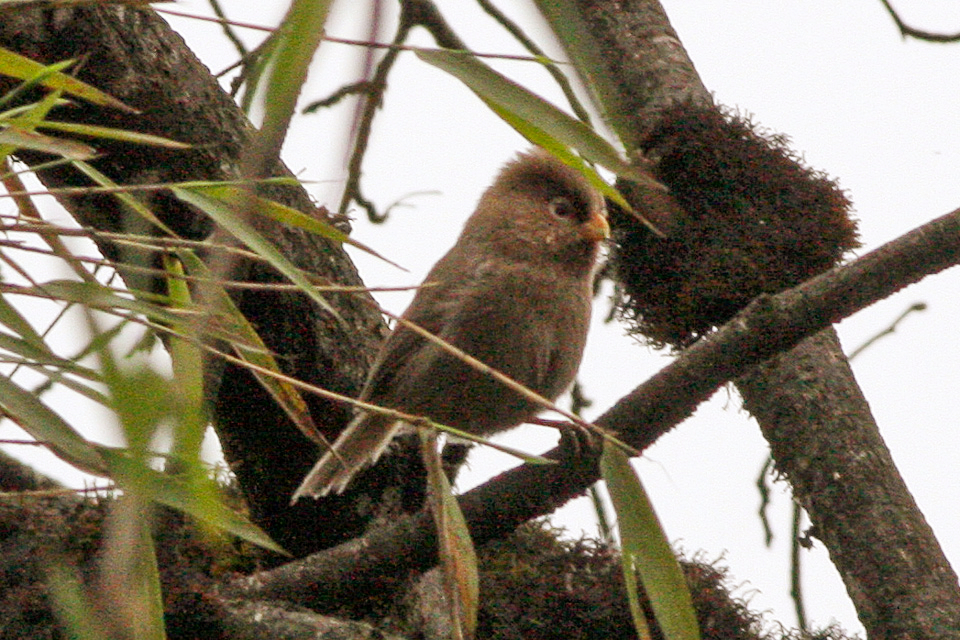
Beijing Babbler
Rhopophilus pekinensis
Order: Passeriformes / Family: Sylviidae

Wikimedia Commons
About the Beijing Babbler
The Beijing Babbler, scientifically known as Rhopophilus pekinensis, is a fascinating member of the Sylviidae family, primarily inhabiting regions in northern China and Mongolia. This bird plays a vital ecological role in its native habitats, contributing to the control of insect populations and seed dispersion. The Beijing Babbler is characterized by its adaptability to a range of environments, from bustling urban areas to serene rural landscapes, making it an intriguing species for both ornithologists and casual birdwatchers.
One of the most intriguing aspects of the Beijing Babbler is its ability to thrive in varied habitats, including dry scrublands, open woodlands, and even the outskirts of urban centers where green spaces are available. This adaptability not only illustrates the bird's resourcefulness but also highlights its importance as an ecological generalist. The Beijing Babbler is often seen in small groups, foraging on the ground or within low shrubs, where its presence can be detected by its distinctive calls and songs.
Seasonally, the Beijing Babbler exhibits some territorial behaviors, especially during the breeding season, which typically occurs in the spring and early summer months. During this time, males become more vocal and conspicuous, using their song to defend territories and attract mates. Outside of the breeding season, the bird's behavior shifts slightly as it may join mixed-species flocks, a strategy that provides increased protection from predators and enhances foraging efficiency.
The Beijing Babbler's ecological role extends beyond insect control. Its diet, which includes a variety of seeds and fruits, positions it as an important agent for seed dispersal, aiding in plant propagation across its range. As a resident species, the Beijing Babbler has adapted well to the seasonal changes in its environment, displaying resilience in the face of habitat changes due to human activity.
The Beijing Babbler belongs to the family Sylviidae, within the order Passeriformes. These birds typically live average 5-7 years with a maximum recorded of 9 years.
How to Identify a Beijing Babbler
The Beijing Babbler is a medium-sized songbird, measuring approximately 17 to 19 centimeters in length, with a wingspan reaching around 18 to 22 centimeters. Its plumage is predominantly brown, with subtle streaking that provides effective camouflage in its natural habitats. The underparts are lighter, exhibiting a buff or grayish tinge that contrasts with the darker back and wings. Distinctive field marks include a pale eyebrow stripe and a slightly curved bill, which is adapted for foraging on a variety of foods.
Sexual dimorphism is minimal in the Beijing Babbler, with males and females appearing similar in plumage. Juvenile birds may be distinguished by their slightly duller coloration and less defined streaking compared to adults. The Beijing Babbler can be confused with other sympatric babbler species, such as the Rufous-tailed Babbler, but it can be reliably identified by its unique vocalizations and habitat preferences.
In flight, the Beijing Babbler displays a somewhat weak and fluttery pattern, often staying low to the ground or hopping from bush to bush. When perching, it tends to adopt a slightly hunched posture, often in dense shrubbery or low trees, where it is both protected from predators and well-positioned to detect prey or conspecifics.
Having trouble telling birds apart? Upload a photo to our bird identification tool for an instant species match.
Beijing Babbler Habitat and Range
Preferred Habitat
The Beijing Babbler inhabits a variety of environments, with a strong preference for scrublands and open woodlands. It thrives in areas with dense undergrowth and scattered trees, often found at elevations ranging from sea level to about 2,000 meters. While it can adapt to urban settings, it typically requires proximity to green spaces such as parks or garden areas.
Seasonal habitat shifts are minimal due to its resident status, although it may venture into different types of vegetation or altitudes in response to food availability or climatic conditions. In rural areas, the Beijing Babbler is often spotted in agricultural lands, where it benefits from the abundance of insects and seeds.
Despite potential habitat encroachment from urban expansion, the Beijing Babbler remains relatively common, demonstrating a remarkable ability to persist in both primary and secondary habitats. Its presence in both rural and urban areas highlights its adaptability and ecological versatility.
Geographic Range
The Beijing Babbler's range is primarily centered in northern China, extending into parts of Mongolia. It is commonly found in the provinces of Hebei, Shanxi, and Inner Mongolia, where it occupies a variety of habitats. The species is largely non-migratory, maintaining a stable presence in its range throughout the year, though some altitudinal movements may occur in response to harsh weather conditions.
Within its range, the Beijing Babbler is particularly abundant in areas with suitable scrubland and open woodland habitats, where it is often seen foraging in small flocks. Its population density tends to be higher in regions with a mix of natural and agricultural landscapes, which provide diverse food resources and nesting opportunities.
While not a migratory species, the Beijing Babbler has a stable resident population, with occasional sightings in adjacent regions that suggest limited dispersal movements. Its presence in a relatively compact geographical area underscores the importance of habitat conservation to ensure the ongoing survival of this adaptable bird.
Want to know which birds visit your area? Browse our backyard birds by location guides for region-specific species lists.
What Does the Beijing Babbler Eat?
The Beijing Babbler has a varied diet that includes a wide array of insects, seeds, and fruits. Its primary food sources are insects, which it actively forages for among leaf litter and low vegetation. The bird's prey includes caterpillars, beetles, and ants, which provide essential proteins and nutrients, especially during the breeding season when energy demands are high.
Seasonally, the Beijing Babbler's diet shifts to include more seeds and fruits, particularly in the late summer and autumn months when these resources become more abundant. This seasonal dietary flexibility helps the bird maintain a stable food intake throughout the year, even when insect populations decline.
Foraging techniques are varied, with the Beijing Babbler employing both ground foraging and low shrub probing to locate prey. It uses its slightly curved bill to deftly pick insects from foliage or the ground. Feeding occurs primarily during daylight hours, with peak activity in the early morning and late afternoon when insects are most active.
Beijing Babbler Behavior and Social Structure
The Beijing Babbler exhibits a range of fascinating behaviors, reflecting its adaptability and social nature. It is a social bird, often found in small groups or family units, which enhances its foraging efficiency and provides protection from predators. Within these groups, the birds communicate constantly using a variety of calls and songs, maintaining group cohesion.
Territorial behavior becomes pronounced during the breeding season, with males establishing and defending territories through vocal displays. These displays serve the dual purpose of deterring rival males and attracting potential mates. Courtship involves both vocalizations and physical displays, with males often seen puffing out their chests and flicking their tails.
Flocking behavior outside of the breeding season includes occasional participation in mixed-species flocks, which can enhance foraging success and predator awareness. The Beijing Babbler's daily activity pattern involves active foraging in the cooler parts of the day, with periods of rest during the hottest hours. In response to predators, the birds exhibit alarm calls and take cover in dense vegetation, relying on their camouflage to evade detection.
Beijing Babbler Nesting and Reproduction
The Beijing Babbler constructs open cup nests, typically located within dense shrubs or low trees. Nest construction involves the use of grasses, twigs, and leaves, woven together to create a secure structure that provides protection from the elements and predators. Preferred nesting locations are usually well-concealed within thick foliage.
Clutch size generally ranges from three to five eggs, with both parents involved in incubation. The incubation period lasts approximately 12 to 14 days, with both male and female taking turns to ensure the eggs remain warm and safe. Once hatched, the chicks are altricial, requiring constant care and feeding from both parents.
Fledging occurs about 12 to 15 days after hatching, with young birds remaining in the vicinity of the nest for several weeks as they develop their foraging skills. The Beijing Babbler may have one to two broods per year, depending on environmental conditions and food availability.
Beijing Babbler Sounds and Vocalizations
The Beijing Babbler is known for its distinctive song, characterized by a series of melodious whistles and trills. The primary song, often delivered from a prominent perch, consists of a mix of rising and falling notes that convey both territorial and mating intentions. The pitch and rhythm vary, adding complexity to the vocalizations.
Call notes include sharp, repeated 'chip' sounds, used for communication among group members. Alarm calls are a rapid series of harsh notes, signaling the presence of potential threats and prompting flock members to seek cover. During the dawn chorus, the Beijing Babbler's song is prominent, contributing to the vibrant soundscape of its habitat.
The bird's vocal repertoire allows it to maintain social bonds and coordinate group activities. Its song, while unique, can be compared to the warbling of other babbler species, yet it retains a distinctive quality that aids identification.
Interesting Facts About the Beijing Babbler
- 1The Beijing Babbler can be heard singing nearly all year round, with a peak in vocal activity during the breeding season.
- 2Despite its name, the Beijing Babbler is not confined to Beijing but ranges across much of northern China and Mongolia.
- 3The species is known for its cooperative breeding behaviors, with older offspring sometimes helping to raise subsequent broods.
- 4The Beijing Babbler has a relatively long lifespan for a small bird, often living up to 10 years in the wild.
- 5Its song is so distinctive that even novice birders can identify it by sound alone, making it a favorite in urban parks.
- 6The Beijing Babbler plays a crucial role in controlling pest populations by consuming a large number of insects.
- 7Unlike many songbirds, the Beijing Babbler is a year-round resident, with no significant migratory patterns.
Beijing Babbler Conservation Status
The Beijing Babbler is currently listed as Least Concern by the IUCN, with a stable population trend. Despite habitat changes due to urbanization and agriculture, the bird has demonstrated resilience and adaptability. Primary threats include habitat loss and fragmentation, which can reduce available nesting and foraging sites. Conservation efforts focus on preserving natural habitats and promoting sustainable land-use practices. In some areas, community-based initiatives aim to protect green spaces and enhance biodiversity, benefiting the Beijing Babbler and other local wildlife. Historical population changes are minimal, owing to the bird's adaptability to altered landscapes. Continued monitoring and habitat protection are essential to ensure the long-term survival of the Beijing Babbler, maintaining its role in the ecosystem and cultural significance in its native regions.