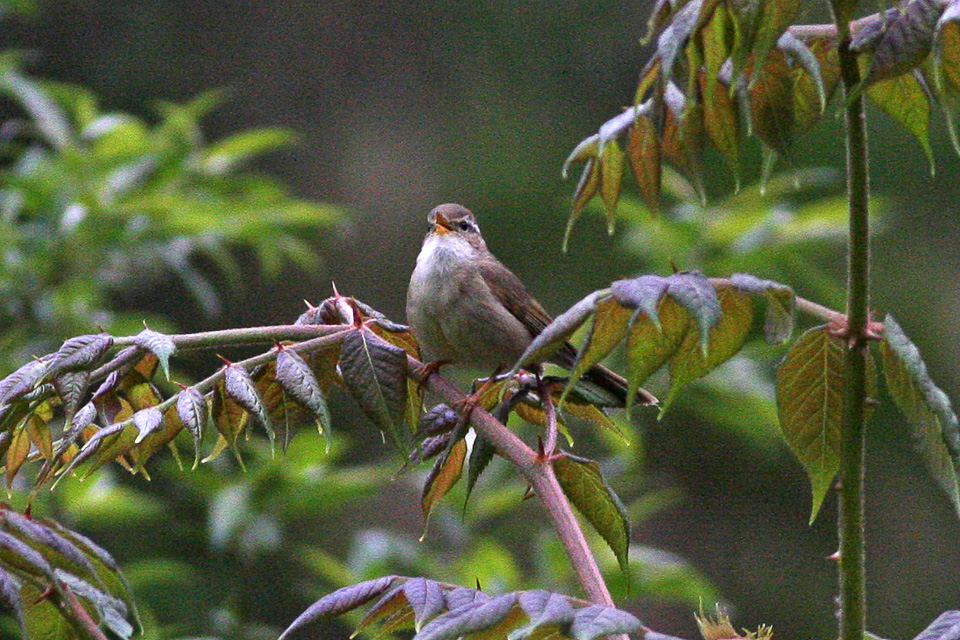
Biak Leaf Warbler
Phylloscopus misoriensis
Order: Passeriformes / Family: Phylloscopidae

Wikimedia Commons
About the Biak Leaf Warbler
The Biak Leaf Warbler, Phylloscopus misoriensis, is a small passerine bird endemic to the island of Biak in Indonesia. This species plays a crucial role in its local ecosystem by aiding in insect population control and serving as both prey and predator within its habitat. Found predominantly in subtropical or tropical moist lowland forests, the Biak Leaf Warbler has adapted to a narrow ecological niche, thriving in the dense understory. Its presence is a significant indicator of forest health and biodiversity. The bird's role in seed dispersal is minimal, but it contributes to the dynamic balance of forest ecosystems through its feeding habits. The Biak Leaf Warbler exhibits seasonal behaviors such as slight altitudinal movements in response to food availability and breeding requirements. During the breeding season, typically from March to June, these warblers become more vocal and active, establishing territories and engaging in courtship displays. Outside the breeding season, they may form small, loose flocks to forage more efficiently. The Biak Leaf Warbler's conservation status is of particular concern due to its limited range and the increasing threat of habitat destruction. Continued deforestation for agricultural expansion and logging poses a significant risk to its habitat. Conservation efforts focus on habitat preservation and the establishment of protected areas to ensure the survival of this unique species.
The Biak Leaf Warbler belongs to the family Phylloscopidae, within the order Passeriformes. These birds typically live average 3-6 years, with limited studies on lifespan.
How to Identify a Biak Leaf Warbler
The Biak Leaf Warbler is a small, greenish bird with a distinctive yellowish wash on its underparts. Adult plumage is bright green on the upperparts, providing excellent camouflage among the leaves. The bird's eye stripe is pale and contrasts with a darker crown, enhancing its distinct facial pattern. Juveniles resemble adults but tend to have duller plumage. There is little sexual dimorphism, making it difficult to distinguish males from females by appearance alone. Confusion with similar species like the Irian Leaf Warbler can occur, but the Biak Leaf Warbler's song is a reliable distinguishing feature. In flight, the Biak Leaf Warbler displays a compact silhouette with rapid wingbeats, typical of leaf warblers. When perched, it often adopts an upright posture, frequently flicking its tail and wings. This behavior, combined with its bright eye stripe and yellowish underparts, assists observers in identification.
Having trouble telling birds apart? Upload a photo to our bird identification tool for an instant species match.
Biak Leaf Warbler Habitat and Range
Preferred Habitat
The Biak Leaf Warbler inhabits lowland tropical forests on Biak Island, thriving in areas with dense foliage and abundant insect life. It prefers elevations below 300 meters, where the understory is thick and provides ample cover and foraging opportunities. Seasonal changes in habitat use are minimal, as this species is non-migratory and resides year-round in its preferred environment. While primarily forest-dwelling, the Biak Leaf Warbler may venture into secondary growth areas and forest edges, though it avoids urban environments. Conservation efforts focus on maintaining these forest habitats, as they are critical to the warbler's survival.
Geographic Range
The Biak Leaf Warbler's range is restricted to Biak Island in Indonesia. It is non-migratory, residing year-round within this confined geographic area. The species' distribution is limited to the island's subtropical or tropical moist lowland forests. Population density is higher in undisturbed forest areas, where habitat quality and food availability are optimal. Due to its narrow range, the Biak Leaf Warbler is particularly susceptible to habitat loss and environmental changes. Conservation initiatives concentrate on protecting these vital forest areas to ensure the species' long-term viability.
Want to know which birds visit your area? Browse our backyard birds by location guides for region-specific species lists.
What Does the Biak Leaf Warbler Eat?
The Biak Leaf Warbler primarily feeds on insects and other small invertebrates, making it an insectivorous species. Its diet includes caterpillars, beetles, and spiders, which it gleans from leaves and branches. During the breeding season, the warbler may increase its intake of protein-rich prey to support the nutritional needs of growing chicks. Foraging techniques involve active searching and gleaning, with occasional aerial sallies to capture flying insects. The Biak Leaf Warbler forages primarily during daylight hours, taking advantage of peak insect activity in the morning and late afternoon.
Biak Leaf Warbler Behavior and Social Structure
Biak Leaf Warblers exhibit solitary or monogamous behavior, especially during the breeding season. Males establish territories with distinctive songs and displays, warding off rivals and attracting mates. Courtship involves singing and displaying bright plumage to entice females. Outside of the breeding season, these warblers may join small, mixed-species flocks to enhance foraging efficiency. In response to predators, Biak Leaf Warblers rely on their cryptic plumage and quick, erratic flight to escape detection. Daily activity patterns include periods of intense foraging interspersed with rest during the hottest parts of the day.
Biak Leaf Warbler Nesting and Reproduction
Biak Leaf Warblers construct cup-shaped nests from fine grasses, leaves, and spider webs, typically placing them in shrubs or low trees. Nest location is chosen for concealment and protection from predators. The clutch size ranges from two to three eggs, which are incubated primarily by the female for about 12 to 14 days. Both parents participate in feeding the chicks, which fledge approximately 12 to 14 days after hatching. The species may raise one or two broods per year, depending on environmental conditions and food availability. Parental roles are shared, with both sexes involved in brooding and feeding.
Biak Leaf Warbler Sounds and Vocalizations
The primary song of the Biak Leaf Warbler is a series of melodious, high-pitched notes that rise and fall in a rhythmic pattern. These songs are crucial during the breeding season for territory establishment and mate attraction. Call notes are sharp and often used in communication between individuals or as alarm calls when predators are near. During the dawn chorus, the Biak Leaf Warbler's song is particularly prominent, contributing to the vibrant soundscape of its forest habitat. Its vocalizations are clear and flute-like, distinguishing it from other sympatric species.
Interesting Facts About the Biak Leaf Warbler
- 1The Biak Leaf Warbler is one of only a few bird species endemic to the small Biak Island in Indonesia.
- 2Despite its small size, the Biak Leaf Warbler plays a significant role in controlling insect populations in its habitat.
- 3Biak Leaf Warblers are known for their energetic foraging, often seen flicking their wings and tails rapidly.
- 4Their song, a series of melodious notes, is a key identifying feature and is often heard before the bird is seen.
- 5The Biak Leaf Warbler's bright green plumage provides excellent camouflage in the dense forest canopy.
- 6This species is particularly vulnerable to habitat loss, highlighting the importance of conservation efforts.
- 7Biak Leaf Warblers contribute to the biodiversity of their island home, making them an indicator of forest health.
Biak Leaf Warbler Conservation Status
The IUCN lists the Biak Leaf Warbler as Near Threatened due to its restricted range and the ongoing threat of habitat loss. Deforestation for agriculture and logging poses significant risks to its forest environment. Population trends suggest a gradual decline, which elevates concerns for its future. Conservation efforts focus on habitat protection and the establishment of reserves to safeguard remaining forest areas. Historical population changes are not well-documented, but current trends underscore the need for continued conservation attention.