
Black-and-gold Cotinga
Tijuca atra
Order: Passeriformes / Family: Cotingidae

Wikimedia Commons
About the Black-and-gold Cotinga
The Black-and-gold Cotinga (Tijuca atra) is a captivating bird species found primarily in the lush montane forests of southeastern Brazil. This bird is renowned for its striking plumage, with males displaying a vivid contrast of black and gold, making them easily identifiable among the dense forest canopies. The species holds ecological significance, playing a crucial role in seed dispersal within its habitat. As a member of the Cotingidae family, the Black-and-gold Cotinga shares its lineage with other cotingas known for their vibrant colors and distinctive vocalizations. The bird inhabits the Atlantic Forest, a biodiversity hotspot rich in endemic species but under threat due to deforestation and habitat fragmentation.
The Black-and-gold Cotinga is mainly found in the states of Rio de Janeiro and São Paulo, thriving in elevations ranging from 900 to 2,000 meters. Its preference for high-altitude forests makes it an important species for maintaining ecological balance in these unique ecosystems. The bird's presence is often indicative of healthy forest environments, as it relies on a rich variety of fruiting trees for sustenance. During the breeding season, which spans from September to February, the Black-and-gold Cotinga becomes more vocal and active, engaging in elaborate courtship displays and establishing territories.
Despite its vibrant appearance, the Black-and-gold Cotinga is currently classified as Near Threatened by the IUCN, primarily due to habitat loss. Conservation efforts are vital to preserve the remaining patches of its habitat and ensure the species' survival. The bird's role as a seed disperser highlights its importance in maintaining the regenerative capacity of the Atlantic Forest. Protecting the Black-and-gold Cotinga and its habitat not only conserves this unique species but also supports the broader biodiversity of the region.
The Black-and-gold Cotinga belongs to the family Cotingidae, within the order Passeriformes. These birds typically live typically 6-8 years, with some individuals reaching up to 10 years..
How to Identify a Black-and-gold Cotinga
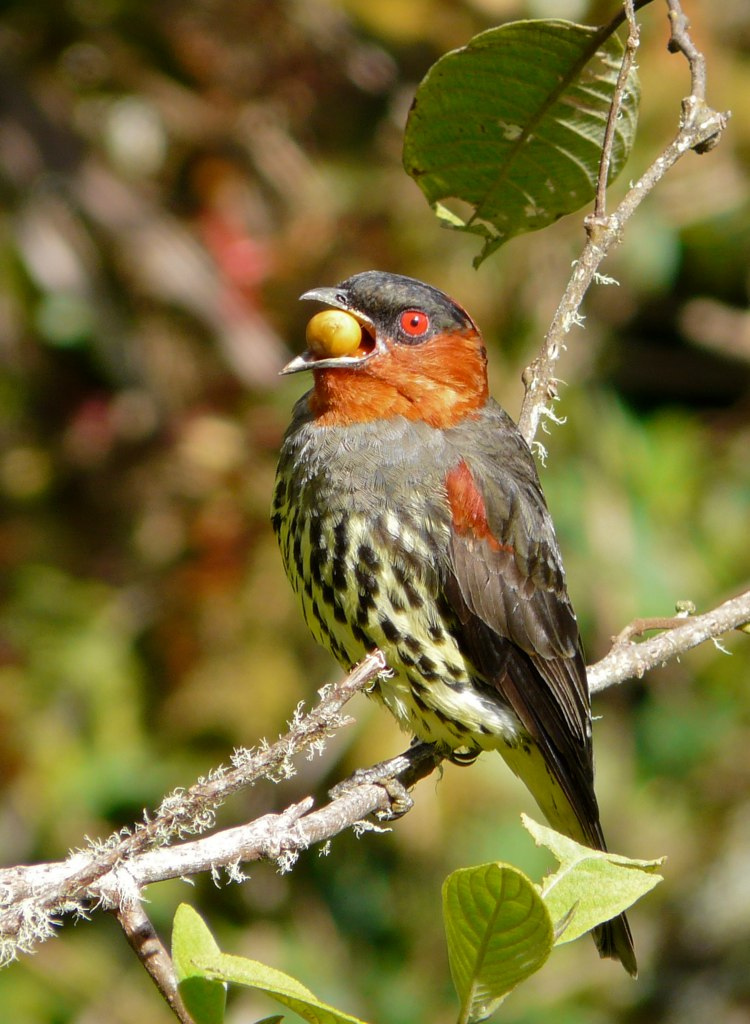
Adult Black-and-gold Cotingas are unmistakable, with males showcasing a stunning contrast between their black upperparts and vibrant gold underparts. The black extends to the wings and tail, while the throat and breast are a brilliant yellow, creating a striking visual effect. Females are more subdued, with olive-green plumage that provides excellent camouflage in the forest canopy. Juveniles resemble females but may exhibit a mottled appearance as they transition to adult plumage.
In flight, the Black-and-gold Cotinga presents a distinctive silhouette, characterized by broad wings and a short tail. The flight pattern is typically direct and purposeful, allowing the bird to navigate efficiently through its forested environment. When perched, the cotinga often chooses high vantage points, where it can survey its surroundings and vocalize to establish its presence.
While similar in size and shape to other cotingas, the Black-and-gold Cotinga can be distinguished by its unique coloration. The male's black and gold plumage is particularly distinctive, reducing confusion with other species. Female and juvenile birds, however, may be mistaken for other greenish cotingas, but their behavior and habitat preferences often aid in accurate identification.
Having trouble telling birds apart? Upload a photo to our bird identification tool for an instant species match.
Black-and-gold Cotinga Habitat and Range
Preferred Habitat
The Black-and-gold Cotinga inhabits the montane forests of southeastern Brazil, particularly within the Atlantic Forest biome. It thrives in elevations between 900 and 2,000 meters, favoring areas with dense canopy cover and abundant fruiting trees. These forests, known for their high biodiversity, provide the necessary resources for the cotinga's survival, including food, nesting sites, and shelter.
Seasonal habitat shifts are minimal, as the Black-and-gold Cotinga is largely sedentary, remaining within its montane forest range year-round. Unlike some bird species that adapt to urban environments, the cotinga's specialized habitat requirements restrict it to forested areas, limiting its presence in urban or heavily altered landscapes. Conservation of these forest habitats is crucial to the cotinga's continued existence, as deforestation poses a significant threat to its survivability.
Geographic Range
The Black-and-gold Cotinga is endemic to Brazil, with its range concentrated in the southeastern part of the country. It primarily inhabits the states of Rio de Janeiro and São Paulo, where the montane forests of the Serra do Mar and Serra da Mantiqueira provide ideal conditions. These regions are characterized by steep slopes and high humidity, supporting the lush vegetation that the cotinga requires.
Unlike many migratory birds, the Black-and-gold Cotinga is largely non-migratory, residing in its montane forest habitat throughout the year. Its population density is relatively low, with hotspots corresponding to areas of well-preserved forest. This limited range and preference for specific habitats make the species vulnerable to environmental changes and habitat destruction.
Efforts to protect the Atlantic Forest directly impact the cotinga's range, as conservation initiatives can help preserve key areas of its habitat. Monitoring population trends in these regions is essential for assessing the species' status and implementing effective conservation strategies.
Want to know which birds visit your area? Browse our backyard birds by location guides for region-specific species lists.
What Does the Black-and-gold Cotinga Eat?
The diet of the Black-and-gold Cotinga primarily consists of fruit, which it forages from the forest canopy. It favors a variety of fleshy fruits, such as those from the family Lauraceae, which are abundant in its montane forest habitat. The cotinga's fruit-based diet plays a pivotal role in seed dispersal, aiding in the regeneration of forest vegetation.
During the breeding season, the bird's diet may expand to include insects, providing additional protein necessary for rearing young. This seasonal dietary shift reflects the cotinga's adaptability in response to the nutritional demands of reproduction. The bird typically feeds in the morning and late afternoon, when temperatures are cooler and fruit is most available.
Foraging behavior often involves short flights between fruiting trees, where the cotinga uses its strong beak to pluck and consume fruit. The bird's feeding schedule and preferences contribute significantly to its ecological role, emphasizing the importance of preserving fruit-bearing trees within its habitat.
Black-and-gold Cotinga Behavior and Social Structure
The Black-and-gold Cotinga exhibits a range of behaviors that reflect its ecological niche and social structure. Primarily solitary, the cotinga defends its territory vigorously, especially during the breeding season. Males engage in elaborate courtship displays, characterized by vocalizations and physical posturing designed to attract females and deter rivals.
Social interactions are limited, with pairs forming only during the breeding season. During this time, the cotinga's vocalizations become more frequent and varied, serving as a means of communication and territorial defense. The bird's response to predators includes silence and stillness, relying on its cryptic plumage and forest cover for protection.
Daily activity patterns reveal peaks in morning and late afternoon, coinciding with optimal feeding times. The cotinga's behavior underscores its reliance on specific habitat conditions, reinforcing the need for habitat preservation to support its natural lifestyle.
Black-and-gold Cotinga Nesting and Reproduction
The nesting habits of the Black-and-gold Cotinga are closely tied to the availability of suitable sites within its montane forest habitat. The bird constructs a shallow cup nest, typically situated high in the forest canopy, using materials such as moss, leaves, and small twigs. These nests are strategically placed to minimize predation risk and maximize protection from the elements.
The breeding season, which occurs from September to February, sees the cotinga laying a clutch of two to three eggs. Both parents share incubation duties, with the female assuming a greater role. The incubation period lasts approximately 20 days, after which the chicks hatch, requiring constant care and feeding from both parents.
Fledging occurs about three weeks after hatching, with young birds gradually gaining independence. The cotinga typically raises one brood per year, though favorable conditions may occasionally allow for a second. Parental investment is significant, ensuring the survival and development of offspring in the challenging montane forest environment.
Black-and-gold Cotinga Sounds and Vocalizations
The Black-and-gold Cotinga's vocalizations are a defining feature of its presence in the forest. The primary song consists of a series of melodious whistles, delivered in a steady rhythm with variations in pitch and tone. This song serves both to establish territory and attract mates during the breeding season.
In addition to its primary song, the cotinga produces a range of call notes, including sharp, metallic chirps used for communication between individuals. Alarm calls are less frequent but serve to alert others to potential threats, blending into the ambient sounds of the forest.
The bird is most vocal during the early morning hours, contributing to the dawn chorus that characterizes its montane forest habitat. Its distinctive vocal repertoire ensures its presence is noted, even if the bird itself remains out of sight.
Interesting Facts About the Black-and-gold Cotinga
- 1The Black-and-gold Cotinga was first described in 1870 by German ornithologist Jean Cabanis, highlighting its long history of scientific interest.
- 2Males use their vibrant plumage not just for attracting mates but also as a display of dominance when establishing territories.
- 3The Black-and-gold Cotinga's diet makes it a vital seed disperser, particularly for trees like Ocotea and Nectandra.
- 4Despite its bright colors, the Black-and-gold Cotinga's vocalizations often reveal its presence before it is seen, due to its preference for high canopy perches.
- 5The Atlantic Forest, home to the Black-and-gold Cotinga, is one of the world's most endangered rainforests, with only 15% of its original cover remaining.
- 6The Black-and-gold Cotinga can live up to 15 years in the wild, assuming it can evade predators and survive habitat challenges.
- 7This species is one of the few cotingas that do not migrate, remaining in Brazil year-round despite seasonal changes.
Black-and-gold Cotinga Conservation Status
The Black-and-gold Cotinga currently holds a Near Threatened status according to the IUCN, with its population trend showing signs of decline. The primary threat to this species is habitat loss, driven by deforestation and land conversion in the Atlantic Forest. This loss of habitat not only reduces available resources but also fragments populations, increasing their vulnerability. Conservation efforts focus on protecting and restoring key areas of the Atlantic Forest, aiming to preserve the biodiversity hotspot that supports the cotinga and other endemic species. Environmental organizations work to implement sustainable land-use practices and establish protected areas, ensuring the survival of this unique bird. Historical population changes reflect the ongoing impact of human activities on the Atlantic Forest. Continued monitoring and conservation initiatives are crucial for reversing the decline and securing a future for the Black-and-gold Cotinga in its natural habitat.
Other Cotingidae Species



Birds Similar to the Black-and-gold Cotinga
These species are often confused with the Black-and-gold Cotinga due to similar appearance or overlapping range.

