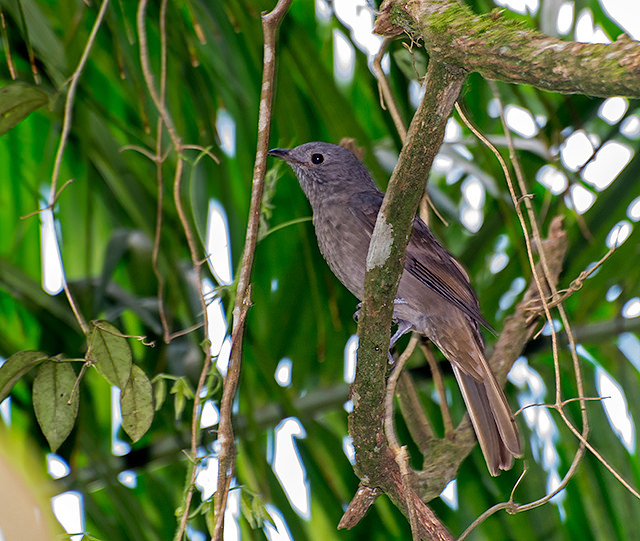
Dusky Piha
Lipaugus fuscocinereus
Order: Passeriformes / Family: Cotingidae

Wikimedia Commons
About the Dusky Piha
The Dusky Piha, scientifically known as Lipaugus fuscocinereus, is a captivating member of the Cotingidae family, found predominantly in montane forests. This bird inhabits the Andes, ranging from Colombia to northern Peru. The Dusky Piha plays a vital ecological role in these regions, contributing to seed dispersal and thus aiding forest regeneration. Its presence signifies a healthy, biodiverse ecosystem as it typically resides in pristine forest environments. The Dusky Piha prefers elevations between 1,500 and 3,000 meters, where it thrives in the dense, humid canopy. This bird is particularly significant in its native regions due to its specific habitat requirements, which align closely with some of the most threatened ecosystems in the world. The Dusky Piha's ecological role extends beyond its immediate habitat. As a frugivore, it engages in mutualistic relationships with fruit-bearing trees. The bird's seasonal behaviors are influenced by fruiting cycles, often leading to altitudinal migrations to track food availability. These movements ensure genetic diversity among plant species as the bird disperses seeds over wide areas, contributing to forest health. The Dusky Piha also enhances avian diversity, sharing its habitat with a variety of other bird species. This diversity indicates the ecological richness of montane forests. Despite its importance, the Dusky Piha remains elusive, blending into the dense foliage with its muted plumage and secretive behavior. It is often more easily heard than seen, with its distinctive calls resonating through the forest. Observing the Dusky Piha provides ornithologists and bird enthusiasts with insights into the intricate web of life within montane ecosystems. Its presence underscores the interconnectedness of species and the critical need for conservation efforts in these biodiverse areas.
The Dusky Piha belongs to the family Cotingidae, within the order Passeriformes. These birds typically live typically 8-10 years, with some individuals living up to 15 years..
How to Identify a Dusky Piha
The Dusky Piha is characterized by its medium size and uniform grayish plumage, which makes it somewhat inconspicuous among the dense foliage of its montane forest habitat. Adult plumage is predominantly dusky gray, with subtle brownish tinges on the wings and tail. Juveniles can be distinguished by their slightly duller appearance and a hint of streaking on their underparts. Both males and females exhibit similar plumage, which is not always the case in many bird species. This lack of sexual dimorphism can make field identification challenging. The Dusky Piha can be confused with other grayish birds of the forest, such as certain species of flycatchers and thrushes. However, its distinctive call and slightly larger size help differentiate it. When perched, the Dusky Piha maintains an upright posture, often found sitting motionless on branches, blending seamlessly into its surroundings. In flight, the bird's moderate wingspan and steady, purposeful flapping are distinguishing features. Its flight silhouette is not as agile as a flycatcher's but more direct and deliberate, befitting its frugivorous lifestyle. Overall, recognizing the Dusky Piha requires careful attention to its subtle field marks and behaviors in its natural habitat.
Having trouble telling birds apart? Upload a photo to our bird identification tool for an instant species match.
Dusky Piha Habitat and Range
Preferred Habitat
The Dusky Piha inhabits montane forests, with a preference for subtropical and tropical moist forests. It thrives at elevations between 1,500 and 3,000 meters. This bird occupies a niche within the dense canopies of cloud forests, where humidity and a rich understory of vegetation provide ample feeding opportunities. The Dusky Piha does not typically venture into urban areas, remaining primarily within remote, forested regions. Seasonal habitat shifts occur as the bird follows fruiting patterns, sometimes moving to slightly lower elevations during the non-breeding season. Its presence in these pristine environments indicates undisturbed forest ecosystems. The Dusky Piha is a key indicator species for montane forest health, as it requires intact forests to meet its ecological needs.
Geographic Range
The Dusky Piha's range extends along the Andes from Colombia through Ecuador to northern Peru. It is a resident species, with little evidence of long-distance migration. However, it may exhibit altitudinal movements in response to seasonal changes in fruit availability. In Colombia, the bird is found in the Central and Western Andes, while in Ecuador, it occupies the eastern slopes. Northern Peru marks the southern extent of its range. Throughout its range, population densities vary, with the Dusky Piha tending to be more abundant in undisturbed forest patches. Hotspots of population density align with areas of high biodiversity, often within protected reserves and national parks. These regions provide the necessary habitat continuity for the species to thrive.
Want to know which birds visit your area? Browse our backyard birds by location guides for region-specific species lists.
What Does the Dusky Piha Eat?
The Dusky Piha primarily feeds on fruit, playing a crucial role in seed dispersal. Its diet consists of a variety of fruits, which it consumes whole before regurgitating the seeds. Seasonal changes in fruit availability influence the bird's diet, prompting altitudinal movements to follow food sources. Besides fruit, the Dusky Piha occasionally supplements its diet with insects, particularly during the breeding season when protein requirements increase. It forages by perching quietly and swooping down to pluck fruit from branches. This technique minimizes energy expenditure while maximizing food intake. The Dusky Piha tends to feed during early morning and late afternoon, aligning its foraging schedule with peak fruit availability and optimal foraging conditions.
Dusky Piha Behavior and Social Structure
The Dusky Piha exhibits solitary or paired behavior, rarely forming large flocks. It is generally territorial, with individuals or pairs maintaining and defending specific home ranges. During the breeding season, territoriality becomes more pronounced, with vocalizations playing a key role in establishing and maintaining territories. Courtship displays include subtle vocal exchanges and mutual preening between pairs. The Dusky Piha responds to predators with a combination of vocal alarms and evasive maneuvers, relying on its cryptic plumage to remain undetected. Its daily activity patterns are largely influenced by food availability, with peak activity during early morning and late afternoon. The bird's behavior reflects its adaptation to the dense, competitive environment of montane forests, where stealth and subtlety are advantageous.
Dusky Piha Nesting and Reproduction
The Dusky Piha constructs a simple, cup-shaped nest using twigs, leaves, and moss. Nests are typically placed in the fork of tree branches, well-concealed among foliage. The bird favors nesting sites that offer protection from predators and adverse weather. Clutch size usually consists of one to two eggs, which are incubated primarily by the female. The incubation period lasts around two weeks, with both parents involved in feeding the nestlings. Fledging occurs approximately three weeks after hatching. The Dusky Piha generally raises one brood per year, although favorable conditions may sometimes permit a second. Parental roles are shared, with both male and female contributing to feeding and protecting the young.
Dusky Piha Sounds and Vocalizations
The primary song of the Dusky Piha is a series of low-pitched, resonant whistles, often described as hauntingly beautiful. The rhythm is slow and deliberate, with each note lasting several seconds. Call notes are softer, used for communication between pairs or as territorial warnings. Alarm calls are sharper and more urgent, signaling the presence of potential threats. The Dusky Piha participates in the dawn chorus, its song carrying well through the forest. Its vocalizations are distinctive, aiding in identification where visual confirmation is challenging. The bird's song serves multiple functions, including mate attraction and territorial defense.
Interesting Facts About the Dusky Piha
- 1The Dusky Piha was first described in the 19th century by ornithologist John Gould.
- 2Despite its plain appearance, the Dusky Piha's song is among the most melodious in its habitat.
- 3The Dusky Piha can consume fruit nearly the size of its own head, showcasing its frugivorous nature.
- 4This bird’s elusive behavior makes it a prized sighting for birdwatchers visiting the Andes.
- 5Dusky Pihas are known to participate in mixed-species foraging flocks, benefiting from shared predator vigilance.
- 6The species' altitudinal movements can cover several hundred meters in elevation annually.
- 7The Dusky Piha plays a vital role in the regeneration of tropical montane forests through seed dispersal.
Dusky Piha Conservation Status
The Dusky Piha is currently listed as Least Concern by the IUCN, although its population trend is decreasing. The primary threats include habitat loss due to deforestation and land conversion for agriculture. Conservation efforts focus on preserving montane forests and establishing protected areas. In recent decades, human encroachment has led to habitat fragmentation, impacting the Dusky Piha's range and population density. Conservation organizations work to mitigate these effects through reforestation projects and sustainable land management practices. Historical population changes reflect broader ecological shifts within its range, highlighting the need for ongoing conservation efforts to ensure its survival.
Other Cotingidae Species


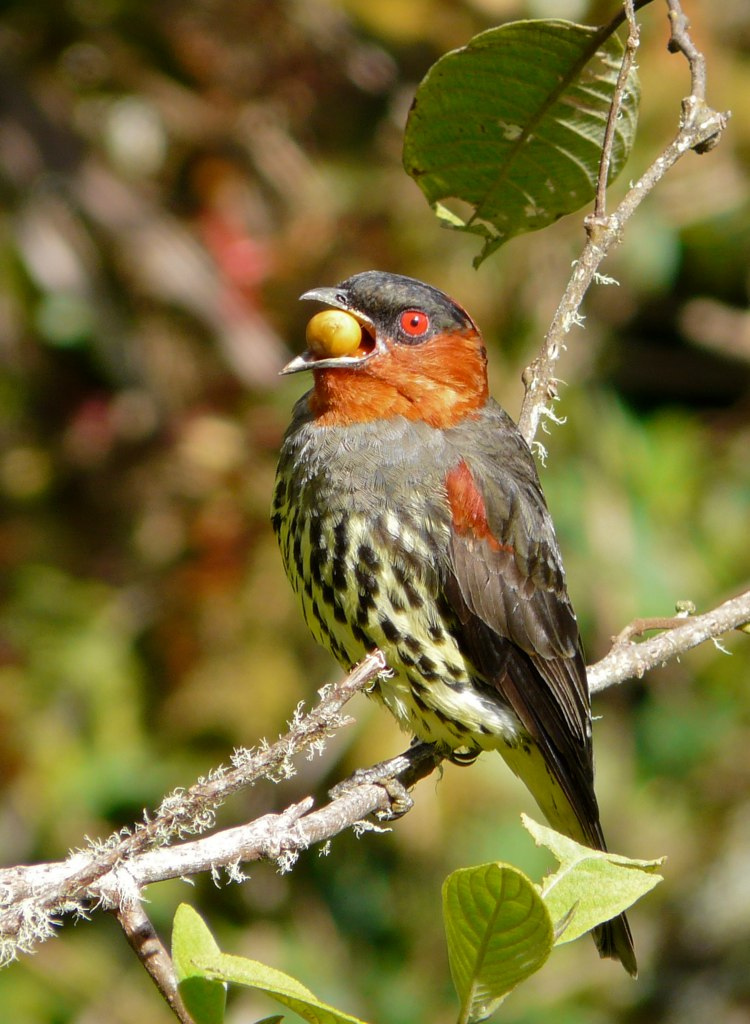

Birds Similar to the Dusky Piha
These species are often confused with the Dusky Piha due to similar appearance or overlapping range.