
Black-crowned Tityra
Tityra inquisitor
Order: Passeriformes / Family: Cotingidae

Wikimedia Commons
About the Black-crowned Tityra
The Black-crowned Tityra (Tityra inquisitor) is an intriguing bird species within the Cotingidae family, recognized for its striking appearance and notable presence in the neotropical forests. This medium-sized bird exhibits a unique combination of black, white, and gray plumage that sets it apart from many other forest inhabitants. The bird's name is derived from its distinct black crown, which contrasts sharply with its predominantly white body and gray wings. The Black-crowned Tityra plays a significant ecological role as both a predator and seed disperser, influencing the forest ecosystems it inhabits.
Geographically, the Black-crowned Tityra is distributed widely across Central and South America, with notable populations in countries such as Mexico, Brazil, Colombia, and Bolivia. This bird thrives in a range of habitats, from dense tropical rainforests to more open woodland areas. It is particularly prevalent in lowland and foothill forests, although it can also be found at higher elevations up to 1,500 meters in some regions.
Ecologically, the Black-crowned Tityra serves as both an insect controller and a seed disperser. Its diet consists primarily of fruit, supplemented by insects and small vertebrates. This dietary flexibility allows the bird to adapt to seasonal changes in food availability. During the breeding season, the Black-crowned Tityra's presence becomes more pronounced, as it engages in conspicuous courtship displays and vocalizations to attract mates and establish territories.
The Black-crowned Tityra's role in seed dispersal is critical for forest regeneration. By consuming fruit and subsequently dispersing seeds across its range, the bird contributes to the propagation of numerous plant species. This activity not only aids in forest regeneration but also helps maintain biodiversity. As such, the Black-crowned Tityra is a vital component of the ecosystems it inhabits, reflecting the intricate web of interactions that sustain tropical forest environments.
The Black-crowned Tityra belongs to the family Cotingidae, within the order Passeriformes. These birds typically live average 6-7 years, with some individuals reaching 12 years..
How to Identify a Black-crowned Tityra
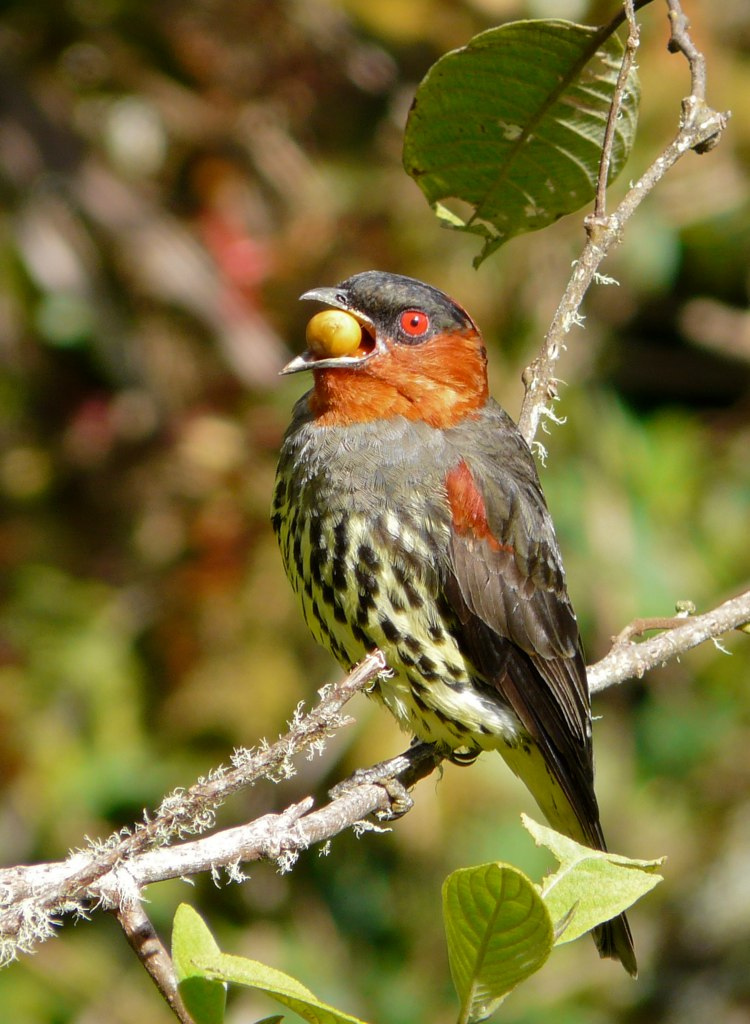
The Black-crowned Tityra is an unmistakable bird, characterized by its bold black, white, and gray coloration. Adult birds possess a prominent black cap that extends from the forehead to the nape, providing a stark contrast to their white face, throat, and underparts. The wings and back are a soft gray, while the tail is a darker shade of black. In flight, this bird's silhouette is compact and its wings are broad, allowing for agile maneuvering through the forest canopy.
Juvenile Black-crowned Tityras exhibit slightly different plumage, with a more muted coloration. Their black cap may be less defined, and their overall plumage may appear duller compared to adults. Both male and female Black-crowned Tityras are similar in appearance, though males may display slightly larger size and more vivid coloration, especially during the breeding season when testosterone levels influence feather pigmentation.
Confusion may arise with similar species such as the Masked Tityra, yet the Black-crowned Tityra can be distinguished by its black crown and lack of a red facial skin, which is present in the Masked Tityra. When perched, the Black-crowned Tityra maintains an upright posture, often seen scanning its surroundings for food or potential threats. Its striking coloration and distinctive features make it a favorite among birdwatchers and a rewarding sight in its natural habitat.
Having trouble telling birds apart? Upload a photo to our bird identification tool for an instant species match.
Black-crowned Tityra Habitat and Range
Preferred Habitat
The Black-crowned Tityra inhabits a variety of tropical and subtropical forest environments. It is commonly found in lowland rainforests, as well as in secondary growth and forest edges. This adaptability allows it to thrive in areas that range from dense, humid jungles to more open woodland regions.
Typically residing at elevations from sea level up to 1,500 meters, the Black-crowned Tityra demonstrates a preference for mid-elevation forests in some parts of its range. Seasonal shifts in habitat use are not well documented, but the bird's presence in diverse forest types suggests a level of adaptability to different environmental conditions.
While the Black-crowned Tityra is primarily associated with rural and forested habitats, it occasionally ventures into more urbanized areas where suitable vegetation is available. This bird's ability to exploit various habitat types aids in its widespread distribution across its range, making it a resilient member of the neotropical avian community.
Geographic Range
The Black-crowned Tityra has a wide-ranging distribution across Central and South America. Its breeding range extends from southern Mexico through Central America, including Belize, Honduras, and Costa Rica, down into South America. In South America, it occupies a significant portion of the continent, with populations found in countries such as Colombia, Venezuela, Brazil, Peru, and Bolivia.
This species appears to be largely resident within its range, showing minimal migratory behavior. However, some local movements may occur in response to food availability or environmental conditions. Population density hotspots include the Amazon basin, where the bird is commonly encountered in suitable habitats.
Although primarily a resident species, the Black-crowned Tityra's widespread distribution makes it a common sight across its range. Its adaptability to various forest types and conditions contributes to its persistence across a broad geographical area, affirming its status as a widespread and relatively common species throughout the neotropics.
Want to know which birds visit your area? Browse our backyard birds by location guides for region-specific species lists.
What Does the Black-crowned Tityra Eat?
The Black-crowned Tityra's diet reflects its adaptability and opportunistic feeding habits. Primarily frugivorous, this bird consumes a wide variety of fruits and berries, which form the bulk of its diet. It frequently forages in the forest canopy, plucking ripe fruit with precision and agility.
In addition to fruit, the Black-crowned Tityra supplements its diet with insects and small vertebrates, such as lizards and frogs. This dietary flexibility allows it to adapt to seasonal variations in food availability, ensuring a consistent food supply throughout the year. During the breeding season, it may increase its intake of protein-rich insects to support the nutritional demands of raising young.
The Black-crowned Tityra employs a patient and methodical foraging technique, often seen perched quietly as it scans for potential prey. Once a target is identified, it executes swift and direct flights to capture its quarry. This bird's diverse diet and effective foraging strategies make it a versatile and resilient member of the forest ecosystem.
Black-crowned Tityra Behavior and Social Structure
The Black-crowned Tityra exhibits a range of fascinating behaviors that reflect its adaptability and social nature. This bird often occurs in pairs or small family groups, displaying a cooperative social structure that enhances its ability to find food and defend territory.
During the breeding season, the Black-crowned Tityra becomes more territorial, engaging in vocal displays and aggressive interactions to establish and defend its nesting area. Males are particularly vocal, using a series of harsh, rasping calls to deter rivals and attract mates. Courtship displays may involve mutual preening and the presentation of food items to potential mates, strengthening pair bonds and facilitating successful reproduction.
In response to predators, the Black-crowned Tityra exhibits a variety of defensive behaviors, including mobbing and alarm calling. These actions serve to protect both individual birds and their young from potential threats. Daily activity patterns typically include periods of active foraging interspersed with rest and social interactions, reflecting a balance between energy conservation and resource acquisition.
Black-crowned Tityra Nesting and Reproduction
The Black-crowned Tityra constructs its nests in tree cavities or modified woodpecker holes, preferring locations that offer protection from predators. The nest is built using a variety of materials, including twigs, leaves, and soft plant fibers, creating a secure and comfortable environment for eggs and nestlings.
Clutch size typically ranges from two to four eggs, which are incubated by both parents for a period of approximately 18 to 20 days. After hatching, the young are cared for by both parents, who share responsibilities for feeding and protecting the nestlings. The fledging timeline for the Black-crowned Tityra is around 30 days, after which the young birds leave the nest but may continue to rely on parental support for a short period.
The Black-crowned Tityra generally produces one brood per year, although favorable conditions and abundant food resources may occasionally result in a second brood. The bird's nesting habits and parental care strategies contribute to its reproductive success and survival in a competitive environment.
Black-crowned Tityra Sounds and Vocalizations
The Black-crowned Tityra's vocalizations are a defining characteristic of the species, with its primary song consisting of a series of harsh, rasping notes. These calls are repetitive and somewhat mechanical in quality, serving as an effective means of communication between individuals.
In addition to the primary song, the Black-crowned Tityra emits a variety of call notes, including alarm calls that are sharp and piercing. These alarm calls alert other birds to potential threats and play a crucial role in the bird's social and defensive behaviors.
The dawn chorus of the Black-crowned Tityra is particularly notable, with males often leading the vocalizations to establish territory and attract mates. While the bird's calls may lack the melodious quality of some other songbirds, they are no less effective in conveying the necessary information for survival and reproduction.
Interesting Facts About the Black-crowned Tityra
- 1The Black-crowned Tityra is known for its striking black and white plumage, making it easily recognizable in its forest habitat.
- 2Unlike many other birds, the Black-crowned Tityra often utilizes old woodpecker holes for nesting, showcasing its resourcefulness.
- 3This bird's diet is primarily frugivorous, but it also consumes insects and small vertebrates, displaying dietary adaptability.
- 4The Black-crowned Tityra's vocalizations are unique, consisting of harsh, rasping calls that set it apart from more melodious birds.
- 5Though primarily a forest resident, the Black-crowned Tityra can adapt to secondary growth and edge habitats, aiding its survival.
- 6The Black-crowned Tityra plays a vital role in seed dispersal, contributing to forest regeneration and biodiversity maintenance.
- 7Pairs or small family groups of Black-crowned Tityra's exhibit cooperative social structures, enhancing their survival and success.
Black-crowned Tityra Conservation Status
According to the International Union for Conservation of Nature (IUCN), the Black-crowned Tityra is currently listed as a species of Least Concern, reflecting its stable population trend across its extensive range. However, habitat loss due to deforestation and land conversion for agriculture poses a potential threat to some local populations. Conservation efforts aimed at preserving tropical forests and maintaining habitat connectivity are essential for ensuring the long-term survival of the Black-crowned Tityra. Protected areas and reserves within its range contribute to safeguarding critical habitats and biodiversity. Historical population changes for the Black-crowned Tityra are not well documented, but its adaptability to various habitats and resilience in the face of environmental changes suggest a species capable of enduring moderate challenges to its existence. Continued monitoring and conservation initiatives will be vital in addressing emerging threats and ensuring the continued success of this striking bird.
Other Cotingidae Species



Birds Similar to the Black-crowned Tityra
These species are often confused with the Black-crowned Tityra due to similar appearance or overlapping range.

