
Brown Warbler
Sylvia lugens
Order: Passeriformes / Family: Sylviidae

Wikimedia Commons
About the Brown Warbler
The Brown Warbler, scientifically known as Sylvia lugens, is a small passerine bird that belongs to the family Sylviidae. This bird is especially notable for its modest yet charming appearance and its intricate song, making it a favorite among birdwatchers. The Brown Warbler flourishes in a variety of habitats across Europe, where it plays a significant ecological role by controlling insect populations and serving as prey for larger birds. Typically found in deciduous and mixed forests, hedgerows, and overgrown gardens, the Brown Warbler is adaptable and resilient, able to thrive in both wild and human-altered landscapes. Its presence indicates healthy ecosystems and biodiversity, as it is sensitive to environmental changes and habitat degradation.
During the breeding season, which occurs from late spring to early summer, the Brown Warbler becomes particularly vocal. Males sing persistently to establish territories and attract mates. This period also sees the bird engaging in intricate courtship displays, which are as much auditory as they are visual. Outside of the breeding season, the Brown Warbler tends to be more elusive, though still active and present in its preferred habitats.
The Brown Warbler's ecological role extends beyond its insectivorous diet. It also contributes to seed dispersal through the occasional consumption of berries, aiding in plant propagation. Additionally, by serving as prey for raptors and other predatory birds, it forms a crucial link in the food chain. The bird's adaptability to various climates and environments highlights its importance as an indicator species, reflecting the health of its ecosystems across regions that include the Iberian Peninsula, the British Isles, and parts of central Europe.
The Brown Warbler belongs to the family Sylviidae, within the order Passeriformes. These birds typically live 5 years on average, with a maximum recorded of 8 years..
How to Identify a Brown Warbler
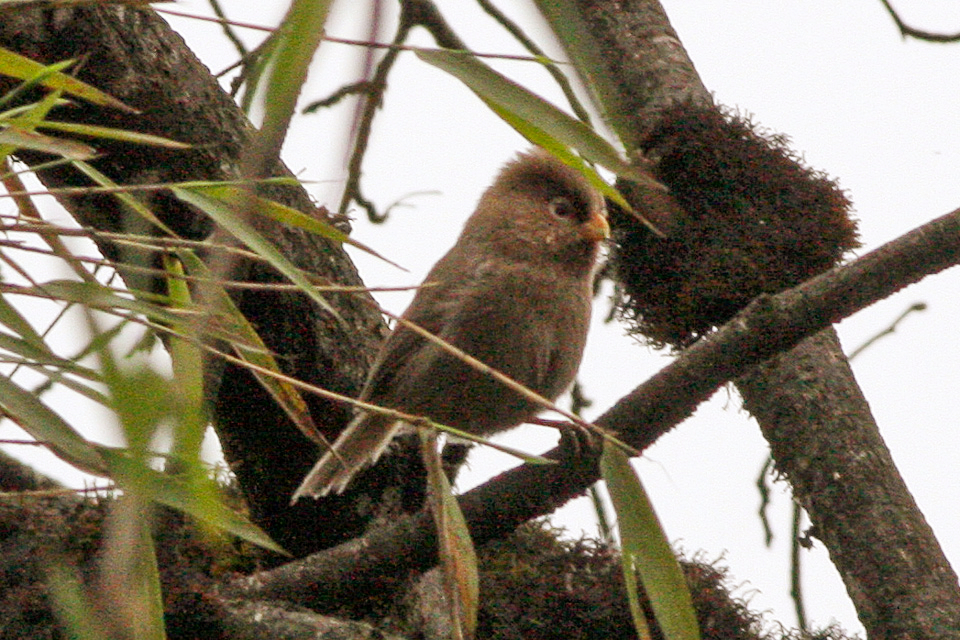
The Brown Warbler is a small, unassuming bird with a length of approximately 13 centimeters and a wingspan of around 18 to 20 centimeters. Its plumage is characterized by a generally brown coloration that blends well with its natural habitat, aiding in camouflage. Adults typically exhibit a warm, rich brown on their upperparts, with slightly paler underparts that sometimes show a subtle buff hue. The bird's head is marked by a faintly streaked crown and a delicate eye-ring that adds a touch of distinction to its appearance.
Juvenile Brown Warblers resemble adults but are often slightly duller in color, with a more pronounced brown on the underparts. Males and females are visually similar, making sex differentiation in the field challenging without observing behavioral cues such as singing or displaying. In flight, the Brown Warbler presents a compact silhouette, with rapid, undulating wingbeats that allow it to maneuver adeptly through dense vegetation.
The Brown Warbler might be confused with similar species like the Eurasian Chiffchaff and the Willow Warbler, which share its general size and brownish tones. However, the Brown Warbler can be distinguished by its more muted coloration and distinct song patterns. When perched, the bird often adopts an upright posture, occasionally flicking its tail as it flits from branch to branch.
Having trouble telling birds apart? Upload a photo to our bird identification tool for an instant species match.
Brown Warbler Habitat and Range
Preferred Habitat
The Brown Warbler thrives in a range of habitats that provide dense vegetation and plentiful insect prey. It is commonly found in deciduous and mixed forests, particularly those with a well-developed understory. This bird is also a frequent inhabitant of hedgerows, scrublands, and overgrown gardens, where it takes advantage of thick shrubs for shelter and foraging.
In terms of elevation, the Brown Warbler generally occupies lowland regions, though it can be found at higher altitudes in mountainous areas, provided that suitable vegetation is present. Seasonal shifts in habitat are minimal, as this species tends to remain in its chosen environment throughout the year.
While urban environments are not its primary habitat, the Brown Warbler can occasionally be spotted in parks and suburban gardens, where dense bushes and hedgerows offer suitable conditions. Its presence in these areas underscores its adaptability and resilience in the face of habitat changes.
Geographic Range
The Brown Warbler's range spans across various parts of Europe, where it is a resident or partial migrant depending on the geographical location. During the breeding season, it is predominantly found in the Iberian Peninsula, the British Isles, and extends into parts of central Europe including Germany and France. This bird favors regions with mild climates and abundant vegetation, which are crucial for its breeding and feeding activities.
In winter, some populations of the Brown Warbler may move slightly southward, but the shifts are generally limited to within their breeding range. Thus, the bird is largely considered a year-round resident in most of its range. Migration corridors, when used, tend to follow natural features like river valleys and coastal areas, which provide essential stopover habitats.
Population density hotspots for the Brown Warbler are often found in areas with extensive hedgerows and forest edges, where the bird's needs for cover and food are optimally met. Despite its relatively small range, the bird is widespread within its preferred habitats, making it a common sight for bird enthusiasts in the regions it inhabits.
Want to know which birds visit your area? Browse our backyard birds by location guides for region-specific species lists.
What Does the Brown Warbler Eat?
The Brown Warbler predominantly feeds on insects, which form the core of its diet throughout the year. It actively forages for caterpillars, beetles, spiders, and other small invertebrates, gleaning them from leaves and branches with remarkable agility. During the breeding season, the need for protein-rich food increases, prompting the bird to intensify its foraging efforts.
In addition to insects, the Brown Warbler occasionally supplements its diet with small quantities of berries, particularly in the autumn months. This seasonal dietary shift aids in energy storage for the colder months and helps with seed dispersal in its habitat.
Foraging techniques employed by the Brown Warbler include hover-gleaning and short, agile flights to capture prey. The bird is most active during the early morning and late afternoon, when insect activity is at its peak. This schedule allows the Brown Warbler to maximize its feeding efficiency while minimizing exposure to predators.
Brown Warbler Behavior and Social Structure
Socially, the Brown Warbler is a solitary bird outside of the breeding season, although it may form loose flocks with other small passerines during migration or in winter. Territorial behavior is pronounced during the breeding season, with males establishing and defending territories through song and displays. These territories are crucial for attracting a mate and ensuring sufficient resources for raising young.
Courtship displays involve the male performing aerial acrobatics and singing to potential mates, often from a prominent perch within the territory. Once paired, the bond between mates remains strong throughout the breeding season, with both sexes participating in nest building and chick rearing.
The Brown Warbler's response to predators is typically evasive. It uses its small size and agility to escape threats, often retreating to dense vegetation for cover. Daily activity patterns show peaks in the morning and late afternoon, corresponding to optimal foraging times.
Brown Warbler Nesting and Reproduction
Nesting for the Brown Warbler begins in late spring, with the birds constructing cup-shaped nests in dense shrubs or low trees. The nests are typically made from grass, leaves, and moss, lined with feathers and soft plant materials to create a warm environment for the eggs.
Preferred nesting locations are those that offer concealment from predators, such as thick hedgerows or underbrush in forests. A typical clutch consists of 3 to 5 eggs, which are incubated primarily by the female for about 12 to 14 days.
After hatching, both parents share the responsibilities of feeding and caring for the chicks. Fledging occurs approximately 10 to 12 days after hatching, although the young may continue to rely on parental support for a short period thereafter. The Brown Warbler generally produces one brood per year, though in favorable conditions, a second brood may be attempted.
Brown Warbler Sounds and Vocalizations
The Brown Warbler's primary song is a melodious series of warbling notes that vary in pitch and tempo, often described as both sweet and complex. This song serves as both a territorial marker and a courtship display. The bird's call notes are short and sharp, used for communication between mates or signaling alarm.
Alarm calls are harsher and more abrupt, intended to warn of potential threats. During the dawn chorus, the Brown Warbler's song stands out for its clarity and musicality, often continuing well into the morning. Its vocalizations can be compared to those of the Blackcap, though generally more understated.
Interesting Facts About the Brown Warbler
- 1Despite its unassuming appearance, the Brown Warbler is known for its complex and melodious song, often described as one of the most beautiful among European warblers.
- 2The Brown Warbler is a master of camouflage, with its brown plumage blending seamlessly into the dense vegetation of its habitat, making it difficult to spot even by experienced birders.
- 3This warbler is known for its agile foraging behavior, capable of catching insects in mid-air with quick, acrobatic maneuvers.
- 4The Brown Warbler is an important ecological indicator, as its presence in an area often signifies a healthy, insect-rich environment.
- 5While primarily insectivorous, the Brown Warbler also plays a role in seed dispersal, occasionally consuming berries in the autumn months.
Brown Warbler Conservation Status
The Brown Warbler is currently listed as Least Concern by the IUCN, with stable population trends in most of its range. Primary threats include habitat loss due to agricultural expansion and urban development, which can fragment the dense vegetation this species relies on. Conservation efforts focus on habitat preservation and restoration, particularly in areas where hedgerows and scrub are declining. Historically, populations have fluctuated in response to environmental changes, but the Brown Warbler's adaptability has helped maintain its numbers in many regions. Continued monitoring and conservation actions are essential to ensure this bird remains a common and thriving component of Europe's avifauna.
Other Sylviidae Species



Birds Similar to the Brown Warbler
These species are often confused with the Brown Warbler due to similar appearance or overlapping range.

